
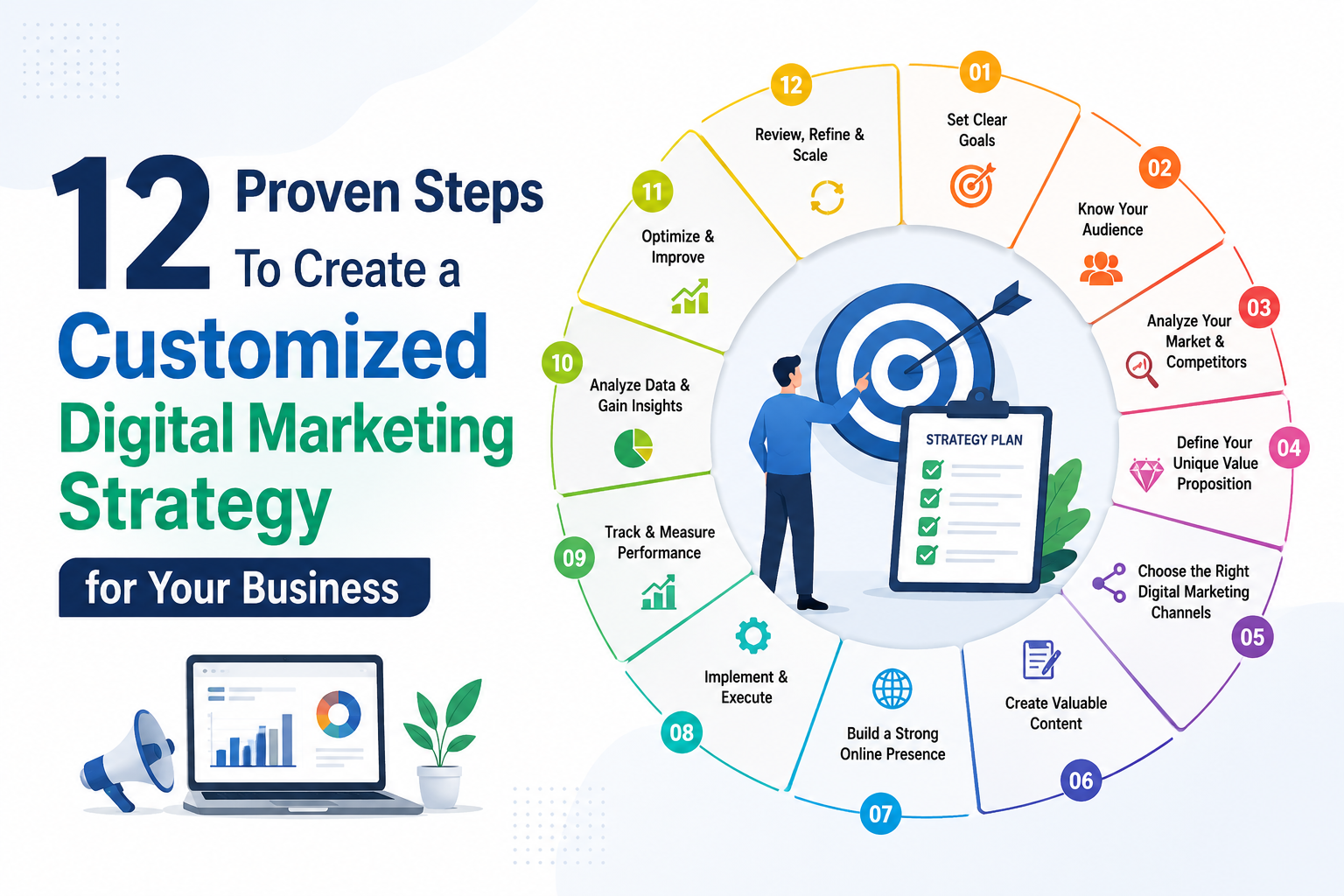

In today’s highly competitive online marketplace, businesses can no longer rely on generic marketing plans. Every company has unique goals, audiences, products, and challenges. That’s why developing a Customized Digital Marketing Strategy is essential for achieving sustainable growth and maximizing your marketing investment.
A tailored digital marketing strategy helps businesses connect with the right audience, improve brand visibility, generate qualified leads, and increase sales. Instead of applying a one-size-fits-all approach, a customized strategy aligns marketing efforts with your specific business objectives and customer needs.
Whether you’re a startup, local business, or established company, this guide will walk you through the steps needed to create a digital marketing strategy that delivers measurable results.
What Is a Customized Digital Marketing Strategy?
A customized digital marketing strategy is a personalized plan designed around your business goals, target audience, industry, and budget. It outlines how you will use digital channels to attract, engage, and convert potential customers.
A successful strategy typically includes:
- Search Engine Optimization (SEO)
- Content Marketing
- Social Media Marketing
- Email Marketing
- Pay-Per-Click Advertising (PPC)
- Website Optimization
- Analytics and Reporting
The goal is to create a coordinated approach that supports business growth while maximizing return on investment (ROI).
Why Your Business Needs a Customized Strategy
Every business is different.
For example:
- A local restaurant has different goals than an e-commerce store.
- A B2B software company targets a different audience than a fashion retailer.
- A startup may prioritize brand awareness, while an established company focuses on customer retention.
A customized strategy ensures that your marketing efforts are relevant, effective, and aligned with your business objectives.
Benefits include:
- Better audience targeting
- Improved marketing efficiency
- Higher conversion rates
- Stronger brand positioning
- More effective budget allocation
- Measurable business growth
Step 1: Define Your Business Goals
Before creating a strategy, clearly identify what you want to achieve.
Common digital marketing goals include:
Increase Brand Awareness
Build visibility and introduce your business to new audiences.
Generate More Leads
Attract potential customers interested in your products or services.
Boost Website Traffic
Drive more visitors through organic and paid channels.
Increase Sales
Convert prospects into paying customers.
Improve Customer Retention
Strengthen relationships with existing customers.
Setting specific, measurable goals creates a clear direction for your marketing efforts.
Step 2: Understand Your Target Audience
Knowing your audience is the foundation of any effective marketing strategy.
Gather information about:
- Age
- Gender
- Location
- Income level
- Interests
- Challenges
- Buying behavior
Create detailed buyer personas that represent your ideal customers.
The better you understand your audience, the more effectively you can create content and campaigns that resonate with them.
Step 3: Analyze Your Current Digital Presence
Conduct a comprehensive audit of your existing online assets.
Review:
- Website performance
- SEO rankings
- Social media profiles
- Content quality
- Email marketing results
- Paid advertising campaigns
Identify strengths, weaknesses, and opportunities for improvement.
This audit provides valuable insights that will guide your strategy development.
Step 4: Research Your Competitors
Competitor analysis helps you understand your market landscape.
Evaluate:
- Competitor websites
- Content strategies
- Social media activity
- Keyword rankings
- Advertising campaigns
Questions to ask include:
- What are competitors doing well?
- Where are they falling short?
- What opportunities can you capitalize on?
Learning from competitors can help you develop a stronger competitive advantage.
Step 5: Build a Strong SEO Foundation
Search engine optimization is one of the most cost-effective digital marketing strategies.
SEO helps your business:
- Increase organic traffic
- Improve search visibility
- Build authority
- Generate long-term leads
Key SEO activities include:
- Keyword research
- On-page optimization
- Technical SEO improvements
- Local SEO
- Link building
A strong SEO foundation supports every other aspect of your digital marketing strategy.
Step 6: Develop a Content Marketing Plan
Content marketing helps attract, educate, and engage potential customers.
Types of content include:
- Blog articles
- Videos
- Infographics
- Case studies
- E-books
- Webinars
Focus on creating content that addresses customer questions, solves problems, and demonstrates expertise.
Consistent, high-quality content strengthens trust and supports SEO efforts.
Step 7: Choose the Right Social Media Platforms
Not every platform is right for every business.
Select platforms based on where your audience spends their time.
Popular options include:
Focus on quality engagement rather than trying to be active everywhere.
Social media should support your broader marketing objectives.
Step 8: Implement Email Marketing
Email marketing remains one of the highest-performing digital channels.
Benefits include:
- Personalized communication
- Lead nurturing
- Customer retention
- Increased conversions
Build an email list through:
- Website forms
- Lead magnets
- Newsletter subscriptions
Send valuable content that keeps your audience engaged and informed.
Step 9: Consider Paid Advertising
While organic marketing delivers long-term value, paid advertising can accelerate results.
Options include:
- Search ads
- Social media ads
- Display advertising
- Remarketing campaigns
Paid campaigns allow businesses to:
- Reach targeted audiences
- Generate leads quickly
- Promote products and services
- Increase brand visibility
Ensure advertising aligns with your overall strategy and budget.
Step 10: Create a Marketing Budget
A customized strategy should include a realistic budget.
Allocate resources based on:
- Business goals
- Channel performance
- Audience behavior
- Expected ROI
Common budget categories include:
- SEO
- Content creation
- Advertising
- Social media management
- Marketing software
Regular budget reviews help optimize spending and maximize results.
Step 11: Track Key Performance Indicators (KPIs)
Measurement is critical for success.
Track metrics such as:
- Website traffic
- Conversion rates
- Lead generation
- Search rankings
- Social engagement
- Email open rates
- Revenue growth
KPIs provide insights into what’s working and where adjustments are needed.
Data-driven decisions improve overall marketing effectiveness.
Step 12: Continuously Optimize Your Strategy
Digital marketing is constantly evolving.
Successful businesses regularly:
- Analyze performance data
- Test new ideas
- Refine campaigns
- Update content
- Adapt to industry trends
Continuous optimization ensures your strategy remains effective and competitive.
Common Mistakes to Avoid
Many businesses struggle because they:
- Target the wrong audience
- Ignore analytics
- Neglect SEO
- Lack consistency
- Focus on too many channels at once
- Fail to establish clear goals
Avoiding these mistakes can significantly improve marketing performance.
Frequently Asked Questions
What makes a digital marketing strategy customized?
A customized strategy is specifically designed around your business goals, target audience, industry, and budget rather than using generic marketing tactics.
How long does it take to see results?
Results vary depending on the channels used. SEO may take several months, while paid advertising can generate results more quickly.
Is digital marketing necessary for small businesses?
Yes. Digital marketing helps small businesses compete effectively, reach local customers, and build brand awareness.
How much should I budget for digital marketing?
Budgets vary widely based on goals and competition. Start with a realistic budget and adjust based on performance.
Which digital marketing channel is most effective?
The most effective channel depends on your audience and objectives. Many businesses benefit from combining SEO, content marketing, social media, and email marketing.
Why is data important in digital marketing?
Data helps measure performance, identify opportunities, and make informed decisions that improve campaign effectiveness.
Conclusion
Creating a Customized Digital Marketing Strategy is one of the smartest investments a business can make. By aligning your marketing efforts with your specific goals, audience, and resources, you can attract the right customers, improve brand visibility, and drive sustainable growth.
The most successful strategies are not built on assumptions. They are built on research, planning, execution, measurement, and continuous improvement. Whether you’re just starting or refining an existing marketing plan, a customized approach will help ensure your efforts produce meaningful and measurable results.
With the right strategy in place, your business can navigate the digital landscape with confidence and achieve long-term success.