
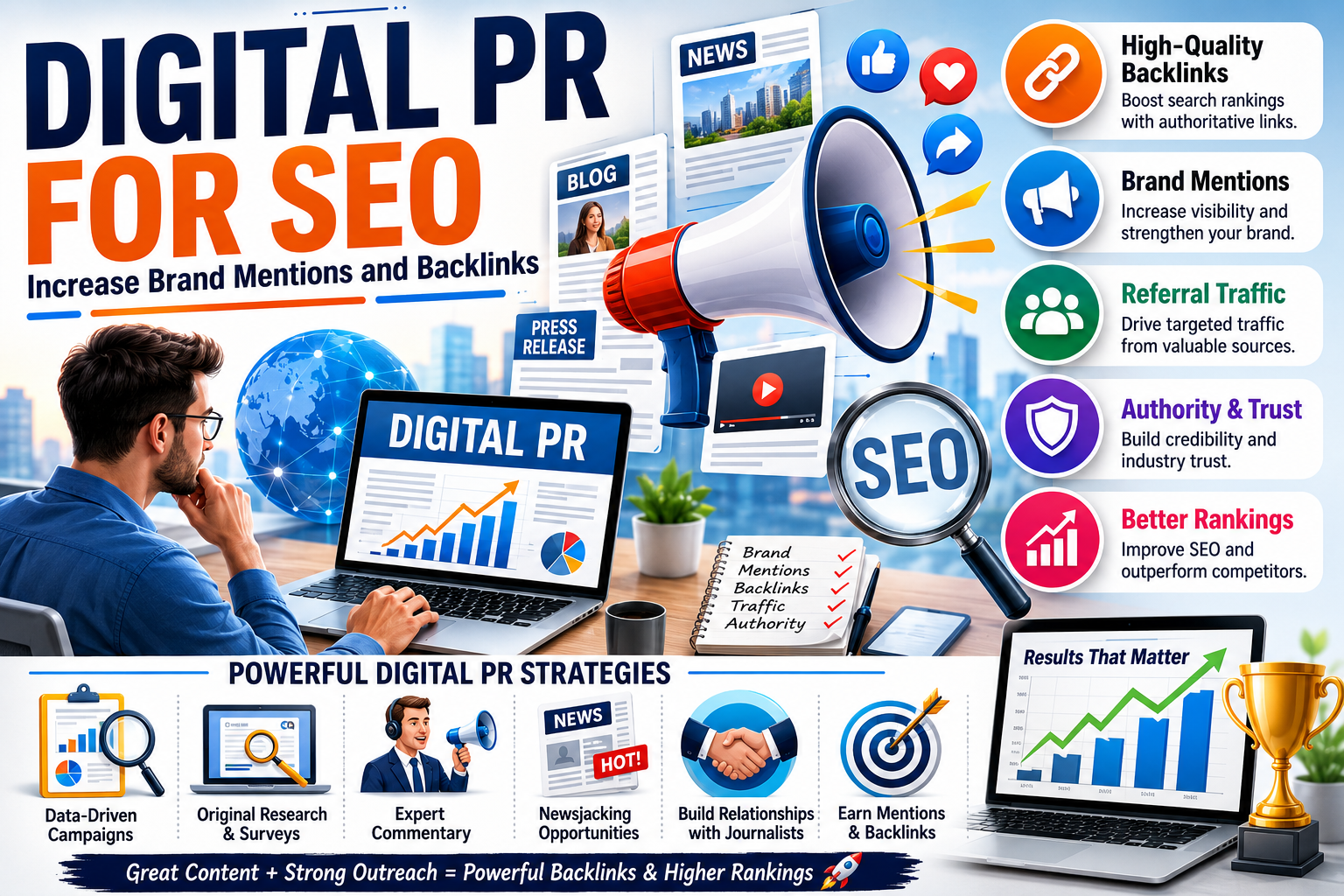

Introduction to Digital PR for SEO
In the modern digital landscape, businesses need more than great products and services to stand out online. Search engines increasingly reward brands that demonstrate authority, trustworthiness, and relevance. One of the most effective ways to achieve this is through digital PR for SEO.
Digital PR combines public relations, content marketing, and search engine optimization to help brands earn media coverage, build authority, and secure valuable backlinks. Unlike traditional link-building tactics that focus solely on acquiring links, digital PR creates genuine interest in your brand by generating newsworthy stories and valuable content.
For businesses seeking stronger search rankings, more website traffic, and enhanced credibility, digital PR has become an essential component of a successful SEO strategy.
What Is Digital PR?
Digital PR is the practice of promoting a brand online through media outreach, content campaigns, journalist engagement, and thought leadership initiatives. The primary goal is to earn online coverage from authoritative websites, news publications, blogs, and industry resources.
How Digital PR Works
A typical digital PR campaign follows these steps:
- Identify a compelling story or data set.
- Create valuable content or research.
- Pitch the story to journalists and publishers.
- Secure media coverage.
- Earn backlinks and brand mentions.
This process not only boosts visibility but also creates SEO value through high-quality editorial links.
Traditional PR vs. Digital PR
| Traditional PR | Digital PR |
|---|---|
| Focuses on print, TV, and radio | Focuses on online publications |
| Measures media exposure | Measures backlinks and SEO impact |
| Brand awareness driven | Brand awareness and SEO driven |
| Limited search value | Significant search ranking benefits |
Why Digital PR for SEO Matters
Search Engine Ranking Benefits
Search engines consider backlinks from authoritative websites as signals of trust. When respected media outlets mention your brand and link to your website, search engines often view your content as more credible.
This can contribute to:
- Higher keyword rankings
- Improved domain authority
- Increased organic traffic
- Better content visibility
Building Brand Authority
Consumers trust brands that appear in respected publications. Consistent media coverage positions your company as a recognized leader in its field.
Authority generated through digital PR often leads to:
- Increased customer confidence
- More partnership opportunities
- Higher conversion rates
- Greater market influence
Key Benefits of Digital PR for SEO
1. High-Authority Backlinks
One of the greatest advantages of digital PR is earning editorial backlinks from reputable websites.
These backlinks are valuable because they are:
- Difficult to replicate
- Contextually relevant
- Editorially earned
- Trusted by search engines
2. Increased Brand Mentions
Brand mentions contribute to online visibility even when a direct link is not included. The more frequently your brand appears across trusted websites, the stronger your overall digital footprint becomes.
3. Referral Traffic Growth
Digital PR campaigns can drive highly targeted visitors from media websites to your own platform.
Benefits include:
- Qualified leads
- Better engagement
- Increased conversions
- Greater brand awareness
4. Improved Trust and Credibility
People naturally trust brands featured in respected publications. Third-party endorsements often carry more weight than self-promotion.
How Search Engines Evaluate Brand Mentions
Linked Mentions vs. Unlinked Mentions
Linked mentions include a direct hyperlink to your website. These provide both referral traffic and SEO value.
Unlinked mentions simply reference your brand without linking. While they may not pass traditional link equity, they still contribute to brand awareness and authority signals.
Authority and Relevance Matter
Search engines pay attention to:
- Publication authority
- Topic relevance
- Editorial context
- Audience engagement
A mention from a respected industry publication is typically more valuable than multiple mentions from unrelated websites.
Digital PR Strategies That Drive Results
Data-Driven Campaigns
Original data attracts journalists because it provides fresh insights.
Examples include:
- Industry surveys
- Consumer behavior studies
- Market trend reports
- Benchmark analyses
Journalists often cite original research, creating opportunities for backlinks and mentions.
Original Research and Surveys
Companies that invest in research frequently gain media attention.
Popular formats include:
| Research Type | SEO Benefit |
|---|---|
| Industry Reports | Editorial Links |
| Surveys | News Coverage |
| Statistics Studies | Citation Opportunities |
| Trend Analysis | Thought Leadership |
Expert Commentary
Journalists constantly seek expert opinions.
Positioning company leaders as subject matter experts can generate:
- Media quotes
- Interview requests
- Guest articles
- Podcast appearances
Newsjacking Opportunities
Newsjacking involves providing expert commentary on breaking news stories.
When executed correctly, it can result in:
- Fast media exposure
- High-authority backlinks
- Increased brand recognition
Speed is often critical for success.
Creating Newsworthy Content
What Journalists Want
Journalists receive hundreds of pitches daily. To stand out, content should be:
- Relevant
- Timely
- Unique
- Data-backed
- Audience-focused
Developing Unique Angles
Instead of promoting products directly, focus on stories that solve problems or reveal new insights.
For example:
- Industry trends
- Consumer habits
- Market forecasts
- Technology developments
The stronger the story, the greater the chance of media coverage.
Building Relationships with Journalists
Media Outreach Best Practices
Successful outreach requires research and personalization.
Best practices include:
- Identifying relevant journalists
- Reading previous articles
- Crafting concise pitches
- Offering exclusive insights
- Following up professionally
Personalizing Pitches
Generic outreach rarely succeeds.
A personalized pitch demonstrates:
- Familiarity with the publication
- Understanding of audience interests
- Respect for the journalist’s work
These factors significantly improve response rates.
Digital PR Link Building Techniques
Journalist Request Platforms
Services such as journalist query platforms allow brands to provide expert commentary for media stories.
Benefits include:
- Earned media opportunities
- Editorial backlinks
- Industry visibility
Resource Page Mentions
Many websites maintain resource sections featuring trusted tools, reports, and guides.
Creating exceptional content can help secure placements on these pages.
Measuring Digital PR Success
A successful campaign requires ongoing measurement.
Backlink Metrics
Monitor:
- Number of referring domains
- Link quality
- Domain authority improvements
- Anchor text diversity
Brand Visibility Metrics
Track:
- Brand mentions
- Share of voice
- Media coverage volume
- Social engagement
Traffic and Conversion Metrics
Measure:
- Referral traffic
- Organic traffic growth
- Lead generation
- Revenue impact
Common Digital PR Mistakes
Generic Outreach Campaigns
Sending identical pitches to hundreds of journalists often results in poor performance.
Focus on relevance and personalization.
Creating Low-Value Content
Journalists rarely cover promotional content.
Avoid:
- Thin content
- Sales-heavy messaging
- Unsupported claims
- Duplicate research
Ignoring Follow-Up Opportunities
Many successful placements occur after thoughtful follow-up communication.
Persistence, when professional, often pays off.
Future Trends in Digital PR and SEO
The future of digital PR for SEO is likely to focus on:
- AI-assisted media research
- Data journalism
- Expert-led content
- Brand authority signals
- E-E-A-T optimization
- Multimedia storytelling
As search engines continue emphasizing expertise and trust, brands that invest in meaningful digital PR campaigns will gain a competitive advantage.
Frequently Asked Questions
1. What is digital PR for SEO?
Digital PR for SEO is a strategy that combines public relations and search optimization to earn media coverage, brand mentions, and high-quality backlinks.
2. Does digital PR help improve rankings?
Yes. Quality backlinks and brand authority generated through digital PR can contribute to improved search engine rankings.
3. How long does a digital PR campaign take?
Results vary, but many campaigns begin generating media coverage within weeks, while SEO benefits may take several months.
4. What types of content work best for digital PR?
Original research, surveys, industry reports, expert commentary, and data-driven studies often perform best.
5. Are brand mentions important for SEO?
Yes. Both linked and unlinked mentions contribute to brand awareness and authority, which can support overall SEO efforts.
6. Is digital PR better than traditional link building?
Digital PR often produces higher-quality backlinks because links are earned through editorial coverage rather than direct link acquisition tactics.
Conclusion
Digital PR for SEO has become one of the most powerful strategies for building brand authority, earning high-quality backlinks, and increasing organic visibility. By creating newsworthy content, developing strong journalist relationships, and focusing on genuine value, businesses can secure media coverage that benefits both reputation and search performance.
Rather than chasing links alone, successful digital PR campaigns build trust, expand audience reach, and create long-term competitive advantages. Companies that consistently invest in digital PR are often rewarded with stronger rankings, greater credibility, and sustainable organic growth.