
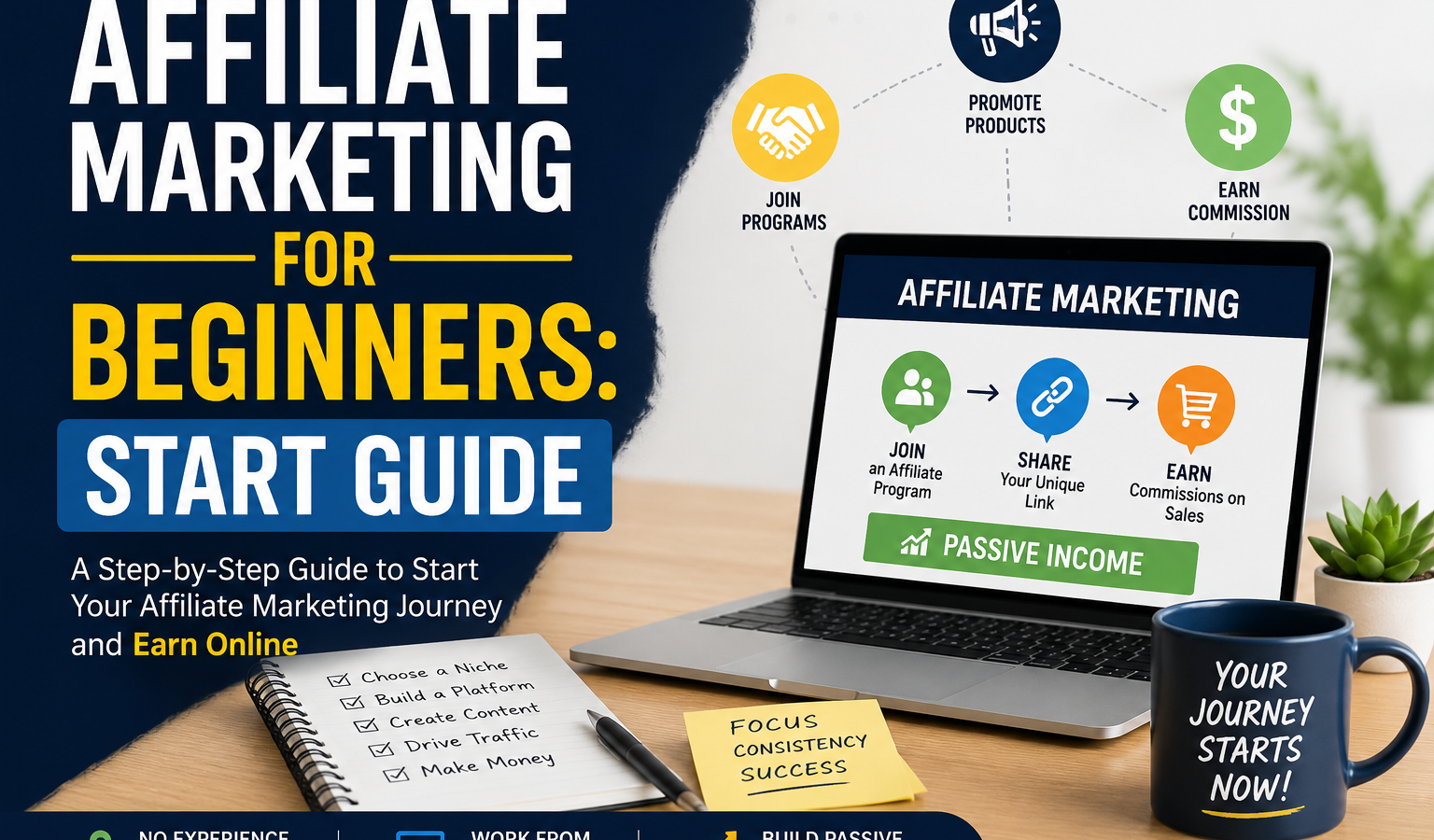

Starting affiliate marketing can feel overwhelming when hundreds of programs compete for your attention. The good news is that you do not need to join dozens of networks or promote every product you see. The better approach is to choose a small group of reputable programs that match your niche, audience, content style, and buying intent.
This guide reviews 17 affiliate programs for beginners, including broad retail programs, software partnerships, marketplaces, and affiliate networks. Program terms, commissions, eligibility rules, and cookies can change, so always confirm the current terms on the official program page before publishing an offer.
Affiliate disclosure: This article may contain affiliate links. We may earn a commission if you purchase through a qualifying link, at no extra cost to you. Recommendations are based on relevance and usefulness, not simply commission size.
Table of Contents
- How we chose these affiliate programs
- 17 best affiliate programs for beginners
- Quick comparison table
- How to choose the right affiliate program
- How to start affiliate marketing as a beginner
- Affiliate SEO and content strategy
- Disclosures, link attributes, and compliance
- Expert tips
- Common mistakes
- FAQs
- Conclusion
How We Chose These Affiliate Programs
There is no single “best” affiliate program for every beginner. We prioritized programs that are recognizable, have a clear affiliate proposition, fit common beginner niches, or provide access to many advertisers.
- Audience fit: The product should solve a problem people already have.
- Beginner accessibility: The program should have a realistic path for new publishers or creators.
- Offer quality: A useful product is easier to recommend honestly.
- Content potential: The program should support reviews, comparisons, tutorials, or educational content.
- Commercial intent: The offer should naturally fit readers who are evaluating a purchase or subscription.
Current affiliate-program roundups from Shopify include many of the brands and networks covered below, while official program terms should be treated as the final source for eligibility and commission details.
17 Best Affiliate Programs for Beginners
1. Amazon Associates
Best for: Product reviews, buying guides, home, technology, books, hobbies, and general retail content.
Amazon Associates is one of the easiest programs for beginners to understand because the product catalog is enormous and readers already know the marketplace. Amazon says Associates can monetize websites, social media user-generated content, and other eligible properties with tagged links, with commissions paid on qualifying purchases subject to its operating agreement and commission statement.
The trade-off is that commission rates vary by category and can be modest. Amazon’s current published schedule includes different fixed rates across categories, illustrating why product choice matters as much as traffic volume.
Beginner advantage: Easy product discovery and strong consumer familiarity.
Watch out for: Program rules, qualifying-purchase requirements, and category-specific commissions.
2. Shopify Affiliate Program
Best for: Ecommerce, entrepreneurship, dropshipping education, online stores, and creator-business content.
Shopify is particularly attractive to publishers who teach people how to build or grow online businesses. Shopify’s affiliate program is aimed at content creators, educators, and influencers with audiences interested in commerce and entrepreneurship. Current program information says commissions vary by location and qualifying referral, with some referrals paying up to $150 in the US and Canada. Shopify also lists a 30-day cookie for standard referrals and a longer window for certain trial conversions.
Beginner advantage: High commercial intent and many tutorial topics.
Watch out for: Approval expectations and differences in payout by market.
3. Hostinger Affiliate Program
Best for: Website hosting, WordPress, blogging, website-building, and online business content.
Hostinger is a natural fit for publishers who write tutorials about websites, domains, hosting, WordPress, or starting an online business. Hostinger currently advertises commissions starting at 40% and increasing with sales volume, along with an affiliate dashboard and promotional assets.
Beginner advantage: Straightforward product positioning and a strong fit with how-to content.
Watch out for: Commission structures can be performance-based, so read the current agreement carefully.
4. Semrush Affiliate Program
Best for: SEO, keyword research, content marketing, digital agencies, and marketing tutorials.
Semrush is a strong choice for an affiliate whose audience already wants SEO or digital marketing software. It works especially well with comparison articles, SEO tutorials, keyword-research guides, and agency workflows.
Beginner advantage: Strong alignment between educational content and a paid software product.
Watch out for: Competition is high because SEO is a crowded affiliate niche.
5. Fiverr Affiliates
Best for: Freelancing, small-business services, creators, entrepreneurs, and remote-work content.
Fiverr can fit content about logo design, writing, video editing, web development, virtual assistance, and other services. Shopify’s current affiliate-program roundup lists Fiverr among established affiliate opportunities for marketers and creators.
Beginner advantage: Easy to build content around specific services and use cases.
Watch out for: Earnings vary according to the category and action attributed to your referral.
6. HubSpot Affiliate Program
Best for: CRM, marketing, sales, customer service, and business software content.
HubSpot is useful for publishers teaching businesses how to manage leads, automate marketing, or organize customer relationships. Its affiliate policies explain that available commissions are defined in the affiliate tool and can be based on qualifying purchases or signups, depending on the applicable terms.
Beginner advantage: Excellent content opportunities for business education.
Watch out for: Read the current commission and eligibility rules rather than relying on old third-party figures.
7. AWeber Affiliate Program
Best for: Email marketing, newsletters, creators, and small-business automation.
AWeber is a useful match for publishers who teach email marketing. Shopify’s 2026 affiliate-program guide reports a base commission of 30% with higher tiers possible, and notes a 90-day cookie under the listed program terms.
Beginner advantage: Natural fit for tutorial and “how to build an email list” content.
Watch out for: Commission tiers depend on program conditions and referral volume.
8. ClickBank
Best for: Digital products, education, information products, and performance-focused affiliates.
ClickBank is an established marketplace where affiliates can choose from many products. Shopify’s current roundup says ClickBank reports more than 100,000 affiliates worldwide and has paid billions in commissions over its history, while commission rates can vary widely by product.
Beginner advantage: Large product selection and clear affiliate links.
Watch out for: Product quality varies, so research every offer before recommending it.
9. CJ Affiliate
Best for: Publishers who want access to multiple established advertisers from one network.
CJ can reduce the need to negotiate separate affiliate relationships with every merchant. Shopify lists CJ among major affiliate networks and notes that commission rates and cookie terms depend on the advertiser.
Beginner advantage: Network access across many brands and categories.
Watch out for: You still need to evaluate each advertiser independently.
10. Awin
Best for: Retail, fashion, finance, travel, and other niche publishers seeking multiple advertisers.
Awin is an affiliate network rather than a single merchant offer. That matters because the quality of your experience depends on the individual advertisers you apply to and the content you produce for them. Shopify includes Awin among the leading affiliate networks used by publishers.
Beginner advantage: One network can open the door to multiple advertiser relationships.
Watch out for: Do not assume every advertiser inside a network has the same commission or approval rules.
11. Impact
Best for: Software, ecommerce, creator partnerships, and publishers managing multiple brand relationships.
Impact is a partnership platform used by many brands to manage affiliate relationships. It is especially useful as your affiliate activity grows and you want centralized reporting and tracking across programs.
Beginner advantage: Broad brand ecosystem and professional tracking environment.
Watch out for: Approval remains advertiser-specific, and the dashboard can take time to learn.
12. Rakuten Advertising
Best for: Retail publishers and audiences interested in recognized consumer brands.
Rakuten Advertising is an established affiliate network that can be useful for publishers whose content centers on retail products and shopping decisions. Shopify includes Rakuten among notable affiliate programs and networks in its 2026 guide.
Beginner advantage: Retail-oriented opportunities and brand familiarity.
Watch out for: Individual advertiser terms can vary significantly.
13. eBay Partner Network
Best for: Collectibles, electronics, automotive, hobbies, deals, and product discovery content.
eBay can be particularly useful for “best finds,” niche product searches, used-item comparisons, collectibles, and category-specific shopping guides. Shopify includes eBay Partner Network in its current list of leading affiliate programs.
Beginner advantage: Wide marketplace selection and strong product-focused search intent.
Watch out for: Commission and qualifying actions depend on current program rules.
14. Elementor Affiliate Program
Best for: WordPress, website design, freelancers, agencies, and web-development tutorials.
Elementor is a strong fit when your audience already needs WordPress design tools. Tutorials such as “how to build a landing page” or “best WordPress page builder” can naturally introduce the product.
Beginner advantage: Excellent fit with practical tutorials and before-and-after demonstrations.
Watch out for: Competition in WordPress affiliate content is substantial.
15. Bluehost Affiliate Program
Best for: Blogging, WordPress, domains, and beginner website setup.
Hosting is a common affiliate niche because a new website owner has an immediate buying decision. Bluehost is frequently included among established affiliate programs in industry guides.
Beginner advantage: Natural alignment with “start a blog” and website-building content.
Watch out for: Avoid recommending hosting solely because the commission is attractive; explain who the plan actually suits.
16. Kinsta Affiliate Program
Best for: Premium WordPress hosting, developers, agencies, and performance-focused website content.
Kinsta fits a more technical audience that values managed WordPress hosting and performance. Shopify’s 2026 high-ticket list includes Kinsta among notable premium affiliate opportunities.
Beginner advantage: Strong commercial intent in technical hosting searches.
Watch out for: Higher-priced products require more trust and stronger audience qualification.
17. FlexOffers
Best for: Publishers who want a broad network of merchants and categories.
FlexOffers is useful when you want to test several verticals from one network rather than building every relationship from scratch. Shopify includes FlexOffers among the established affiliate networks available to publishers.
Beginner advantage: Variety can help you identify which niches and merchants fit your audience.
Watch out for: More choice can create more distraction. Start with offers directly related to your main topic.
Quick Comparison Table
| Program | Best for | Type | Beginner fit |
|---|---|---|---|
| Amazon Associates | General products | Retail program | Excellent |
| Shopify | Ecommerce | Merchant program | Very good |
| Hostinger | Hosting & websites | Merchant program | Excellent |
| Semrush | SEO & marketing | Software program | Very good |
| Fiverr | Freelance services | Marketplace program | Very good |
| HubSpot | CRM & marketing | Software program | Good |
| AWeber | Email marketing | Software program | Very good |
| ClickBank | Digital products | Marketplace | Good |
| CJ Affiliate | Multiple niches | Network | Good |
| Awin | Retail & brands | Network | Good |
| Impact | Software & partnerships | Network/platform | Good |
| Rakuten Advertising | Retail | Network | Good |
| eBay Partner Network | Marketplace products | Retail program | Very good |
| Elementor | WordPress | Software program | Very good |
| Bluehost | Blogging & hosting | Merchant program | Very good |
| Kinsta | Premium hosting | Merchant program | Good |
| FlexOffers | Multiple niches | Network | Good |
How to Choose the Right Affiliate Program
The highest commission is rarely the best reason to choose a program. A better decision starts with your audience.
Match the program to search intent
Someone searching for “best laptop for video editing” has a different intent from someone searching for “what is video editing.” The first query is much closer to a purchase. Affiliate content generally works best when the offer appears at the point where the reader needs a solution.
Check the economics
Look beyond the headline commission. Review the cookie or attribution window, payout threshold, refund rules, eligible traffic sources, approval requirements, and whether commissions are recurring or one-time.
Evaluate the product first
A high commission cannot rescue a poor product. Read user feedback, test the product where possible, inspect the sales funnel, and make sure you can explain its limitations accurately.
How to Start Affiliate Marketing as a Beginner
- Choose one niche. Start with a topic where people have recurring problems and buying decisions.
- Choose one primary traffic channel. A website, YouTube channel, newsletter, or social platform is enough to begin.
- Join two to four relevant programs. Avoid spreading yourself across dozens of offers.
- Create commercial-intent content. Start with reviews, comparisons, alternatives, tutorials, and buying guides.
- Add useful original analysis. Explain who the product is for, who should avoid it, and what trade-offs matter.
- Track clicks and conversions. Use program dashboards and your analytics platform.
- Improve what already works. Refresh titles, calls to action, tables, screenshots, and internal links.
Affiliate SEO and Content Strategy
Google does not prohibit affiliate content. The bigger risk is publishing “thin affiliate” pages that copy merchant descriptions without adding meaningful value. Google explicitly says good affiliate pages can add original reviews, testing, ratings, comparisons, price information, and useful navigation.
Build topic clusters instead of isolated money pages
For example, a website about SEO could publish a pillar article on SEO tools, followed by supporting articles on keyword research, site audits, rank tracking, competitor research, and individual software comparisons. Internal links then connect informational content to commercial pages.
Use first-hand evidence where possible
Original screenshots, testing notes, workflow examples, benchmarks, and practical observations can make an affiliate page substantially more useful. Do not copy product descriptions and simply attach an affiliate button.
Use descriptive affiliate link attributes
Google recommends using rel="sponsored" for paid or advertising links. Google notes that nofollow remains acceptable, but sponsored is preferred for this purpose.
Disclosures, Link Attributes, and Compliance
The Federal Trade Commission says affiliate relationships should be disclosed clearly and conspicuously so consumers understand the connection when evaluating a recommendation. The FTC also says the disclosure should be placed close to the recommendation or link rather than hidden in an obscure policy page.
A practical disclosure can be simple: “We may earn a commission from purchases made through links in this article.” Your exact legal obligations can depend on the jurisdictions and platforms involved, so review applicable rules before publishing.
Do not make unsupported claims
Do not claim you tested a product when you did not. Do not promise readers guaranteed income. Do not invent discount rates, earnings figures, conversion rates, or product features. The FTC emphasizes that endorsements should be truthful and not misleading.
Expert Tips for Better Affiliate Results
- Start narrow: One audience and one problem are easier to serve than an entire industry.
- Prioritize buyer intent: Comparisons and alternatives often attract readers closer to a decision.
- Show trade-offs: Explain both advantages and limitations.
- Build topical authority: Publish supporting informational content around your money pages.
- Track earnings per click: Traffic alone does not tell you whether an offer is commercially strong.
- Refresh old articles: Affiliate terms, features, prices, and product positioning can change.
Common Affiliate Marketing Mistakes
- Choosing programs only because the commission looks high.
- Publishing copied merchant descriptions.
- Adding affiliate links before building reader trust.
- Ignoring disclosure requirements.
- Failing to use appropriate sponsored-link attributes.
- Promoting products that do not fit the article’s search intent.
- Joining too many programs and creating unfocused content.
- Ignoring program policy changes and expired offers.
FAQs
1. What is the best affiliate program for beginners?
There is no universal winner. Amazon Associates is useful for broad product content, while Shopify, Hostinger, Semrush, Elementor, and similar software programs can be stronger when your audience has a specific commercial need.
2. Can I start affiliate marketing with no audience?
Yes, but you still need a way to attract people. You can build an audience through SEO, YouTube, social content, communities, or email over time. Do not expect an affiliate link alone to generate traffic.
3. Do I need a website for affiliate marketing?
No. Some programs accept qualifying creators and publishers on social platforms, video channels, or other properties. However, a website can give you stronger control over search traffic and long-form content.
4. How many affiliate programs should a beginner join?
Two to four relevant programs is a practical starting point. Expand after you understand which products, pages, and traffic sources convert.
5. How do affiliate marketers get paid?
Payouts vary by program. Some use a percentage of a sale, others pay a fixed amount, and some offer recurring commissions. Payment methods and minimum thresholds are set by each program.
6. Can affiliate links hurt SEO?
Affiliate links themselves are not the core problem. Google’s concern is low-value or “thin affiliate” content. Add original information and use appropriate link attributes, including rel="sponsored" for qualifying paid links.
7. Do I have to disclose affiliate links?
Disclosure obligations depend on the applicable law and platform, but the FTC says affiliate relationships should be clearly and conspicuously disclosed to consumers.
8. How long does it take to make money with affiliate marketing?
There is no fixed timeline. Your results depend on traffic, audience quality, search rankings, offer fit, conversion rates, and how consistently you publish and improve your content. Treat the first months as a testing and audience-building phase rather than a guaranteed income period.
Conclusion
The best affiliate programs for beginners are not necessarily the ones with the biggest advertised commissions. They are the programs that fit your audience, solve a real problem, have trustworthy products, and give you enough content angles to educate before you ask readers to buy.
Amazon Associates can work well for broad product publishing. Shopify and Hostinger fit website and business content. Semrush and HubSpot are natural choices for marketing audiences. Networks such as CJ, Awin, Impact, Rakuten Advertising, and FlexOffers can help publishers expand into multiple advertisers. The key is to choose deliberately instead of promoting everything.
As you build, keep two principles at the center: add genuine value and be transparent about commercial relationships. Google’s current guidance favors affiliate pages that provide original value, while FTC guidance emphasizes clear disclosure of material connections.
Call to Action
Pick one niche, shortlist three relevant affiliate programs, and create your first genuinely useful comparison or tutorial. Focus on helping readers make a better decision, then use your data to improve the content over time.