
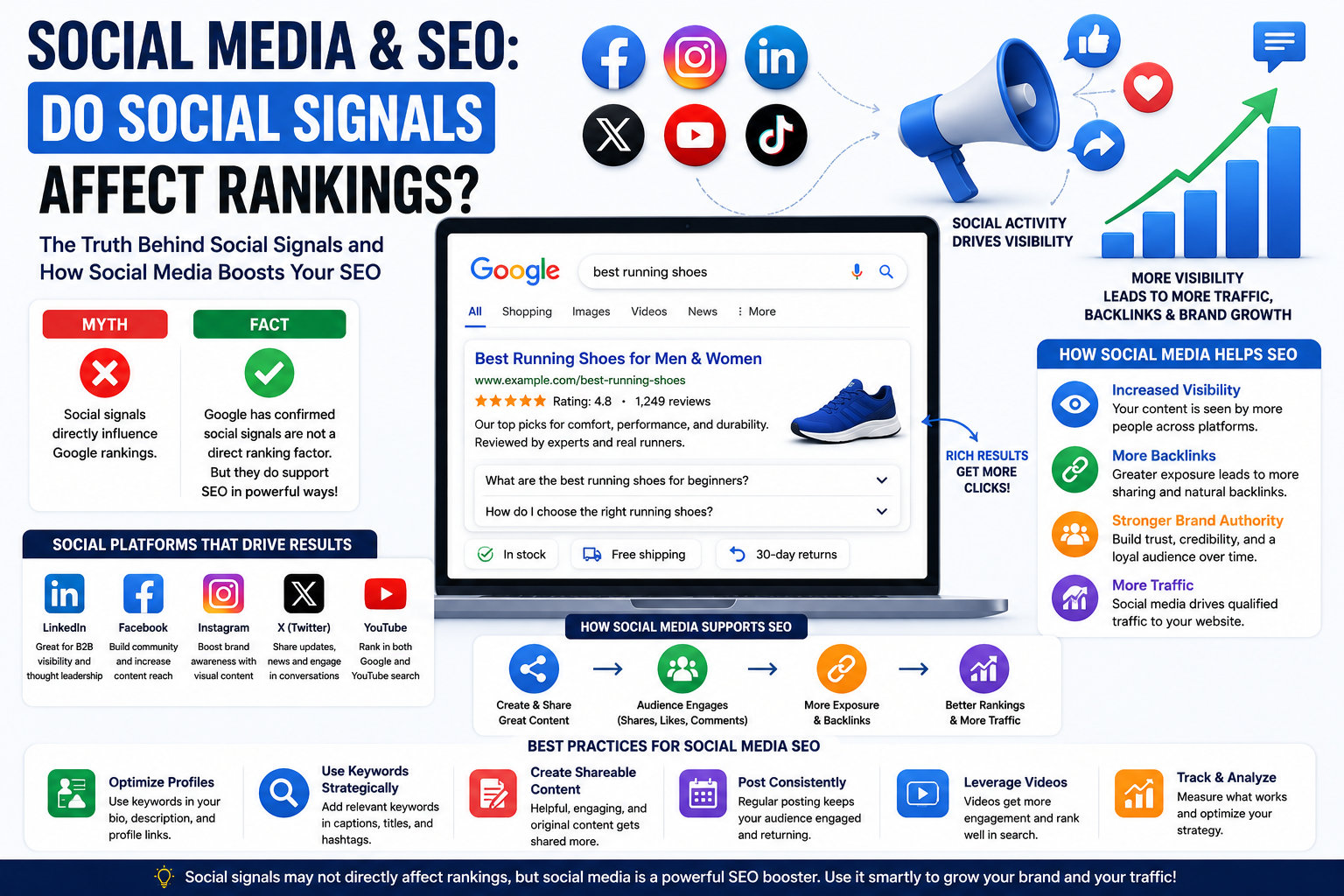

The connection between social media and search engine optimization has sparked debate for years. Many marketers wonder whether likes, shares, comments, and followers directly influence search rankings. The topic of social media SEO continues to generate curiosity because both social platforms and search engines play major roles in online visibility.
While social media activity can drive traffic, increase brand awareness, and amplify content, the question remains: do social signals directly impact rankings on search engines like Google?
The answer is more nuanced than a simple yes or no. Understanding how social media supports SEO can help businesses create more effective digital marketing strategies and maximize their online presence.
Understanding Social Media SEO
Social media SEO refers to the ways social platforms contribute to search visibility, brand awareness, traffic generation, and overall digital authority.
Rather than treating social media and SEO as separate channels, successful marketers often integrate both into a unified strategy.
Benefits include:
- Increased content exposure
- Improved audience reach
- Enhanced brand recognition
- Potential backlink opportunities
- Higher website traffic
Together, these factors can indirectly support search performance.
What Are Social Signals?
Social signals are engagement metrics generated through social media activity.
Likes, Shares, and Comments
Common social signals include:
- Likes
- Shares
- Comments
- Reposts
- Reactions
- Saves
These interactions indicate audience engagement with content.
Social Engagement Metrics
Additional metrics include:
| Metric | Description |
|---|---|
| Followers | Audience size |
| Reach | Number of users exposed |
| Impressions | Content views |
| Engagement Rate | Interaction percentage |
| Clicks | Traffic generated |
These measurements help evaluate content performance on social platforms.
Google’s Official Position on Social Signals
One reason the debate continues is that search engines have addressed the issue directly.
Are Social Signals a Direct Ranking Factor?
Google has repeatedly indicated that social signals such as likes and shares are not direct ranking factors.
Search rankings are primarily influenced by:
- Content quality
- Relevance
- Backlinks
- User experience
- Technical SEO
- Authority signals
A post receiving thousands of likes does not automatically rank higher in search results.
What Search Engines Actually Measure
Search engines focus on signals they can consistently evaluate.
Examples include:
- Crawlable content
- Link structures
- Content relevance
- Website performance
- User satisfaction
Social platforms often restrict access to data, making social signals less reliable as direct ranking inputs.
How Social Media Indirectly Supports SEO
Although social signals may not directly influence rankings, social media can strongly support SEO outcomes.
Increased Content Visibility
Social media helps distribute content to larger audiences.
Benefits include:
- More views
- Increased awareness
- Greater engagement
- Faster content discovery
The more people see content, the greater the chance it will attract valuable attention.
More Backlink Opportunities
One of the most important SEO benefits of social media is increased backlink potential.
When content reaches:
- Journalists
- Bloggers
- Industry experts
- Publishers
It has a better chance of earning natural backlinks.
Since backlinks remain a significant ranking factor, social promotion can indirectly influence search visibility.
Enhanced Brand Awareness
Strong brands often perform better in search.
Social media contributes by:
- Building recognition
- Increasing trust
- Expanding audience familiarity
Users are more likely to click search results from brands they already recognize.
The Relationship Between Social Media and Organic Traffic
Social platforms frequently serve as traffic-generation channels.
Content Amplification
Every social share expands content distribution.
Benefits include:
- Immediate exposure
- Broader reach
- Increased engagement opportunities
High-quality content often gains momentum through social amplification.
Audience Expansion
Social platforms help businesses reach:
- New customers
- Industry influencers
- Potential partners
- Future subscribers
Expanded audiences create more opportunities for organic growth.
Social Media SEO Benefits for Businesses
Businesses of all sizes can benefit from integrating social media into SEO efforts.
Building Brand Authority
Consistent social activity helps establish expertise.
Effective approaches include:
- Sharing industry insights
- Publishing educational content
- Engaging with audiences
- Demonstrating thought leadership
Authority strengthens overall digital presence.
Improving User Engagement
Social media encourages:
- Discussions
- Feedback
- Community building
- Customer interaction
Engaged audiences often become repeat visitors and customers.
Social Platforms That Influence Visibility
Different platforms offer unique opportunities.
LinkedIn excels for:
- B2B marketing
- Professional content
- Industry networking
- Thought leadership
Facebook supports:
- Community engagement
- Local business visibility
- Content sharing
Instagram helps build:
- Brand awareness
- Visual engagement
- Audience loyalty
X remains useful for:
- Real-time discussions
- News distribution
- Industry conversations
YouTube deserves special attention because its content often appears directly in search results.
Video optimization can contribute significantly to visibility.
Social Content Optimization Strategies
Maximizing social media SEO benefits requires strategic optimization.
Optimizing Profiles
Complete profiles should include:
- Business descriptions
- Contact information
- Website links
- Relevant keywords
Optimized profiles improve discoverability.
Using Keywords Strategically
Keywords can be incorporated into:
- Bios
- Captions
- Hashtags
- Video descriptions
Natural usage improves relevance without appearing spammy.
Creating Shareable Content
Content is more likely to earn engagement when it is:
- Helpful
- Entertaining
- Educational
- Visually appealing
Shareability expands reach organically.
Social Media and Link Building
Social media can play a supporting role in link acquisition.
Earning Natural Backlinks
Content that performs well socially often gains visibility among publishers and website owners.
Examples include:
- Original research
- Industry reports
- Infographics
- Case studies
These assets frequently attract backlinks.
Digital PR Opportunities
Social platforms help distribute:
- Press releases
- Announcements
- Research findings
Digital PR campaigns often combine social media and SEO for maximum impact.
Measuring Social Media SEO Impact
While rankings may not change directly because of social engagement, measurable benefits often exist.
Traffic Metrics
Monitor:
- Referral traffic
- Session duration
- Pages per visit
- Conversions
These metrics help evaluate social performance.
Engagement Indicators
Track:
- Shares
- Comments
- Mentions
- Click-through rates
Growing engagement often signals stronger audience interest.
Common Myths About Social Media SEO
Several misconceptions continue to circulate.
Myth: Viral Posts Guarantee Rankings
Viral content may increase visibility, but virality alone does not guarantee higher rankings.
Search engines still prioritize relevance, authority, and quality.
Myth: Followers Directly Improve SEO
A large follower count can support marketing efforts but does not directly improve search rankings.
Value comes from audience engagement and content distribution.
Future Trends in Social Media SEO
The relationship between social media and search continues evolving.
Emerging trends include:
- AI-powered content discovery
- Social search growth
- Creator-driven influence
- Video-first experiences
- Brand entity recognition
Search engines increasingly evaluate brand signals across the web, making integrated marketing strategies more important.
For official search guidance, review Google’s recommendations through .
Frequently Asked Questions
1. Do social signals directly affect Google rankings?
Google has stated that likes, shares, and followers are not direct ranking factors.
2. Can social media improve SEO?
Yes. Social media can increase visibility, traffic, brand awareness, and backlink opportunities that indirectly support SEO.
3. Does having more followers improve rankings?
No. Follower count alone does not directly influence search rankings.
4. Which social platform is best for SEO?
The best platform depends on your audience, though YouTube, LinkedIn, Facebook, Instagram, and X all offer valuable visibility opportunities.
5. Can social media generate backlinks?
Yes. Social promotion can expose content to publishers, bloggers, and journalists who may link to it.
6. Does social traffic help SEO?
Social traffic itself is not a ranking factor, but increased visibility and engagement can create indirect SEO benefits.
7. Should SEO and social media strategies be integrated?
Absolutely. Combining SEO and social media often produces stronger marketing results than treating them separately.
8. Will social media become more important for search in the future?
As search engines increasingly recognize brands and entities across the web, social media will likely continue supporting broader visibility and authority.
Conclusion
The debate around social media SEO often focuses on whether social signals directly affect rankings. While search engines do not appear to use likes, shares, comments, or followers as direct ranking factors, social media remains a powerful SEO ally.
By amplifying content, increasing brand awareness, attracting backlinks, and expanding audience reach, social platforms create opportunities that can indirectly improve search performance. Businesses that integrate social media with SEO are better positioned to build authority, generate traffic, and strengthen their digital presence.
Rather than asking whether social signals directly influence rankings, the more useful question is how social media can support broader SEO goals—and the answer is: significantly.