
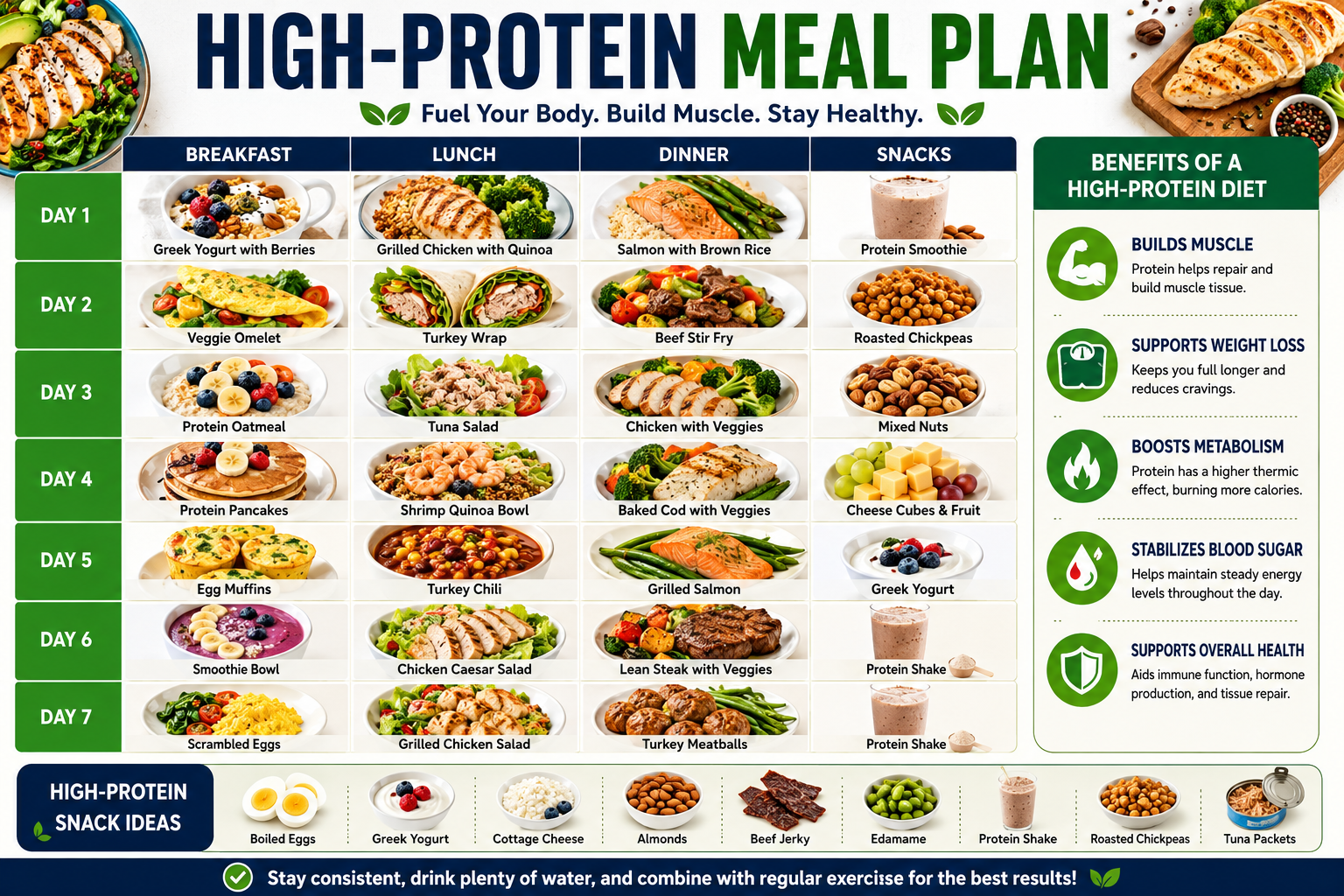

High-Protein Meal Plan
A High-Protein Meal Plan is one of the most effective ways to improve overall health, support muscle growth, manage weight, and maintain steady energy levels throughout the day. Whether you’re an athlete, trying to lose weight, or simply aiming to eat healthier, increasing your protein intake can make a significant difference.
Protein is an essential macronutrient responsible for repairing tissues, building muscles, producing enzymes, supporting immune function, and keeping you feeling full longer. Unlike diets that rely heavily on carbohydrates or fats, a well-balanced high-protein meal plan promotes satiety while helping preserve lean muscle mass.
In this comprehensive guide, you’ll learn everything you need to know about creating a healthy, sustainable, and delicious high-protein meal plan.
What Is a High-Protein Meal Plan?
A high-protein meal plan emphasizes foods rich in protein while maintaining a healthy balance of carbohydrates, healthy fats, vitamins, and minerals.
Typically, protein accounts for 25–35% of daily calories, compared with the standard recommendation of around 10–20%.
A quality meal plan includes:
- Lean meats
- Fish
- Eggs
- Dairy products
- Beans
- Lentils
- Tofu
- Greek yogurt
- Nuts and seeds
- Whole grains
The goal is not to eliminate carbohydrates but to replace low-quality processed foods with nutrient-dense protein sources.
Benefits of a High-Protein Meal Plan
1. Supports Muscle Growth
Protein provides amino acids needed for muscle repair and growth after exercise.
People involved in:
- Strength training
- CrossFit
- Running
- Sports
often require additional protein to maximize recovery.
2. Promotes Weight Loss
Protein increases fullness by influencing hormones that regulate appetite.
Benefits include:
- Reduced hunger
- Fewer cravings
- Lower calorie intake
- Better fat loss
- Preservation of lean muscle
3. Improves Metabolism
Digesting protein requires more energy than digesting carbohydrates or fats.
This phenomenon is called the Thermic Effect of Food (TEF).
Protein burns approximately:
- 20–30% of calories consumed during digestion
- Carbohydrates: 5–10%
- Fat: 0–3%
4. Supports Healthy Aging
Older adults naturally lose muscle mass.
Adequate protein helps:
- Preserve strength
- Improve mobility
- Reduce fall risk
- Maintain independence
5. Stabilizes Blood Sugar
Balanced meals containing protein slow carbohydrate absorption.
This helps:
- Reduce blood sugar spikes
- Improve insulin sensitivity
- Increase sustained energy
How Much Protein Do You Need?
Daily protein needs vary depending on age, activity level, and health goals.
| Goal | Protein Recommendation |
|---|---|
| Sedentary adults | 0.8 g/kg body weight |
| Weight loss | 1.2–1.6 g/kg |
| Muscle gain | 1.6–2.2 g/kg |
| Athletes | 1.4–2.0 g/kg |
| Older adults | 1.2–1.6 g/kg |
Example:
A 70 kg (154 lb) person aiming for muscle growth should consume approximately:
70 × 1.8 = 126 grams of protein daily
Best High-Protein Foods
Animal Protein
| Food | Protein |
|---|---|
| Chicken breast | 31 g |
| Turkey | 29 g |
| Tuna | 30 g |
| Salmon | 25 g |
| Eggs | 6 g |
| Greek yogurt | 20 g |
| Cottage cheese | 28 g |
Plant Protein
| Food | Protein |
|---|---|
| Lentils | 18 g |
| Chickpeas | 15 g |
| Black beans | 15 g |
| Edamame | 18 g |
| Tofu | 20 g |
| Tempeh | 31 g |
| Quinoa | 8 g |
How to Build a Balanced High-Protein Meal Plan
Every meal should contain:
Protein
- Chicken
- Fish
- Eggs
- Greek yogurt
- Lentils
- Tofu
Healthy Carbohydrates
- Brown rice
- Sweet potatoes
- Oats
- Quinoa
- Whole grains
Healthy Fats
- Avocados
- Olive oil
- Almonds
- Walnuts
- Chia seeds
Vegetables
Fill half your plate with colorful vegetables to maximize vitamins and fiber.
7-Day High-Protein Meal Plan
Day 1
Breakfast
Greek yogurt with berries and almonds
Snack
Boiled eggs
Lunch
Grilled chicken with quinoa and broccoli
Snack
Protein smoothie
Dinner
Salmon with asparagus and brown rice
Approximate protein: 145 g
Day 2
Breakfast: Vegetable omelet
Snack: Cottage cheese
Lunch: Turkey wrap
Snack: Roasted chickpeas
Dinner: Beef stir fry
Protein: 140 g
Day 3
Breakfast: Protein oatmeal
Snack: Greek yogurt
Lunch: Tuna salad
Snack: Mixed nuts
Dinner: Chicken breast with vegetables
Protein: 150 g
Day 4
Breakfast: Protein pancakes
Lunch: Shrimp quinoa bowl
Dinner: Baked cod
Snacks: Cheese cubes and fruit
Protein: 145 g
Day 5
Breakfast: Egg muffins
Lunch: Turkey chili
Dinner: Grilled salmon
Snacks: Greek yogurt
Protein: 148 g
Day 6
Breakfast: Smoothie bowl
Lunch: Chicken Caesar salad
Dinner: Lean steak with vegetables
Protein: 150 g
Day 7
Breakfast: Scrambled eggs
Lunch: Grilled chicken salad
Dinner: Turkey meatballs
Snacks: Protein shake
Protein: 147 g
Vegetarian High-Protein Meal Plan
Vegetarians have plenty of protein-rich options:
- Cottage cheese
- Eggs
- Greek yogurt
- Paneer
- Lentils
- Chickpeas
- Kidney beans
- Tofu
- Tempeh
- Edamame
- Quinoa
Combining legumes with whole grains helps provide a complete amino acid profile.
Vegan Protein Sources
Plant-based eaters can meet protein needs by including:
- Tofu
- Tempeh
- Soy milk
- Seitan
- Lentils
- Chickpeas
- Peas
- Hemp seeds
- Pumpkin seeds
- Chia seeds
- Nutritional yeast
Aim for a variety of sources throughout the day.
High-Protein Snack Ideas
Healthy snacks include:
- Greek yogurt
- Cottage cheese
- Hard-boiled eggs
- Beef jerky (low sodium)
- Protein shakes
- Edamame
- Roasted chickpeas
- Cheese sticks
- Mixed nuts
- Tuna packets
Meal Prep Tips
Successful meal planning starts with preparation.
Tips:
- Cook proteins in bulk.
- Portion meals into containers.
- Wash and chop vegetables ahead of time.
- Freeze extra servings.
- Keep healthy snacks readily available.
- Rotate recipes to prevent boredom.
Meal prep saves time and reduces the temptation to choose less nutritious foods.
Common Mistakes to Avoid
Avoid these pitfalls:
- Ignoring vegetables
- Eating too much processed meat
- Skipping healthy fats
- Not drinking enough water
- Relying only on protein powders
- Consuming excessive calories despite high protein intake
Whole foods should remain the foundation of your diet.
Who Should Follow a High-Protein Meal Plan?
A high-protein meal plan can benefit:
- Athletes
- Bodybuilders
- Busy professionals
- Older adults
- People trying to lose weight
- Individuals recovering from illness or surgery (under medical guidance)
People with kidney disease or certain medical conditions should consult a healthcare professional before significantly increasing protein intake.
Frequently Asked Questions (FAQs)
1. Is a high-protein meal plan safe?
Yes, for most healthy adults, a balanced high-protein diet is safe when paired with adequate hydration and nutrient-rich foods.
2. Can I lose weight with a high-protein meal plan?
Yes. Protein helps control hunger, supports fat loss, and preserves muscle mass during weight loss.
3. Do I need protein supplements?
Not necessarily. Most people can meet their protein needs through whole foods. Supplements are useful when convenience or higher protein requirements make them helpful.
4. Can vegetarians get enough protein?
Absolutely. Dairy, eggs, legumes, tofu, tempeh, and whole grains can provide ample protein.
5. Is eating too much protein harmful?
For healthy individuals, moderate increases in protein are generally well tolerated. Those with kidney disease or other medical conditions should seek medical advice.
6. What is the best time to eat protein?
Distributing protein evenly across meals—especially including some after exercise—supports muscle repair and satiety.
Conclusion
A High-Protein Meal Plan is a practical and sustainable way to improve nutrition, support muscle maintenance and growth, aid weight management, and promote long-term health. The key is balance: combine lean proteins with whole grains, healthy fats, fruits, and vegetables while tailoring your intake to your activity level and goals.
Consistency matters more than perfection. By planning meals, choosing whole-food protein sources, and preparing ahead, you can build eating habits that are both enjoyable and effective for years to come.