
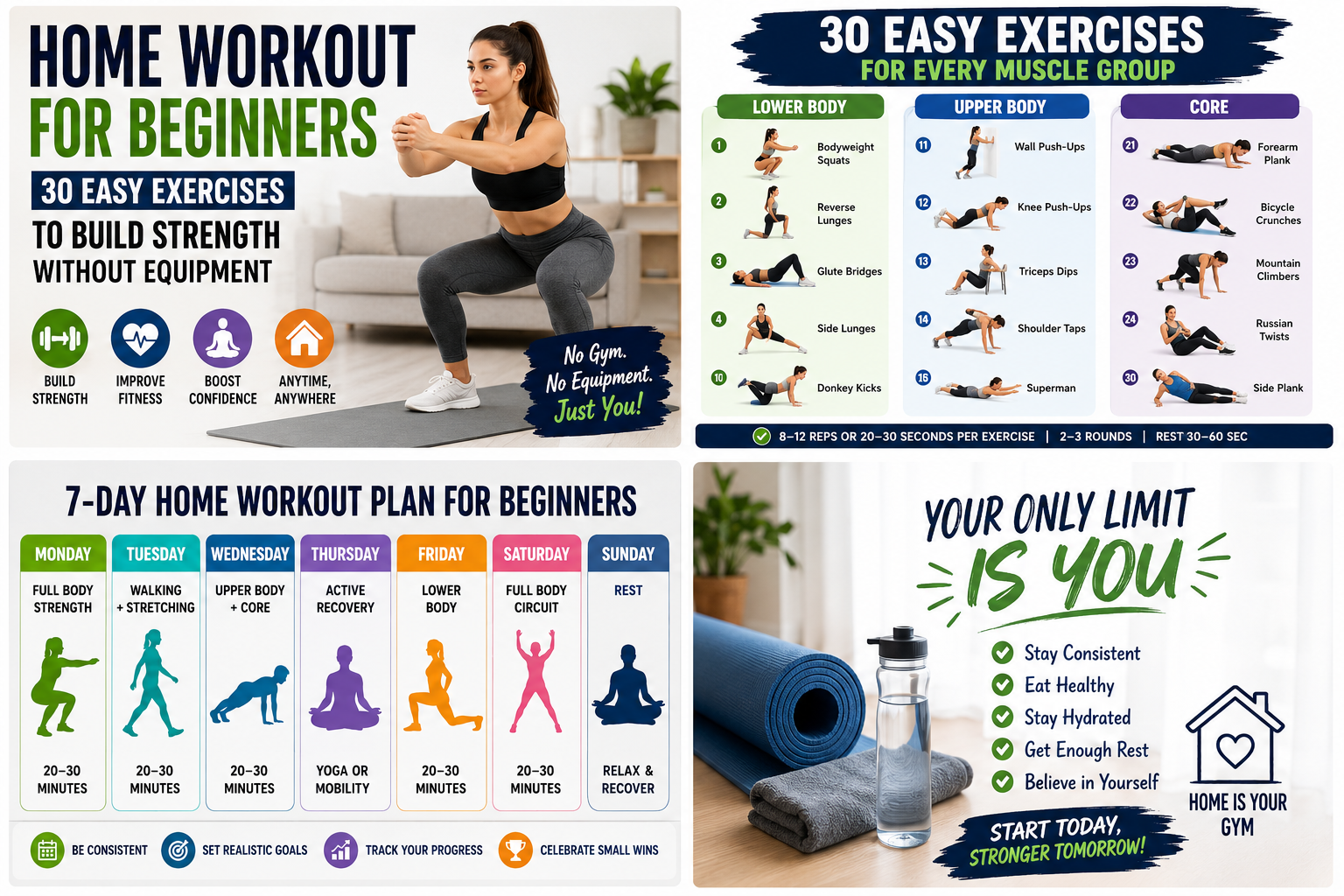

Starting a home workout for beginners routine is one of the easiest and most affordable ways to improve your health. You don’t need a gym membership, fancy machines, or years of experience to begin your fitness journey. With just your body weight and a little motivation, you can build strength, increase flexibility, improve balance, and enhance your overall well-being.
Whether your goal is weight loss, muscle toning, or simply becoming more active, this guide covers everything you need to know. You’ll learn the benefits of home workouts, proper warm-up techniques, 30 beginner-friendly exercises, a sample weekly workout schedule, and answers to common questions.
Why Choose a Home Workout for Beginners?
Working out at home offers unmatched convenience. You can exercise whenever it fits your schedule, save money, and avoid the intimidation some people feel in a gym.
Key Benefits
- No equipment required
- Suitable for all fitness levels
- Saves time and money
- Improves strength and endurance
- Supports weight management
- Enhances mental health
- Builds healthy habits
Benefits of Bodyweight Training
Bodyweight exercises use your own weight as resistance, making them effective and accessible.
They help improve:
- Muscle strength
- Core stability
- Joint mobility
- Balance
- Coordination
- Cardiovascular fitness
Because movements mimic everyday activities, they also improve functional fitness.
Essential Safety Tips
Before beginning any workout:
- Warm up for 5–10 minutes.
- Wear comfortable clothing and supportive shoes if needed.
- Focus on proper form instead of speed.
- Stay hydrated.
- Rest if you feel pain or dizziness.
- Progress gradually.
Warm-Up Routine (5–10 Minutes)
Prepare your body with these simple movements:
- March in place – 1 minute
- Arm circles – 30 seconds each direction
- Hip circles – 30 seconds
- Leg swings – 10 each leg
- Shoulder rolls – 20 repetitions
- Bodyweight squats – 10 repetitions
- High knees (slow pace) – 1 minute
30 Easy Exercises for Beginners
Lower Body
- Bodyweight Squats
- Chair Squats
- Reverse Lunges
- Step-Ups
- Glute Bridges
- Wall Sit
- Standing Calf Raises
- Side Lunges
- Donkey Kicks
- Fire Hydrants
Upper Body
- Wall Push-Ups
- Incline Push-Ups
- Knee Push-Ups
- Triceps Dips (using a sturdy chair)
- Arm Circles
- Shoulder Taps
- Pike Hold
- Plank Shoulder Touches
- Superman
- Reverse Snow Angels
Core
- Forearm Plank
- Bird Dog
- Dead Bug
- Heel Taps
- Bicycle Crunches
- Mountain Climbers (slow)
- Russian Twists (bodyweight)
- Side Plank (knees bent)
- Hollow Hold
- Standing Knee-to-Elbow Crunches
Tip: Start with 8–12 repetitions for each exercise (or 20–30 seconds for timed movements). Complete 2–3 rounds, resting 30–60 seconds between exercises.
Sample 7-Day Beginner Workout Plan
| Day | Workout |
|---|---|
| Monday | Full Body Strength |
| Tuesday | Walking + Stretching |
| Wednesday | Upper Body + Core |
| Thursday | Active Recovery (Yoga or Mobility) |
| Friday | Lower Body |
| Saturday | Full Body Circuit |
| Sunday | Rest |
Aim for 20–30 minutes per session and increase duration as your fitness improves.
Cool-Down Routine
Finish every workout with gentle stretches:
- Hamstring stretch
- Quadriceps stretch
- Chest stretch
- Shoulder stretch
- Child’s Pose
- Cat-Cow stretch
Hold each stretch for 20–30 seconds without bouncing.
Nutrition Tips
Support your workouts by:
- Eating lean protein such as chicken, fish, beans, or tofu.
- Choosing whole grains instead of refined carbohydrates.
- Including fruits and vegetables daily.
- Drinking plenty of water.
- Getting enough sleep for recovery.
Common Mistakes to Avoid
Avoid these beginner pitfalls:
- Skipping the warm-up
- Using poor exercise form
- Doing too much too soon
- Neglecting rest days
- Comparing yourself to others
- Ignoring recovery and hydration
Consistency is more important than intensity when you’re starting out.
How to Stay Motivated
- Set realistic goals.
- Track your progress.
- Follow a regular schedule.
- Celebrate small milestones.
- Find a workout buddy or online community.
- Mix up your routine to keep it interesting.
Frequently Asked Questions
1. Can beginners build muscle without equipment?
Yes. Bodyweight exercises provide enough resistance for beginners to develop strength and muscle when performed consistently.
2. How often should beginners work out?
Aim for 3–5 sessions per week with at least one or two rest days.
3. How long should a beginner workout last?
Twenty to thirty minutes is an excellent starting point.
4. Do I need to warm up before exercising?
Yes. Warming up helps prepare your muscles and joints while reducing injury risk.
5. Can I lose weight with home workouts?
Yes. Combined with a balanced diet, regular home workouts can help create the calorie deficit needed for weight loss.
6. When will I see results?
Most people notice improvements in energy, strength, and endurance within 4–8 weeks of consistent training.
Conclusion
A home workout for beginners is an effective, affordable, and convenient way to improve your fitness without equipment. By mastering basic bodyweight movements, following a structured weekly plan, and staying consistent, you can build strength, increase confidence, and establish healthy habits that last a lifetime.
Remember that progress comes from steady effort rather than perfection. Start with exercises that match your current ability, focus on proper form, and gradually increase the challenge as you become stronger. With dedication and patience, your home can become the perfect place to begin your fitness journey.