
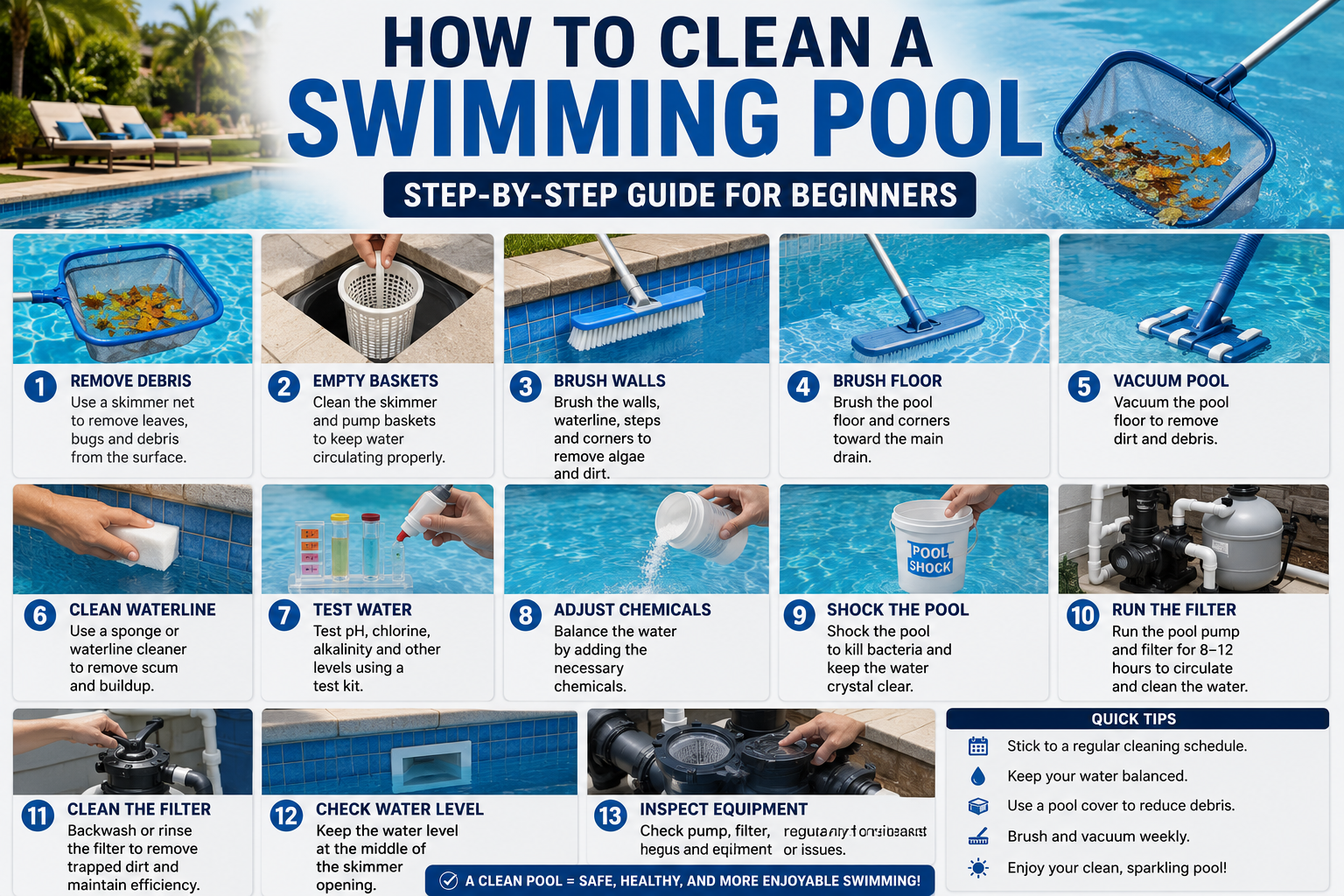

Owning a swimming pool is one of the best ways to enjoy your outdoor space, stay active, and create lasting memories with family and friends. However, keeping your pool crystal clear and safe requires regular cleaning and maintenance. For beginners, pool care may seem complicated, but once you understand the basics, it becomes a simple routine that only takes a little time each week.
A clean pool is not just about appearance. Proper maintenance prevents algae growth, eliminates harmful bacteria, protects expensive equipment, and extends the lifespan of your pool. Neglecting regular cleaning can result in cloudy water, clogged filters, damaged pumps, unpleasant odors, and costly repairs.
This comprehensive beginner’s guide explains exactly how to clean a swimming pool step by step. Whether you own an above-ground pool, an in-ground pool, or a small plunge pool, these proven methods will help you maintain sparkling, healthy water throughout the swimming season. schwimmbadfolie online bestellen
Why Regular Pool Cleaning Is Important
Cleaning your swimming pool regularly offers many benefits.
These include:
- Crystal-clear water
- Safe swimming conditions
- Prevention of algae growth
- Balanced water chemistry
- Longer equipment lifespan
- Lower maintenance costs
- Improved energy efficiency
- Better filtration performance
- Extended pool liner life
- Increased property value
Routine maintenance is far easier and less expensive than restoring a neglected pool.
Pool Cleaning Equipment You’ll Need
Before you begin, gather the essential tools.
Pool Skimmer Net
Used to remove leaves, insects, and floating debris.
Telescopic Pole
Connects to various cleaning attachments.
Pool Brush
Removes algae and dirt from walls, steps, and corners.
Pool Vacuum
Eliminates debris that settles on the bottom.
Water Testing Kit
Measures:
- pH
- Chlorine
- Alkalinity
- Calcium hardness
- Cyanuric acid
Pool Filter
Removes fine particles from the water.
Pool Pump
Keeps water circulating through the filtration system.
Pool Chemicals
Including:
- Chlorine
- pH increaser
- pH reducer
- Alkalinity increaser
- Calcium hardness increaser
- Pool shock
- Algaecide
Step 1: Remove Large Debris
Start by removing all floating debris.
Use your skimmer net to collect:
- Leaves
- Bugs
- Grass
- Twigs
- Flowers
- Pollen
Removing debris first prevents it from sinking to the bottom where it becomes more difficult to clean.
Daily skimming keeps the pool looking inviting.
Step 2: Empty Skimmer and Pump Baskets
The skimmer basket catches floating debris before it reaches the pump.
Remove and empty:
- Skimmer baskets
- Pump basket
Rinse them thoroughly with a garden hose.
Clean baskets improve water circulation and reduce strain on your filtration system.
Step 3: Brush Pool Walls
Even clean-looking pools develop algae and dirt along the walls.
Brush:
- Pool walls
- Waterline
- Steps
- Ladders
- Corners
- Around return jets
Different pool surfaces require different brushes.
Use:
- Nylon brushes for vinyl and fiberglass
- Stainless steel brushes for concrete pools
Brushing loosens dirt so it can be vacuumed or filtered away.
Step 4: Brush the Pool Floor
The pool floor collects:
- Dirt
- Sand
- Dust
- Fine debris
Brush everything toward the main drain whenever possible.
This makes vacuuming easier.
Step 5: Vacuum the Pool
Vacuuming removes dirt that brushing alone cannot eliminate.
There are several vacuum options.
Manual Vacuum
Affordable and effective.
Ideal for beginners.
Automatic Suction Cleaner
Uses the pool’s pump to move around automatically.
Pressure Cleaner
Operates using water pressure.
Robotic Cleaner
The easiest option.
Benefits include:
- Cleans floor
- Cleans walls
- Cleans waterline
- Energy efficient
- Minimal effort
Vacuum your pool at least once each week.
Step 6: Clean the Waterline
Body oils, sunscreen, and dirt often collect around the waterline.
Use:
- Pool sponge
- Soft brush
- Waterline cleaner
Never use household cleaners unless they are specifically designed for pools.
Step 7: Test the Water
Water chemistry determines whether your pool remains safe.
Test the following:
pH
Ideal range:
7.2–7.6
Free Chlorine
Ideal range:
1–3 ppm
Total Alkalinity
80–120 ppm
Calcium Hardness
200–400 ppm
Cyanuric Acid
30–50 ppm
Test the water at least twice each week during heavy use.
Step 8: Adjust Water Chemistry
Once you’ve tested the water, make adjustments as needed.
Low Chlorine
Add chlorine.
High Chlorine
Allow levels to decrease naturally or dilute with fresh water if necessary.
Low pH
Add pH increaser.
High pH
Use pH reducer.
Low Alkalinity
Add alkalinity increaser.
Low Calcium Hardness
Use calcium hardness increaser.
Balanced chemistry protects swimmers and equipment.
Step 9: Shock the Pool
Pool shock destroys contaminants that regular chlorine cannot remove.
Shock your pool:
- Weekly during summer
- After heavy rain
- After pool parties
- Following algae outbreaks
Always follow manufacturer instructions.
Run the pump while shocking.
Avoid swimming until chlorine returns to safe levels.
Step 10: Run the Filtration System
Your filter cannot clean water if the pump isn’t running.
Most residential pools require:
8–12 hours of circulation daily.
Longer filtration may be needed during:
- Hot weather
- Heavy use
- Storms
Good circulation distributes chemicals evenly.
Step 11: Clean the Pool Filter
A dirty filter reduces water quality.
Cleaning depends on filter type.
Sand Filters
Backwash when pressure rises 8–10 psi above normal.
Cartridge Filters
Remove and rinse thoroughly.
Replace when worn.
DE Filters
Backwash and recharge with fresh diatomaceous earth.
Clean filters improve water clarity.
Step 12: Check Water Level
Water should remain approximately halfway up the skimmer opening.
Low water reduces pump efficiency.
High water affects skimming performance.
Add or remove water as necessary.
Step 13: Inspect Equipment
Regular inspections prevent expensive repairs.
Check:
- Pump
- Filter
- Heater
- Plumbing
- Valves
- Pool lights
- Timers
- Automation systems
Listen for unusual noises.
Repair leaks immediately.
Weekly Pool Maintenance Checklist
Every week:
- Skim debris
- Brush walls
- Vacuum pool
- Empty baskets
- Test water
- Adjust chemicals
- Shock pool if needed
- Inspect equipment
- Clean waterline
Consistency keeps maintenance easy.
Monthly Maintenance
Each month:
- Deep clean the filter
- Inspect pool liner
- Check ladders
- Lubricate O-rings
- Examine plumbing
- Clean behind ladders
- Inspect drains
- Review automation settings
Monthly inspections prevent long-term problems.
Seasonal Maintenance
At the beginning of the swimming season:
- Remove cover
- Deep clean
- Balance water
- Service equipment
- Replace worn parts
At season’s end:
- Clean thoroughly
- Balance chemicals
- Lower water if required
- Winterize equipment
- Install winter cover
Proper seasonal care protects your investment.
Common Pool Problems
Green Water
Usually caused by algae.
Solution:
- Shock pool
- Brush walls
- Run filter continuously
- Add algaecide
Cloudy Water
Possible causes:
- Dirty filter
- Poor circulation
- Unbalanced chemicals
Correct chemistry and clean the filter.
Strong Chlorine Smell
Contrary to popular belief, this often indicates insufficient free chlorine.
Shock the pool to eliminate chloramines.
Algae Growth
Prevent algae by:
- Maintaining chlorine
- Brushing weekly
- Running the pump daily
- Using algaecide when necessary
Scale Formation
Hard water causes calcium deposits.
Maintain proper pH and calcium hardness.
Safety Tips While Cleaning
Always:
- Wear gloves when handling chemicals.
- Store chemicals in a cool, dry place.
- Keep chemicals away from children and pets.
- Never mix different pool chemicals.
- Add chemicals to water—not water to chemicals.
- Read all manufacturer instructions carefully.
Safety should always come first.
Eco-Friendly Pool Cleaning Tips
Reduce environmental impact by:
- Using a pool cover
- Running a variable-speed pump
- Cleaning filters regularly
- Fixing leaks promptly
- Using LED lighting
- Installing solar heating
- Conserving water during backwashing
These practices lower both costs and environmental impact.
Mistakes Beginners Should Avoid
Many new pool owners make avoidable errors.
Common mistakes include:
- Ignoring water testing
- Adding too many chemicals at once
- Running the pump too little
- Forgetting to brush walls
- Skipping filter cleaning
- Waiting too long to remove debris
- Using household cleaning products
- Ignoring small leaks
Avoiding these mistakes makes maintenance much easier.
Creating a Simple Cleaning Routine
A consistent schedule prevents problems before they start.
Daily
- Remove floating debris.
- Check water level.
Weekly
- Brush surfaces.
- Vacuum the pool.
- Test and balance water.
- Empty baskets.
Monthly
- Clean the filter.
- Inspect equipment.
- Deep clean accessories.
Following this routine keeps your pool sparkling with minimal effort.
Conclusion
Cleaning a swimming pool poolfolie kaufen may seem overwhelming at first, but with the right tools, a regular schedule, and a basic understanding of water chemistry, anyone can maintain a clean and inviting swimming environment. By removing debris, brushing surfaces, vacuuming regularly, balancing water chemistry, and keeping the filtration system in top condition, you’ll protect your investment while ensuring a safe and enjoyable swimming experience.
Consistency is the secret to successful pool maintenance. A few minutes of routine care each week can prevent algae blooms, cloudy water, equipment failures, and expensive repairs. As you become more familiar with your pool, cleaning will become a quick and rewarding part of your routine.
Whether you own a small above-ground pool or a luxurious in-ground oasis, following this step-by-step guide will help you enjoy crystal-clear water all season long. With proper maintenance, your swimming pool will remain a beautiful centerpiece for relaxation, recreation, and unforgettable moments with family and friends for many years to come.