
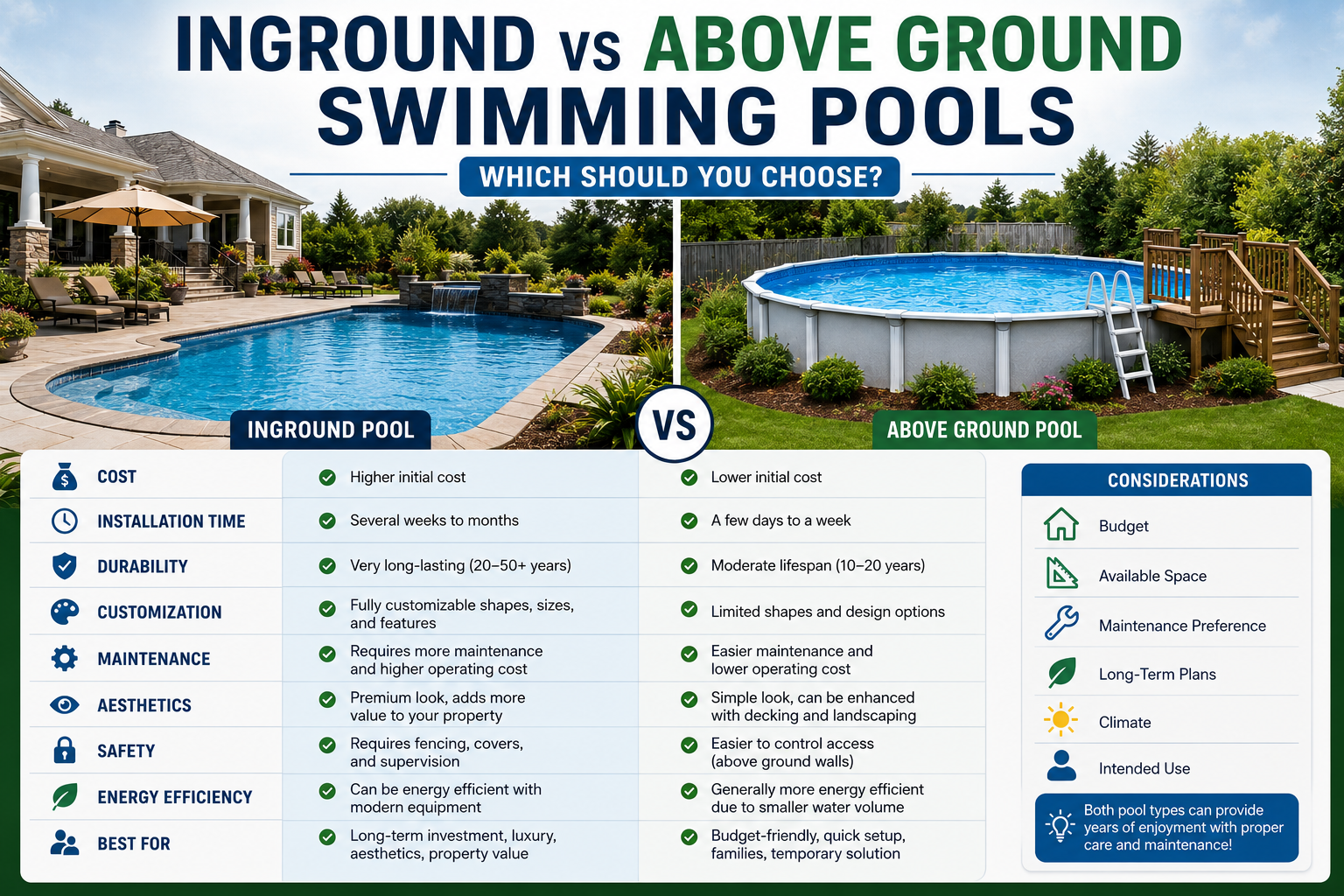

Installing a swimming pool is one of the most exciting home improvement projects you can undertake. A pool provides a place to relax, exercise, entertain guests, and spend quality time with family. Beyond the lifestyle benefits, a well-designed pool can enhance your outdoor living space and increase your property’s value.
One of the first—and most important—decisions you’ll face is whether to install an inground swimming pool or an above ground swimming pool. Both options offer unique advantages and disadvantages, and the right choice depends on your budget, available space, intended use, maintenance preferences, local climate, and long-term goals.
While inground pools are often associated with luxury, customization, and durability, above ground pools are known for affordability, quicker installation, and lower maintenance costs. Advances in pool technology and materials have also made modern above ground pools more attractive and durable than ever before.
This comprehensive guide compares inground and above ground swimming pools in detail, helping you understand the differences in cost, installation, maintenance, durability, safety, aesthetics, energy efficiency, poolfolie resale value, and overall ownership experience.
Understanding the Difference
What Is an Inground Pool?
An inground pool is permanently installed below ground level. It is typically constructed from reinforced concrete, fiberglass, or vinyl-lined steel or polymer walls.
Because they are built into the landscape, inground pools offer virtually unlimited design flexibility.
Common styles include:
- Rectangular pools
- Freeform pools
- Infinity pools
- Lap pools
- Plunge pools
- Geometric pools
- Resort-style pools
- Hybrid pool and spa combinations
What Is an Above Ground Pool?
An above ground pool is a freestanding structure installed on top of a prepared surface. Most models feature steel, aluminum, resin, or hybrid frames with a durable vinyl liner.
Above ground pools are available in:
- Round designs
- Oval designs
- Rectangular models
- Compact family pools
- Large recreational pools
Modern models can be integrated into decks and landscaping for a premium appearance.
Initial Installation Cost
Inground Pools
One of the biggest differences between pool types is cost.
An inground pool generally requires:
- Excavation
- Engineering
- Concrete work
- Plumbing
- Electrical installation
- Deck construction
- Landscaping
- Permits
Additional luxury features may include:
- Heating systems
- Waterfalls
- Lighting
- Automation
- Built-in spas
Although the upfront investment is substantial, many homeowners consider it worthwhile for the long-term value and customization.
Above Ground Pools
Above ground pools are significantly more affordable.
Typical costs include:
- Pool kit
- Ground preparation
- Filtration equipment
- Ladder
- Safety barrier
- Optional deck
Because excavation is not required, installation expenses remain considerably lower.
For families seeking an economical swimming solution, above ground pools provide excellent value.
Installation Time
Inground Pools
Construction usually involves several stages:
- Design
- Permits
- Excavation
- Plumbing
- Structural work
- Deck installation
- Landscaping
- Equipment setup
Depending on weather and project complexity, installation can take several weeks or even months.
Above Ground Pools
Most above ground pools can be installed within one or two days after proper site preparation.
Many homeowners with basic DIY skills can assemble certain models themselves, although professional installation is recommended for larger pools.
Design Flexibility
Inground Pools
Customization is one of the greatest advantages.
Options include:
- Custom shapes
- Unlimited sizes
- Infinity edges
- Beach entries
- Built-in spas
- Swim-up bars
- Tanning ledges
- Waterfalls
- Fire features
- Integrated lighting
Every aspect can be tailored to complement your home and landscape.
Above Ground Pools
Design flexibility is more limited.
However, homeowners can improve appearance through:
- Raised decks
- Decorative fencing
- Landscaping
- Composite surrounds
- Stone veneer panels
- Pergolas
These additions can create an attractive outdoor living space despite the simpler pool structure.
Durability
Inground Pools
With proper maintenance:
- Concrete pools may last 50 years or more.
- Fiberglass pools often last several decades.
- Vinyl liners typically require replacement every 8–15 years.
The structural shell itself remains extremely durable.
Above Ground Pools
Modern above ground pools generally last 10–25 years depending on:
- Material quality
- Climate
- Maintenance
- Installation quality
Vinyl liners usually require periodic replacement.
Maintenance Requirements
Both pool types require regular care.
Routine maintenance includes:
- Water testing
- Vacuuming
- Skimming
- Brushing
- Filter cleaning
- Pump inspection
Inground Pool Maintenance
Larger water volume often means:
- More chemicals
- Longer cleaning times
- Increased energy use
- More extensive equipment
Automatic cleaning systems can simplify maintenance.
Above Ground Pool Maintenance
Because they are generally smaller:
- Less water to treat
- Lower chemical consumption
- Faster cleaning
- Reduced operating costs
Many owners appreciate their simplicity.
Energy Efficiency
Pool efficiency depends more on equipment than pool type.
Energy-saving upgrades include:
- Variable-speed pumps
- Solar covers
- Heat pumps
- LED lighting
- Smart automation
- Efficient filtration
Smaller above ground pools often require less energy because they contain less water.
Swimming Experience
Inground Pools
Advantages include:
- Greater depth
- More swimming space
- Better diving opportunities
- Professional appearance
- Luxury features
Ideal for:
- Lap swimming
- Pool parties
- Large families
- Water games
Above Ground Pools
Best suited for:
- Recreation
- Cooling off
- Family fun
- Children’s swimming
- Casual exercise
Depth is generally more limited.
Safety
Safety should always remain the highest priority.
Essential features include:
- Four-sided fencing
- Self-closing gates
- Pool alarms
- Safety covers
- Non-slip decking
- Rescue equipment
Above Ground Pools
Their elevated walls naturally reduce accidental access by small children, although ladders should always be secured or removed when not in use.
Inground Pools
Because access is easier, proper fencing and safety barriers are especially important.
Property Value
An attractive inground pool often increases home value in suitable climates and neighborhoods.
Luxury outdoor spaces featuring:
- Landscaping
- Outdoor kitchens
- Lighting
- Fire features
may attract buyers seeking premium homes.
Above ground pools generally contribute less to resale value because many buyers view them as removable structures.
Landscaping Possibilities
Inground Pools
Offer unlimited landscaping opportunities.
Popular additions include:
- Palm trees
- Decorative lighting
- Stone patios
- Pergolas
- Outdoor kitchens
- Fire pits
- Waterfalls
- Garden pathways
Above Ground Pools
Landscaping options include:
- Raised decks
- Flower beds
- Decorative gravel
- Composite decking
- Privacy screens
- Climbing plants
Creative landscaping greatly improves appearance.
Climate Considerations
Both pool types perform well in many climates.
Cold climates require:
- Winterization
- Pool covers
- Equipment protection
Warm climates allow longer swimming seasons, making either investment more attractive.
Water Features
Both pool types can include:
- Fountains
- Deck jets
- LED lighting
- Spillways
- Waterfalls
- Bubblers
Inground pools offer greater flexibility for custom installations.
Automation
Smart technology is available for both.
Features include:
- Smartphone control
- Automated cleaning
- Smart heating
- Lighting control
- Chemical monitoring
- Scheduled filtration
Automation reduces maintenance while improving convenience.
Environmental Impact
Eco-friendly improvements include:
- Solar heating
- Pool covers
- Variable-speed pumps
- Cartridge filters
- Saltwater sanitation
- Water-saving equipment
- LED lighting
Smaller above ground pools generally require fewer resources.
However, efficient inground pools can also achieve excellent sustainability.
Long-Term Ownership Costs
Beyond installation, consider:
- Electricity
- Water
- Chemicals
- Repairs
- Equipment replacement
- Cleaning supplies
- Insurance
- Winter maintenance
Above ground pools generally cost less to operate because of their smaller size.
Common Mistakes When Choosing
Avoid these mistakes:
- Underestimating maintenance
- Ignoring local regulations
- Choosing the wrong size
- Forgetting future operating costs
- Poor site selection
- Skipping professional advice
- Focusing only on purchase price
Careful planning prevents disappointment later.
Who Should Choose an Inground Pool?
An inground pool is ideal if you:
- Want a permanent investment
- Prefer luxury aesthetics
- Have a larger budget
- Plan extensive landscaping
- Want maximum customization
- Intend to stay in your home for many years
- Value long-term property enhancement
Who Should Choose an Above Ground Pool?
An above ground pool is ideal if you:
- Have a limited budget
- Need quick installation
- Want lower maintenance costs
- Prefer a removable option
- Have children seeking seasonal recreation
- Need a practical family swimming solution
Frequently Asked Questions
Which pool lasts longer?
Inground concrete and fiberglass pools generally outlast above ground pools by many years when properly maintained.
Which pool is easier to maintain?
Above ground pools are usually easier to clean because they are smaller and hold less water.
Which pool costs less to operate?
Most above ground pools have lower annual operating costs due to reduced water volume and smaller equipment.
Which pool adds more property value?
A professionally designed inground pool is more likely to increase property value, especially in regions where pools are highly desirable.
Can an above ground pool look luxurious?
Yes. Modern decking, landscaping, lighting, pergolas, and decorative finishes can dramatically improve the appearance of an above ground pool.
Future Trends in Residential Pools
Pool design continues to evolve with innovations such as:
- AI-powered water monitoring
- Automated chemical balancing
- Solar-powered filtration
- Smart energy management
- Eco-friendly pool finishes
- Saltwater sanitation
- Robotic cleaning systems
- Integrated outdoor kitchens
- Wellness-focused plunge pools
- Compact backyard pool designs
These technologies make pool ownership more convenient, efficient, and environmentally responsible.
Final Verdict
Both inground and above ground swimming pools offer excellent poolfolien kaufen opportunities for recreation, fitness, and outdoor enjoyment, but the best choice depends on your individual priorities.
Choose an inground pool if your goal is a permanent, highly customizable feature that enhances your property’s appearance and value. While the upfront investment is higher, the long-term benefits include exceptional durability, greater design flexibility, and a luxurious swimming experience.
Choose an above ground pool if affordability, quick installation, and lower maintenance are your primary concerns. Modern above ground pools provide outstanding value, especially for families seeking a practical and enjoyable way to stay cool during warmer months.
Before making your decision, evaluate your budget, available space, maintenance expectations, local regulations, and long-term plans. Consulting with experienced pool professionals can also help you select the option that best suits your lifestyle. With thoughtful planning and proper care, either type of swimming pool can provide years of enjoyment, improve your outdoor living space, and become a favorite gathering place for family and friends.