
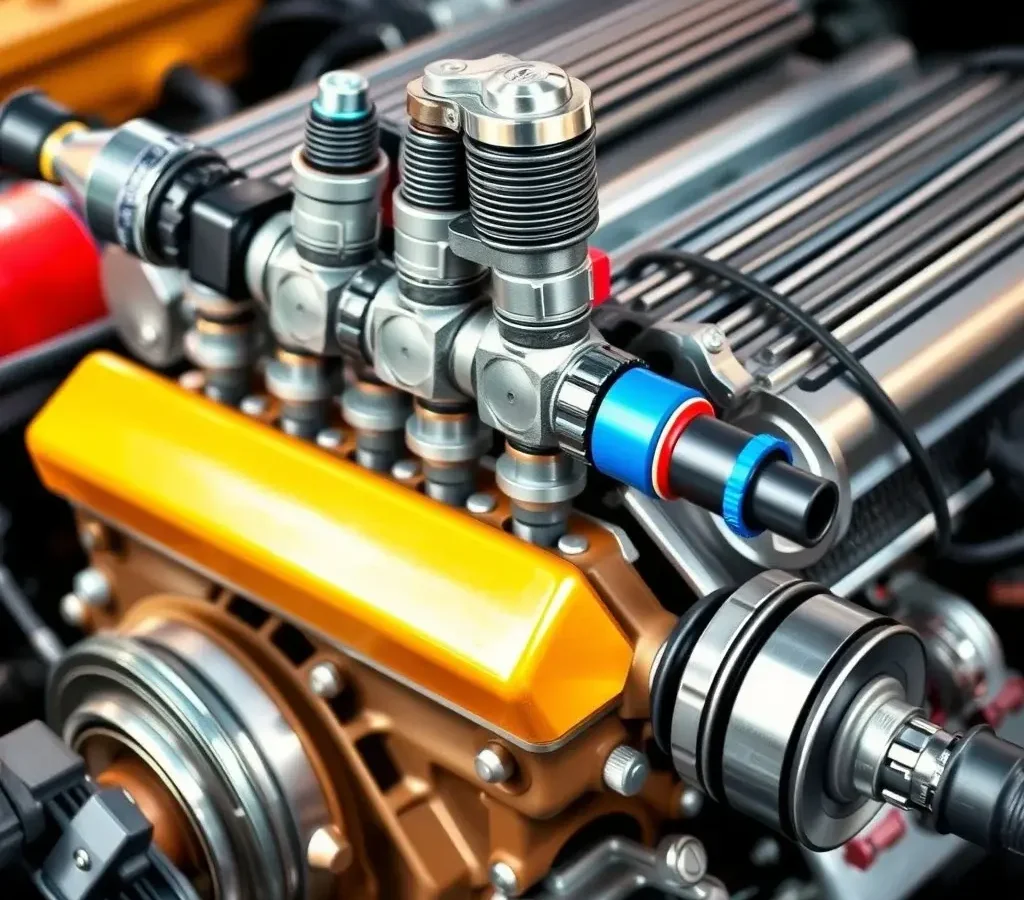

Fuel injection is one of the most important technologies in a modern internal-combustion engine. It controls how much fuel enters the engine, when it enters, and how effectively it mixes with incoming air. That precise control affects starting, power, fuel economy, emissions, and drivability.
Unlike older carbureted systems, electronic fuel injection uses sensors, injectors, fuel pumps, and an engine control unit (ECU) to manage fuel delivery continuously. The result is a system that can adapt to engine speed, load, temperature, throttle position, and other operating conditions.
In this guide, we explain how fuel injection works, the main components involved, the differences between port and direct injection, common symptoms of injector problems, maintenance considerations, and what drivers should know before diagnosing a fuel-system fault.
Table of Contents
- What Is Fuel Injection?
- How Fuel Injection Works
- Main Components of a Fuel Injection System
- Types of Fuel Injection
- Port vs Direct Injection
- Benefits of Fuel Injection
- Common Fuel Injector Problems
- Expert Tips for Fuel-System Care
- Common Mistakes
- FAQs
What Is Fuel Injection?
Fuel injection is a method of delivering a measured quantity of fuel into an engine so it can mix with air and support combustion. In a modern electronically controlled system, the ECU calculates the required fuel quantity and commands the injector to open for a precisely controlled period.
The exact arrangement varies by engine. In port fuel injection, the injector sprays fuel into the intake port upstream of the intake valve. Bosch describes this process as creating an air-fuel mixture before it enters the combustion chamber. citeturn0search0
In gasoline direct injection (GDI), the injector sprays fuel directly into the combustion chamber. Bosch notes that modern GDI systems can use fuel-rail pressures of up to 350 bar, illustrating how different direct injection is from conventional low-pressure fuel delivery. citeturn0search1
How Fuel Injection Works
1. Fuel leaves the tank
An electric fuel pump normally moves fuel from the tank through the fuel lines toward the engine. The system maintains the pressure required by the particular injection design.
2. The ECU monitors engine conditions
The ECU receives information from sensors. Depending on the vehicle, these can include the mass airflow or manifold-pressure sensor, throttle-position sensor, engine-coolant-temperature sensor, crankshaft-position sensor, camshaft-position sensor, and oxygen sensors.
The ECU uses this information to determine the appropriate injection quantity and timing. Bosch describes the engine control unit as the central controller for fuel supply, air management, fuel injection, and ignition. citeturn0search15
3. Fuel pressure is regulated
A pressure regulator or electronically managed pressure system keeps fuel delivery within the range required by the engine. Direct-injection engines generally require a high-pressure pump in addition to the low-pressure supply system.
4. The injector opens
An injector is essentially a fast-acting metering valve. When the ECU commands it to open, pressurized fuel passes through a small nozzle and is atomized into a spray.
5. Fuel mixes with air
In port injection, the spray enters the intake port and mixes with incoming air before entering the cylinder. In direct injection, fuel enters the combustion chamber itself. The location changes how precisely the engine can control the combustion event.
6. Combustion produces power
In a gasoline engine, the spark plug ignites the prepared charge. In a diesel engine, fuel is injected into highly compressed hot air and ignition occurs without a conventional spark. The resulting combustion pressure pushes the piston downward and transfers mechanical energy through the connecting rod and crankshaft.
7. Sensors provide feedback
Oxygen-sensor feedback helps the ECU adjust fueling during operating conditions where closed-loop control is available. This continuous correction helps maintain combustion and emissions performance.
Main Components of a Fuel Injection System
- Fuel tank: Stores the fuel.
- Fuel pump: Moves fuel toward the engine and, in some systems, supplies the initial pressure.
- Fuel filter: Removes contaminants that could damage sensitive components.
- Fuel rail: Distributes fuel to the injectors. In common-rail systems it also acts as a high-pressure accumulator. citeturn0search8
- Fuel injectors: Meter and atomize fuel.
- ECU: Calculates and controls injection commands.
- Engine sensors: Provide information about air flow, engine position, temperature, load, and exhaust oxygen.
- Fuel-pressure control components: Maintain the pressure required by the system.
Types of Fuel Injection
Port Fuel Injection
Port fuel injection (PFI) places the injector in the intake manifold or runner close to the intake valve. It is a mature technology that provides good mixture preparation and comparatively straightforward hardware.
Bosch notes that PFI can provide lower friction losses at partial load and good mixture homogenization, while also offering a cost-effective solution compared with high-pressure direct-injection systems. citeturn0search3
Gasoline Direct Injection
GDI places the injector inside the combustion chamber. Fuel is injected at high pressure and can be timed very precisely during the engine cycle. The evaporating fuel can also cool the charge, which can help engineers increase compression or boost within appropriate limits. citeturn0search1turn0search12
Diesel Common-Rail Injection
Modern diesel engines commonly use common-rail injection. The rail stores high-pressure fuel and supplies individual injectors. Bosch reports that some of its common-rail solenoid systems operate at pressures up to 2,500 bar and can control injection timing and quantity separately for each cylinder. citeturn0search8
Dual Injection
Some gasoline engines combine port and direct injection. The ECU can select the most suitable system, or use both, according to engine speed, load, temperature, emissions requirements, and other conditions. Bosch says combining the two approaches can exploit their different strengths across operating conditions. citeturn0search3
Port Injection vs Direct Injection
| Feature | Port Injection | Direct Injection |
|---|---|---|
| Injection location | Intake port | Combustion chamber |
| Fuel pressure | Generally lower | Much higher |
| Fuel metering | Precise | Very precise at the cylinder |
| System complexity | Generally simpler | Generally more complex |
| Intake-valve fuel washing | Yes, in conventional gasoline PFI | No |
| Potential efficiency advantage | Strong in many part-load applications | Strong potential through charge cooling and precise control |
| Typical maintenance concerns | Injector and pump wear | High-pressure components and possible intake-valve deposits |
Neither system is universally superior. The best design depends on the engine, calibration, emissions targets, fuel, operating range, and intended application.
Benefits of Fuel Injection
- Better fuel metering: Electronic control allows fuel quantity to be adjusted according to operating conditions.
- Improved starting: The ECU can modify fueling for cold and hot starts.
- Better drivability: Accurate fuel control supports smoother acceleration and transient response.
- Potential fuel savings: Precise metering can reduce unnecessary fuel delivery.
- Lower emissions: Proper air-fuel control helps the engine and after-treatment system operate effectively.
- Higher performance potential: Direct injection can support charge cooling, higher compression, and increased torque in suitable designs. citeturn0search1
Common Fuel Injector Problems
\p>Fuel injectors can become restricted, leak, stick, or develop electrical faults. The symptoms depend on the failure mode and engine design.
- Rough or unstable idle
- Engine misfire
- Hard starting
- Loss of power
- Poor acceleration
- Unusual fuel consumption
- Fuel odor
- Check-engine warning
A single symptom does not prove that an injector is defective. Similar symptoms can result from ignition faults, vacuum leaks, fuel-pressure problems, sensor failures, compression problems, or other engine-management issues. Proper diagnosis should therefore include fault-code checks and appropriate pressure, electrical, and mechanical tests.
Why Fuel Injector Atomization Matters
\p>Injector spray quality affects how quickly fuel mixes and evaporates. Fine atomization can improve mixture preparation, but injector design must also match pressure, combustion-chamber geometry, timing, and the engine’s operating strategy.
Research summarized by ScienceDirect describes substantially smaller typical fuel-droplet sizes for gasoline direct injection than port injection in the cited technical comparison, helping explain why higher-pressure systems can improve vaporization under suitable conditions. citeturn0search9
Expert Tips for Fuel-System Care
- Use the fuel grade recommended by the vehicle manufacturer.
- Replace the fuel filter according to the manufacturer’s service schedule where applicable.
- Do not ignore repeated misfires or a persistent check-engine light.
- Use reputable fuel-system cleaning products only when they are appropriate for the engine.
- Keep the fuel system free from contamination during repairs.
- For direct-injection engines, ask a qualified technician about intake-valve deposits if symptoms or inspection findings justify it.
- Do not replace expensive injectors solely because a generic diagnostic code suggests a mixture problem.
Common Fuel Injection Mistakes
Assuming every misfire is an injector problem
Ignition coils, spark plugs, wiring, air leaks, compression problems, and sensors can create similar symptoms.
Ignoring fuel pressure
An injector cannot deliver the expected quantity if the supply pressure is incorrect. Pressure testing can be an important part of diagnosis.
Using unsuitable additives
Not every cleaner is appropriate for every fuel system. Follow the vehicle manufacturer’s guidance and product instructions.
Confusing direct injection with all electronic injection
Electronic fuel injection is a broad control concept. Direct injection is a specific injector location and fuel-delivery architecture.
Frequently Asked Questions
1. How does fuel injection work in a car?
A fuel pump supplies fuel, sensors report engine conditions to the ECU, and the ECU commands injectors to deliver a calculated quantity of fuel. The fuel then mixes with air and supports combustion.
2. What is the main purpose of a fuel injector?
The injector meters fuel and sprays it through a nozzle so the engine receives the quantity required for the current operating condition.
3. Is fuel injection better than a carburetor?
For modern vehicles, electronic fuel injection generally provides more precise control over fuel delivery and adapts more effectively to changing engine conditions.
4. What is the difference between port and direct injection?
Port injection sprays fuel into the intake port before the intake valve, while direct injection sprays fuel directly into the combustion chamber.
5. Can a dirty fuel injector cause poor acceleration?
Yes. A restricted or malfunctioning injector can disrupt fuel delivery and cause hesitation, misfire, or reduced power. However, other faults can produce the same symptoms.
6. Do direct-injection engines have disadvantages?
Yes. They require more complex high-pressure hardware, and some designs can experience intake-valve deposit issues because gasoline does not normally wash over the back of the intake valves. citeturn0search2
7. How long do fuel injectors last?
There is no universal replacement interval. Injector life depends on fuel quality, contamination, engine design, operating conditions, maintenance, and component quality.
8. Can I clean fuel injectors myself?
Some fuel-system maintenance can be performed with approved products, but professional injector testing or cleaning is preferable when an injector has a suspected mechanical or electrical fault.
Conclusion
Fuel injection works by delivering a controlled quantity of fuel at the right time so the engine can combine it with air and produce efficient combustion. Modern systems use pumps, injectors, sensors, fuel rails, and an ECU to manage that process with remarkable precision.
Port injection remains valuable because of its simplicity and mixture characteristics, while direct injection offers powerful opportunities for precise cylinder-level fuel control, charge cooling, performance, and efficiency. Dual-injection systems can combine advantages from both approaches.
Understanding how fuel injection works also makes vehicle troubleshooting easier. When symptoms appear, focus on systematic diagnosis rather than immediately replacing expensive components.
Call to Action
Want to understand more about modern automotive technology? Explore Signal Media Mkg for practical guides covering engines, technology, digital trends, and other topics that help you make better-informed decisions.