
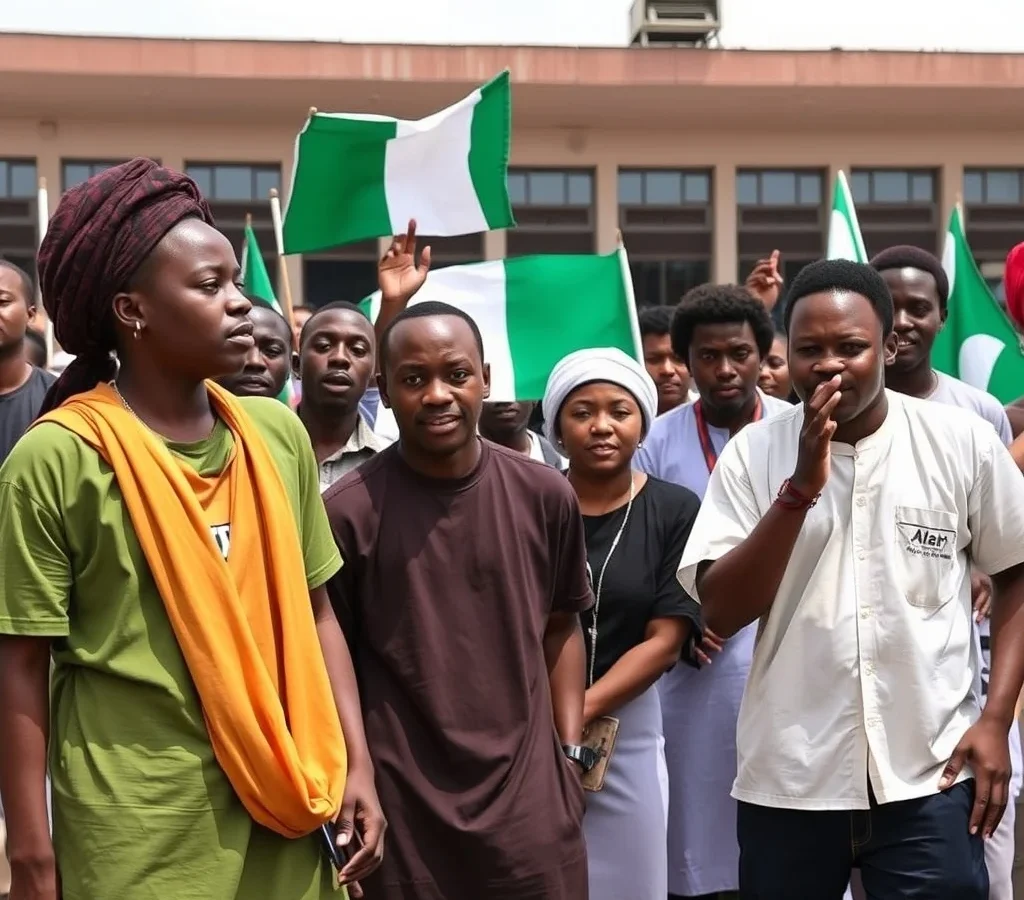

Nigeria’s youth are not simply the leaders of tomorrow; they are a major political constituency today. Young Nigerians influence elections, public debate, civic campaigns, policy conversations and the way political issues are discussed online and offline. Their influence can be seen in voting, advocacy, volunteering, community organizing, digital activism and, increasingly, attempts to enter political office.
This guide examines the role of youth in Nigerian politics, the ways young people influence decision-making, the barriers that limit their participation, and practical steps that can make youth political engagement more effective and sustainable.
Nigeria’s demographic structure makes the subject especially important. The National Population Commission reported in 2025 that more than 60% of the country’s population is under 30. INEC’s register for the 2023 general election also contained 37,060,399 registered voters aged 18–34, representing 39.65% of all registered voters. National Population Commission and INEC
Table of Contents
- Why Youth Matter in Nigerian Politics
- How Young Nigerians Participate in Politics
- How Youth Influence Decision-Making
- The Power of Digital Politics
- Youth and Nigerian Elections
- Barriers to Youth Political Participation
- Traditional vs Modern Youth Political Engagement
- How Youth Can Increase Their Political Influence
- Expert Tips
- Common Mistakes
- Frequently Asked Questions
- Conclusion
Why Youth Matter in Nigerian Politics
Youth participation matters because political institutions ultimately make decisions about education, employment, technology, healthcare, housing, security, transportation, taxation and other issues that directly affect younger generations.
Nigeria has an unusually young population. UNFPA data for 2025 estimates the country’s population at about 237.5 million, while previous UNFPA analysis found that young people aged 10–24 accounted for roughly 31.7% of the population and 63% of Nigerians were under 25. UNFPA Nigeria population data
A large youth population creates both political opportunity and responsibility. When young citizens participate constructively, they can push political parties and elected officials to pay greater attention to issues that matter to them. When they disengage, public policy can be shaped without sufficient input from a large part of the population.
Youth are a major electoral constituency
INEC’s 2023 voter register illustrates the scale of youth electoral influence. Voters aged 18–34 accounted for 39.65% of registered voters. Students alone represented 27.8% of registered voters by occupation in the same INEC briefing. INEC 2023 election briefing
Registration, however, is only the first step. Political influence depends on informed participation, turnout, issue-based voting, monitoring and continued engagement between elections.
How Young Nigerians Participate in Politics
Youth political participation goes far beyond contesting elections. It includes every legitimate activity through which young people attempt to influence public affairs.
1. Voting and voter education
Voting is one of the most direct ways citizens influence who receives political authority. Young voters can strengthen this role by learning how registration works, verifying election information, understanding candidates’ programmes and encouraging eligible citizens to participate peacefully.
2. Political parties and campaign organizations
Young Nigerians participate in political parties as members, volunteers, organizers, communication teams, canvassers and campaign strategists. Their familiarity with social platforms and digital communication can be particularly valuable during campaigns.
3. Civil society and advocacy
Youth-led organizations can raise awareness about public policy, accountability, human rights, education, employment, climate issues, governance and electoral reform. Advocacy can influence decision-makers even when activists do not hold political office.
4. Community organizing
Local political influence often begins with community problems. Young organizers can identify issues, collect evidence, organize residents, engage local representatives and follow up on government commitments.
5. Running for political office
Young people can contest party positions and public offices where they meet the applicable constitutional and electoral requirements. The 2018 Not Too Young To Run reform lowered age barriers for several elective offices, helping make youth candidacy more feasible, although financial, institutional and party-level barriers remain significant.
How Youth Influence Decision-Making
Youth influence public decisions through several interconnected channels. Political power is not limited to having a seat in a legislature.
Agenda setting
When young people consistently highlight an issue, they can move it higher on the political agenda. Employment, digital entrepreneurship, education, insecurity, corruption, transport and access to finance are examples of subjects that can receive greater attention when citizens organize around them.
Public opinion
Politicians respond to public opinion because elections create incentives to understand voters’ priorities. Youth can shape that opinion through informed conversations, community meetings, journalism, research, public forums and social media.
Policy advocacy
Effective advocacy connects a problem to evidence and a practical policy solution. Rather than simply demanding that government “do something,” youth groups can define the problem, identify the responsible institution, propose measurable actions and track implementation.
Accountability
Young citizens can influence decisions after policies are announced by monitoring budgets, projects, legislation and public commitments. Accountability is especially powerful when claims are documented and communicated responsibly.
Political leadership
Young elected officials, political appointees, advisers, community leaders and policy professionals can bring different experiences into decision-making. Their presence does not automatically guarantee better policy, but broader representation can improve the range of perspectives considered.
The Power of Digital Politics
Digital platforms have changed how young Nigerians participate in politics. A political message that once required access to a newspaper, television station or large rally can now reach thousands of people through a smartphone.
Social media as a political tool
- Explaining policy issues in accessible language.
- Sharing verified election information.
- Organizing civic campaigns and events.
- Connecting citizens with representatives.
- Documenting public concerns and community problems.
- Amplifying underrepresented voices.
Digital influence has limits, however. Visibility is not the same as political impact. A post can generate thousands of views without changing a policy. Strong digital advocacy therefore needs offline organization, credible evidence and sustained engagement.
Combating misinformation
Youth political influence can become harmful when misinformation spreads quickly. Responsible digital participation means checking claims against primary sources, distinguishing opinion from fact, avoiding manipulated images and refusing to share unverified allegations simply because they support a preferred political position.
Youth and Nigerian Elections
The 2023 general election demonstrated the importance of young voters within Nigeria’s electoral system. INEC reported 93,469,008 registered voters, including 37,060,399 people aged 18–34. INEC election data
These numbers show why political parties cannot reasonably ignore young voters. But numerical strength does not automatically translate into policy influence. The key question is whether young citizens can convert demographic weight into organized, informed and sustained political participation.
What makes youth votes influential?
- High numbers of eligible and registered voters.
- Ability to influence family and community discussions.
- Strong digital networks.
- Growing interest in accountability and public policy.
- Capacity to volunteer and organize at community level.
Youth voters should also avoid reducing elections to personalities or online popularity. Candidate records, policy proposals, competence, integrity and constitutional responsibilities deserve attention.
Barriers to Youth Political Participation
Young Nigerians face structural obstacles that can prevent demographic strength from becoming institutional power.
High campaign costs
Political competition can require substantial financial resources. This can disadvantage young candidates who have limited access to established political networks and wealthy donors.
Party structures
Established party structures can be difficult for newcomers to penetrate. Young members may participate heavily in campaigns but have limited influence over candidate selection or policy priorities.
Political patronage
Patron-client relationships can make political advancement dependent on established networks. This can discourage independent young candidates and shift attention away from competence and policy.
Limited civic and policy education
Political enthusiasm is valuable, but effective participation requires knowledge of government institutions, budgets, legislation, electoral rules and public policy.
Economic pressure
Unemployment, underemployment and financial insecurity can make sustained civic participation difficult. A young person struggling to meet basic needs may have little time or money for political organizing.
Security concerns and political violence
Fear of violence can discourage people from attending political meetings, volunteering or contesting elections. Peaceful participation and credible security arrangements are therefore essential to inclusive democracy.
Traditional vs Modern Youth Political Engagement
| Approach | Strength | Limitation | Best use |
|---|---|---|---|
| Political rallies | Large public visibility | Can be personality-driven | Mobilization and public engagement |
| Community meetings | Direct local interaction | Limited geographic reach | Solving local issues |
| Social media | Fast and inexpensive reach | Misinformation and polarization | Communication and advocacy |
| Policy research | Evidence-based influence | Requires expertise and time | Legislative and policy advocacy |
| Voting | Direct electoral influence | Only periodic | Selecting representatives |
| Political office | Direct decision-making power | High entry barriers | Policy implementation and representation |
How Youth Can Increase Their Political Influence
1. Move from reaction to organization
Online outrage may attract attention, but organized citizens can maintain pressure. Build groups around specific issues, assign responsibilities, establish goals and measure progress.
2. Learn how government works
Understand the responsibilities of federal, state and local institutions. Knowing which institution controls an issue makes advocacy more precise.
3. Use evidence
Strong campaigns use data, laws, budgets, research and firsthand community evidence. Evidence makes it easier for journalists, policymakers and the public to take an issue seriously.
4. Engage representatives between elections
Political participation should not begin a few months before an election. Young citizens can attend public meetings, communicate with representatives and monitor promises throughout the political cycle.
5. Build cross-community coalitions
Youth interests are diverse. Successful coalitions can bring together students, entrepreneurs, workers, professionals, community groups, women’s organizations and people from different regions and backgrounds around specific policy objectives.
6. Develop future candidates
Youth political influence becomes more durable when young people develop leadership skills, understand public administration and build credible records of community service before seeking higher office.
7. Protect political participation from misinformation
Verify information before sharing it. Political credibility is difficult to build and easy to lose.
Expert Tips for Young Political Participants
- Choose issues, not only personalities: evaluate policies and records rather than relying entirely on political loyalty.
- Keep records: document promises, meetings, petitions, budgets and outcomes.
- Learn negotiation: influence often requires compromise without abandoning core principles.
- Build professional networks: connect with civil society, researchers, journalists, community leaders and policy professionals.
- Stay peaceful: political disagreement should never become a justification for violence or intimidation.
- Think long term: build credibility through consistent civic work rather than chasing viral moments.
Common Mistakes Young People Make in Politics
- Supporting candidates without checking their records.
- Sharing unverified political claims.
- Confusing social-media popularity with electoral strength.
- Participating only during election periods.
- Ignoring local government and community-level politics.
- Allowing ethnic, religious or partisan identity to replace issue-based evaluation.
- Failing to develop practical leadership and policy skills.
- Expecting immediate results from advocacy.
Frequently Asked Questions
1. What is the role of youth in Nigerian politics?
Youth participate as voters, candidates, party members, activists, volunteers, community organizers, journalists, researchers and digital advocates. Their large population also gives them significant potential electoral influence.
2. How many young voters were registered for Nigeria’s 2023 general election?
INEC reported 37,060,399 registered voters aged 18–34, equal to 39.65% of the 93,469,008 registered voters in the 2023 register. INEC 2023 election briefing
3. Can young Nigerians influence government decisions without holding office?
Yes. Citizens can influence decisions through voting, public consultations, advocacy, civil society, research, journalism, community organizing, petitions and sustained engagement with public officials.
4. How does social media influence Nigerian politics?
Social media can rapidly spread political information, mobilize supporters, frame public debates and connect citizens with political actors. Its influence is strongest when online activity is supported by credible evidence and offline organization.
5. What are the biggest barriers facing young political participants?
Major barriers include campaign costs, established party structures, patronage, limited access to decision-making spaces, economic pressure, inadequate political education and security concerns.
6. Why is youth political participation important for Nigeria’s future?
Nigeria has a very young population. The NPC said in 2025 that more than 60% of the population is under 30, making youth inclusion important to the country’s democratic and development trajectory. National Population Commission
7. How can young people become more effective political leaders?
They can develop policy knowledge, community-service records, communication skills, financial discipline, negotiation ability and an understanding of public institutions. Credibility should be built before seeking higher office.
8. What is the best way for a young Nigerian to start participating in politics?
Start locally: learn about government, register and vote when eligible, join a credible civic or community organization, volunteer around a specific issue, attend public meetings and verify political information before sharing it.
Conclusion
The role of youth in Nigerian politics extends far beyond voting on election day. Young Nigerians have the numbers, networks and technological tools to influence political agendas, demand accountability and contribute directly to decision-making.
Yet demographic strength alone is not enough. Sustainable political influence requires organization, civic knowledge, evidence, peaceful participation and leadership development. Young citizens who understand how institutions work can move from being passive recipients of political decisions to active participants in shaping them.
For Nigeria, investing in youth political participation is also an investment in governance. UNFPA has emphasized that strategic investment in education, employment, empowerment and good governance is important for turning Nigeria’s youthful population into a demographic dividend. UNFPA demographic analysis
Call to Action
Young Nigerians can start today. Learn how your local government works, verify political information, discuss issues respectfully, support evidence-based civic initiatives and participate peacefully in elections and community decision-making. Political influence is built through consistent action—not just during campaign season.
Sources and Further Reading
- Independent National Electoral Commission (INEC), 2023 General Election materials and voter statistics.
- National Population Commission (NPC), 2025 World Population Day statements on Nigeria’s youthful population.
- United Nations Population Fund (UNFPA), Nigeria population and youth demographic data.
