
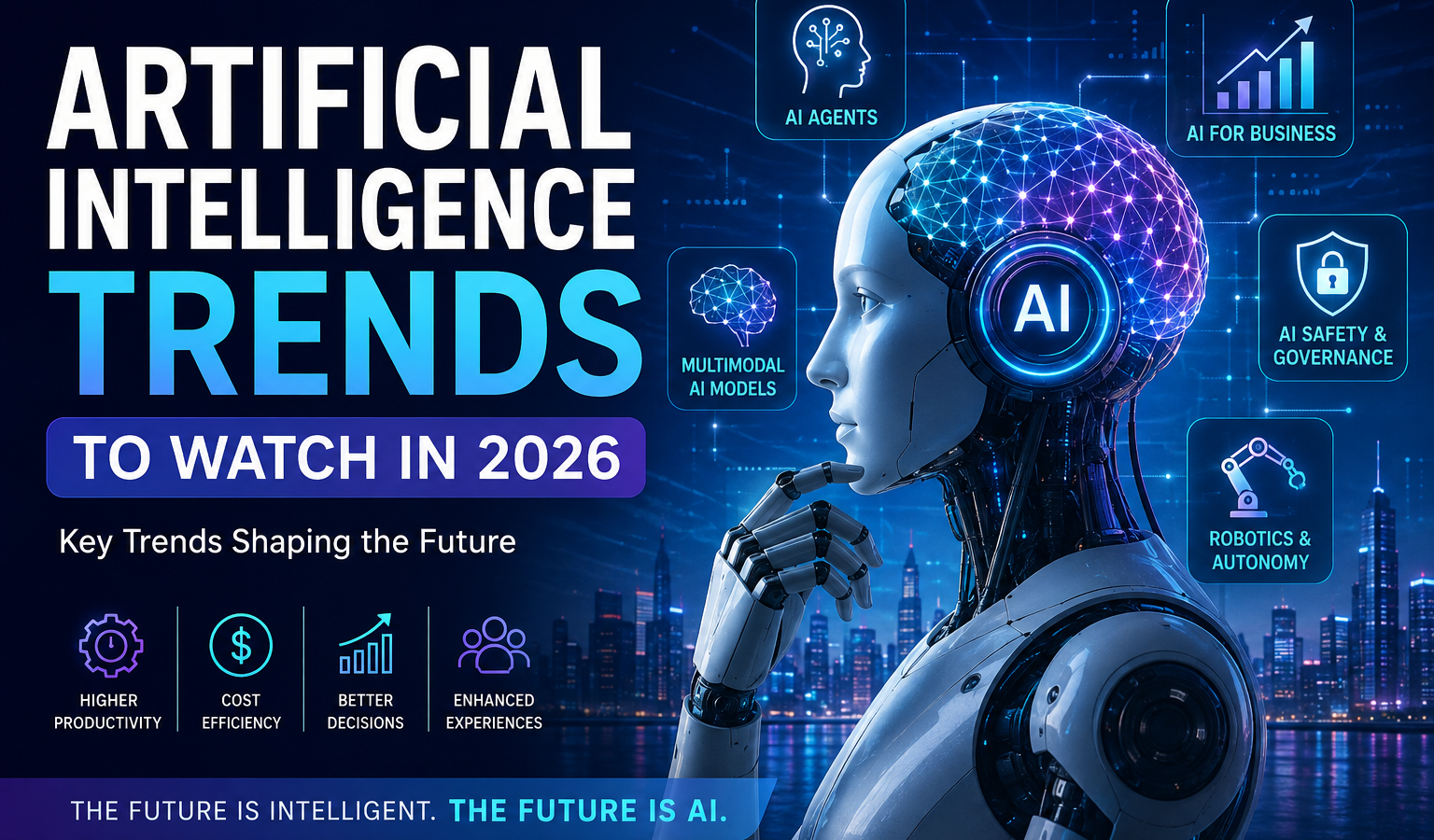

Artificial intelligence in Nigerian industries is changing how businesses and public institutions work. Banks use AI for fraud monitoring and customer support. Health innovators use it for clinical workflows. Farmers can use AI-assisted tools for crop and weather decisions. Meanwhile, manufacturers, retailers, telecom operators and government agencies are exploring automation, prediction and data analysis.
At the policy level, Nigeria has moved toward a more structured AI ecosystem. The National Centre for Artificial Intelligence and Robotics (NCAIR) promotes AI, robotics and other emerging technologies, while the National Artificial Intelligence Strategy focuses on responsible and inclusive development.
This guide explains how artificial intelligence is transforming Nigerian industries, the business value it can create, the risks organisations should manage and the practical steps for adoption. You can also explore our guide to artificial intelligence trends for a broader view of the technology landscape.
Table of Contents
- AI in Nigeria: Current Landscape
- 1. Banking, Fintech and Financial Services
- 2. Healthcare
- 3. Agriculture
- 4. Telecommunications
- 5. Retail and E-Commerce
- 6. Manufacturing
- 7. Education
- 8. Transport and Logistics
- 9. Media and Creative Industries
- 10. Government and Public Services
- AI Applications by Sector
- Benefits of AI Adoption
- Challenges of AI Adoption
- Expert Tips
- Common Mistakes
- Future of AI in Nigeria
- Frequently Asked Questions
AI in Nigeria: Current Landscape
Artificial intelligence in Nigerian industries is becoming more practical as businesses gain access to cloud AI, generative AI and data analytics tools. Adoption is growing, but it is not uniform. Large financial institutions and technology companies can invest in data platforms, cloud services and specialist teams faster than many small businesses. However, generative AI has lowered the barrier to experimentation because employees can access useful capabilities through natural-language tools.
PwC’s 2025 Nigeria analysis reported that, as of February 2025, 10 of 26 commercial banks had adopted conversational AI for customer engagement and issue resolution. PwC also highlighted AI applications emerging in healthcare and agriculture.
Customer use is also significant. KPMG’s 2025 West Africa Banking Industry Customer Experience Survey reported that 92% of surveyed Nigerians regularly used AI. That finding shows how quickly AI has entered everyday digital behaviour in Nigeria.
For Nigerian businesses, AI adoption is no longer only about creating advanced models. For many Nigerian organisations, the immediate opportunity is to use existing AI tools to improve productivity, service quality, forecasting and decision support.
1. Banking, Fintech and Financial Services
Fraud detection
Financial institutions process large transaction volumes. AI in Nigerian banking can analyse transaction patterns, device signals and account behaviour to flag unusual activity. Machine-learning models can analyse transaction patterns, device signals and account behaviour to flag unusual activity. As a result, analysts can focus attention on higher-risk cases.
Customer service
AI assistants can answer routine questions about accounts, cards, transfers and service requests. This can reduce waiting times while human agents handle more complex issues.
Credit and risk analytics
AI can help lenders evaluate more signals when traditional credit histories are limited. Used responsibly, these systems can improve segmentation and support wider access to formal financial services.
Personalisation
AI can analyse spending patterns and customer needs to support more relevant savings, payment, lending and investment recommendations.
2. Healthcare
Medical decision support
AI can assist clinicians with medical-image review and pattern detection. In Nigeria, such tools may help where specialist capacity is unevenly distributed.
Administrative automation
Healthcare providers can use AI to summarise notes, organise records, support appointment workflows and process documents. This can reduce administrative workload.
Research
AI can analyse large datasets to help researchers study disease patterns, treatment candidates and public-health trends. However, qualified professionals should retain responsibility for clinical decisions.
3. Agriculture
Crop monitoring
Computer vision, remote sensing and analytics can help identify crop stress, pests, disease symptoms and field variation. Therefore, farmers can make earlier interventions.
Weather and yield forecasting
AI can combine weather, soil, satellite and historical data to improve forecasting. Better forecasts can support planting, irrigation and harvesting decisions.
Digital farmer advice
AI-powered advisory services can provide location-aware recommendations through mobile channels. PwC’s Nigeria research identifies agronomic advice and crop analysis as examples of local AI activity.
4. Telecommunications
Network optimisation
Telecom operators can use AI to predict congestion, detect network anomalies and improve capacity planning. Predictive maintenance can also help identify equipment problems before outages occur.
Customer support
AI can classify complaints, route requests and handle routine questions. Consequently, support teams can spend more time on issues that require human judgement.
Revenue assurance
Machine learning can identify unusual usage and transaction patterns that may indicate leakage, abuse or other anomalies.
5. Retail and E-Commerce
Recommendations
Retailers can personalise product discovery using browsing, purchase and preference signals.
Demand forecasting
AI can help businesses estimate demand and reduce both excess stock and stockouts. That matters for merchants managing changing prices and supply-chain uncertainty.
Marketing
Generative AI can assist with product descriptions, campaign ideas, customer segmentation and content workflows. Human review remains essential for accuracy and brand consistency.
6. Manufacturing
Predictive maintenance
Manufacturers can analyse machine and maintenance data to identify early signs of failure and reduce unplanned downtime.
Quality inspection
Computer vision can inspect products for defects at production speed. Strong implementations combine automated detection with human quality control.
Production planning
AI can model demand, production schedules and resource constraints to support more efficient planning.
7. Education
Personalised learning
AI tutors can adapt explanations, practice questions and revision plans to a learner’s pace and performance. This makes AI useful as a supplement to formal instruction.
Teacher productivity
Educators can use AI to draft lesson materials, create practice questions and organise resources, while checking outputs for accuracy.
AI skills
Nigeria’s AI strategy emphasises talent, infrastructure, research and collaboration. NCAIR also highlights multilingual AI work involving Yoruba, Hausa, Igbo and Nigerian-accented English.
8. Transport and Logistics
Route optimisation
AI can analyse traffic, delivery history and demand to suggest efficient routes.
Fleet management
Predictive analytics can help operators monitor vehicle performance, maintenance schedules and fuel usage.
Delivery planning
Logistics companies can use AI to forecast demand and allocate vehicles, drivers and warehouse resources more effectively.
9. Media and Creative Industries
Content workflows
Generative AI can accelerate research, drafting, editing, transcription, translation and visual ideation. In most professional settings, AI-assisted workflows are safer than fully automated publishing.
Audience analysis
Publishers and brands can analyse audience behaviour to identify topics, formats and distribution opportunities.
Language technology
Language-focused AI can improve accessibility and localisation. NCAIR’s N-ATLaS initiative illustrates the strategic value of AI built around African languages and local speech patterns.
10. Government and Public Services
Citizen services
Government agencies can use AI assistants to help citizens navigate forms, public information and service processes.
Data analysis
AI can support planning, anomaly detection and resource allocation across large datasets.
Responsible governance
Government use must address transparency, privacy, cybersecurity and accountability. Nigeria’s National AI Strategy specifically links responsible AI with data protection, security, transparency and human rights.
AI Applications by Sector
| Sector | Main AI Uses | Potential Impact | Key Risk |
|---|---|---|---|
| Banking & fintech | Fraud detection, chatbots, analytics | Faster service and risk control | Bias and privacy |
| Healthcare | Imaging, records, research | Workflow and decision support | Clinical error and privacy |
| Agriculture | Crop analysis, forecasting, advice | Earlier intervention and efficiency | Data quality |
| Telecom | Network optimisation, support | Reliability and service quality | Security |
| Retail | Recommendations, forecasting | Sales and inventory efficiency | Privacy |
| Manufacturing | Maintenance, inspection | Less downtime and waste | Integration cost |
| Education | AI tutoring, content support | Personalised learning | Inaccuracy |
| Logistics | Routing, fleet analytics | Lower operating costs | Bad data |
| Media | Content, translation, analytics | Faster production | Copyright and misinformation |
| Government | Citizen support, analytics | Faster public services | Accountability |
Benefits of AI Adoption in Nigeria
- Productivity: automate repetitive work and reduce manual processing.
- Better decisions: identify patterns across large datasets.
- Lower costs: reduce avoidable processing and operational downtime.
- Better customer experience: respond faster and personalise interactions.
- Innovation: use existing AI services without building models from scratch.
- Wider access: extend useful services to underserved users and local-language audiences.
Challenges of AI Adoption in Nigeria
Data quality
Weak, fragmented or inaccurate data can produce unreliable results.
Infrastructure
AI depends on connectivity, computing capacity, dependable power and secure digital systems. Nigeria’s AI strategy identifies broadband and digital infrastructure as key foundations for scaling AI.
Privacy and cybersecurity
Organisations need governance, access controls, security testing, retention rules and compliance with applicable data-protection requirements.
Skills
Successful adoption requires AI literacy across product, operations, legal, security and frontline teams, not only specialist engineers.
Bias and accountability
AI can reproduce weaknesses in historical data. High-stakes applications therefore need testing, oversight and clear accountability.
Privacy risks are also becoming more visible. In 2026, the Nigeria Data Protection Commission joined an international statement addressing risks from AI-generated imagery and calling for stronger safeguards, transparency and rapid removal mechanisms for harmful content.
Expert Tips for Nigerian Businesses
- Start with a measurable problem. Choose a workflow where AI can improve speed, cost, quality or revenue.
- Run a small pilot. Test one process before scaling.
- Keep human oversight. Use human review for financial, medical, legal and public-service decisions.
- Measure outcomes. Track accuracy, time saved, cost per task and customer satisfaction.
- Protect data. Define what information staff may enter into AI systems.
- Train employees. Teach verification, privacy and escalation procedures.
- Localise the solution. Account for Nigerian regulations, languages, infrastructure and customer behaviour.
Common Mistakes
- Adopting AI without a clear business objective.
- Uploading confidential data without checking privacy controls.
- Assuming AI output is automatically accurate.
- Ignoring cybersecurity and access management.
- Removing human judgement from high-stakes decisions.
- Measuring AI activity instead of business outcomes.
Future of AI in Nigeria
Nigeria’s next phase of AI adoption will depend on stronger infrastructure, workforce capability and mature governance. The 2025 National AI Strategy provides a framework for responsible and inclusive development, while NCAIR continues to build ecosystem capacity around AI and robotics.
Another important shift is the move from standalone AI tools to AI embedded in normal business systems. Companies can integrate AI into customer relationship management, accounting, enterprise software, supply chains and internal knowledge platforms.
For Nigerian businesses, competitive advantage may therefore depend less on owning a proprietary model and more on having better data, stronger processes, effective governance and a clear understanding of where AI creates measurable value.
Frequently Asked Questions
1. What is the impact of artificial intelligence on Nigerian industries?
AI is improving automation, forecasting, fraud detection, customer service and decision support across finance, healthcare, agriculture, telecoms, retail and manufacturing.
2. Which Nigerian industries are using AI?
Financial services are among the most visible adopters, with growing applications in healthcare, agriculture, telecoms, retail, logistics, media and government. PwC reported that 10 of 26 commercial banks had adopted conversational AI by February 2025.
3. Can small businesses in Nigeria use AI?
Yes. Small businesses can use off-the-shelf AI for customer support, marketing, research, documentation, sales and operations.
4. How is AI transforming Nigerian banking?
Key applications include fraud detection, conversational banking, transaction monitoring, risk analytics and operational automation.
5. How can AI help Nigerian farmers?
AI can support crop monitoring, pest and disease detection, weather planning, yield forecasting and agronomic advice.
6. What are the biggest AI risks in Nigeria?
Important risks include inaccurate output, bias, privacy violations, cybersecurity threats, weak data and overreliance on automation.
7. Is AI regulated in Nigeria?
Nigeria is developing a broader AI and digital-governance framework. The National AI Strategy sets responsible-AI principles, while data-protection rules remain relevant when AI processes personal information.
8. What should a company do before adopting AI?
Define the business case, assess data and privacy needs, select a limited pilot, establish human oversight and measure results before scaling.
Conclusion
Artificial intelligence in Nigerian industries is becoming a practical part of how organisations serve customers, manage operations and make decisions. The biggest opportunities are not limited to futuristic robotics. They include faster support, smarter forecasting, fraud detection, agricultural advice, predictive maintenance and more efficient administration.
However, successful AI adoption requires reliable data, infrastructure, skilled people, cybersecurity, privacy safeguards and accountability. Nigeria’s national strategy and growing AI ecosystem provide a strong foundation, but individual organisations still need to connect AI investment to measurable outcomes.
Call to Action
Choose one repetitive or data-heavy process in your organisation, set a measurable target, run a controlled AI pilot and scale only after the results are proven.
Sources consulted include Nigeria’s National AI Strategy, NCAIR, the Federal Ministry of Communications, Innovation and Digital Economy, PwC Nigeria, KPMG and the Nigeria Data Protection Commission.