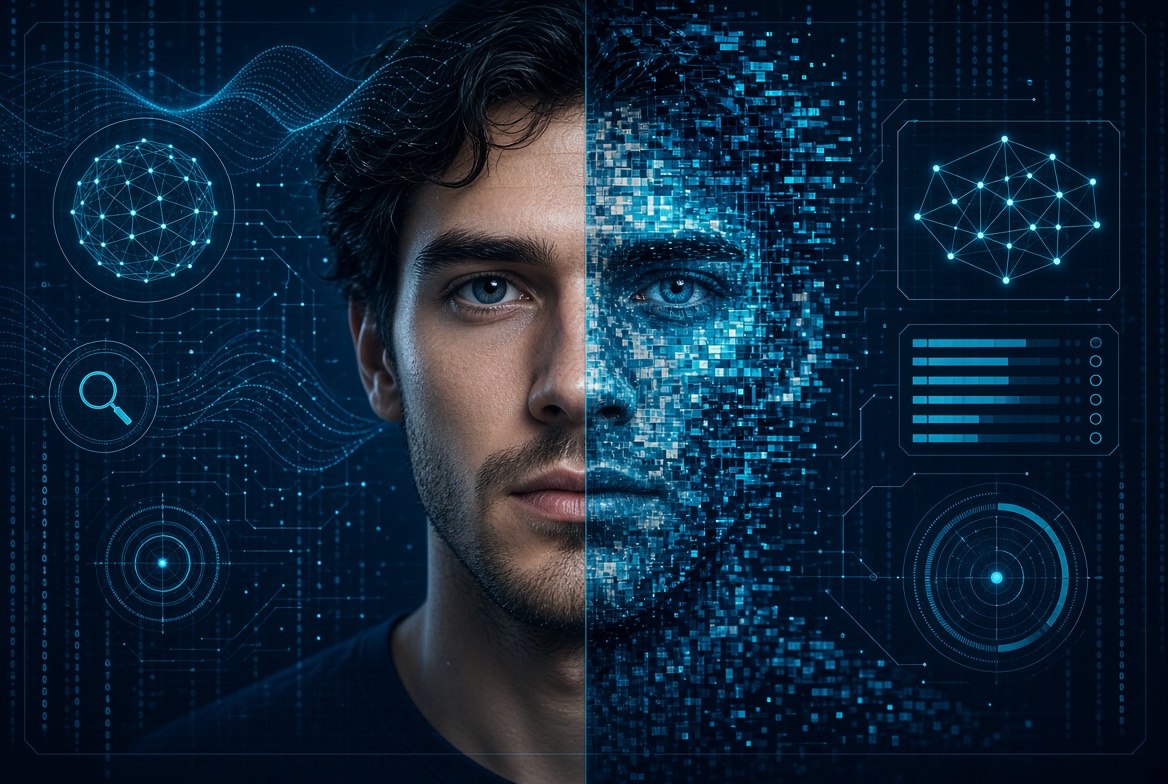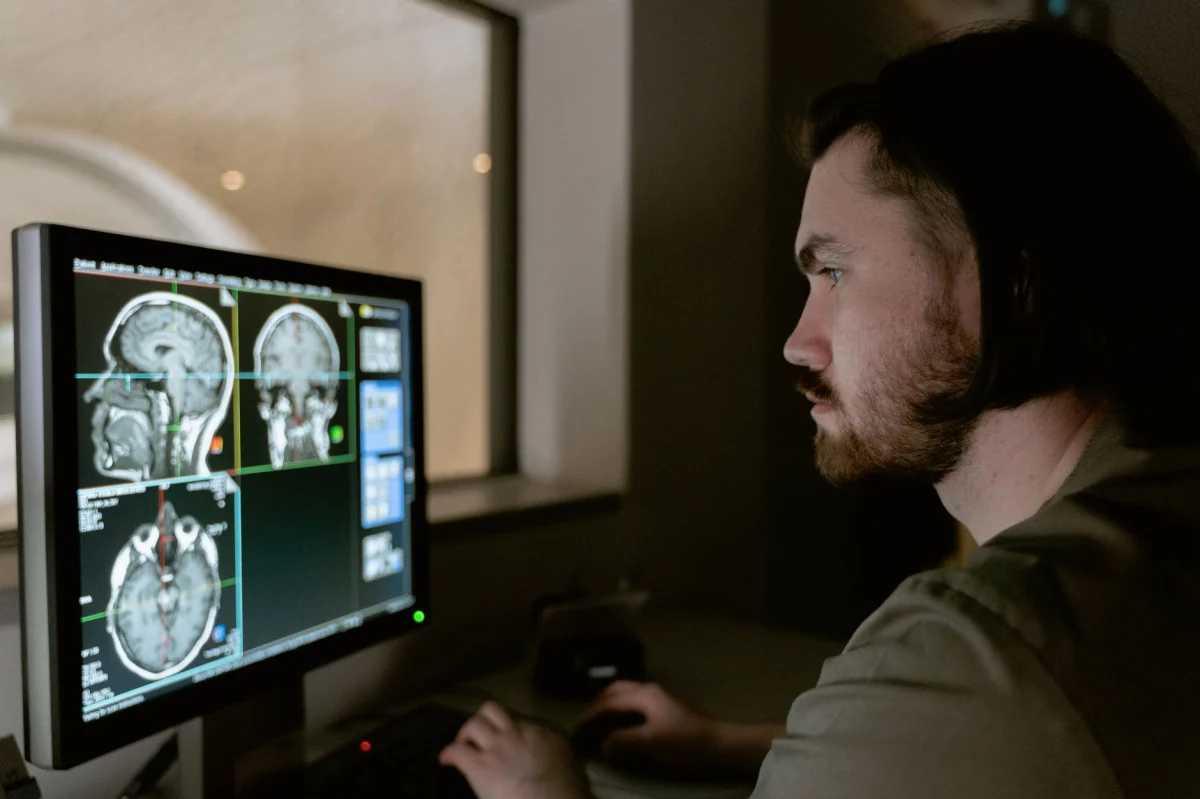

Brain-Computer Interfaces (BCIs) are technologies that create a direct communication pathway between brain activity and a computer or other electronic system. Instead of relying only on a keyboard, touchscreen, voice command, or conventional physical movement, a BCI can measure neural activity and translate patterns in that activity into commands.
The technology is especially important in assistive communication, neuroprosthetics, rehabilitation research, robotics, accessibility, and emerging human-computer interaction. At the same time, BCIs remain technically difficult: neural signals are noisy, individual brains differ, invasive systems require surgery, and long-term reliability, privacy, safety, calibration, and regulation remain major considerations.
This guide explains how Brain-Computer Interfaces work, the major types of BCI, their applications, advantages, limitations, current research directions, and what businesses and technology professionals should understand about the field.
विषय-सूची
- What Is a Brain-Computer Interface?
- How Brain-Computer Interfaces Work
- Types of Brain-Computer Interfaces
- Applications of BCI Technology
- AI and Machine Learning in BCIs
- Benefits and Potential Advantages
- चुनौतियाँ और सीमाएँ
- Neural Data, Privacy, and Security
- The Future of Brain-Computer Interfaces
- विशेषज्ञ युक्तियाँ
- Common Mistakes and Misconceptions
- अक्सर पूछे जाने वाले प्रश्न
What Is a Brain-Computer Interface?
A Brain-Computer Interface is a system that records brain activity and processes it electronically to enable communication with, control of, or interaction with an external device. Depending on the design, a BCI may also involve computer-controlled stimulation of neural activity.
The field is broader than the popular image of a person controlling a computer purely by thought. Modern BCI research covers different signal sources, hardware configurations, decoding algorithms, feedback mechanisms, and applications. A 2025 taxonomy discussion in Nature Biomedical Engineering proposed using BCI as a broad term for technologies that record brain activity and process it electronically, or stimulate brain activity based on electronic computation.
In practical terms, a BCI can be viewed as a pipeline: neural activity → signal acquisition → signal processing → decoding → command → device response → user feedback.
How Brain-Computer Interfaces Work
1. Signal acquisition
The first step is measuring biological signals. Non-invasive systems commonly use electroencephalography (EEG), in which electrodes placed on the scalp measure electrical activity. Other research approaches include functional near-infrared spectroscopy and emerging wearable sensing methods.
Invasive systems place electrodes closer to neural tissue. These can provide higher-quality or more localized signals, but they introduce surgical risks and additional long-term engineering challenges.
2. Signal processing
Raw neural recordings contain useful information alongside noise caused by movement, muscles, electrical interference, electrode changes, and other sources. Software therefore filters and transforms the incoming data before decoding.
3. Feature extraction
The system identifies signal characteristics that correlate with an intended action or state. Depending on the BCI, these features may involve frequency patterns, changes in neural activity, or activity recorded from particular brain regions.
4. Decoding
A machine-learning model or other decoder converts signal patterns into an estimated intention or command. For example, a decoder may learn the relationship between neural activity and intended cursor movement.
5. Device control and feedback
The decoded command is sent to software, a computer cursor, communication interface, robotic system, prosthetic device, or another controlled system. Feedback then helps the user and the decoder adapt to each other.
This closed-loop relationship is important because a BCI is not simply a sensor. Performance depends on the interaction between the person, signal acquisition hardware, decoder, software, and controlled device.
Types of Brain-Computer Interfaces
| Type | Signal access | Main advantage | Main limitation |
|---|---|---|---|
| Non-invasive | Outside the body, such as scalp EEG | No brain surgery required | Lower signal quality and susceptibility to noise |
| Minimally invasive | Closer to the brain with limited surgical access | Potentially better signals with reduced surgical footprint | Still involves medical procedures and engineering challenges |
| Invasive | Electrodes implanted in or on the brain | High-quality, high-bandwidth neural signals can be possible | Surgical risk, long-term reliability, and maintenance concerns |
These categories are useful for understanding engineering trade-offs, but they should not be treated as a simple ranking. The best architecture depends on the application, required signal quality, safety requirements, acceptable risk, and regulatory pathway.
Applications of BCI Technology
Assistive communication
One of the most important BCI applications is helping people with severe motor or speech impairments communicate. Research systems can decode intended communication into computer-generated speech, text, or other digital outputs.
Recent research continues to expand these capabilities. In September 2026, an NIH-funded team reported a BCI system that decoded speech and upper-body gesture information simultaneously for participants with paralysis, allowing a personalized virtual avatar to express both forms of communication.
Cursor and computer control
BCIs can translate neural signals into cursor movement or other digital commands. This could provide an alternative input method when conventional keyboards, mice, touchscreens, or voice interfaces are difficult or impossible to use.
Robotic arms and neuroprosthetics
Researchers are investigating BCIs that allow users to control robotic limbs or other assistive devices. The objective is not simply movement, but increasingly natural interaction with external systems.
Rehabilitation research
BCIs are also being investigated as part of rehabilitation approaches in which neural activity, physical movement, and feedback are combined. Clinical evidence varies by application, so experimental results should not automatically be interpreted as established medical treatment.
Immersive computing and accessibility
BCIs may eventually complement spatial interfaces, virtual environments, and other emerging interaction models. They could provide additional input channels for users who cannot rely on conventional physical controls.
For context, see our guides to Spatial Computing और Mixed Reality Technology.
AI and Machine Learning in BCIs
Artificial intelligence is increasingly important because neural signals are complex and vary between people and sessions. Machine-learning models can learn patterns connecting recorded signals with intended actions, communication, or other target outputs.
Modern BCI research is also exploring AI-assisted or shared-autonomy systems. A 2025 study published in Nature Machine Intelligence demonstrated an AI-BCI approach in which AI copilots helped improve performance in cursor-control and robotic-arm tasks. The research illustrates an important direction: instead of expecting the BCI to decode every low-level action perfectly, AI can help interpret goals and assist with task execution.
However, AI does not eliminate the fundamental BCI challenges. Models still need representative data, reliable signal acquisition, appropriate validation, and safeguards against incorrect or unintended commands.
Benefits and Potential Advantages
- Alternative communication: BCIs can create new input channels for people with severe physical impairments.
- Hands-free interaction: Some systems can reduce dependence on conventional physical controls.
- Direct neural information: BCIs can access information associated with brain activity rather than relying solely on observable movement.
- Assistive technology: BCIs can connect users with computers, communication systems, prosthetics, and other devices.
- New human-computer interfaces: The technology may eventually complement touch, voice, vision, gesture, and wearable interfaces.
चुनौतियाँ और सीमाएँ
Signal quality
Brain signals can be difficult to measure accurately, particularly through the scalp. Noise and signal attenuation can reduce decoding performance.
Calibration and personalization
Neural activity differs between individuals, and signals can change over time. Systems may therefore require training, calibration, or adaptive algorithms.
Invasiveness
Implanted electrodes can provide valuable signal access but require surgery. Research reviews continue to identify surgical risk and long-term reliability as major barriers to clinical translation.
Reliability and durability
A BCI intended for everyday use must work consistently, not only during controlled laboratory experiments. Hardware stability, software robustness, signal drift, battery life, wireless connectivity, and maintenance all matter.
Cost and accessibility
Advanced neural interfaces can require specialized hardware, clinical expertise, data processing infrastructure, and regulatory work. These factors can make deployment expensive.
Clinical evidence
Promising demonstrations are not equivalent to proven clinical treatments. The appropriate level of evidence depends on the intended use, and medical applications require rigorous testing, safety evaluation, and regulatory oversight.
Neural Data, Privacy, and Security
Neural data introduces a particularly sensitive category of information. Even when a system is designed only to recognize specific commands, organizations should consider what data is collected, how long it is retained, who can access it, and whether it is transmitted to third-party systems.
Security should be designed into the architecture rather than added after deployment. Strong authentication, encryption, access controls, secure device updates, data minimization, audit logs, and clear consent mechanisms are relevant considerations.
Developers should also avoid treating neural signals as if they were ordinary application telemetry. The ethical and privacy implications can be substantially different.
The Future of Brain-Computer Interfaces
BCI development is moving in several directions at once. Researchers are working on higher-quality sensors, flexible electronics, more reliable implants, better non-invasive systems, improved machine-learning decoders, and interfaces that require less calibration.
Another important trend is multimodal interaction. Future systems may combine neural signals with eye tracking, muscle signals, voice, cameras, inertial sensors, and conventional controls. This could allow a system to choose the most reliable input channel for a particular task rather than depending entirely on brain signals.
AI-assisted decoding is another major direction. Instead of requiring the neural interface to solve every part of an interaction, an AI layer can help interpret context and goals. This could improve usability while also introducing new requirements for transparency, testing, and safety.
Longer-term progress will depend on more than better algorithms. Hardware durability, clinical validation, privacy, cybersecurity, affordability, regulatory frameworks, and user experience will determine whether BCI technology moves from specialized research environments into broader real-world use.
For readers interested in brain-inspired hardware, our Neuromorphic Computing guide provides useful background on how computing architectures can be inspired by biological neural systems.
विशेषज्ञ युक्तियाँ
- Define the use case first: Choose the required signal quality and interface architecture based on the task rather than starting with a specific sensor.
- Separate research from product claims: A laboratory demonstration does not automatically represent a commercially ready or clinically proven system.
- Design for adaptation: Expect neural signals and user behavior to change over time.
- Protect neural data: Treat brain-related data as highly sensitive information and minimize collection wherever possible.
- Measure end-to-end performance: Evaluate latency, accuracy, user effort, reliability, and failure recovery.
- Use human-centered design: A technically impressive decoder is not useful if the interface is uncomfortable, confusing, or difficult to operate.
Common Mistakes and Misconceptions
- “BCIs can read any thought.” Most practical systems decode specific trained signal patterns or intended actions, not unrestricted private thoughts.
- “All BCIs require brain implants.” Many BCI systems are non-invasive, including EEG-based approaches.
- “Higher accuracy means the technology is ready for everyone.” Real-world deployment also requires safety, reliability, usability, privacy, and regulatory validation.
- “AI solves the BCI problem.” AI can improve decoding and adaptation, but it cannot remove hardware, signal, clinical, ethical, or security constraints.
- “A research result is automatically a medical treatment.” Clinical applications require appropriate evidence and regulatory evaluation.
अक्सर पूछे जाने वाले प्रश्न
1. What is a Brain-Computer Interface?
A Brain-Computer Interface is a technology that records or interacts with brain activity and uses electronic processing to communicate with or control an external system.
2. How does a BCI work?
A typical BCI acquires neural signals, processes and extracts useful features, decodes those signals into an intended command, and sends the command to a computer or other device.
3. Are Brain-Computer Interfaces invasive?
Some are invasive and use implanted electrodes, while others are non-invasive and use sensors such as scalp EEG. There are also approaches designed to reduce the invasiveness of implantation.
4. Can BCIs help people with paralysis?
BCIs are being researched and developed for communication, computer control, robotic devices, and other assistive applications for people with severe motor impairments. Individual capabilities depend on the system and clinical context.
5. Do BCIs actually read thoughts?
Not in the unrestricted sense often portrayed in science fiction. Most systems decode measurable neural patterns associated with defined tasks, intentions, or trained commands.
6. What role does AI play in BCI technology?
AI and machine learning can help decode complex neural signals, adapt models to users, and support higher-level task interpretation. They can improve performance but do not eliminate the underlying limitations of neural sensing.
7. What are the biggest challenges for BCIs?
Major challenges include signal quality, calibration, reliability, invasiveness, device durability, cost, cybersecurity, privacy, clinical evidence, and regulatory requirements.
8. Will Brain-Computer Interfaces replace keyboards and smartphones?
There is no evidence that BCIs will replace conventional interfaces broadly in the near term. A more realistic path is for BCIs to complement existing input methods, particularly in accessibility, specialized computing, and selected hands-free applications.
निष्कर्ष
Brain-Computer Interfaces represent one of the most ambitious areas of modern human-computer interaction. By connecting neural activity with digital systems, BCIs can create new possibilities for communication, assistive technology, robotics, rehabilitation research, and future computing interfaces.
Yet the technology is still developing. Signal quality, invasive procedures, personalization, reliability, privacy, security, affordability, and clinical validation remain critical challenges. The strongest BCI progress will therefore come from combining neuroscience, electrical engineering, machine learning, software engineering, cybersecurity, ethics, and human-centered design.
As sensors improve and AI-assisted decoding becomes more capable, BCIs may become more practical and accessible. For now, the most useful way to understand the field is to separate proven capabilities from promising research and evaluate each system according to its specific application, evidence, and risk profile.
Stay with SignalMediaMKG for practical explainers on emerging technology, AI, computing, cybersecurity, and digital innovation.
Authoritative Research Sources
- Nature Biomedical Engineering — An application-based taxonomy for brain–computer interfaces
- Nature Machine Intelligence — Brain–computer interface control with artificial intelligence copilots
- Nature Biomedical Engineering — Invasive neurophysiology and neural decoding research
- NIH — Neuroprosthesis research enabling simultaneous speech and body-language communication