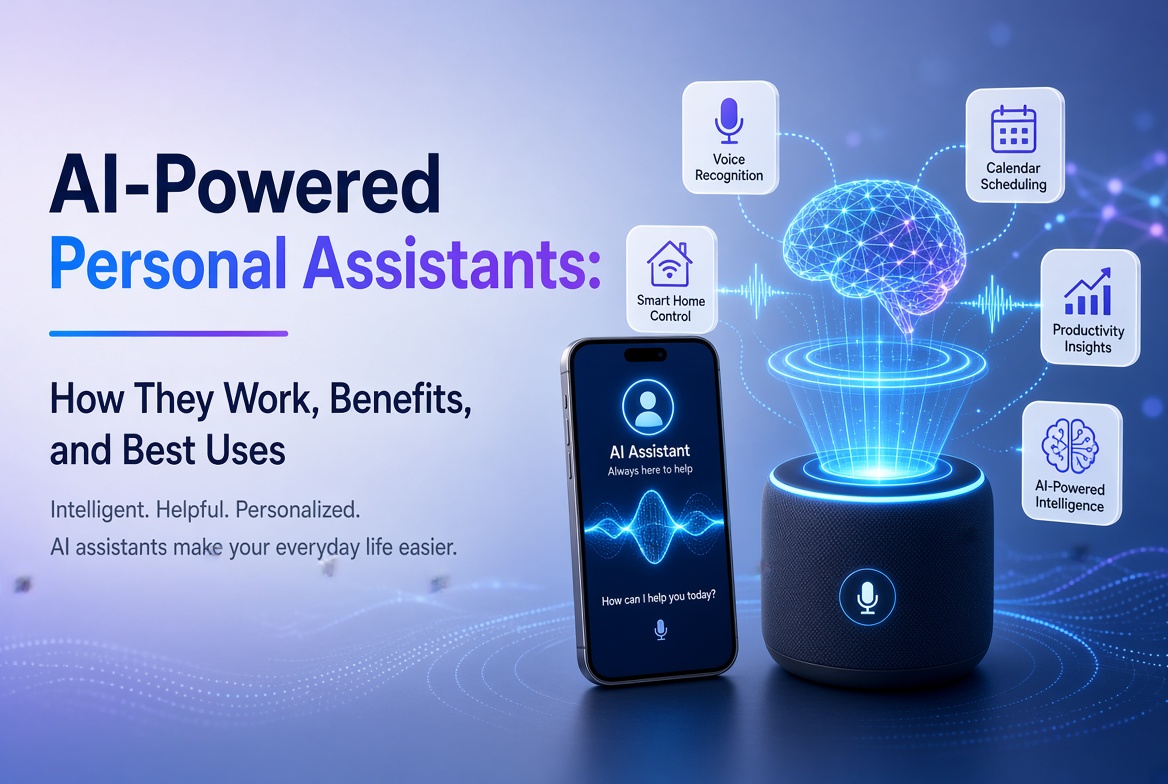

L'intelligenza artificiale sta cambiando il modo in cui le persone organizzano le proprie attività quotidiane, gestiscono le informazioni, completano i compiti e interagiscono con i servizi digitali. Una delle applicazioni più pratiche di questa tecnologia è l' assistente personale basato su AI.
A differenza dei tradizionali assistenti digitali che rispondono principalmente a comandi vocali predefiniti o a semplici domande, i moderni assistenti personali basati su AI possono comprendere il linguaggio naturale, riassumere informazioni, redigere documenti, aiutare a pianificare calendari e supportare flussi di lavoro più complessi.
Questi assistenti stanno diventando strumenti utili per studenti, professionisti, imprenditori, creatori di contenuti e aziende che desiderano migliorare la produttività senza aumentare il carico di lavoro.
Tuttavia, non tutti gli assistenti AI offrono le stesse capacità. Alcuni si specializzano in conversazione e ricerca, mentre altri si concentrano su programmazione, scrittura, codifica o integrazione con software aziendali.
Questa guida spiega cosa sono gli assistenti personali basati su AI, come funzionano, i loro principali vantaggi, applicazioni pratiche, limitazioni, considerazioni di sicurezza e come scegliere la soluzione giusta.
Indice
- Che Cos'è un Assistente Personale Potenziato dall'IA?
- Come Funzionano gli Assistenti Personali Potenziati dall'IA
- Tipi di Assistenti Personali Potenziati dall'IA
- Caratteristiche chiave da cercare
- Vantaggi degli Assistenti Personali Potenziati dall'IA
- Utilizzi pratici nella vita quotidiana
- Applicazioni per aziende e imprenditori
- Assistenti IA vs Assistenti Digitali Tradizionali
- Limitazioni e rischi per la sicurezza
- Come scegliere il giusto assistente AI
- Il futuro degli assistenti personali basati su AI
- Domande Frequenti
- Conclusione
Che Cos'è un Assistente Personale Potenziato dall'IA?
Un assistente personale basato su AI è un'applicazione software che utilizza l'intelligenza artificiale per aiutare le persone a svolgere compiti, recuperare informazioni, organizzare attività e prendere decisioni.
Questi sistemi accettano tipicamente istruzioni tramite testo, voce o altre interfacce supportate. Interpretano la richiesta, determinano una risposta appropriata e possono utilizzare strumenti aggiuntivi per completare un compito.
Ad esempio, un utente potrebbe chiedere a un assistente AI di:
- Riassumere un lungo rapporto.
- Redigere un'email professionale.
- Spiegare un concetto tecnico complicato.
- Creare un piano di studio settimanale.
- Confrontare diversi prodotti.
- Generare idee per un'impresa.
- Aiutare a risolvere un problema software.
- Organizzare appunti in un elenco di attività realizzabili.
Sistemi più avanzati possono connettersi a calendari, documenti, servizi email, piattaforme di gestione progetti o altre applicazioni. Con le giuste autorizzazioni, queste integrazioni consentono a un assistente di recuperare informazioni o svolgere azioni piuttosto che limitarsi a fornire istruzioni.
Le capacità effettive variano a seconda del prodotto. Alcuni assistenti generano solo risposte, mentre altri supportano analisi di file, ricerche web, integrazioni di applicazioni e flussi di lavoro multistep.
Cosa Rende un Assistente IA Diverso da un Software Ordinario?
Il software tradizionale di solito segue istruzioni predefinite. Un'applicazione calendariale, ad esempio, consente agli utenti di creare appuntamenti, impostare promemoria e visualizzare programmi.
Un assistente AI può aiutare a interpretare una richiesta come, “Aiutami a organizzare la mia settimana intorno a tre scadenze lavorative e due appuntamenti.”
Può proporre un piano, identificare potenziali conflitti e organizzare le informazioni in un piano utilizzabile.
Tuttavia, i suoi suggerimenti devono comunque essere verificati. Se l'assistente non ha accesso al calendario effettivo dell'utente, non può identificare affidabilmente ogni appuntamento esistente.
La principale distinzione è che gli assistenti AI possono interpretare istruzioni flessibili e generare risposte sensibili al contesto, mentre le applicazioni convenzionali richiedono tipicamente che gli utenti interagiscano con controlli specifici e flussi di lavoro predefiniti.
Come Funzionano gli Assistenti Personali Potenziati dall'IA
Gli assistenti personali alimentati dall'IA combinano diverse tecnologie per interpretare le istruzioni e produrre risultati utili.
Sebbene le implementazioni differiscano, la maggior parte dei sistemi moderni si basa su una combinazione dei seguenti componenti.
1. Elaborazione del Linguaggio Naturale
L'elaborazione del linguaggio naturale aiuta i computer a interpretare e generare il linguaggio umano.
Quando un utente fa una domanda, l'assistente analizza le parole, il contesto e l'intento probabile dietro la richiesta.
Ad esempio, l'istruzione “Rendi questo rapporto più breve e più facile da capire” richiede al sistema di riconoscere che l'utente desidera un riassunto o una riscrittura semplificata piuttosto che un rapporto completamente nuovo.
Le capacità di elaborazione del linguaggio rendono possibile interagire con il software utilizzando istruzioni conversazionali ordinarie.
2. Modelli di Linguaggio Vasto
Molti assistenti AI moderni utilizzano modelli linguistici di grandi dimensioni per comprendere le istruzioni, generare testi, riassumere documenti, spiegare concetti e assistere con compiti di ragionamento.
Questi modelli apprendono schemi dai dati di addestramento e usano quegli schemi per generare risposte.
Possono eseguire una vasta gamma di compiti legati al linguaggio senza richiedere un'applicazione separata per ogni richiesta.
Tuttavia, un modello linguistico può produrre informazioni plausibili ma errate. Gli utenti dovrebbero verificare fatti importanti, calcoli, interpretazioni legali e altre uscite di grande importanza.
3. Gestione del Contesto
Il contesto aiuta un assistente a interpretare la richiesta attuale rispetto ai messaggi precedenti o alle informazioni fornite.
Ad esempio, se un utente fornisce un documento e poi chiede: “Puoi trasformare questo in cinque punti elenco?”, l'assistente può utilizzare il documento come contesto per l'istruzione successiva.
Alcuni prodotti offrono anche funzionalità di personalizzazione persistente o di memoria, a seconda delle loro impostazioni e politiche sulla privacy.
Il contesto non deve essere confuso con una memoria illimitata. Un assistente potrebbe non avere accesso a ogni conversazione precedente, file connessi o registri esterni.
4. Strumenti Esterni e Integrazioni
Alcuni assistenti AI possono connettersi a servizi esterni per recuperare informazioni o completare compiti.
Esempi includono:
- Applicazioni di calendario per la programmazione.
- Servizi email per la gestione dei messaggi.
- Sistemi documentali per accedere ai file.
- Strumenti di ricerca web per la ricerca di informazioni attuali.
- Applicazioni di gestione progetti per il monitoraggio delle attività.
- Business software for retrieving authorized records.
These integrations can make an assistant substantially more useful because it can work with information beyond the text provided directly in a conversation.
However, access must be configured appropriately. A system should not receive more permissions than it needs to perform its intended tasks.
5. Automazione ed Esecuzione dei Compiti
More advanced assistants can divide complex requests into smaller steps and execute some of those steps using available tools.
For example, preparing a meeting brief might involve gathering information, reviewing documents, organizing findings, and producing a summary.
Depending on the product, some steps may happen automatically, while others require user approval.
Actions with significant consequences—such as sending messages, deleting files, publishing content, or making purchases—should have suitable confirmation and permission controls.
6. Feedback e Valutazione
AI assistant quality can be evaluated through user feedback, task completion rates, factual accuracy, response relevance, and other performance indicators.
Developers use testing and evaluation processes to identify failures and improve system behavior.
For individual users, providing clear instructions and checking outputs can also improve results. However, user feedback does not guarantee that a system will learn from every correction or remember it in future sessions.
Tipi di Assistenti Personali Potenziati dall'IA
AI assistants can be grouped according to their primary functions and interaction methods.
1. Assistenti AI Conversazionali
Conversational assistants allow users to ask questions, discuss ideas, request explanations, and complete writing tasks through natural language.
They are useful for research assistance, brainstorming, learning, summarization, and general productivity.
Examples include ChatGPT and other conversational AI products.
2. Assistenti Vocali
Voice assistants allow users to interact with devices through spoken instructions.
They may support tasks such as setting timers, checking information, controlling compatible smart-home equipment, or initiating supported device functions.
Their capabilities depend on the operating system, connected services, available languages, and device permissions.
3. Assistenti per la Produttività
Productivity-focused assistants help users manage work-related activities.
Common applications include summarizing meetings, drafting documents, organizing information, creating task lists, and supporting project planning.
Some integrate directly with office software and workplace collaboration platforms.
4. Assistenti per la Ricerca
Research assistants help users investigate topics, compare sources, summarize findings, and organize information.
Some can search the web or retrieve information from uploaded documents and connected knowledge bases.
Research quality depends on source reliability, retrieval accuracy, and whether the assistant distinguishes verified facts from uncertain claims.
5. Assistenti per la Programmazione
Coding assistants help software developers write, explain, review, and troubleshoot code.
They can generate code suggestions, explain error messages, propose tests, and assist with documentation.
Generated code should be reviewed for correctness, security, performance, licensing considerations, and compatibility before deployment.
6. Assistenti Aziendali Specializzati
Specialized assistants are designed around particular industries or workflows.
Examples include customer support assistants, sales assistants, financial analysis tools, and internal knowledge assistants.
Their usefulness depends on how well they integrate with existing systems and how accurately they handle the information relevant to their tasks.
7. Agenti IA
AI agents are systems designed to pursue objectives through a sequence of actions, often using external tools.
A conventional assistant might explain how to organize a project. An agent-enabled system might help create tasks, organize documents, and update a project board if it has the necessary integrations and permissions.
Not every AI assistant is an agent, and the degree of autonomy varies considerably.
Caratteristiche Chiave da Cercare in un Assistente Personale IA
Choosing an assistant based only on popularity can lead to a poor fit. The right solution should match the tasks you need to complete.
Comprensione del Linguaggio Naturale
The assistant should understand ordinary instructions and handle reasonable follow-up questions.
The ability to clarify ambiguous requests is particularly useful when working on complex tasks.
Analisi di Documenti e File
For work involving reports, spreadsheets, PDFs, or presentations, file analysis can save time.
Check which formats are supported, whether the assistant can process large files, and how uploaded information is handled.
Ricerca sul Web
Access to current web information is useful for researching products, market developments, news, and technical documentation.
A good research workflow should make it possible to inspect the original sources rather than relying entirely on generated summaries.
Integrazione delle Applicazioni
If you regularly use calendars, email, document storage, or project management software, integrations may significantly improve productivity.
Before connecting an application, review the requested permissions and determine whether the integration can read information, modify records, or perform external actions.
Personalizzazione
Some assistants support custom instructions, specialized workflows, reusable templates, or domain-specific configurations.
These capabilities can help standardize recurring tasks.
Controlli sulla Privacy e Sicurezza
Review the provider’s data-handling policies, available retention settings, access controls, and options for managing connected applications.
For business use, consider whether the product meets relevant contractual, regulatory, and organizational requirements.
Limiti di Costo e Utilizzo
Free plans may be sufficient for occasional tasks, while paid plans may provide higher limits, additional tools, or business features.
Evaluate the total cost relative to the time saved and the quality of the results.
Vantaggi degli Assistenti Personali Potenziati dall'IA
AI assistants can deliver practical benefits when used for suitable tasks.
1. Risparmiare Tempo
One of the most immediate benefits is reducing the time required for repetitive information-processing tasks.
An assistant can help draft a document, summarize a report, prepare a checklist, or organize notes in a fraction of the time manual work might require.
The result still needs review, especially when accuracy is important.
2. Migliorare la Produttività
AI assistants can help users move from an initial idea to an organized plan.
For example, an entrepreneur could use an assistant to brainstorm business ideas, develop a content outline, prepare a customer survey, and organize the resulting work into actionable steps.
3. Supportare l'Apprendimento
Students and professionals can use AI assistants to explain unfamiliar concepts, generate practice questions, clarify technical terminology, and create study plans.
Effective learning requires active engagement. Users should attempt to understand and verify the material rather than simply accepting every generated answer.
4. Ridurre il Lavoro Ripetitivo
Templates, reusable instructions, and supported integrations can simplify recurring tasks.
For example, a content creator might use an assistant to generate article outlines from a list of topics, while reviewing every outline before drafting the final article.
5. Migliorare l'Accessibilità
Text-to-speech, speech recognition, language simplification, and conversational interfaces can make some digital activities easier for people with different accessibility needs.
The effectiveness of these features varies by language, device, disability, and application.
6. Supportare la Creatività
AI assistants can help users generate ideas, compare alternative approaches, develop fictional concepts, and overcome the initial difficulty of starting a project.
Human judgment remains important for originality, relevance, factual accuracy, and the final creative direction.
7. Rendere le Conoscenze Tecniche Più Accessibili
Users without advanced technical training can ask for explanations of programming concepts, website configuration, cybersecurity practices, and software troubleshooting.
For complicated technical changes, users should still test recommendations carefully and maintain backups where appropriate.
Utilizzi Pratici degli Assistenti Personali Potenziati dall'IA nella Vita Quotidiana
AI assistants can support many everyday activities.
Pianificazione Personale
Users can create daily routines, weekly plans, shopping lists, and preparation checklists.
For example, a user could describe their priorities and available time and ask for a realistic schedule.
The assistant should not be assumed to know the user’s actual appointments unless it has authorized access to the relevant calendar.
Scrittura e Comunicazione
AI assistants can help draft emails, summarize correspondence, improve grammar, and adjust writing tone.
Users should check names, dates, factual statements, and sensitive information before sending generated messages.
Ricerca e Confronto
An assistant can help identify comparison criteria for phones, computers, software, educational courses, or service providers.
For decisions involving current prices or rapidly changing specifications, information should be verified against reliable, up-to-date sources.
Apprendimento di Nuove Competenze
A learner can request a structured course plan, ask follow-up questions, and practice with examples.
A good learning workflow includes exercises, independent problem-solving, and verification of important concepts.
Organizzazione Domestica
Users can create meal-planning schedules, maintenance checklists, travel preparation lists, and household budgets.
For financial planning, generated calculations should be checked, and users should avoid sharing unnecessary sensitive information.
Come Imprenditori e Piccole Imprese Possono Utilizzare gli Assistenti IA
AI-powered personal assistants are particularly useful when entrepreneurs have limited time or cannot afford to hire specialists for every task.
1. Pianificazione dei Contenuti
Website owners can use assistants to generate topic ideas, create article outlines, identify content gaps, and plan publishing schedules.
For SEO, however, keyword suggestions should be checked against actual search demand, competition, user intent, and the site’s existing content.
Automatically generated articles should be reviewed for originality, accuracy, usefulness, and unnecessary repetition.
2. Assistenza Clienti
Businesses can use AI assistants to answer routine questions, explain product features, and direct customers to relevant information.
Customer-facing systems should be tested carefully and should escalate complicated, sensitive, or uncertain issues to a human representative.
3. Marketing e Vendite
Assistants can help draft promotional copy, develop campaign ideas, prepare product descriptions, and organize customer feedback.
Claims about product capabilities, prices, and discounts should be verified before publication.
4. Sviluppo di Siti Web
AI tools can help developers plan website features, explain code, investigate errors, and produce test cases.
Generated code should be reviewed for security vulnerabilities, compatibility, performance, and maintainability.
Website owners should maintain backups and test significant changes before applying them to a production environment.
5. Compiti Amministrativi
Entrepreneurs can use AI assistants to prepare meeting agendas, summarize notes, draft proposals, and organize internal procedures.
Where integrations are available, certain administrative tasks can be partially automated.
Access to business records should follow the principle of least privilege.
6. Analisi dei Dati
Some assistants can analyze spreadsheets, summarize datasets, identify patterns, and help create visualizations.
Users should confirm that the assistant interpreted the columns correctly and applied suitable calculations.
Sensitive customer, employee, or financial data should only be processed through systems approved for that information.
Assistenti IA vs Assistenti Digitali Tradizionali
Although both types help users complete tasks, their capabilities can differ significantly.
| Caratteristica | Traditional Digital Assistants | Modern AI-Powered Assistants |
|---|---|---|
| Interaction | Often relies on predefined commands | Often supports flexible natural-language instructions |
| Question answering | Frequently limited to specific functions | Can explain a wide range of topics |
| Writing | Usually limited | Can draft, rewrite, and summarize text |
| Context handling | Often task-specific | May use conversation context and supplied information |
| Research | Often relies on predefined services | May support document retrieval and web research |
| Automation | Commonly based on defined routines | May support more flexible multistep workflows |
| Personalizzazione | Often focused on device settings and routines | May support custom instructions and specialized workflows |
| Reliability | Depends on the defined function | Depends on the task, model, tools, and available information |
These are general distinctions rather than absolute rules. Traditional assistants may include AI capabilities, and modern AI assistants may still rely on predefined commands for certain actions.
Limitazioni e rischi per la sicurezza
AI-powered personal assistants are useful, but they introduce limitations that users must understand.
Risposte errate o fuorvianti
AI models can generate inaccurate information, invent details, or misinterpret instructions.
Verify important claims using authoritative sources, especially when dealing with health, legal, financial, or security matters.
Preoccupazioni sulla privacy
Conversations may contain personal, financial, professional, or confidential information.
Before sharing sensitive information, review the provider’s privacy policy and available data controls.
Avoid supplying passwords, authentication codes, payment credentials, or confidential records unless a specific, trusted workflow requires the information and appropriate safeguards are in place.
Azioni non autorizzate
An assistant connected to external applications may have permission to modify documents, send messages, or change records.
Use limited permissions, confirmation steps, and activity monitoring for sensitive actions.
Iniezione di prompt e contenuti malevoli
Assistants that retrieve web pages, read documents, or interact with external tools may encounter instructions designed to manipulate their behavior.
External content should be treated as potentially untrusted. Systems should not allow retrieved text to override security policies or grant itself additional permissions.
Eccessiva dipendenza
Relying on AI for every decision can weaken independent judgment and make it harder to recognize errors.
Use AI to support thinking, not replace necessary verification, expertise, or personal responsibility.
Costo e disponibilità
Advanced features may require paid subscriptions, compatible devices, reliable connectivity, or access to supported integrations.
Users should compare actual capabilities and costs before committing to a service.
Come scegliere il giusto assistente personale basato su AI
Use the following process to select a suitable assistant.
Step 1: Identify your main objective.
Decide whether you need help with writing, research, scheduling, programming, business operations, or general productivity.
Step 2: Compare relevant features.
Look for the tools and integrations required for your tasks. Avoid paying for advanced capabilities you will rarely use.
Step 3: Test with realistic tasks.
Try the assistant on several representative activities and evaluate accuracy, usefulness, response quality, and ease of use.
Step 4: Review privacy and security.
Understand how your information is handled, what permissions integrations require, and what controls are available.
Step 5: Evaluate the cost.
Compare subscription fees, usage limits, and any additional costs with the expected benefits.
Step 6: Establish a verification process.
Decide which outputs require review before being used, published, or acted upon.
Step 7: Reassess periodically.
AI products change rapidly. Review your chosen assistant when your needs change or better alternatives become available.
Il futuro degli assistenti personali basati su AI
AI personal assistants are evolving from systems that mainly answer questions into tools that can support more complete workflows.
Several developments are likely to influence their future.
Agenti AI più capaci
Assistants may increasingly support multistep activities such as organizing projects, preparing research, coordinating information, and interacting with authorized applications.
Reliable execution will depend on better planning, tool integration, permission controls, and error recovery.
Interazione multimodale
Assistants increasingly support combinations of text, images, audio, and other information formats.
This may make it easier to analyze documents, interpret visual information, discuss spoken content, and interact with software in more natural ways.
Assistenza più personalizzata
Some products may offer improved personalization through user-approved preferences, conversation history, and connected information sources.
Personalization should remain transparent and provide appropriate controls over sensitive information.
AI sul dispositivo
AI processing on compatible phones, computers, and other devices may allow certain tasks to run locally.
Depending on the implementation, local processing can reduce reliance on remote servers and improve responsiveness. It does not automatically guarantee privacy or eliminate all security risks.
Integrazione più profonda con software aziendali
Assistants may become more closely integrated with office applications, customer support systems, developer tools, and business platforms.
Organizations will need to manage permissions, audit actions, verify results, and ensure that automation follows established policies.
Maggiore enfasi sull'affidabilità
As assistants take on more important tasks, users and organizations will increasingly need measurable evidence of accuracy, consistency, and safe operation.
Human oversight will remain important for consequential decisions and actions that require professional judgment.
Domande Frequenti
1. Che cos'è un assistente personale basato su AI?
An AI-powered personal assistant is software that uses artificial intelligence to help users answer questions, organize information, draft content, plan activities, and perform supported tasks through natural-language instructions.
2. Quali sono esempi di assistenti personali basati su AI?
Examples include ChatGPT and other conversational AI assistants, voice-enabled assistants, coding assistants, research tools, and productivity assistants integrated into business software. Their capabilities differ by product and subscription.
3. Gli assistenti personali basati su AI possono automatizzare le attività giornaliere?
Yes. Depending on the application and its permissions, an assistant may help organize schedules, prepare documents, summarize messages, create task lists, or interact with connected applications. Sensitive actions should have suitable approval controls.
4. Gli assistenti personali basati su AI sono gratuiti?
Some offer free access with usage limits, while others require paid subscriptions for advanced models, higher limits, business features, or integrations. Availability and pricing depend on the provider and may change.
5. Gli assistenti personali basati su AI sono sicuri da usare?
They can be used safely for many tasks when appropriate precautions are followed. Users should protect sensitive information, review application permissions, verify important outputs, and avoid granting unnecessary access to personal or business systems.
6. Un assistente AI può accedere al mio telefono o computer?
Access depends on the product, device, operating system, integrations, and permissions granted. Some assistants can perform limited device functions or interact with connected applications, while others operate primarily within a chat interface.
7. Gli assistenti personali basati su AI possono aiutare le piccole imprese?
Yes. They can support content planning, customer support, marketing, administrative work, research, and software development. Businesses should evaluate output quality, data protection, implementation costs, and measurable results.
8. Qual è la differenza tra un assistente AI e un agente AI?
An AI assistant generally helps users through conversation and task support. An AI agent is designed to pursue an objective by planning and executing a sequence of actions using available tools. Some assistants include agent capabilities, but not all assistants operate autonomously.
Conclusione
AI-powered personal assistants are becoming practical tools for managing information, improving productivity, supporting learning, and simplifying business operations.
Their usefulness extends beyond answering questions. Depending on their capabilities, they can help draft documents, analyze files, research topics, organize projects, and interact with connected applications.
However, choosing the right assistant requires careful consideration of accuracy, privacy, security, integrations, cost, and the tasks it can reliably perform.
For individuals and entrepreneurs, the best starting point is to identify a repetitive or time-consuming task, test an appropriate assistant, and measure whether it improves the result.
As AI systems become more capable, the most effective users will be those who combine automation with critical thinking, appropriate security controls, and human judgment.
Explore more technology guides on SignalMediaMKG to learn how emerging digital tools can improve productivity, strengthen security, and support smarter business decisions.