
技術は人々の生活、仕事、コミュニケーション、学習、ビジネスの行い方を変革しています。人工知能やクラウドコンピューティングからロボティクス、サイバーセキュリティ、量子コンピューティングに至るまで、新興の革新は伝統的な産業を変えながら新しい機会を生み出しています。
技術トレンドを理解することは、急速に変化するデジタル経済で競争力を維持したい企業、起業家、開発者、投資家、学生、専門家にとって不可欠です。
しかし、すべての新しい技術が広く採用されるわけではありません。一部の革新は迅速に成熟し、即座にビジネス価値を提供しますが、他の技術は主流のユーザーに届くまでに数年の研究、インフラ開発、規制の進展を必要とします。
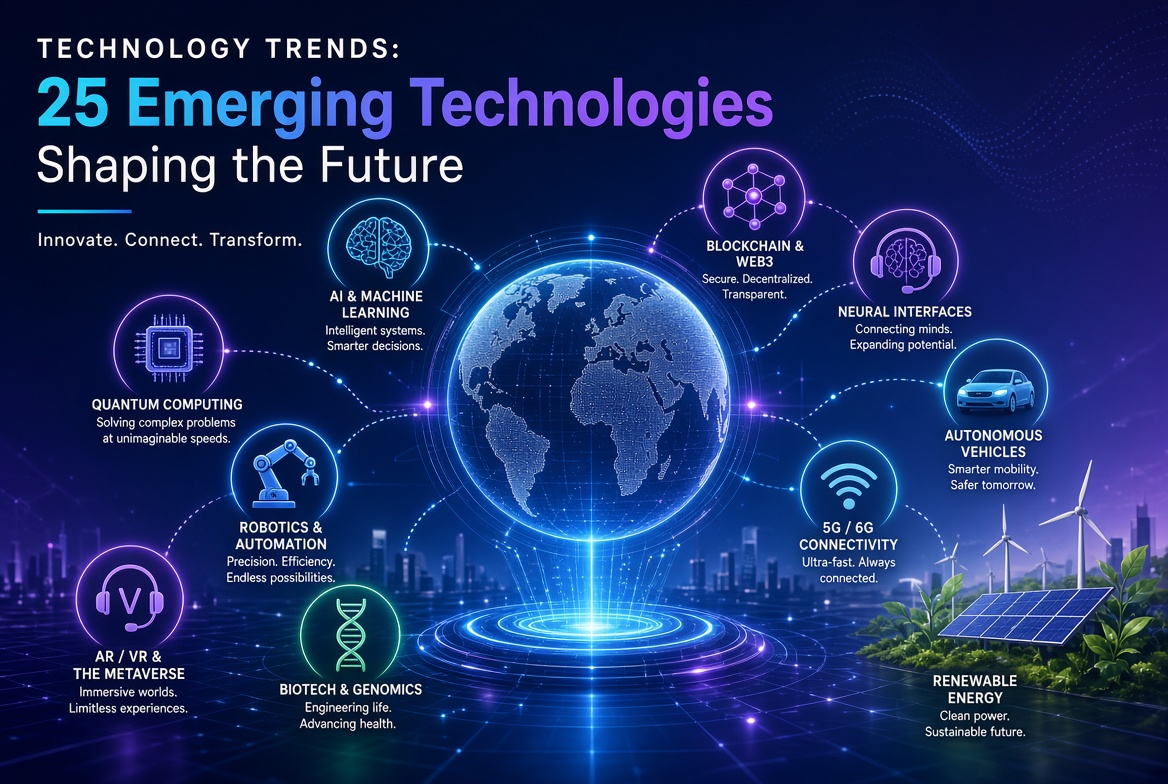
このガイドでは 未来を形作る25の重要な技術トレンドを探りますその仕組みを説明し、実際の用途を強調し、それらが提供する機会と課題を検証します。
目次
- 技術トレンドとは?
- 技術トレンドが重要な理由
- 注目すべき25の技術トレンド
- テクノロジートレンドがビジネスに与える影響
- ナイジェリアおよびアフリカのテクノロジートレンド
- 新興技術を追うことの利点
- テクノロジー採用の課題
- 将来の技術変化に備える方法
- よくある質問
- 結論
技術トレンドとは?
技術トレンドは、デジタルツール、科学革新、ソフトウェア、ハードウェア、および技術システムに関連する開発、採用、投資のパターンです。
新しい発明が商業的に実用的になるとき、既存の技術が大幅に改善されるとき、または組織が広範な問題に対処するための解決策を採用し始めるとき、技術トレンドが生まれることがあります。
例えば、人工知能は機械学習、計算インフラ、データ処理の改善によりAIアプリケーションがよりアクセスしやすくなったため、重要な技術トレンドとなりました。
同様に、クラウドコンピューティングは、企業が物理システムに依存するのではなく、インターネットを介してインフラとソフトウェアにアクセスできるようにすることで、コンピュータリソースの購入と管理の方法を変革しました。
技術トレンドは、いくつかのカテゴリに分けることができます:
- 人工知能: 予測、言語、推論、またはパターン認識に関わるタスクを実行する技術。
- 計算インフラ: 処理能力、ストレージ、ネットワーキング、およびアプリケーション展開を提供するシステム。
- サイバーセキュリティ: システム、アイデンティティ、ネットワーク、および情報を保護するために設計された技術。
- 自動化とロボティクス: 手動介入を減らしてタスクを実行する機械とソフトウェア。
- 接続性: デバイス、アプリケーション、車両、およびインフラを接続する技術。
- デジタル体験: 人々が情報やデジタル環境と対話する方法を変えるツール。
- 持続可能な技術: エネルギー効率を向上させ、環境への影響を減らす革新。
これらのカテゴリを理解することで、組織はすべての新しい技術の発展を追うのではなく、自分たちの目的に関連する革新を特定するのに役立ちます。
技術トレンドが重要な理由
テクノロジートレンドは、ビジネス戦略、雇用、教育、ヘルスケア、金融サービス、製造、輸送、通信に影響を与えます。
関連する開発を理解している組織は、機会を早期に特定し、業務効率を改善し、競争の変化に備えることができます。
1. ビジネス機会を創出する
新興技術は、まったく新しい市場を創出し、既存の製品を改善することができます。
たとえば、AI駆動のカスタマーサポートツールは、企業が一般的な質問に自動的に答えることを可能にし、クラウドベースのソフトウェアは起業家が高価な物理インフラを維持せずにデジタルサービスを提供できるようにします。
2. 生産性を向上させる
自動化、高度な分析、AIツールは反復作業を減少させ、従業員が判断、創造性、対人関係を必要とするタスクに集中するのを助けることができます。
3. 消費者の期待に影響を与える
顧客はますます便利なデジタル決済、応答性のあるウェブサイト、パーソナライズされた推奨、セキュアな認証、アクセス可能なオンラインサービスを期待しています。
合理的なデジタルの期待に応えられないビジネスは、顧客を保持するのに苦労するかもしれません。
4. 組織がリスクを管理するのを助ける
サイバーセキュリティ、デジタルアイデンティティ、ソフトウェアサプライチェーン保護の開発を理解することで、ビジネスは変化する脅威に備えることができます。
5. キャリア開発に影響を与える
関連する技術的および分析的スキルを持つ専門家は、業界が新しいシステムを採用するにつれて、雇用機会を改善できるかもしれません。
それにもかかわらず、技術の価値はその実用的な応用に依存します。問題を解決する理解なしに流行のツールを学ぶことは、限られた長期的な利益をもたらす可能性があります。
注目すべき25の技術トレンド
1. 人工知能と機械学習
人工知能は、情報を分析したり、パターンを認識したり、コンテンツを生成したり、意思決定を支援したりするタスクをソフトウェアに実行させることができるため、最も影響力のあるテクノロジートレンドの1つです。
機械学習は、データからパターンを学び、それを使用して予測や分類を行うことを可能にするAIの一分野です。
企業は、詐欺検出、カスタマーサポート、需要予測、文書処理、推薦システム、品質管理のためにこれらの技術を使用します。
生成的AIは、システムがテキスト、画像、音声、ビデオ、およびソフトウェアコードを生成することを可能にすることにより、アプリケーションの範囲を拡大しました。
しかし、AIシステムは、設計が不適切な場合に不正確な情報を生成したり、バイアスを再現したり、機密データを露呈したりすることがあります。組織は適切なテスト、人間の監視、プライバシー制御、およびセキュリティ対策を実施するべきです。
なぜ重要なのか: AIは明確に定義された問題に適用されると、生産性を向上させ、新しいサービスを提供することができます。
2. エージェンティックAI
エージェンティックAIは、タスクを計画し、利用可能なツールを使用し、結果を評価し、さまざまなレベルの自律性を持って複数のステップを踏むように設計されたシステムを指します。
たとえば、AIエージェントは、サプライヤーを調査し、製品の仕様を比較し、調査結果を整理し、購入推薦を準備するかもしれません。
ソフトウェア開発では、エージェントがエラーを調査したり、コードの変更を提案したり、テストを実行するのを支援できます。
しかし、自律システムは慎重に定義された権限と境界を必要とします。顧客記録にアクセスしたり、メールを送信したり、ファイルを修正したり、金融取引を実行したりできるエージェントは、その指示や保護措置が不十分な場合、重大な損害を引き起こす可能性があります。
なぜ重要なのか: エージェンティックAIは、従来の質問応答アシスタントよりも複雑なワークフローを自動化できますが、信頼性と制御は依然として重要です。
3. 検索強化生成(RAG)
リトリーバル拡張生成は、情報取得と生成的AIを組み合わせています。
トレーニング中に学習した情報に完全に依存するのではなく、RAGアプリケーションは選択した文書のコレクションを検索し、質問に答える際にAIモデルに関連するパッセージを供給します。
例えば、企業は製品マニュアル、従業員ポリシー、技術文書、顧客サポート記録から情報を取得する内部アシスタントを構築できます。
このアプローチは、組織の情報に対する回答をより関連性の高いものにし、サポート文書を参照する方法を提供します。
しかし、システムには適切なアクセス制御、正確な文書インデックス、および無関係または悪意のある取得コンテンツに対する保護措置が依然として必要です。
なぜ重要なのか: RAGは、専門的または頻繁に更新される情報の周りにAIアシスタントを構築するための実用的なアプローチを提供します。
4. AI駆動のサイバーセキュリティ
サイバーセキュリティ技術は、AIや機械学習を活用して、疑わしい活動を特定し、セキュリティイベントを分析し、アラートに優先順位を付け、異常な行動を検出するように増加しています。
これらの能力は、セキュリティチームが大量の情報をより効率的に調査するのに役立ちます。
例えば、AI支援のセキュリティプラットフォームは、異常なログインパターンを特定したり、潜在的に悪意のあるファイルを検出したり、疑わしいネットワークトラフィックを強調表示したりするかもしれません。
攻撃者もAIを利用して説得力のあるフィッシングメッセージを作成し、偵察を自動化し、悪意のあるキャンペーンに適応することができます。
したがって、組織はAIの防御的および攻撃的な使用の両方を考慮する必要があります。
なぜ重要なのか: AIは、セキュリティチームが脅威を特定し、対応する方法を変えていますが、健全なセキュリティ慣行の必要性を排除するものではありません。
5. クラウドコンピューティング
クラウドコンピューティングは、リモート管理されたインフラストラクチャを通じてコンピューティングリソース、データベース、ストレージ、ネットワーキング、およびソフトウェアへのアクセスを提供します。
すべてのサーバーを購入して維持するのではなく、企業はクラウドサービスを利用し、需要に応じてリソースをスケールできます。
一般的なクラウドサービスモデルには、インフラストラクチャサービス、プラットフォームサービス、ソフトウェアサービスが含まれます。
アプリケーションは、ウェブサイトホスティングやデータ分析から、エンタープライズソフトウェアやAI開発まで多岐にわたります。
クラウドコンピューティングはインフラ管理の要件を軽減できますが、リソースが不適切に設定または監視されている場合、費用が増加する可能性があります。
組織は可用性、データの居住地、ベンダー依存、バックアップ手続き、およびアクセスセキュリティも考慮しなければなりません。
なぜ重要なのか: クラウドインフラストラクチャは、多くの現代的なデジタルサービスをサポートし、異なる規模の組織が高度なコンピューティング機能にアクセスできるようにします。
6. エッジコンピューティング
エッジコンピューティングは、すべての操作を遠くのクラウドサーバーに送信するのではなく、情報が生成された場所に近いところで処理します。
このアプローチは、通信遅延を減少させ、ネットワークトラフィックを低下させ、迅速な応答を要求するアプリケーションをサポートできます。
例としては、産業用センサー、接続された車両、スマートカメラ、医療機器におけるローカル処理などがあります。
エッジデバイスは、センサー情報をローカルで分析し、重要な結果のみを中央プラットフォームに送信することがあります。
エッジコンピューティングはクラウドインフラストラクチャを排除するわけではありません。多くのシステムがローカル処理を中央集約型のストレージ、分析、管理と組み合わせています。
なぜ重要なのか: エッジコンピューティングは、ネットワークの遅延、接続制限、またはデータ処理要件により中央集約型処理が適さないレスポンシブなアプリケーションをサポートします。
7. 量子コンピューティング
量子コンピューティングは、従来のコンピューティングとは異なる方法で情報を処理するために量子力学の原理を使用します。
量子コンピュータは量子ビット、またはキュービットを使用し、特定の専門的な計算問題に対して利点を提供することがあります。
潜在的なアプリケーションには、分子シミュレーション、材料科学、最適化、科学研究の側面が含まれます。
しかし、実用的な量子コンピューティングは、ノイズ、エラー訂正、ハードウェアの複雑さ、従来のシステムに対する有用な利点を示すことの難しさなど、 substantial challenges に直面しています。
量子コンピュータがすべてのタスクにおいて通常のコンピュータを上回るとは限らないことを前提としてはいけません。
なぜ重要なのか: 量子コンピューティングは、特化した科学的および産業的アプリケーションに影響を与える可能性がありますが、多くの期待される利益はまだ開発中です。
8. ポスト量子暗号
ポスト量子暗号は、十分に能力のある量子コンピュータからの攻撃に耐えるように設計された暗号手法に焦点を当てています。
この分野は重要です。なぜなら、大規模で耐障害性のある量子コンピュータが実用化されると、一部の広く展開されている公開鍵暗号システムが脆弱になる可能性があるからです。
組織は、暗号が使用されている場所を特定し、脆弱なシステムを評価し、適切なポスト量子アルゴリズムへの移行の準備をする必要があります。
移行は、ソフトウェア、ネットワーク機器、アイデンティティシステム、証明書、および長期間にわたって暗号化された情報に影響を及ぼす可能性があります。
ポスト量子暗号は量子コンピューティングとは異なります:それは通常のコンピュータ上で実行できる数学的な暗号手法を使用します。
なぜ重要なのか: 将来の暗号リスクに備えるためには、量子コンピュータが既存のシステムを脅かす能力に到達する前に計画が必要です。
9. ゼロトラストセキュリティ
ゼロトラストは、ユーザーやデバイスが組織の内部ネットワークに接続されているからといってアクセスが許可されるべきではないという原則に基づいたセキュリティアプローチです。
アクセス決定は、アイデンティティ、デバイスの状態、要求されたリソース、場所、その他の関連するリスク信号を考慮することができます。
組織は、多要素認証、最小権限アクセス、ネットワークのセグメンテーション、継続的な監視、文脈に応じたアクセスポリシーを通じてゼロトラストを実装できます。
たとえば、見慣れないデバイスから機密の会社情報にアクセスする従業員は、追加の認証要件に直面する可能性があります。
ゼロトラストは単一の製品ではありません。複数のセキュリティ制御を組み合わせたアーキテクチャ的なアプローチです。
なぜ重要なのか: 現代の組織は、リモートワーク、クラウドアプリケーション、サードパーティサービス、侵害された認証情報を考慮するセキュリティモデルが必要です。
10. パスキーとパスワードレス認証
パスキーは、公開鍵暗号に基づいた認証方法を提供し、従来のパスワードへの依存を減らします。
プラットフォームや設定に応じて、ユーザーはデバイスのPIN、指紋、顔認証、またはその他のサポートされている方法を使用して認証できます。
パスキーは、認証が正当なサービスと暗号的に関連付けられているため、フィッシングなどの一般的なパスワードベースの攻撃に耐えるように設計されています。
それらは便利さを向上させる一方で、パスワードの使い回しや認証情報の盗難に関連するリスクを低減します。
ただし、組織は依然としてアカウントの復旧、デバイスの交換、管理者アクセス、およびユーザー教育の計画が必要です。
なぜ重要なのか: パスキーは、より安全で便利なデジタル認証への実用的な道を提供します。
11. 検索ベースおよびベクトル検索技術
現代の検索システムは、伝統的なキーワードマッチングとセマンティック検索をますます組み合わせています。
ベクトルデータベースは、埋め込みとして知られる情報の数値表現を保存し、アプリケーションが類似の意味や特徴を持つアイテムを特定するのを助けることができます。
これらのシステムは、文書発見、製品推奨、画像検索、カスタマーサポート、そしてRAGアプリケーションをサポートできます。
例えば、製品検索エンジンは、製品説明の文言が異なっていてもユーザーのリクエストに関連するアイテムを特定することができます。
パフォーマンスは、埋め込みの品質、インデックス戦略、データ準備、評価方法に依存します。
なぜ重要なのか: セマンティック検索は、アプリケーションが正確なキーワードマッチを超えて関連情報を取得するのを助けます。
12. ロボティクスとインテリジェント自動化
ロボティクスは、物理的なタスクを実行するために機械システム、センサー、制御ソフトウェア、コンピュータを組み合わせます。
インテリジェントロボットは、コンピュータビジョン、機械学習、計画アルゴリズムを使用して、従来の自動生産ラインよりも複雑な環境で操作することができます。
アプリケーションには、製造、農業、物流、検査、医療、倉庫業務が含まれます。
ソフトウェアの自動化も引き続き拡大しています。ロボティックプロセスオートメーションは、ビジネスシステム間の情報転送など、繰り返しのデジタルタスクを処理できます。
最も効果的な自動化戦略は、自動化が信頼でき、経済的に正当化されるタスクを特定します。
なぜ重要なのか: ロボティクスとソフトウェアの自動化は、適切なワークフローとメンテナンスに支えられた場合、一貫性、生産性、運用効率を改善できます。
13. ヒューマノイドロボット
ヒューマノイドロボットは、人間の体の構造または動きの能力に似たデザインの機械です。
一部は研究、デモ、工業タスク、または人間の作業者を中心に設計された環境のために開発されています。
彼らの潜在的なアプリケーションには、材料処理、検査、特定の繰り返し作業が含まれます。
しかし、不確実な環境で多様なタスクを安全に実行できるロボットの構築は、技術的に困難なままです。
コスト、エネルギー消費、器用さ、メンテナンス、信頼性、安全要件が実際の展開を制限することがあります。
なぜ重要なのか: ヒューマノイドロボティクスは、最終的に人々のためにデザインされた環境への自動化を拡大するかもしれませんが、広範な採用は実績と経済的価値に依存します。
14. デジタルツイン
デジタルツインは、物理的なオブジェクト、プロセス、またはシステムのデジタル表現であり、実世界の対応物からの情報を使用して更新できます。
デジタルツインは、センサーデータ、シミュレーション、エンジニアリングモデル、および履歴記録を組み合わせることがあります。
製造業者は、デジタルツインを使用して、設備を監視し、パフォーマンスの問題を調査し、変更をシミュレーションし、メンテナンス計画をサポートできます。
都市やインフラの運営者も、それらを使用して建物、輸送システム、エネルギーネットワークをモデル化することがあります。
デジタルモデルは自動的に完全なデジタルツインではありません。その有用性は、データの品質、モデルの精度、物理システムとの反映の程度に依存します。
なぜ重要なのか: デジタルツインは、組織が複雑なシステムを理解し、物理世界に変更を実装する前に決定をテストするのに役立ちます。
15. モノのインターネット(IoT)
モノのインターネットは、センサー、ソフトウェア、ネットワーク通信機能を備えた物理デバイスを接続します。
例としては、スマートメーター、接続された家電、産業用センサー、環境モニター、農業監視機器などがあります。
IoTシステムは、温度、湿度、機器の状態、エネルギー使用量、その他の運用変数に関する情報を収集できます。
企業は、これらの洞察を使用して資産を監視し、応答を自動化し、リソース管理を改善できます。
ただし、接続されたデバイスは、弱いパスワード、古いファームウェア、または安全でない通信プロトコルを使用する場合にセキュリティの脆弱性をもたらす可能性があります。
なぜ重要なのか: IoTは、物理的な環境が監視、自動化、データ駆動型の意思決定を支える情報を生成することを可能にします。
16. 5Gおよび高度な接続性
第5世代モバイルネットワークは、より高いデータ速度、改善された応答性、適切な条件下でのデバイス接続性をサポートすることを目的とした機能を提供します。
これらの機能は、モバイルブロードバンド、産業用アプリケーション、接続された機器、および特定のリアルタイムサービスをサポートできます。
実際の性能は、周波数の可用性、ネットワークの展開、信号状態、デバイスの能力、サービス構成に依存します。
高度な接続性は、クラウドコンピューティング、エッジ処理、接続されたセンサーを組み合わせたアプリケーションにも重要です。
なぜ重要なのか: 信頼性の高い接続性は、多くの新興デジタルサービスの基盤ですが、ネットワークカバレッジと手頃な価格が採用に影響を与えます。
17. 空間コンピューティング
空間コンピューティングは、デジタル情報を物理空間、物体、およびユーザーの動きの理解と組み合わせます。
コンピュータビジョン、空間マッピング、センサー、三次元インターフェースなどの技術を取り入れることができます。
アプリケーションには、産業用トレーニング、建築ビジュアライゼーション、リモートアシスタンス、デザイン、インタラクティブな学習が含まれます。
例えば、技術者は機械の物理的な部品に沿ったデジタル指示を表示することができます。
空間コンピューティングは、拡張現実、仮想現実、および混合現実と重なる広範なカテゴリです。
なぜ重要なのか: 空間インターフェースは、現実の環境に接続されたときに複雑なデジタル情報を理解しやすくすることができます。
18. 拡張現実および混合現実
拡張現実は、物理環境のビューにデジタル情報を重ね合わせ、混合現実はデジタルオブジェクトと周囲の世界とのより統合された相互作用をサポートできます。
デバイスによっては、これらの体験はスマートフォン、タブレット、ヘッドセット、または特別な眼鏡を使用する場合があります。
企業は製品デモ、メンテナンス指示、ナビゲーション、インタラクティブなトレーニングにARを利用できます。
小売業者は、購入前に部屋の中で家具や他の製品をプレビューすることを顧客に許可するかもしれません。
制限には、ハードウェアコスト、快適さ、バッテリー寿命、視覚品質、役立つアプリケーションの可用性が含まれます。
なぜ重要なのか: ARと混合現実は、視覚的で空間的なガイダンスから恩恵を受けるタスクをサポートし、情報を提示する新しい方法を提供します。
19. WebAssemblyおよびWebGPU
WebAssemblyは、モダンなWebブラウザを含むサポートされている環境でコンパイルされたコードを実行するアプリケーションを可能にします。
これは、開発者がサポートされているプラットフォーム間のポータビリティを維持しながら、Web上で計算負荷の高いソフトウェアを実行するのに役立ちます。
WebGPUは、デバイスとブラウザのサポートに応じて、グラフィックス処理機能にアクセスするための現代的なブラウザインターフェースを提供します。
他のウェブ技術と組み合わせることで、これらのツールは高度なグラフィックス、科学的ビジュアライゼーション、創造的なアプリケーション、そして特定の形のローカル機械学習をサポートできます。
これらはブラウザの互換性、セキュリティ、パフォーマンス、およびデバイスの制限を考慮する必要を排除するわけではありません。
なぜ重要なのか: 高度なウェブ技術により、全ユーザーが従来のデスクトッププログラムをインストールする必要なく、ブラウザを通じて高度なアプリケーションを利用できるようになります。
20. ソフトウェアサプライチェーンセキュリティ
現代のソフトウェアは、多数の外部ライブラリ、パッケージ、ビルドツール、開発サービス、インフラ構成要素に依存しています。
1つの依存関係の脆弱性や妥協は、多くの下流アプリケーションに影響を及ぼす可能性があります。
ソフトウェアサプライチェーンのセキュリティは、依存関係管理、アクセス制御、安全なビルドシステム、脆弱性スキャン、署名されたアーティファクト、ソフトウェアの出所を通じて、これらのリスクを低減することを目的としています。
ソフトウェア製品に含まれるコンポーネントを記録するソフトウェア部品表(SBOM)は、組織が影響を受けた依存関係を特定するのに役立ちます。
しかし、SBOMは正確で維持され、脆弱性管理プロセスに統合されている場合に最も有用です。
なぜ重要なのか: ソフトウェアを保護するには、アプリケーションコードだけでなく、それを作成し配布するために使用されるコンポーネントやプロセスにも注意を払う必要があります。
21. 機密コンピューティング
機密コンピューティングは、サポートされている環境で処理中の機密データを保護するために、ハードウェアベースのセキュリティメカニズムを使用します。
従来のセキュリティ制御は、情報が保存または送信されている間の保護を強調することが多いです。機密コンピューティングは、メモリ内で行われる特定の操作に対して保護を拡張するのに役立ちます。
潜在的なアプリケーションには、金融分析、医療研究、機密クラウドワークロード、機密情報を伴うコラボレーションが含まれます。
実装は、ハードウェアの能力、ソフトウェアアーキテクチャ、脅威モデル、および信頼できる実行環境の正しい構成に依存します。
これは完全なセキュリティソリューションではなく、すべての形態の妥協から自動的に保護されるわけではありません。
なぜ重要なのか: 機密コンピューティングは、特定の脅威シナリオにおいて曝露を減らしながら、組織が機密情報を処理するのを支援できます。
22. デジタルアイデンティティと分散型アイデンティティ
デジタルアイデンティティ技術は、オンライン環境でユーザー、デバイス、組織、および資格情報を検証するのに役立ちます。
アプリケーションには、オンラインバンキング、政府サービス、労働力認証、医療システム、電子取引が含まれます。
分散型アイデンティティアプローチは、個人または組織に特定のアイデンティティ資格情報及びそれらの提示方法へのより大きな制御を与えることを目指しています。
一部のシステムは、検証可能な資格情報と分散型識別子を使用しますが、設計は実装ごとに大きく異なります。
Strong identity systems must address verification quality, privacy, credential recovery, fraud, interoperability, and legal requirements.
なぜ重要なのか: Reliable digital identity is essential for secure online transactions and access to increasingly digital services.
23. フィンテックおよび組込みファイナンス
Financial technology uses software, data, and digital infrastructure to deliver or improve financial services.
Examples include mobile payments, digital banking, online lending, automated financial management, and payment APIs.
Embedded finance integrates financial capabilities into non-financial products or platforms. For example, an online marketplace might allow customers to pay directly through its purchasing workflow.
These services can make transactions more convenient, but they also introduce requirements involving fraud prevention, consumer protection, privacy, compliance, and financial risk.
なぜ重要なのか: FinTech can broaden access to financial services and make digital transactions easier for businesses and consumers.
24. グリーンコンピューティングおよびエネルギー効率の良い技術
Green computing focuses on reducing the environmental impact of computing systems throughout their lifecycle.
Approaches include improving energy efficiency, extending hardware lifespans, optimizing software, using renewable electricity, and reducing electronic waste.
Data centers, AI workloads, connected devices, and digital infrastructure can consume substantial energy and other resources.
Software optimization can sometimes reduce the computing resources required to deliver a service, although the environmental impact depends on workload characteristics and infrastructure.
Organizations can evaluate energy consumption, hardware utilization, equipment lifespan, and resource efficiency to identify improvement opportunities.
なぜ重要なのか: As digital services expand, efficient computing can help manage operating costs and environmental impacts.
25. 脳-コンピュータインターフェースおよび神経形態コンピューティング
Brain-computer interfaces establish communication pathways between brain activity and external devices.
Research and clinical applications include assistive communication, movement support, and the investigation of neurological functions.
Different systems use different approaches, including non-invasive sensors and surgically implanted electrodes. Their capabilities, risks, and intended uses vary substantially.
Neuromorphic computing takes a different approach. It explores computing architectures inspired by aspects of biological neural systems, with the goal of supporting certain forms of efficient information processing.
Both fields remain technically demanding and involve significant questions about reliability, privacy, safety, and practical deployment.
なぜ重要なのか: These technologies may open new possibilities in healthcare, assistive systems, and specialized computing, although their maturity varies widely.
テクノロジートレンドがビジネスに与える影響
Technology trends can influence business performance through productivity, customer experience, cost structures, security, and product development.
However, successful adoption requires more than purchasing new software or investing in fashionable technology.
運営効率の向上
Automation can reduce repetitive tasks, while analytics can help identify bottlenecks and improve resource allocation.
For example, a logistics company might combine route-planning software with vehicle tracking to improve delivery coordination.
新しい製品とサービスの創出
Businesses can use APIs, cloud infrastructure, AI, and digital payments to develop products that would previously have required greater technical investment.
A small company might build a subscription service using cloud hosting, an established payment provider, and existing software components.
顧客体験の強化
Personalized recommendations, faster customer support, and more convenient digital transactions can improve the customer journey.
These capabilities should be designed around genuine customer needs rather than introduced simply because the technology is available.
リスク管理の改善
Cybersecurity tools, digital identity systems, and monitoring platforms can help businesses identify and manage operational threats.
Technology alone cannot eliminate risk. Effective governance, employee training, and clear response procedures remain necessary.
より良い意思決定の支援
Business intelligence and AI-powered analytics can help organizations examine sales, inventory, customer behavior, and operational performance.
Decision-makers should verify data quality and understand the limitations of analytical models before relying on their outputs.
ナイジェリアおよびアフリカのテクノロジートレンド
Technology adoption in Nigeria and across Africa presents opportunities to address practical challenges in finance, agriculture, education, healthcare, transportation, energy, and commerce.
The most valuable innovations are often those that respond to local conditions, including infrastructure availability, affordability, language requirements, regulatory frameworks, and customer behavior.
1. デジタルペイメントおよび金融技術
Mobile payments, electronic transfers, payment gateways, and digital financial platforms support transactions between consumers and businesses.
Entrepreneurs can use established payment services to accept online payments, sell digital products, or manage e-commerce transactions.
Trust, fraud prevention, transaction reliability, and regulatory compliance remain important.
2. AI駆動のビジネスサービス
Businesses can use AI tools to draft content, summarize documents, categorize customer inquiries, analyze information, and automate selected workflows.
Local-language support and the quality of available data can influence how effectively these applications serve different communities.
Companies should avoid entering confidential information into AI services without appropriate privacy and security safeguards.
3. 農業技術
Sensors, satellite imagery, weather information, and analytical tools can help farmers monitor environmental conditions and make better-informed operational decisions.
Potential applications include irrigation planning, crop monitoring, pest identification, and supply-chain coordination.
Solutions must be practical, affordable, and appropriate for local connectivity and farming conditions.
4. デジタル教育
Online learning platforms, virtual classrooms, educational applications, and AI-assisted learning tools can expand access to educational resources.
Offline functionality, accessible pricing, device availability, and relevant educational content are important considerations.
5. Eコマースおよびデジタル起業家精神
Entrepreneurs can use websites, online marketplaces, digital marketing, and cloud-based tools to reach customers beyond their immediate communities.
For example, a Nigerian entrepreneur can build a niche information website, offer online services, sell digital products, or develop a subscription platform.
Long-term success still depends on product quality, customer trust, effective marketing, and sustainable business economics.
6. サイバーセキュリティおよびデジタルトラスト
As more transactions and services move online, businesses need stronger authentication, secure websites, reliable backups, fraud prevention, and effective data-protection practices.
Small businesses should begin with practical measures such as multifactor authentication, software updates, secure payment integrations, access controls, and incident-response planning.
新興テクノロジートレンドを追う利点
Following technology developments can provide several advantages.
Better strategic planning: Organizations can identify technologies that may affect their industries and prepare appropriate responses.
New business opportunities: Emerging technologies may create demand for software, consulting, training, digital products, and specialized services.
Improved productivity: Suitable tools can automate repetitive work and reduce operational delays.
Competitive differentiation: Businesses that solve customer problems effectively may distinguish themselves from competitors.
Improved security awareness: Monitoring cybersecurity developments helps organizations understand changing risks.
Professional development: Learning relevant technologies can improve technical knowledge and support career growth.
Innovation: Understanding new capabilities can inspire better products, services, and business processes.
These benefits are not automatic. They depend on the relevance of the technology, implementation quality, staff capability, and measurable results.
テクノロジー採用の課題
Although technology can create substantial value, organizations must also manage several challenges.
高い導入コスト
Hardware, software licenses, cloud usage, integration, employee training, and maintenance can increase the total cost of ownership.
A technology that appears affordable initially may become expensive as usage grows.
サイバーセキュリティリスク
New systems can introduce vulnerabilities, additional access points, and dependencies on external providers.
Security should be incorporated into technology selection and implementation rather than added as an afterthought.
スキル不足
Some technologies require specialized skills that may not be available within an organization.
Training existing employees, hiring specialists, and working with experienced implementation partners can help address this problem.
プライバシーとコンプライアンス
AI systems, analytics platforms, connected devices, and identity technologies may process personal or confidential information.
Organizations should determine what data is collected, how it is used, who can access it, and which legal requirements apply.
統合の問題
New software may not work smoothly with existing databases, workflows, or applications.
Compatibility assessments and controlled testing can reduce the likelihood of disruption.
誇大広告と不確実なリターン
Technology vendors may promote ambitious benefits that are difficult to achieve in practice.
Businesses should conduct pilots, measure results, compare alternatives, and define success criteria before making large investments.
将来の技術変化に備える方法
You do not need to adopt every emerging technology to remain competitive. A structured approach can help you focus on developments with the greatest potential value.
ステップ1:関連する問題を特定する
Start by identifying challenges that affect your business, career, or personal objectives.
Examples include reducing administrative work, improving website performance, protecting customer data, or reaching new customers.
ステップ2:適切な技術を調査する
Investigate technologies that address the identified problems.
Compare their capabilities, limitations, costs, security requirements, and maturity.
ステップ3:ビジネスの価値を評価する
Estimate the expected benefits and total implementation costs.
Consider measurable indicators such as time saved, error reduction, customer satisfaction, operating expenses, or additional revenue.
ステップ4:小規模なパイロットを開始する
Test the technology on a limited scale before introducing it across the organization.
A pilot can reveal integration problems, usability concerns, security weaknesses, and unexpected expenses.
ステップ5:従業員を訓練する
Ensure that the people using the technology understand how it works, what its limitations are, and when human intervention is required.
ステップ6:セキュリティ管理を実施する
Review authentication, access permissions, data protection, backups, software updates, and incident-response procedures.
ステップ7:結果を測定する
Compare actual performance against the original objectives.
If a technology does not deliver sufficient value, adjust the implementation, test an alternative, or discontinue the project.
ステップ8:進展を監視する
Technology changes continuously. Review relevant developments periodically and update your strategy when new evidence justifies a change.
よくある質問
1. 最も重要な技術トレンドは何ですか?
Important trends include artificial intelligence, AI agents, cloud computing, cybersecurity, automation, edge computing, digital identity, advanced connectivity, and energy-efficient computing. The most relevant trends depend on the industry and the problems an organization needs to solve.
2. どの技術トレンドがビジネスに最も大きな影響を与えますか?
Artificial intelligence is likely to remain an important influence because it can be integrated into many existing workflows. However, cybersecurity, cloud infrastructure, automation, and digital payments may be equally important in particular industries.
3. 初心者はどの技術トレンドを最初に学ぶべきですか?
Beginners can start with digital literacy, AI tools, cybersecurity fundamentals, cloud computing concepts, data analysis, and basic programming. The best learning path depends on whether the goal is employment, entrepreneurship, or personal productivity.
4. 小規模企業は新興技術からどのように利益を得ることができますか?
Small businesses can use cloud-based software, AI-assisted workflows, digital payments, customer relationship management systems, and analytics tools to improve productivity and reach customers. They should begin with affordable solutions that address measurable business needs.
5. 新興技術は常に信頼できますか?
No. Some technologies are mature and widely deployed, while others remain experimental. Reliability depends on the application, implementation, testing, security controls, and operating environment.
6. どのようにして技術トレンドについていくことができますか?
Follow reputable technology publications, official technical documentation, research organizations, professional communities, and industry reports. Focus on developments relevant to your interests rather than attempting to follow every announcement.
7. どの技術トレンドが起業家にチャンスを提供しますか?
Potential opportunities include AI-powered services, cybersecurity consulting, website development, cloud services, educational platforms, digital payments, business automation, and specialized software. Entrepreneurs should validate customer demand before investing heavily.
8. 技術トレンドと技術革新の違いは何ですか?
A technology innovation is a new or significantly improved product, method, or system. A technology trend describes a broader pattern of development, adoption, or investment that may involve multiple innovations over time.
結論
Technology trends are reshaping industries by changing how organizations process information, protect data, automate operations, connect devices, and deliver services.
Artificial intelligence, cloud computing, cybersecurity, robotics, digital identity, and energy-efficient computing offer opportunities to improve productivity and develop new products. Other fields, including quantum computing, brain-computer interfaces, and neuromorphic computing, continue to advance through research and specialized applications.
However, successful technology adoption requires more than following popular developments. Businesses and individuals must evaluate practical benefits, implementation costs, security risks, available skills, and long-term sustainability.
The most effective strategy is to identify a real problem, investigate relevant technologies, test promising solutions, and measure the results.
For entrepreneurs, professionals, and organizations, staying informed about technology trends can support better decisions and help identify opportunities in the evolving digital economy.
Stay informed, continue learning, and adopt technology where it creates measurable value.
Explore more technology guides on SignalMediaMKG to understand the innovations influencing digital business, cybersecurity, software development, and the future of computing.