
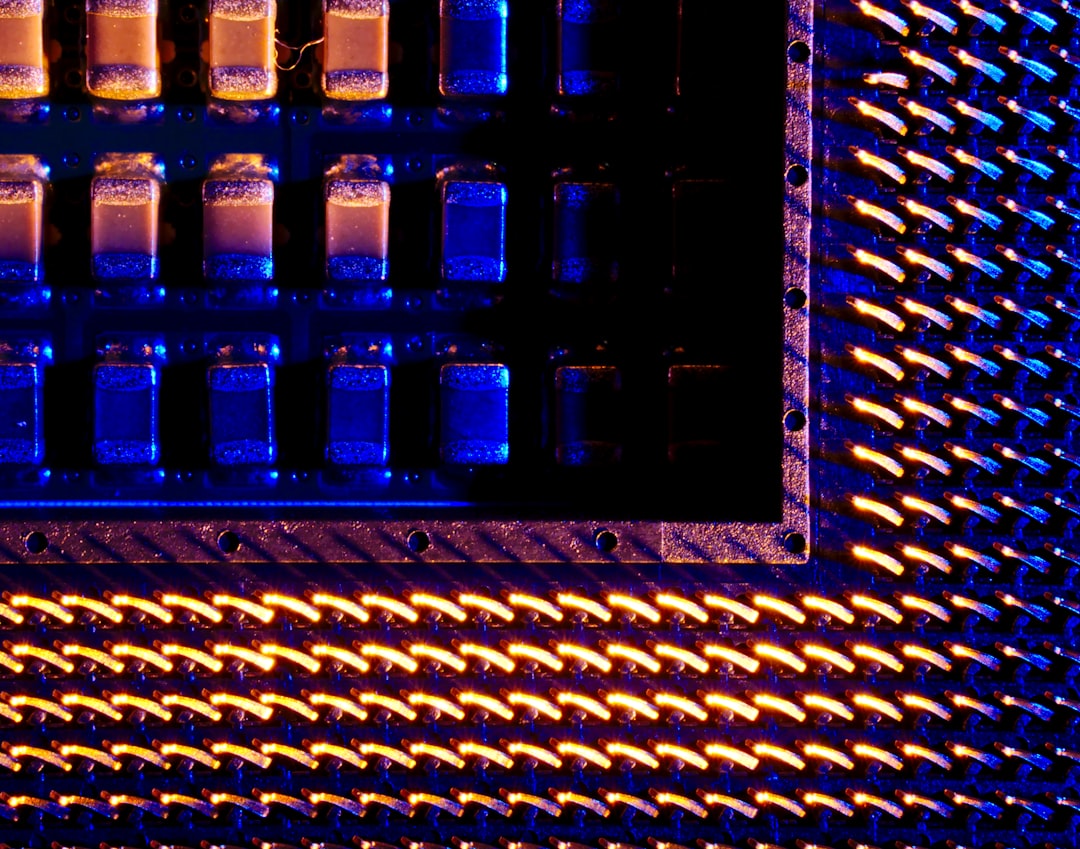

Quantum computing is no longer a distant sci-fi dream. With the global quantum computing market projected to reach over $125 billion by 2030, this revolutionary technology is rapidly moving from theoretical physics labs into commercial reality. Traditional computers, from the smartphone in your pocket to the world’s fastest supercomputers, process information sequentially. Quantum computers, however, leverage the bizarre rules of quantum mechanics to solve highly complex problems at speeds once thought impossible.
Understanding this paradigm shift is crucial for businesses, developers, and tech enthusiasts alike. This comprehensive guide breaks down the fundamentals of quantum technology, compares it to classical systems, and explores how it will reshape our world.
Table of Contents
Understanding Quantum Mechanics in Computing
To grasp how quantum computing works, we must look at the subatomic level. Classical computers use transistors to process data as bits, which represent either a 0 or a 1. Quantum computers use quantum bits, or qubits, which process information in a fundamentally different way.
Qubits vs. Classical Bits
Unlike a standard bit, a qubit can exist in multiple states simultaneously. This ability allows quantum computers to analyze vast amounts of data and explore millions of possibilities at the same time, rather than checking them one by one.
Superposition and Entanglement
Two key principles of quantum mechanics govern how qubits operate:
- Superposition: This allows a qubit to represent a 0, a 1, or any fractional combination of both at the same time. Think of a spinning coin; while spinning, it is neither just heads nor just tails, but a blur of both.
- Entanglement: This is a unique connection where qubits become linked. The state of one qubit instantly influences the state of another, no matter how far apart they are. Einstein famously called this “spooky action at a distance,” and it allows quantum systems to share information instantaneously, multiplying processing power exponentially.
Classical vs. Quantum Computing
It is important to note that quantum computers are not just faster versions of our current computers. They are entirely different tools designed for specific, highly complex tasks.
| Feature | Classical Computing | Quantum Computing |
|---|---|---|
| Basic Unit | Bits (0 or 1) | Qubits (0, 1, or both simultaneously) |
| Operation | Boolean logic gates | Quantum logic gates (superposition & entanglement) |
| Best Used For | Daily tasks, data storage, streaming, basic calculations | Complex optimization, molecular modeling, cryptography |
| Environment | Room temperature | Extreme cold (near absolute zero, -273°C) |
Real-World Applications of Quantum Power
The practical applications of quantum computing span across several major industries, offering solutions to problems that would take classical computers millennia to solve.
- Pharmaceuticals and Drug Discovery: Quantum computers can simulate the precise behavior of molecules. This allows scientists to model chemical reactions accurately, potentially reducing the time it takes to develop life-saving medicines from decades to days.
- Financial Modeling: Financial institutions can use quantum algorithms to analyze highly volatile market behaviors, optimize investment portfolios, and detect fraudulent transactions with unprecedented accuracy.
- Logistics and Supply Chain: Finding the absolute most efficient route for global shipping networks involves billions of variables. Quantum systems can calculate these optimal paths instantly, drastically lowering global carbon emissions and shipping costs.
- Cybersecurity and Cryptography: Quantum computers will eventually be strong enough to break modern encryption standards like RSA. However, they are also paving the way for unbreakable quantum cryptography, securing global communication networks.
Expert Tips for Entering the Quantum Era
If you want to prepare your business or career for the quantum revolution, keep these expert strategies in mind:
- Start with Hybrid Solutions: Do not wait for fully fault-tolerant quantum computers. Many enterprises are already utilizing hybrid cloud models that combine classical servers with early-stage quantum processors.
- Learn Quantum Programming Languages: Developers should start exploring open-source quantum software development kits (SDKs) like IBM’s Qiskit, Google’s Cirq, or Microsoft’s Q#.
- Assess Your Cryptographic Vulnerabilities: Begin transitioning your organization toward quantum-resistant security algorithms to protect your long-term data today.
Common Mistakes in Understanding Quantum Tech
Despite the excitement, several misconceptions persist about this emerging technology:
- Thinking Quantum Will Replace PCs: Quantum computers will not replace your laptop or smartphone. They are specialized machines built for heavy-duty scientific and mathematical computations.
- Assuming They Are Ready for Everything: Current quantum systems suffer from high error rates due to “decoherence” (environmental noise disrupting qubits). Building stable, error-corrected quantum computers remains a significant engineering challenge.
- Ignoring the Timeline: While progress is rapid, widespread commercial quantum utility is still a few years away. It is a marathon, not a sprint.
Frequently Asked Questions (FAQs)
1. What is quantum computing in simple terms?
Quantum computing is a type of computing that uses the principles of quantum physics to solve complex mathematical and scientific problems much faster than traditional computers ever could.
2. How fast is a quantum computer?
In 2019, Google’s Sycamore processor completed a calculation in 200 seconds that would have taken the world’s fastest supercomputer 10,000 years to solve. However, this speed is highly task-specific.
3. Can I buy a quantum computer?
No, they are incredibly expensive, require cryogenic cooling systems to run at temperatures colder than deep space, and are currently housed in specialized labs. However, you can access quantum processors online via cloud services like IBM Quantum Experience.
4. Will quantum computing destroy Bitcoin and blockchain?
While quantum computers could theoretically crack the cryptography securing blockchain networks, the industry is already developing quantum-resistant cryptographic keys to secure digital assets before that happens.
5. What is quantum decoherence?
Decoherence is the loss of a qubit’s quantum state due to environmental interference like heat, vibration, or electromagnetic waves. It is the primary cause of errors in quantum calculations.
6. What industries will benefit first from quantum computing?
The pharmaceutical, chemical, financial, and logistics industries are poised to benefit first, as they rely heavily on molecular simulation and complex optimization algorithms.
7. What is Qiskit?
Qiskit is an open-source software development kit created by IBM. It allows developers to write programs and run them on real quantum computers via the cloud using Python.
8. When will quantum computers be mainstream?
Most experts believe that fault-tolerant, commercially viable quantum computers will become widely accessible within the next 5 to 10 years, as researchers solve current error-correction challenges.
As we stand on the brink of this technological paradigm shift, staying informed about quantum advancements is no longer optional for forward-thinking professionals. Embracing these concepts today ensures that we are not merely spectators, but active participants in shaping a quantum-powered tomorrow.