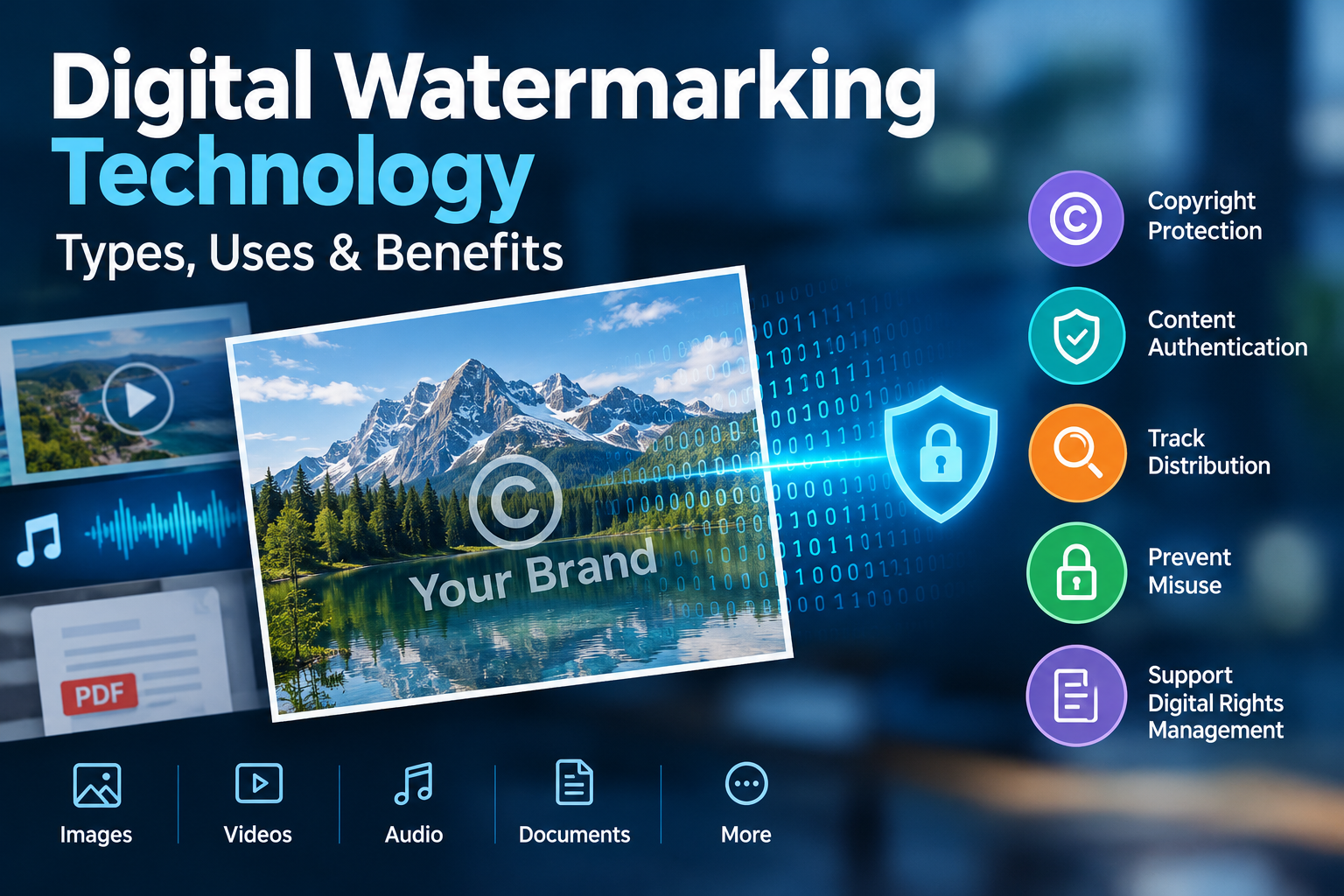

เนื้อหาดิจิทัลง่ายต่อการสร้าง แจกจ่าย คัดลอก และแก้ไขมากกว่าที่เคยเป็นมา รูปภาพ วิดีโอ เพลง เอกสาร และสินทรัพย์ดิจิทัลอื่น ๆ สามารถหมุนเวียนในเว็บไซต์และแพลตฟอร์มโซเชียลมีเดียภายในไม่กี่วินาที ขณะที่สิ่งนี้สร้างโอกาสสำหรับผู้สร้างและธุรกิจ แต่ก็ยังนำเสนอความท้าทายเกี่ยวกับการละเมิดลิขสิทธิ์ การเป็นเจ้าของเนื้อหา การแจกจ่ายโดยไม่ได้รับอนุญาต และความถูกต้องของดิจิทัล
เทคโนโลยีการทำลายน้ำดิจิทัล ช่วยจัดการกับความท้าทายเหล่านี้โดยการฝังข้อมูลที่สามารถระบุได้ลงในเนื้อหาดิจิทัล ขึ้นอยู่กับวิธีที่ใช้ ลายน้ำอาจมองเห็นได้สำหรับผู้ชม หรือซ่อนอยู่ภายในภาพ วิดีโอ ไฟล์เสียง หรือเอกสาร มันสามารถช่วยระบุเจ้าของเนื้อหา ติดตามสำเนาที่ไม่ได้รับอนุญาต ยืนยันความถูกต้อง หรือสนับสนุนกระบวนการจัดการเนื้อหา
การทำลายน้ำดิจิทัลมีความเกี่ยวข้องมากขึ้นกับช่างภาพ ผู้เผยแพร่ ผู้สร้างภาพยนตร์ นักดนตรี บริษัทซอฟต์แวร์ สถาบันการศึกษา และองค์กรที่บริหารสินทรัพย์ดิจิทัลที่มีค่า
อย่างไรก็ตาม การทำลายน้ำไม่ใช่ทางออกที่สมบูรณ์แบบสำหรับการละเมิดลิขสิทธิ์ดิจิทัลหรือข้อมูลเท็จ ประสิทธิภาพของมันขึ้นอยู่กับวิธีการนำลายน้ำไปใช้ ประเภทเนื้อหาที่ได้รับการปกป้อง และว่าลายน้ำสามารถอยู่รอดจากการคัดลอก การบีบอัด การแก้ไข หรือการลบโดยเจตนาได้หรือไม่
คู่มือนี้อธิบายว่าวิธีการทำงานของการทำลายน้ำดิจิทัล ประเภทหลัก การใช้งานจริง ประโยชน์ ข้อจำกัด และการพัฒนาในอนาคต
สารบัญ
- เทคโนโลยีการทำลายน้ำดิจิทัลคืออะไร?
- การทำลายน้ำดิจิทัลทำงานอย่างไร?
- ประเภทของการทำลายน้ำดิจิทัล
- การทำลายน้ำดิจิทัล เปรียบเทียบกับการเข้ารหัส และลายเซ็นดิจิทัล
- การใช้งานทั่วไปของการทำลายน้ำดิจิทัล
- ประโยชน์หลักของการทำลายน้ำดิจิทัล
- ความท้าทายและข้อจำกัด
- การทำลายน้ำดิจิทัลและปัญญาประดิษฐ์
- ธุรกิจสามารถนำการทำลายน้ำดิจิทัลไปใช้ได้อย่างไร
- แนวโน้มการทำลายน้ำดิจิทัลที่ควรจับตา
- ข้อผิดพลาดทั่วไปในการทำลายน้ำดิจิทัล
- คำถามที่พบบ่อย
- บทสรุป
1. เทคโนโลยีการทำลายน้ำดิจิทัลคืออะไร?
การทำลายน้ำดิจิทัลเป็นเทคนิคที่ใช้ในการฝังข้อมูลลงในไฟล์ดิจิทัลเพื่อให้ข้อมูลสามารถช่วยระบุ ยืนยัน ติดตาม หรือปกป้องเนื้อหาได้
ลายน้ำอาจมีข้อมูลเช่น:
- ชื่อหรือตัวระบุของเจ้าของลิขสิทธิ์
- ตัวระบุแบรนด์หรือบริษัท
- การอ้างอิงการทำธุรกรรมหรือใบอนุญาต
- รหัสเฉพาะที่เกี่ยวข้องกับผู้รับเฉพาะ
- ข้อมูลเมตาที่ใช้ในการระบุไฟล์หรือยืนยันแหล่งที่มา
- ข้อมูลที่ช่วยระบุว่าเนื้อหาได้ถูกแก้ไขหรือไม่
ลายน้ำสามารถเพิ่มลงในภาพดิจิทัล วิดีโอ การบันทึกเสียง เอกสารอิเล็กทรอนิกส์ และสื่อดิจิทัลประเภทอื่น ๆ ได้.
ตัวอย่างเช่น ช่างภาพอาจวางโลโก้ที่มองเห็นได้บนภาพที่แสดงในพอร์ตโฟลิโอออนไลน์ ซึ่งทำให้แหล่งที่มาของภาพนั้นชัดเจนยิ่งขึ้น แม้ว่าโลโก้อาจถูกตัดออกหรือถูกลบไป
บริษัทสื่อภาพอาจฝังลายน้ำที่ซ่อนอยู่ในภาพตัวอย่าง หากภาพตัวอย่างถูกแจกจ่ายโดยไม่ได้รับอนุญาต บริษัทอาจสามารถตรวจจับตัวบ่งชี้ที่ฝังอยู่และตรวจสอบต้นทางของมันได้
ตัวอย่างเหล่านี้แสดงให้เห็นถึงสองแนวทางที่แตกต่างกัน: การสร้างแบรนด์ที่มองเห็นได้และข้อมูลที่ไม่โดดเด่นซึ่งถูกฝังอยู่ในเนื้อหาดิจิทัลเอง
ทำไมการทำลายน้ำดิจิทัลถึงสำคัญ?
ไฟล์ดิจิทัลสามารถถูกทำสำเนาได้โดยไม่ทำให้คุณภาพลดลงในลักษณะเดียวกับที่การทำสำเนาซ้ำสามารถส่งผลต่อวัสดุทางกายภาพบางอย่าง เมื่อไฟล์ถูกแชร์ออนไลน์ เจ้าของไฟล์อาจมีการควบคุมที่จำกัดเกี่ยวกับที่ที่มันไป
การทำลายน้ำดิจิทัลเป็นวิธีหนึ่งในการรักษาการเชื่อมต่อระหว่างไฟล์และข้อมูลเกี่ยวกับความเป็นเจ้าของ แหล่งที่มา หรือการแจกจ่าย
มันสามารถสนับสนุนการจัดการสิทธิ์ในลิขสิทธิ์ การตรวจสอบเนื้อหา การออกใบอนุญาตสื่อ และการสอบสวนเกี่ยวกับการแชร์ที่ไม่ได้รับอนุญาต
สิ่งที่สำคัญคือ ลายน้ำไม่สร้างความเป็นเจ้าของทางกฎหมายโดยอัตโนมัติ การขัดแย้งเกี่ยวกับความเป็นเจ้าของอาจต้องการสัญญา ไฟล์ต้นฉบับ เวลาที่ถูกบันทึก บันทึกการออกใบอนุญาต หรือหลักฐานอื่น ๆ
2. การทำลายน้ำดิจิทัลทำงานอย่างไร?
กระบวนการทางเทคนิคจะแตกต่างกันไปตามประเภทไฟล์และวิธีการทำลายน้ำ แต่ระบบส่วนใหญ่มีขั้นตอนการทำงานที่คล้ายกัน
ขั้นตอนที่ 1: เตรียมเนื้อหาดิจิทัล
กระบวนการเริ่มต้นด้วยไฟล์ต้นฉบับ เช่น ภาพถ่าย วิดีโอ การบันทึกเสียง หรือเอกสาร PDF
ระบบจะระบุรูปแบบเนื้อหาและกำหนดวิธีการทำลายน้ำที่เหมาะสม
ตัวอย่างเช่น วิธีการที่ออกแบบมาสำหรับภาพถ่ายอาจใช้ไม่ได้ผลดีสำหรับการบันทึกเสียงเพราะไฟล์มีโครงสร้างและลักษณะการรับรู้ที่แตกต่างกัน
ขั้นตอนที่ 2: สร้างลายน้ำ
ลายน้ำอาจประกอบด้วยโลโก้ ข้อความ ตัวระบุที่ไม่ซ้ำกัน ลำดับบิต หรือข้อมูลอื่น ๆ
ลายน้ำที่มองเห็นได้อาจมีชื่อบริษัท ลายน้ำที่ซ่อนอยู่อาจมีรหัสเฉพาะที่เชื่อมโยงกับบันทึกในฐานข้อมูล
ปริมาณข้อมูลที่ฝังอยู่ขึ้นอยู่กับวิธีการและวัตถุประสงค์ที่ตั้งใจไว้
ขั้นตอนที่ 3: ฝังลายน้ำ
ระบบทำลายน้ำจะปรับเปลี่ยนเนื้อหาหรือการแทนค่าดิจิทัลพื้นฐานเพื่อรวมข้อมูลที่เลือก
ในการทำลายน้ำภาพ อาจเกี่ยวข้องกับการปรับเปลี่ยนค่าพิกเซลที่เลือกหรือนำภาพไปเปลี่ยนเป็นการแทนค่าอิงความถี่ก่อนที่จะทำการเปลี่ยนแปลงอย่างระมัดระวัง
เทคนิคบางอย่างใช้การแปลงโคไซน์ที่แยกจากกันหรือการแปลงคลื่นที่แยกจากกัน วิธีการอื่น ๆ ทำงานโดยตรงกับพิกเซลหรือใช้การแทนค่าที่เรียนรู้
สำหรับเสียงและวิดีโอ วิธีการฝังจะปรับให้เข้ากับลักษณะของสัญญาณเสียงและกรอบวิดีโอ
เป้าหมายมักจะเป็นการสร้างสมดุลระหว่างความต้องการที่แข่งขันกันสองประการ:
- ไม่สามารถรับรู้ได้: The watermark should not noticeably reduce the content’s quality.
- Robustness: The watermark should remain detectable after expected forms of processing or modification.
A watermark optimized for one purpose may perform poorly at another. For example, a highly subtle watermark may be difficult to detect after aggressive compression.
ขั้นตอนที่ 4: แจกจ่ายเนื้อหาที่มีลายน้ำ
The watermarked file can then be published, licensed, shared, or delivered to customers.
Some organizations embed the same watermark in every copy. Others create a unique watermark for each recipient, transaction, or distribution channel.
Unique recipient identifiers can help investigate leaks, but their use must be managed carefully to avoid exposing personal information or creating unfair accusations when files are redistributed.
ขั้นตอนที่ 5: ตรวจจับหรือตัดลายน้ำออก
When a file needs to be checked, compatible detection software analyzes it for the embedded information.
Depending on the technique, the system may need the original file, a reference watermark, a secret key, or other supporting information.
A detected identifier can then be compared with stored records to help identify the content’s source or associated license.
ขั้นตอนที่ 6: สืบสวนและตอบสนอง
The final step depends on the purpose of the watermark.
A media company might investigate unauthorized distribution. A publisher might verify whether a document came from an approved source. A business might use the result as one component of a broader authenticity check.
Watermark detection should not automatically be treated as conclusive proof of wrongdoing. Detection systems can produce false positives, and some transformations can damage or remove a watermark.
3. ประเภทของการทำลายน้ำดิจิทัล
Digital watermarking can be classified in several ways, including visibility, robustness, detectability, and the type of content being protected.
3.1 การทำลายน้ำที่มองเห็น
Visible watermarking places an identifiable mark directly on the displayed content.
ตัวอย่างรวมถึง:
- A photographer’s logo on an image.
- A broadcaster’s logo in the corner of a video.
- A draft label across a confidential document.
- A company name over a preview image.
ข้อดี:
- Easy for people to recognize.
- Can provide immediate branding.
- May discourage casual unauthorized reuse.
Limitations:
- Can interfere with the viewing experience.
- May be cropped, obscured, or removed.
- May not establish ownership on its own.
Visible watermarking is particularly useful when the primary objective is branding or communicating the status of a file.
3.2 การทำลายน้ำที่มองไม่เห็น
Invisible watermarking embeds information that is not normally apparent to the viewer or listener.
The information may be detected using specialized software.
Invisible watermarking is used in some copyright-management systems, content-tracking workflows, and media-authentication applications.
Its effectiveness depends on the embedding technique, the quality of the original content, and the changes made to the file after embedding.
A watermark that is invisible in one format may become detectable after conversion, while another may become too damaged to recover.
3.3 การทำลายน้ำที่แข็งแกร่ง
Robust watermarking is designed to remain detectable after common forms of processing.
Depending on the implementation, this may include:
- Image resizing.
- Compression.
- Changes in brightness or contrast.
- Audio compression.
- Video transcoding.
- Certain forms of noise or signal modification.
Robustness is important when content is expected to move across platforms that modify files during uploading or distribution.
However, no robust watermark is guaranteed to survive every transformation or deliberate removal attempt.
3.4 การทำลายน้ำที่ละเอียดอ่อน
Fragile watermarking is designed to be sensitive to changes in the protected content.
If the file is modified, the watermark may be damaged or fail verification.
This characteristic can be useful for detecting tampering with images, documents, or other digital records.
For example, a system could use a fragile watermark to help determine whether an image has been modified since it was prepared.
The method must be designed carefully because ordinary operations, such as file conversion or compression, can also cause changes that affect verification.
3.5 การทำลายน้ำกึ่งละเอียดอ่อน
Semi-fragile watermarking aims to tolerate certain acceptable transformations while detecting other modifications.
A system might be designed to tolerate limited compression but flag changes that are more likely to indicate substantive editing.
The distinction depends on the watermarking algorithm and its verification rules. It should not be assumed that every semi-fragile watermark can reliably distinguish harmless changes from malicious ones.
3.6 การทำลายน้ำแบบบอดและไม่บอด
Watermarking systems can also be classified by the information needed to detect a watermark.
Blind watermarking attempts to detect or extract the watermark without requiring the original unwatermarked content.
Non-blind watermarking requires the original content or another reference file during verification.
Blind techniques can simplify large-scale monitoring because the original file does not always need to be stored for comparison. Non-blind techniques can be useful when the verification process benefits from a trusted reference.
3.7 การทำลายน้ำดิจิทัลตามประเภทสื่อ
Watermarking techniques also differ according to the content being protected.
| Media type | Typical use | ตัวอย่าง |
|---|---|---|
| ภาพ | Copyright identification and authenticity checks | Watermarking a photograph |
| วิดีโอ | Copyright management and distribution tracking | Embedding an identifier in a licensed video |
| Audio | Music ownership and media tracking | Embedding information in a recording |
| เอกสาร | Identification and document-integrity workflows | Watermarking an approved PDF |
| Digital artwork | Ownership identification and licensing | Embedding a creator identifier |
| Scientific or medical images | Provenance and record-management workflows | Linking an image to associated records |
The most appropriate method depends on the content format, intended use, quality requirements, and threat model.
4. การทำลายน้ำดิจิทัล เทียบกับ การเข้ารหัส เทียบกับ ลายเซ็นดิจิทัล
Digital watermarking, encryption, and digital signatures can all contribute to digital-content protection, but they solve different problems.
| ฟีเจอร์ | Digital watermarking | Encryption | Digital signatures |
|---|---|---|---|
| Main purpose | Embed identifying or verification information in content | Protect information from unauthorized access | Verify integrity and support authentication of a signed message or file |
| Changes the content or representation | Usually | Encrypts the protected data | Typically signs a hash or representation without embedding a visible mark |
| Hides content from unauthorized viewers | No, not by itself | Yes, when properly implemented | No, not by itself |
| Can help trace copies | Yes, with suitable techniques | Not inherently | Not inherently |
| Can detect changes | Some methods can | Not its primary purpose | Yes, if the verification process detects a mismatch |
| Typical use | Copyright management and media tracking | Confidential communications and protected storage | Software distribution, document signing, and file verification |
These technologies can be used together.
For example, a media distributor could encrypt a video during delivery, embed a watermark associated with the recipient, and use digital signatures to authenticate relevant software or metadata.
Combining controls can provide stronger protection than relying on any single technique.
5. การใช้งานที่พบบ่อยของการทำลายน้ำดิจิทัล
Digital watermarking supports a range of business, creative, technical, and institutional activities.
5.1 การปกป้องลิขสิทธิ์สำหรับช่างภาพและศิลปิน
Photographers and digital artists frequently share their work through websites, online portfolios, marketplaces, and social media platforms.
Visible watermarks can make the creator’s identity recognizable. Invisible watermarks may provide an additional way to identify the source of a copied image.
For example, a photography business could embed a unique identifier into licensed preview images and retain the corresponding records in its asset-management system.
If an image appears on an unrelated website, the business may investigate whether it was used within the license terms.
Watermarking can support copyright-management efforts, but it does not prevent every unauthorized use or replace appropriate licensing agreements.
5.2 การสตรีมวิดีโอและการแจกจ่ายสื่อ
Film studios, broadcasters, and streaming services distribute valuable video content across multiple platforms and devices.
Watermarking can help identify the source of unauthorized copies, particularly when each customer or distribution channel receives a differently watermarked version.
Forensic watermarking is one approach used to associate leaked content with a particular distribution path.
A watermark can provide an investigative lead, but organizations must consider whether identifiers can be transferred, removed, spoofed, or incorrectly associated with a recipient.
5.3 เนื้อหาดนตรีและเสียง
Audio watermarking can embed information into sound recordings while attempting to preserve the listener’s experience.
Possible applications include identifying licensed recordings, tracking distribution, and supporting rights-management processes.
The technical challenge is to make the watermark sufficiently subtle while allowing it to survive expected changes such as compression, resampling, or format conversion.
Audio watermarking may be combined with content fingerprinting. These are different technologies: watermarking embeds information, while fingerprinting identifies content through characteristics extracted from the signal.
5.4 การเผยแพร่ดิจิทัลและการทำข่าวออนไลน์
Publishers create original photographs, illustrations, infographics, videos, and other digital assets.
Watermarking can help publishers identify their content and support investigations into unauthorized reuse.
For a digital publication, a content-management workflow might apply a visible brand mark to selected promotional images while retaining hidden identifiers in higher-value licensed assets.
Publishers should avoid making visible marks so large that they undermine the reader’s experience.
5.5 การปกป้องเอกสารและการทำงานขององค์กร
Organizations exchange proposals, reports, presentations, research documents, and confidential business materials.
Visible watermarks such as “Draft,” “Confidential,” or “Internal Use Only” can communicate how a document should be handled.
Some systems also embed document identifiers to support tracking or audit workflows.
However, a watermark saying “Confidential” does not enforce access restrictions. Sensitive documents may also require permissions, encryption, secure sharing, access logging, and retention controls.
5.6 การเรียนรู้ออนไลน์และการศึกษาออนไลน์
Online learning providers distribute recorded lectures, training videos, course materials, and downloadable resources.
Watermarking can support content ownership and discourage unauthorized redistribution.
For example, an educational platform could display a learner-specific identifier in a course video or embed a distribution identifier into licensed material.
Any learner-specific watermark should be designed with privacy in mind. Displaying unnecessary personal information can expose students if content is shared publicly.
5.7 นิติวิทยาศาสตร์ดิจิทัลและการสอบสวน
Digital forensic teams may use watermark detection as one source of information when examining files.
A watermark could help connect a media file to a known distribution process or indicate that it was produced by a particular system.
The result should be interpreted alongside other evidence, including file metadata, access records, original files, and the chain of custody.
A watermark alone should not be treated as proof that a specific person created, altered, or distributed a file.
5.8 การถ่ายภาพทางการแพทย์และวิทยาศาสตร์
Medical institutions and research organizations manage digital images that may be shared among professionals, researchers, and authorized systems.
Watermarking may support provenance or help associate images with relevant identifiers.
However, medical use requires particular care. Any watermarking process must avoid compromising diagnostic information, changing clinically important image characteristics, or interfering with interoperability.
Sensitive patient data should not be embedded into images without appropriate privacy, security, and governance controls.
5.9 อีคอมเมิร์ซและการถ่ายภาพผลิตภัณฑ์
Online retailers and product manufacturers invest in product photography, promotional graphics, and branded media.
Watermarking can help identify the source of these assets and discourage unauthorized commercial reuse.
Retailers may use visible marks on preview images while distributing clean, unwatermarked versions to authorized partners under controlled licensing arrangements.
5.10 การเผยแพร่ของรัฐและภาครัฐ
Government agencies and public institutions publish reports, maps, photographs, and other official materials.
Watermarking can help identify document versions or connect assets to internal records.
It is particularly important to distinguish watermarking from formal digital signatures. A watermark may support identification, while a properly implemented digital signature can help verify whether signed data has changed and whether the signature corresponds to a trusted signing key.
6. ข้อดีหลักของการใส่ลายน้ำดิจิทัล
การระบุเนื้อหาที่ดีกว่า
A watermark can preserve information that helps identify a file’s owner, source, license, or distribution channel.
This can be valuable when files are copied or separated from their original descriptions.
การสนับสนุนการจัดการลิขสิทธิ์
Watermarks can make unauthorized use easier to investigate by helping rights holders connect copies to original assets or licensing records.
Their value depends on the quality of the implementation and the organization’s ability to respond to detected misuse.
การติดตามการกระจายที่ดีขึ้น
Organizations that issue different watermarks to different recipients can sometimes identify which distribution path is associated with a leaked copy.
This is particularly relevant to high-value video, licensed media, and confidential previews.
สัญญาณการตรวจสอบเพิ่มเติม
Some watermarking systems can provide evidence that a file is associated with a particular source or has undergone a defined processing workflow.
This information may support verification, but it should be combined with stronger controls when authenticity has significant legal, financial, or operational consequences.
การบูรณาการที่ยืดหยุ่น
Watermarking can be incorporated into media-processing systems, content-management platforms, publishing workflows, and digital asset-management tools.
The integration may be automated so that identifiers are applied when files are uploaded, exported, licensed, or delivered.
การรู้จักแบรนด์
Visible watermarks can communicate a creator’s or organization’s identity when content is shared beyond its original platform.
This can support brand awareness, although excessive or poorly positioned watermarks can reduce the quality of the content.
7. ความท้าทายและข้อจำกัดของการใส่ลายน้ำดิจิทัล
Despite its benefits, digital watermarking has important limitations.
การลบและจัดการลายน้ำ
Attackers may attempt to remove, obscure, crop, or distort a watermark.
Some methods may survive ordinary processing but fail under more aggressive modifications. Others may be vulnerable to specialized removal techniques.
Watermarking should therefore be treated as one layer in a broader content-protection strategy.
การเสื่อมสภาพของคุณภาพ
Embedding information requires some form of modification or alteration to the file representation.
If the watermark is too strong, it may reduce image quality, introduce audio artifacts, or interfere with video presentation.
Designers must balance visibility, robustness, and capacity according to the intended use.
ผลบวกเท็จและข้อผิดพลาดในการตรวจจับ
A detection system may incorrectly identify a watermark or fail to detect one that is present.
This can happen because of noise, unsupported transformations, poor implementation, or limitations in the detection algorithm.
High-stakes decisions should not rely on a watermark detector alone.
การแปลงรูปแบบและการบีบอัด
Social platforms, messaging applications, video editors, and document tools may modify files during upload, download, or export.
These changes can damage a watermark, particularly when the system was not designed to tolerate that processing.
Testing should reflect the actual distribution environments in which the content will be used.
ปัญหาความเป็นส่วนตัว
Recipient-specific watermarks can contain or reference identifiers associated with individual users.
If these identifiers are exposed, they may create privacy risks or reveal information about a customer’s activity.
Organizations should minimize personal data, restrict access to mapping records, establish retention rules, and document how watermark data is used.
ข้อจำกัดทางกฎหมายและหลักฐาน
A watermark may help identify content, but its presence does not automatically prove legal ownership, the identity of the person who distributed a file, or whether a particular use was unlawful.
Organizations should maintain supporting evidence such as contracts, original assets, license records, timestamps, and audit logs.
ค่าใช้จ่ายในการดำเนินการ
A basic visible watermark may be inexpensive to implement. More advanced forensic watermarking systems can require specialized software, integration, testing, monitoring, and ongoing maintenance.
Businesses should evaluate the value of the protected content and the likelihood of misuse before investing in complex systems.
8. การใส่ลายน้ำดิจิทัลและปัญญาประดิษฐ์
Artificial intelligence is changing how digital content is generated, edited, distributed, and analyzed.
Generative AI systems can create realistic images, videos, voices, music, and written content. This increases the need for reliable methods to communicate content provenance and identify unauthorized redistribution.
Digital watermarking is one approach being developed and deployed in this environment.
การใส่ลายน้ำในเนื้อหาที่สร้างโดย AI
Some AI systems can embed information into generated images, audio, or other media.
A detector may then analyze the content to determine whether it contains a watermark associated with a particular system.
This can help content platforms, publishers, or researchers investigate where media may have originated.
However, not all AI-generated content contains a watermark. Some watermarks can be damaged or removed, and detection results may be inconclusive.
A missing watermark does not prove that content was created by a human.
การตรวจจับสื่อสังเคราะห์
Watermarking may complement other methods used to investigate AI-generated or manipulated media.
These can include:
- Digital signatures.
- Content provenance records.
- Metadata analysis.
- Reverse-image search.
- Media forensics.
- Platform-level disclosure labels.
- Human review and source verification.
Each method has different strengths and limitations. Combining independent signals can provide a more useful assessment than relying on a single detector.
การใส่ลายน้ำกับข้อมูลรับรองเนื้อหา
Digital watermarking and content credentials are related but distinct concepts.
Watermarking embeds information within content. Content-credential systems can attach cryptographically verifiable provenance information describing a file’s origin or editing history.
A provenance record can help establish whether recorded information has been altered, provided the relevant signatures and trust mechanisms verify correctly. It does not necessarily establish that the content’s claims are truthful or that the original creator was trustworthy.
The two approaches can complement one another: a watermark may remain associated with the media itself, while signed credentials can carry more detailed information about its provenance.
9. วิธีที่ธุรกิจสามารถนำการใส่ลายน้ำดิจิทัลไปใช้
Organizations considering digital watermarking should begin by defining the problem they want to solve.
ขั้นตอนที่ 1: ระบุทรัพย์สินที่ต้องปกป้อง
Determine which files are most valuable or most likely to be reused without permission.
These might include:
- Product photographs.
- Training videos.
- Licensed stock images.
- Music recordings.
- Confidential reports.
- Digital artwork.
- Research materials.
Not every file requires the same level of protection.
ขั้นตอนที่ 2: กำหนดรูปแบบการคุกคาม
Identify the risks the watermark must address.
For example, a photographer may primarily want to display ownership information. A video distributor may need to trace unauthorized copies. A document-management team may want to identify confidential files or detect tampering.
The intended outcome determines which watermarking method is appropriate.
ขั้นตอนที่ 3: เลือกประเภทลายน้ำที่เหมาะสม
Select a visible, invisible, robust, fragile, or semi-fragile approach based on the requirements.
Consider whether the system must survive compression, whether the original file will be available during verification, and whether a watermark needs to be unique to each recipient.
ขั้นตอนที่ 4: ปกป้องข้อมูลที่เกี่ยวข้อง
If watermarks use identifiers linked to a database, protect that database with appropriate access controls, encryption, monitoring, and backups.
If a secret key is required for embedding or detection, manage it securely and define a process for rotation and recovery.
Do not store sensitive information directly in the watermark unless there is a clear need and an appropriate privacy and security assessment.
ขั้นตอนที่ 5: รวมการใส่ลายน้ำเข้ากับกระบวนการทำงานที่มีอยู่
Watermarking may be added to an existing content-management or media-delivery process.
For example, a publisher could automatically watermark preview images when editors upload them. A training platform could apply a learner-specific watermark when a video is delivered.
Automation reduces manual effort, but the organization should ensure that watermarking does not unintentionally affect original master files or approved distribution formats.
ขั้นตอนที่ 6: ทดสอบสภาพแวดล้อมจริง
Test the system against realistic processing scenarios.
สิ่งเหล่านี้อาจรวมถึง:
- Resizing and cropping.
- Compression and transcoding.
- Screenshots and screen recordings.
- File-format conversion.
- Changes in brightness or contrast.
- Audio resampling.
- Partial editing.
- Repeated distribution through common platforms.
Testing should measure both successful detection and the frequency of false detections.
ขั้นตอนที่ 7: สร้างกระบวนการตอบสนอง
Decide what happens when a watermark is detected in an unexpected location.
A practical process might involve reviewing the file, comparing it with original records, checking license terms, preserving evidence, and contacting the relevant parties where appropriate.
Avoid automatic accusations or penalties based solely on a detector’s result.
ขั้นตอนที่ 8: ทบทวนประสิทธิภาพและความเป็นส่วนตัว
Monitor watermark detection rates, file quality, processing time, system costs, and operational outcomes.
Review privacy risks when unique recipient identifiers are used. Limit access to identifying records and retain them only as long as necessary.
10. แนวโน้มการใส่ลายน้ำดิจิทัลที่ต้องเฝ้าระวัง
Several developments are likely to influence how digital watermarking is used.
การใส่ลายน้ำที่แข็งแกร่งขึ้นสำหรับสื่อที่สร้างโดย AI
AI developers and media organizations are exploring ways to identify generated content through embedded signals and related provenance mechanisms.
The challenge is to create systems that are useful across different platforms and robust enough for realistic content transformations.
การตรวจสอบต้นกำเนิดเนื้อหาที่รวมเข้าด้วยกันมากขึ้น
Watermarking may increasingly operate alongside signed metadata, content credentials, digital signatures, and media-management systems.
This combination can help organizations connect a file with its origin, licensing information, and editing history.
การใส่ลายน้ำทางนิติวิทยาศาสตร์ที่พัฒนา
Media distributors may continue developing techniques that identify the source of unauthorized copies while minimizing visible or audible changes.
Such systems must be evaluated against privacy, accuracy, and resistance-to-removal requirements.
การตรวจจับและติดตามอัตโนมัติ
AI-assisted tools may help organizations scan large collections of images, videos, and audio files for specific watermarks.
Automation can reduce the workload involved in checking large media libraries, although detection quality and false-positive rates remain important considerations.
การสนับสนุนที่ดีกว่าสำหรับการแจกจ่ายข้ามแพลตฟอร์ม
Digital content frequently moves between platforms that compress, crop, re-encode, or otherwise modify it.
Watermarking systems will need to account for these transformations if they are to remain useful in complex distribution environments.
ความสนใจที่มากขึ้นต่อความโปร่งใสและความเป็นส่วนตัว
As watermarking becomes more closely connected with content tracking and AI-generated media, organizations will need clear policies explaining what information is embedded, how it is used, and how long related records are retained.
Technical capability alone is not enough; trustworthy implementation also requires responsible governance.
11. ข้อผิดพลาดทั่วไปในการใส่ลายน้ำดิจิทัล
Businesses and creators can reduce avoidable problems by understanding several common mistakes.
Relying only on a visible watermark: A logo can be cropped or removed. Combine watermarking with licensing records, access controls, and monitoring where appropriate.
Assuming every watermark is permanent: Different methods tolerate different transformations. Test the watermark against realistic distribution conditions.
Using watermarks that damage content quality: A watermark that is too prominent or intrusive can reduce the value of the content being protected.
Treating detection as conclusive proof: A detected watermark is a technical signal that requires interpretation. Verify it alongside supporting evidence.
Ignoring privacy requirements: Unique identifiers can create risks if they expose personal data or allow unauthorized tracking.
Failing to protect watermarking keys: Where secret keys are used, poor key management can undermine the entire system.
Confusing watermarking with encryption: A watermark does not prevent someone from opening or viewing a file. Confidential content may need encryption and access controls.
Failing to keep original files and records: Original assets, license agreements, and reliable audit logs can be essential when investigating unauthorized use.
12. คำถามที่พบบ่อย
1. เทคโนโลยีการใส่ลายน้ำดิจิทัลคืออะไร?
Digital watermarking is a technique that embeds identifying or verification information into digital content such as images, videos, audio, and documents. It can support copyright management, content tracking, authentication workflows, and tamper detection.
2. วัตถุประสงค์หลักของการใส่ลายน้ำดิจิทัลคืออะไร?
Its main purpose is to associate digital content with information about its source, ownership, license, distribution, or integrity. The exact purpose depends on the watermarking method and how the system is used.
3. ความแตกต่างระหว่างการใส่ลายน้ำที่มองเห็นได้และไม่สามารถมองเห็นได้คืออะไร?
Visible watermarking displays a mark, such as a logo or text, directly on the content. Invisible watermarking embeds information that normally cannot be seen or heard and requires compatible software or a verification process to detect.
4. สามารถลบลายน้ำดิจิทัลได้หรือไม่?
Yes. Some watermarks can be removed or damaged through cropping, editing, compression, or specialized techniques. Robust watermarking is designed to survive certain transformations, but no method is guaranteed to withstand every attack.
5. การใส่ลายน้ำดิจิทัลช่วยป้องกันการละเมิดลิขสิทธิ์หรือไม่?
No. Watermarking can discourage casual reuse, support ownership identification, and help investigate unauthorized distribution. It does not prevent every infringement or replace copyright law, licensing agreements, or enforcement procedures.
6. ความแตกต่างระหว่างการใส่ลายน้ำดิจิทัลและการพิมพ์ลายนิ้วมือดิจิทัลคืออะไร?
Digital watermarking embeds information into a file. Digital fingerprinting analyzes characteristics of a file to generate a representation that can help identify matching or similar content. Both can support content identification, but they work differently.
7. การใส่ลายน้ำดิจิทัลมีประโยชน์สำหรับภาพที่สร้างโดย AI หรือไม่?
Yes. Watermarking can help identify images associated with particular AI systems or generation workflows. However, not all AI-generated images contain watermarks, and some watermarks can be removed or damaged. Additional provenance and verification methods may be necessary.
8. ลายน้ำดิจิทัลสามารถพิสูจน์ได้ว่าใครเป็นผู้สร้างไฟล์หรือไม่?
Not by itself. A watermark can provide information associated with a file, but it may be copied, manipulated, or incorrectly attributed. Reliable conclusions require supporting evidence, such as original files, licensing records, trusted signatures, or audit logs.
บทสรุป
Digital watermarking technology provides a practical way to associate digital content with information about its ownership, source, licensing, or distribution. It can support photographers, publishers, filmmakers, musicians, educational platforms, and businesses that manage valuable digital assets.
Its usefulness depends on selecting the right technique for the intended purpose. Visible watermarks can support branding, invisible watermarks can provide less noticeable identifiers, and robust or fragile methods can serve different content-tracking and integrity-checking requirements.
However, watermarking should not be mistaken for complete protection against piracy, unauthorized access, or misinformation. It works best as part of a broader strategy that may include encryption, access controls, digital signatures, content credentials, licensing agreements, and reliable recordkeeping.
As AI-generated media and digital distribution continue to expand, watermarking will remain one of several technologies that organizations can use to improve content identification and provenance.
The key takeaway: Digital watermarking is most effective when it is matched to a clearly defined use case, tested against realistic threats, and supported by appropriate security, privacy, and verification procedures.
การเรียกร้องให้ดำเนินการ
Do you create, publish, or distribute digital content? Consider reviewing how your organization identifies and protects its images, videos, audio files, and documents. Choosing the right combination of watermarking and complementary security measures can help you manage digital assets more responsibly.