
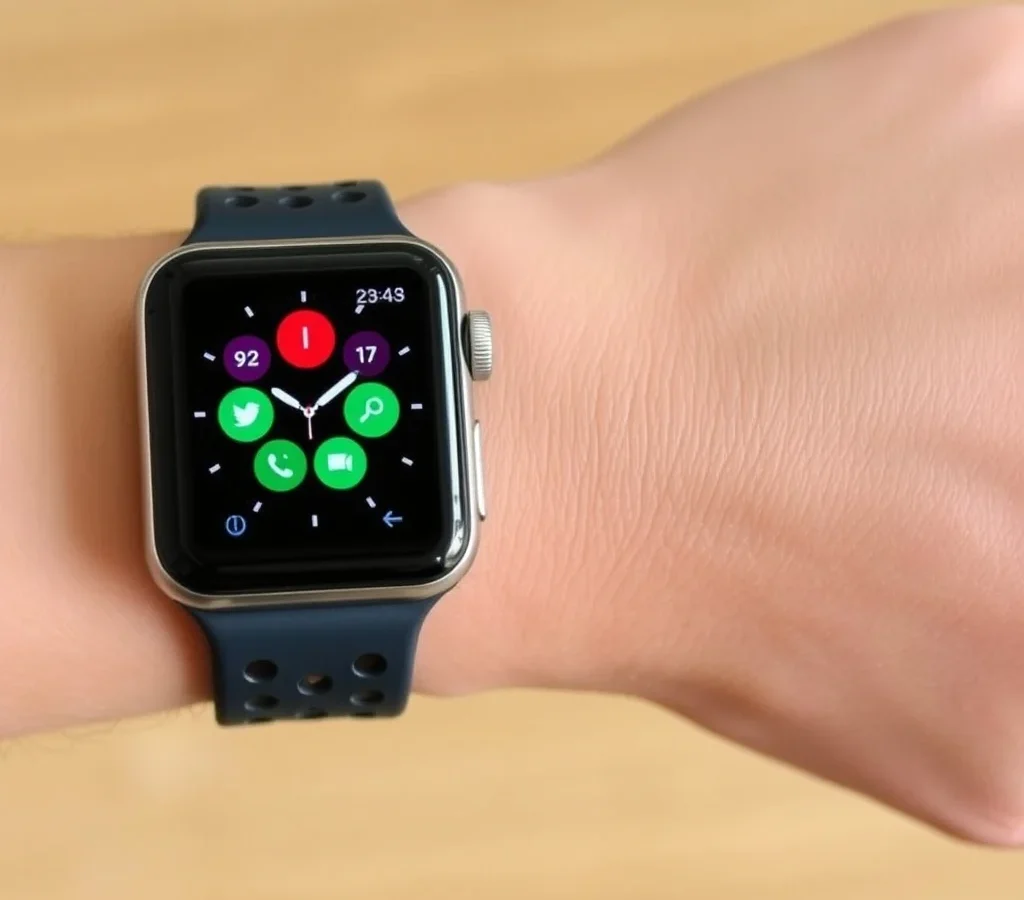

The Apple Watch has evolved from a convenient iPhone companion into a sophisticated wearable that can support communication, fitness, health awareness, safety and everyday productivity. With newer hardware and watchOS improvements, the question is no longer simply whether a smartwatch can tell time. It is whether one device can meaningfully reduce the number of times you need to reach for your phone.
Apple’s current Apple Watch generation combines health and fitness tracking with connectivity, intelligent features and safety tools. The result is a wearable that can fit into many parts of a user’s day, although its value still depends on the model, region, iPhone compatibility and which features a person actually needs.
Table of Contents
Why the Apple Watch Is Becoming the Ultimate Everyday Smartwatch
The strongest argument for the Apple Watch is integration. It works closely with the iPhone, Health app and Apple ecosystem, allowing information to move between devices without requiring constant manual setup.
A wearable that reduces phone dependence
Notifications, calls, messages, timers, music controls, navigation and other quick actions can be handled from the wrist. That matters when you are exercising, commuting, cooking or simply trying to avoid checking your phone repeatedly.
Hardware and software now work as one system
The watch’s usefulness comes from the combination of sensors, apps and watchOS. Apple continues to expand the platform instead of treating the watch as a smaller phone.
Health and Wellness Are Central to the Experience
Health tracking has become one of the Apple Watch’s defining strengths. Apple Support lists features for sleep, heart-rate notifications, AFib-related information, medications, menstrual-cycle tracking, mindfulness and overnight vitals.
Sleep tracking and Sleep Score
Newer watchOS releases provide a Sleep Score based on sleep duration, bedtime consistency and sleep interruptions. This gives users a simple way to review sleep patterns rather than focusing on a single measurement.
Heart and cardiovascular awareness
Compatible Apple Watch models can provide high- and low-heart-rate notifications and irregular-rhythm notifications. Newer models and supported software also introduce hypertension notifications designed to identify signs that may warrant medical attention.
These features are useful for awareness, but they are not a substitute for professional diagnosis. Users should discuss concerning readings or symptoms with a qualified healthcare professional.
Daily health information in one place
The Vitals experience can present overnight metrics such as heart rate, respiratory rate, wrist temperature and sleep duration. Looking at trends can be more useful than reacting to one isolated reading.
Fitness Features Make the Watch More Useful for Training
The Apple Watch is also a capable workout companion. It can track different workout types and provide real-time metrics such as heart rate, pace, distance and activity progress.
Workout Buddy adds personalized motivation
watchOS 26 introduced Workout Buddy, an Apple Intelligence-powered experience that can provide spoken encouragement based on workout data and fitness history. Apple says it can respond to milestones, effort and other moments during a session.
Better workout customization
The redesigned Workout app brings easier access to metrics, Custom Workout, Pacer, Race Route, workout alerts and media controls. This makes the watch more practical for runners and other users who want structured training information without carrying a phone in their hand.
Connectivity and Productivity on the Wrist
Messages, calls and notifications
An Apple Watch can make everyday communication faster. Depending on the model and connection, users can view notifications, respond to messages, answer calls and interact with apps from the wrist.
Smart Stack and intelligent suggestions
The Smart Stack can surface information and suggested actions based on context. This is important because a smartwatch becomes more useful when it presents relevant information without requiring a long sequence of taps.
Notes and hands-free actions
Recent watchOS versions bring Notes to Apple Watch and add convenient voice and gesture interactions. Wrist Flick, available on supported models, can dismiss notifications, silence calls and alarms, and return to the watch face with a quick wrist movement.
Safety Features Add Another Layer of Value
Safety is another reason the Apple Watch can feel more valuable than a conventional fitness tracker. Depending on the model and region, users can access features such as Emergency SOS, fall detection and other emergency-oriented tools.
Ultra models extend off-grid capability
Apple Watch Ultra 3 adds satellite connectivity for supported emergency messaging, communication and location sharing when cellular and Wi-Fi coverage are unavailable. This is particularly relevant for hiking, outdoor work and remote travel.
Availability varies by country and service conditions, so buyers should verify local support before relying on any emergency communication feature.
Which Apple Watch Model Makes Sense?
| Model type | Best suited for | Key consideration |
|---|---|---|
| Apple Watch SE | Everyday users and value-focused buyers | Lower entry cost with essential smartwatch and fitness functions |
| Apple Watch Series | Most users seeking advanced health and connectivity features | Balanced feature set and mainstream design |
| Apple Watch Ultra | Athletes, outdoor users and demanding environments | Larger display, longer battery life and rugged features |
Choose features, not hype
The most expensive model is not automatically the best choice. Consider battery requirements, cellular connectivity, health features, sports activities, durability and budget before buying.
What Makes the Apple Watch Different From Basic Fitness Trackers?
A basic fitness tracker can be excellent at steps, sleep and exercise tracking. The Apple Watch goes further by combining those functions with apps, communication, payments where supported, navigation, safety tools and deeper iPhone integration.
| Capability | Basic fitness tracker | Apple Watch |
|---|---|---|
| Activity tracking | Usually | Yes |
| Smartphone notifications | Often limited | Extensive |
| Apps | Limited | Broad ecosystem |
| Health features | Varies | Advanced on supported models |
| Safety features | Varies | Strong on supported models |
| iPhone integration | Limited | Deep integration |
Expert Tips for Getting More From an Apple Watch
- Configure only the notifications that genuinely matter.
- Wear the watch consistently if you want useful health and sleep trends.
- Review battery habits before enabling every feature.
- Use workout customization for activities you perform regularly.
- Check regional availability before depending on cellular, satellite or health features.
- Keep watchOS updated to receive security fixes and new capabilities.
- Use strong device security and keep your paired iPhone protected.
Common Apple Watch Mistakes to Avoid
Buying the most expensive model without a need
Premium hardware can be worthwhile for serious outdoor or athletic use, but many people will get more value from a standard model.
Treating health features as medical diagnoses
Wearable readings can provide useful signals, but they should not replace clinical evaluation.
Ignoring battery management
Always-on displays, cellular use, workouts and sleep tracking can affect battery life. Build a charging routine around your daily schedule.
Ignoring regional restrictions
Apple states that some capabilities vary by country, model and local regulations. Confirm availability in your market before buying specifically for one feature.
Frequently Asked Questions
1. Why is the Apple Watch becoming so popular?
Its appeal comes from combining fitness, health awareness, communication, productivity and safety in one wrist-worn device that integrates closely with the iPhone.
2. Is the Apple Watch worth buying?
It can be worth buying if you use an iPhone and will regularly use its health, fitness, communication or convenience features. The best value depends on your needs and model choice.
3. Can an Apple Watch replace an iPhone?
No. Some cellular models can perform useful tasks independently, but the Apple Watch remains designed as part of the wider Apple ecosystem.
4. Is Apple Watch good for fitness?
Yes. It offers workout tracking, heart-rate data, activity goals, training metrics and structured workout tools on supported models.
5. Can Apple Watch monitor blood pressure?
Supported newer models can provide hypertension notifications designed to identify possible signs of chronic high blood pressure. This is not the same as taking a conventional blood-pressure measurement.
6. Is Apple Watch good for sleep tracking?
Yes. Supported models can track sleep and provide information such as sleep duration, stages and Sleep Score features in compatible watchOS versions.
7. Which Apple Watch is best for outdoor activities?
Apple Watch Ultra models are designed for demanding outdoor use and provide features such as a larger display, longer battery life and, on supported generations, satellite communication.
8. Does Apple Watch work with Android phones?
Apple Watch is designed to work with iPhone rather than Android phones. Users should check Apple’s current compatibility requirements before purchasing.
Conclusion
The Apple Watch is becoming an increasingly complete wearable because it solves several small problems at once. It can monitor activity, provide health insights, support workouts, surface important notifications, assist with communication and add safety capabilities.
Its greatest strength is not any single sensor or app. It is the way hardware, watchOS and the Apple ecosystem work together to make useful information available at a glance.
Still, the ultimate smartwatch is subjective. Buyers should choose a model based on genuine needs rather than specifications alone, and they should remember that health and safety features have limitations and vary by region.
Call to Action
Thinking about getting an Apple Watch? Compare the available models, identify the features you will actually use and choose the option that fits your lifestyle and budget. Share this guide with someone deciding whether an Apple Watch is right for them.
Sources: Apple Support and Apple Developer documentation on Apple Watch, watchOS 26 and health features.