
Rising premium rates have forced many drivers to rethink how they pay for vehicle protection. Traditional auto coverage relies heavily on demographic factors like age, zip code, marital status, and credit score to determine risk. However, a modern alternative is rapidly changing the landscape: usage-based car insurance. By shifting the focus from who you are to how you actually drive, this technology-driven model offers a personalized path to lower premiums.
Usage-based car insurance leverages telematics technology to collect real-time data about your driving habits. For safe, low-mileage drivers, this approach can lead to substantial discounts that traditional policies simply cannot match. If you are tired of paying high rates based on the mistakes of other drivers in your demographic group, understanding how these programs work is the first step toward reclaiming control over your insurance budget.
This comprehensive guide explores the mechanics of usage-based programs, compares the primary models available, highlights potential drawbacks, and offers practical strategies to maximize your savings. Whether you are a remote worker who rarely drives or a safety-conscious commuter, personalized pricing could be the key to unlocking affordable car insurance.
What Is Usage-Based Car Insurance?
Usage-based car insurance, often abbreviated as UBI, is a type of auto insurance policy that calculates your premium based on your actual driving behavior and mileage. Instead of grouping you into a broad risk category based on statistical averages, insurance companies use telematics to track your real-world performance behind the wheel. This means your premium is directly tied to your personal safety record and habits.
The concept relies on the premise that safe drivers should not have to subsidize the risks of reckless drivers. By opting into a UBI program, you agree to let your insurer monitor specific aspects of your driving. In exchange, the insurance company offers a personalized discount, often starting with an immediate sign-up bonus and followed by ongoing savings based on your performance over a tracking period.
Telematics programs are typically managed through one of three primary tracking methods:
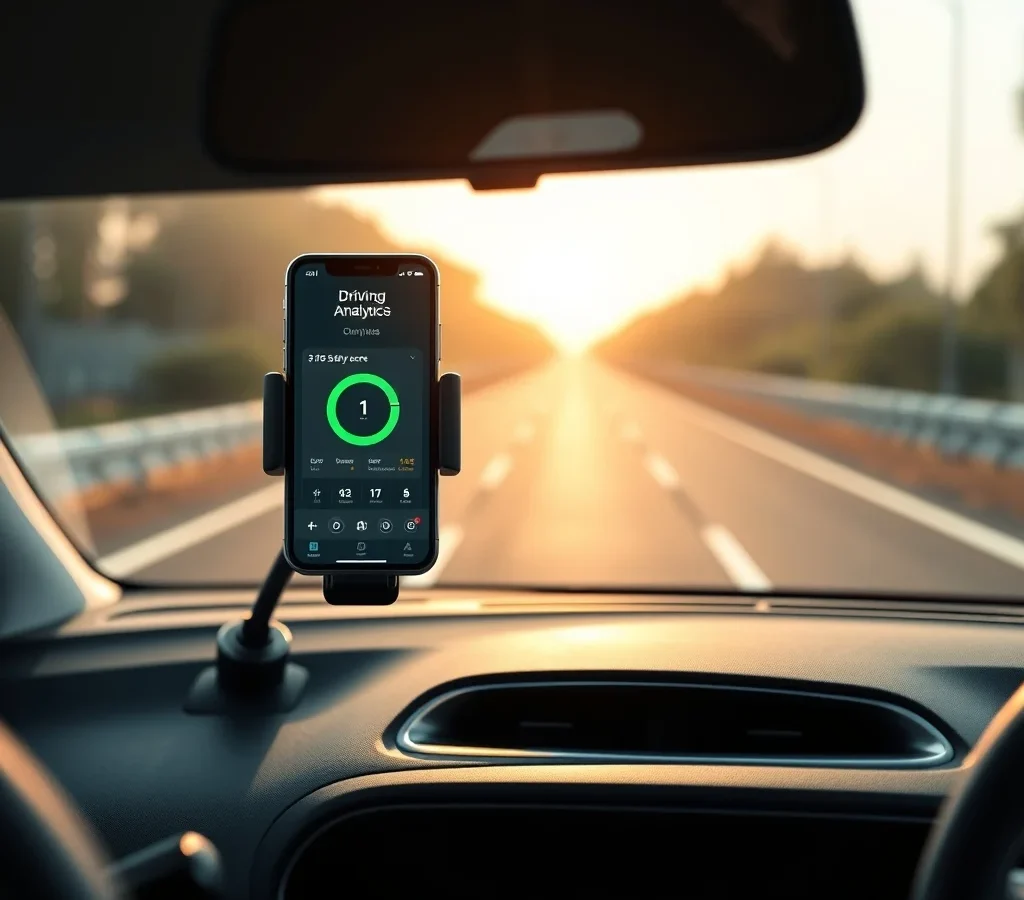
- Mobile Smartphone Applications: Most insurers now use dedicated mobile apps that utilize your phone’s GPS, accelerometer, and gyroscope to detect driving patterns.
- Plug-In OBD-II Devices: A small device is inserted directly into your vehicle’s On-Board Diagnostics port (usually located under the steering wheel) to read data directly from the car’s computer.
- Built-In Manufacturer Systems: Modern connected vehicles, such as those equipped with OnStar or similar proprietary systems, can transmit driving data directly to the insurer without requiring external devices or apps.
How Telematics Technology Tracks Your Driving
To establish your safety profile, telematics systems monitor a specific set of driving metrics. While every insurance company uses a slightly different algorithm to calculate risk, most programs focus on several core behaviors that correlate highly with accident frequency and severity.
First, the system monitors acceleration and deceleration. Sudden, aggressive bursts of speed or hard braking events are flagged as high-risk behaviors because they often indicate tailgating or distracted driving. Smooth transitions between stopping and starting are rewarded with higher safety scores.
Second, the timing of your trips plays a major role. Statistically, driving during the late-night hours—typically between 11:00 PM and 4:00 AM—is significantly more dangerous due to fatigue, reduced visibility, and a higher prevalence of impaired drivers. Consistently driving during these high-risk windows can lower your potential discount.
Finally, total mileage and speed are carefully analyzed. Simply put, the less time you spend on the road, the lower your chances of being involved in an accident. Additionally, driving at excessive speeds reduces your reaction time and increases the severity of any potential collision, making speed management critical for a high safety score.
Comparing Usage-Based Insurance Models
Usage-based car insurance generally falls into two primary categories: pay-how-you-drive (PHYD) programs and pay-per-mile programs. Understanding the differences between these two models is essential for choosing the policy that best aligns with your driving patterns and financial goals.
Pay-how-you-drive programs focus heavily on the quality of your driving. Your rates are determined by how safely you handle the vehicle, with metrics like braking, acceleration, and cornering taking center stage. These programs are ideal for daily commuters who drive regularly but maintain excellent safety habits on the road.
Conversely, pay-per-mile programs focus almost exclusively on quantity. Under this model, your monthly bill consists of a flat base rate plus a flexible per-mile fee. If your car sits in the driveway for most of the week, your premium will be incredibly low, regardless of how you drive during your rare trips. This model is highly popular among remote workers, retirees, and city dwellers who rely on public transit.
| Feature | Pay-How-You-Drive (PHYD) | Pay-Per-Mile | Traditional Insurance |
|---|---|---|---|
| Primary Pricing Factor | Driving behavior (braking, speed, time of day) | Total miles driven | Demographics and driving history |
| Best For | Safe, consistent drivers with standard commutes | Low-mileage drivers (under 8,000 miles/year) | High-mileage or aggressive drivers |
| Tracking Method | Mobile app or OBD-II plug-in | Odometer readings or plug-in device | No active tracking required |
| Potential Savings | Up to 30% to 40% discount based on safety score | Highly variable; save more the less you drive | Flat rate, standard discounts only |
The Real Benefits of Switching to Telematics
The most obvious benefit of usage-based car insurance is the opportunity for significant financial savings. Safe drivers can often secure discounts ranging from 10% to 40% off their standard premiums. For young drivers or individuals with less-than-perfect credit, who are traditionally penalized by demographic pricing, telematics offers a way to prove their safety and lower their rates immediately.
Beyond the financial incentives, telematics programs act as a powerful tool for self-improvement. Most companion apps provide detailed feedback after every trip, highlighting exactly where you braked too hard or accelerated too quickly. This gamification of driving encourages safer habits, which ultimately reduces your risk of being involved in a costly and dangerous accident.
Additionally, some UBI programs offer built-in safety features that provide peace of mind. Many mobile apps include automatic crash detection, which can notify emergency services and dispatch roadside assistance if a severe impact is detected. In the event of a disputed claim, the telematics data can also serve as objective evidence to prove you were not at fault in an accident.
Potential Drawbacks and Privacy Concerns
While the benefits are compelling, usage-based car insurance is not a perfect fit for everyone. The most common reservation drivers have regarding telematics is data privacy. Opting into a UBI program means sharing highly detailed location and behavioral data with your insurance provider. While insurers maintain strict privacy policies, some consumers are uncomfortable with the continuous tracking of their daily movements.
Another factor to consider is the potential for premium increases. While many insurance companies promise that participating in a telematics program will not raise your rates, some insurers reserve the right to increase premiums if the data reveals highly reckless driving habits, frequent hard braking, or excessive late-night driving. It is crucial to read the fine print of any program before enrolling.
Finally, technology is not infallible. Mobile apps can sometimes misinterpret passenger trips, public transportation rides, or ride-sharing journeys as personal driving. While most apps allow you to manually correct these trips, monitoring your driving log to ensure accuracy requires ongoing diligence. Furthermore, phone-based tracking can contribute to faster battery drain and data usage.
Common Mistakes to Avoid with Usage-Based Insurance
To get the most out of your telematics program, it is important to avoid common pitfalls that can accidentally inflate your rates or ruin your safety score.
- Allowing others to drive your vehicle recklessly: Telematics devices track the vehicle, not the person. If a family member or friend borrows your car and drives aggressively, those hard-braking events will be logged against your account, lowering your overall discount.
- Forgetting to classify passenger trips: If you frequently ride as a passenger in a friend’s car, use ride-sharing services, or take public transit, your phone’s app might record these trips. If the driver of that vehicle behaves aggressively, your score will suffer unless you manually classify yourself as a passenger.
- Ignoring the feedback in the app: Telematics apps are designed to help you adjust your habits. If you ignore the warnings about hard braking or speeding, you will miss out on the maximum possible discount at renewal time.
- Assuming all programs are identical: Different insurers prioritize different metrics. Some might penalize late-night driving heavily, while others focus almost entirely on mileage. Choose a program whose algorithm aligns with your natural lifestyle.
Expert Tips for Maximizing Your Savings
Maximizing your discount requires a conscious effort to adjust your daily driving habits. One of the most effective strategies is to increase your following distance behind other vehicles. By leaving extra space, you give yourself ample time to slow down gradually, virtually eliminating the hard-braking events that heavily penalize safety scores.
Additionally, try to plan your schedule to avoid peak congestion and late-night driving. If you can shift your commute slightly to avoid heavy stop-and-go traffic, you will reduce both your stress levels and the likelihood of sudden stops. When possible, avoid driving between 11:00 PM and 4:00 AM, as even safe driving during these hours is statistically flagged as higher risk.
Finally, treat the monitoring period as an active test. Many programs only track your driving for a set period—such as 90 days—to establish your discount, which is then locked in for the remainder of your policy term. Dedicating yourself to impeccable driving habits during this evaluation window can secure long-term savings that remain in place for months or even years to come.
Frequently Asked Questions
What is usage-based car insurance?
Usage-based car insurance is a policy type that uses telematics technology to monitor your driving behavior and mileage. Your premium is calculated based on real-time data—such as speed, braking, and time of day—rather than solely relying on traditional demographic factors.
Can usage-based car insurance raise my rates?
It depends on the insurance provider. While many insurers only use telematics to apply discounts, some companies reserve the right to increase your premiums if the data reveals high-risk behaviors, such as excessive speeding or frequent hard braking.
What driving habits does telematics track?
Telematics programs typically monitor speed, rapid acceleration, hard braking, sharp cornering, total mileage, and the time of day you drive. Some phone-based apps also track phone distraction, flagging instances where the phone is handled while the vehicle is in motion.
Is my personal driving data safe and private?
Insurance companies are bound by strict privacy regulations and generally do not sell your personal driving data to third parties. However, the data can be subpoenaed in legal proceedings or used to reconstruct accidents during claim investigations.
How much money can I save with a telematics program?
Savings vary widely depending on your driving habits and the insurer. Safe drivers typically save between 10% and 40% on their premiums. Many programs also offer an immediate sign-up discount of 5% to 10% just for enrolling.
Does usage-based insurance track location via GPS?
Yes, most mobile app-based and plug-in OBD-II telematics programs utilize GPS to track your location. This helps the insurer analyze where you drive, determine if you are on high-risk roads, and calculate your total mileage accurately.
Is pay-per-mile insurance the same as usage-based insurance?
Pay-per-mile is a specific type of usage-based insurance. While standard usage-based insurance focuses on how safely you drive, pay-per-mile insurance focuses almost exclusively on how many miles you drive, utilizing a flat daily rate plus a per-mile charge.
What happens if I have to slam on my brakes in an emergency?
A single hard-braking event to avoid an animal or an unexpected obstacle will not ruin your safety score. Telematics algorithms look for patterns of behavior over time. Occasional emergency stops are expected and will have a negligible impact on your overall discount.
Transitioning to a usage-based car insurance model represents a fundamental shift in how we value and purchase vehicle protection. By allowing technology to highlight your individual safety habits, you break free from the generalized risk pools that keep premiums high for low-risk drivers. If you are willing to embrace a minor level of tracking in exchange for lower monthly bills, taking the time to compare telematics programs and adjust your driving habits can yield substantial financial rewards. Exploring quotes from top-rated insurers who offer these programs is a practical, proactive step toward aligning your auto insurance costs with your actual lifestyle.