
Traditional auto insurance relies heavily on demographic generalizations. If you are a young driver, you pay more. If you live in a specific ZIP code, your rates spike. But what if your premium was determined solely by how you actually drive? This is where usage-based car insurance comes into play, shifting the paradigm from generalized risk pools to highly personalized pricing.
By leveraging modern telematics technology, these programs track your real-time driving habits to calculate your rates. This offers a transparent, actionable path to lower premiums for safe and low-mileage drivers. If you have been looking for ways to save money on car insurance, understanding how these programs function is a crucial first step.
What Is Usage-Based Car Insurance?
Usage-based car insurance (UBI), also known as pay-how-you-drive or telematics car insurance, is a type of auto insurance policy that calculates premiums based on actual driving behavior rather than historical demographic data alone. Instead of grouping you with thousands of other drivers based on age, gender, or credit score, insurance companies use technology to monitor your daily habits behind the wheel.
This approach allows insurance providers to price their policies with unprecedented accuracy. Safe drivers are rewarded with significant discounts, while those with riskier habits may pay standard rates or, in some cases, face surcharges. It transforms auto insurance from a fixed monthly expense into a controllable cost variable.
How Does Telematics Car Insurance Work?
The backbone of usage-based insurance is telematics. Telematics is the integration of telecommunications and informatics, allowing data to be sent wirelessly from your vehicle to your insurance provider. There are three primary methods insurers use to collect this driving data.
Plug-In Devices
Many insurance companies provide a small proprietary device that plugs directly into your vehicle’s OBD-II port, which is usually located under the dashboard. This device automatically records vehicle diagnostics, speed, and mileage, transmitting the data directly to the insurer.
Mobile Applications
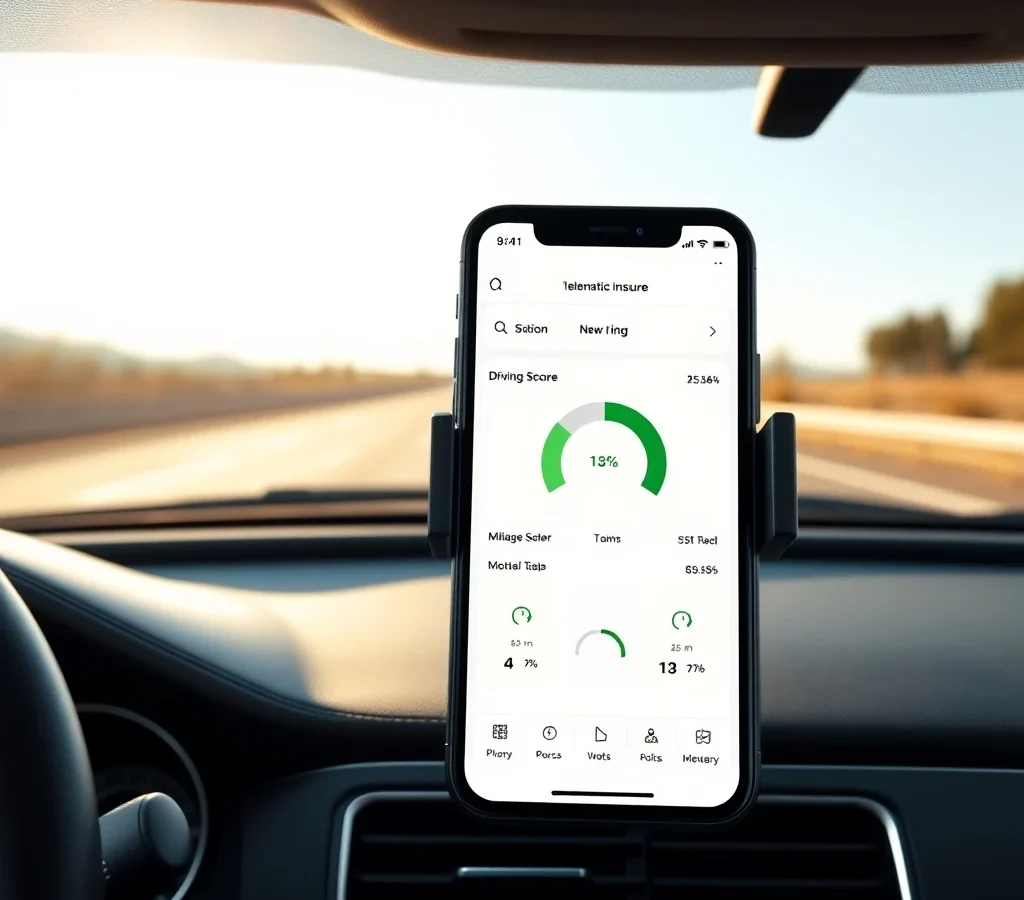
The most common method today is a dedicated smartphone application. These apps utilize your phone’s built-in GPS, accelerometer, and gyroscope sensors to detect when you are driving, how fast you are traveling, and how smoothly you handle turns and stops.
Built-In Vehicle Systems
Modern connected vehicles often come equipped with built-in telematics systems, such as GM’s OnStar or Subaru’s Starlink. Some insurers can link directly to these pre-installed manufacturer systems, eliminating the need for external devices or smartphone apps.
Key Metrics Tracked by UBI Programs
To determine your risk profile, telematics programs track a specific set of driving behaviors. While every insurance company uses its own proprietary algorithm, most programs focus on the same core metrics.
- Braking Habits: Frequent, sudden stops (hard braking) are viewed as indicators of tailgating or distracted driving.
- Acceleration Rates: Rapid acceleration or “jackrabbit starts” signal aggressive driving behavior.
- Speeding: Consistently driving above the posted speed limit or traveling at high speeds increases your risk profile.
- Time of Day: Driving late at night, particularly between midnight and 4:00 AM, is statistically linked to more severe accidents.
- Total Mileage: The less time you spend on the road, the lower your statistical probability of being involved in an accident.
Comparing Usage-Based Insurance Models
Not all usage-based insurance programs are the same. It is important to distinguish between behavior-based programs and mileage-based programs, as they serve different types of drivers. Below is a comparison to help you understand which option fits your lifestyle.
| Feature | Behavior-Based Insurance | Pay-Per-Mile Insurance | Traditional Auto Insurance |
|---|---|---|---|
| Primary Pricing Factor | Driving habits (braking, speed, time of day) | Total miles driven | Demographics, credit score, driving record |
| Best Suited For | Cautious, defensive, and consistent drivers | Low-mileage drivers, remote workers, retirees | High-mileage drivers with long daily commutes |
| Potential Savings | Up to 30% to 40% discount for safe driving | Highly variable; savings depend on low mileage | Standard discounts only (bundling, multi-car) |
| Tracking Method | Smartphone app or OBD-II plug-in device | OBD-II device or odometer photos | No tracking required |
The Financial Benefits of Usage-Based Insurance
The primary appeal of usage-based car insurance is the potential for substantial savings. Many insurers offer an immediate sign-up discount, often ranging from 5% to 10%, simply for enrolling in the program and installing the app or device.
Once the initial monitoring period is complete (usually 30 to 90 days), your driving data is analyzed to calculate your ongoing discount. Highly rated safe drivers can see their premiums reduced by up to 40%. For drivers who maintain excellent habits but face high demographic rates, such as students or young drivers, this can translate to hundreds of dollars saved annually.
Potential Drawbacks and Privacy Concerns
While the savings can be significant, usage-based insurance is not a perfect fit for everyone. There are several potential downsides that consumers should carefully evaluate before enrolling in a telematics program.
First, privacy is a major concern for many drivers. Telematics programs track your location, driving routes, and daily schedule. While insurers state that this data is used strictly for pricing and is kept secure, some consumers are uncomfortable with continuous digital surveillance.
Second, some programs can actually increase your rates. While many insurers advertise that participation will only result in a discount, certain companies reserve the right to raise premiums for drivers who consistently display risky behaviors, such as excessive hard braking or late-night driving.
Who Benefits Most from Usage-Based Insurance?
Understanding your driving profile will help you determine if switching to a telematics program is a smart financial move. Certain demographics stand to benefit far more than others from this technology.
Low-mileage drivers, such as remote employees, retirees, or those who utilize public transit, can save significantly through pay-per-mile options. Similarly, cautious drivers who naturally avoid hard stops, stick to the speed limit, and rarely drive late at night will easily qualify for the highest behavior-based discounts.
Additionally, young drivers and students often face incredibly high standard insurance premiums due to their lack of driving history. Participating in a telematics program allows responsible young drivers to prove their safe habits quickly, bypassing general demographic penalties and securing affordable car insurance much sooner.
Expert Tips for Maximizing Your UBI Savings
If you decide to enroll in a usage-based program, you can take active steps to ensure you receive the maximum possible discount. Implementing these strategies will help you optimize your driving score.
- Increase Your Following Distance: Maintaining a safe distance from the car ahead gives you more time to react, drastically reducing instances of hard braking.
- Avoid Rush Hour and Late Nights: If your schedule allows, avoid driving during heavy traffic periods or between midnight and 4:00 AM, when risk metrics are weighted most heavily.
- Accelerate Gently: Treat every stoplight and stop sign as an opportunity to accelerate smoothly and gradually.
- Review Your App Dashboard Daily: Most telematics apps provide immediate feedback after each trip. Reviewing these logs helps you identify and correct bad habits quickly.
Common Mistakes to Avoid with Telematics Programs
Many drivers miss out on potential savings due to simple misunderstandings of how telematics systems operate. Avoiding these common pitfalls will ensure your tracking period goes smoothly.
- Forgetting to classify passenger trips: Smartphone apps sometimes mistake you for the driver when you are actually a passenger in a rideshare, bus, or friend’s car. Be sure to manually correct these trips in the app.
- Ignoring phone battery and setting requirements: Telematics apps require location services and background data to be enabled constantly. Letting your phone die or turning off GPS can disqualify you from the program.
- Allowing aggressive drivers to use your vehicle: If you use an OBD-II plug-in device, it tracks the vehicle, not the person. Anyone who drives your car with the device plugged in will affect your driving score.
- Assuming all programs are identical: Always read the fine print. Some programs only monitor you for a limited trial period, while others track your driving continuously for as long as you hold the policy.
Frequently Asked Questions
What is usage-based car insurance?
Usage-based car insurance is a type of auto coverage that adjusts your premium based on your actual driving habits, such as speed, braking intensity, mileage, and the time of day you drive, rather than relying solely on traditional demographic factors.
Can telematics car insurance raise my premiums?
Yes, depending on the insurance company. While many insurers promise that participation will only result in a discount, some companies reserve the right to increase your rates if the telematics data shows highly risky driving behavior.
How does pay-per-mile insurance save money?
Pay-per-mile insurance charges a low flat monthly base rate plus a small per-mile fee. If you drive infrequently or have a very short commute, your total monthly cost will be significantly lower than a traditional flat-rate policy.
What specific data do telematics devices collect?
Most telematics devices and apps collect data on vehicle speed, braking force, acceleration rates, cornering, total mileage, time of day, and GPS location to determine your overall safety score.
Does usage-based insurance track my location?
Yes, most smartphone-based telematics apps use GPS to track your location. This helps insurers analyze where you drive and whether you are traveling through high-risk areas, though some plug-in OBD-II devices do not use GPS tracking.
Is telematics suitable for high-mileage drivers?
It can be, provided you are an exceptionally safe driver. However, if you drive long distances daily, pay-per-mile models will not be cost-effective, and behavior-based programs may offer smaller discounts due to increased road exposure.
How do insurance companies verify who is driving?
Smartphone apps use motion sensors and machine learning to predict if you are the driver or a passenger. If the app misclassifies a trip, most providers allow you to open the app and manually change your status to passenger.
Can I opt out of a usage-based insurance program?
Yes, you can opt out of a telematics program at any time. However, doing so will result in losing any active participation discounts, and your premium will revert to the standard rate calculated by traditional demographic underwriting.
Transitioning to a usage-based policy is one of the most effective ways to take control of your auto insurance expenses. By allowing technology to highlight your safe driving habits, you move away from generalized risk pools and pay a premium that reflects your actual personal risk. If you are ready to see how your driving habits stack up, contacting your current provider or comparing quotes from top telematics insurers is an excellent next step to securing personalized, affordable coverage.