
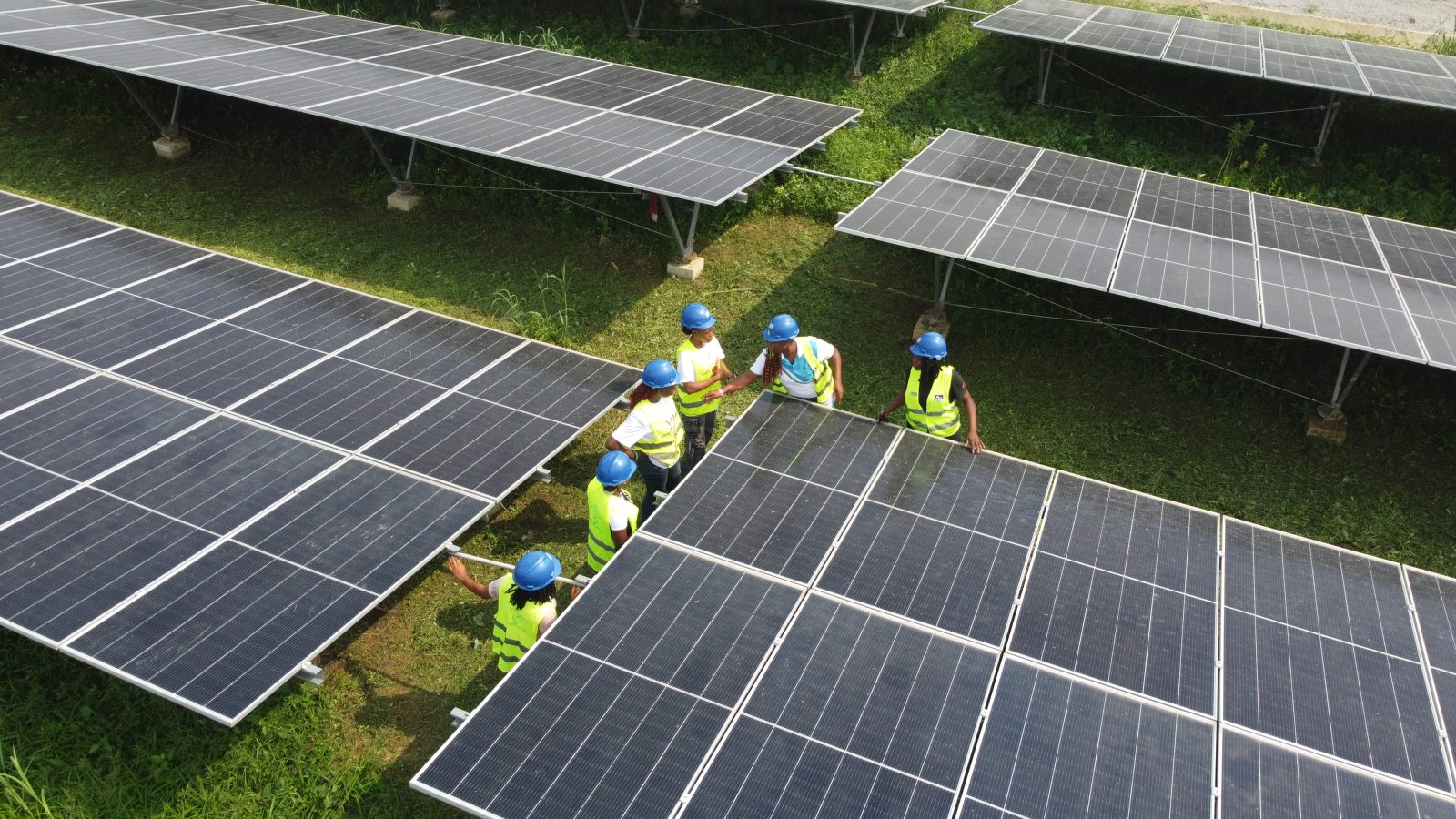

Renewable energy solutions in Nigeria are becoming increasingly important as households, businesses and communities seek cleaner and more reliable electricity. Nigeria has a strong case for distributed renewable energy. Electricity access has improved, but the latest World Bank data reports access at 62.5% of the population in 2024, leaving a large access gap. At the same time, many connected households and businesses still need more reliable power. Solar photovoltaic systems, battery storage, mini-grids and other distributed solutions can help fill those gaps while reducing dependence on petrol and diesel generation.
This guide explains the most practical renewable energy solutions in Nigeria, who they suit, how they work, what to consider before investing, and how Nigeria’s current policy and regulatory environment is evolving.
Table of Contents
- What renewable energy means in Nigeria
- Why renewable energy matters
- Main renewable energy solutions in Nigeria
- Renewable energy solutions comparison
- How to choose the right system
- Renewable energy for homes, businesses and communities
- Policies, programmes and regulation
- Common mistakes to avoid
- Expert tips
- Frequently asked questions
What Does Renewable Energy Mean in Nigeria?
Renewable energy comes from naturally replenishing resources such as sunlight, flowing water, wind and organic material. In Nigeria, solar power is especially important because photovoltaic systems can be deployed from a single home to a community-scale mini-grid.
The opportunity is not only about generating electricity. Good renewable projects also improve reliability, lower exposure to generator fuel costs, support productive activities and extend electricity services to places where conventional grid expansion is difficult or expensive.
Why Renewable Energy Matters for Nigeria
1. Nigeria still has a substantial electricity-access gap
World Bank data puts Nigeria’s electricity access at 62.5% in 2024. That means a significant share of the population remains without formal electricity access, while unreliable supply creates additional demand for decentralized power.
2. Solar resources are widely available
Nigeria has substantial solar resource potential. The World Bank’s Global Solar Atlas dataset provides country-level solar irradiation and photovoltaic power-potential data that can be used for project screening and site assessment.
3. Distributed systems can be deployed faster
Large centralized power projects can take years to plan and deliver. Distributed systems can be installed closer to the point of consumption, making them useful for homes, clinics, schools, farms, shops and remote communities.
4. Clean power can replace some generator use
Nigeria’s Energy Transition Plan explicitly targets a shift away from diesel and petrol generator dependence as solar and other cleaner electricity sources expand. The plan now works toward net-zero emissions by 2060.
Main Renewable Energy Solutions in Nigeria
Solar photovoltaic systems
Solar PV converts sunlight into electricity. A typical system includes solar panels, an inverter, mounting hardware, protection equipment and, where backup is required, batteries.
Solar PV is suitable for households, offices, shops, schools, farms and many small businesses. System size should be based on actual loads rather than a generic “number of panels” package.
Solar home systems
Standalone solar home systems can provide lighting, phone charging, small appliances and other basic electrical services without requiring a national-grid connection. Nigeria’s electrification programmes have used standalone solar alongside mini-grids to expand access. The World Bank reported that the Nigeria Electrification Project supported the sale of more than one million solar home systems and helped provide electricity access to more than 5.5 million Nigerians.
Solar-plus-battery systems
Batteries store electricity generated during periods of sunlight so it can be used later. This makes solar more useful for evening loads and backup applications.
Battery selection matters. Lithium iron phosphate batteries are increasingly popular for stationary applications because of their cycle life and operating characteristics, but the right choice still depends on budget, expected duty cycle, temperature, warranty and installer support.
Solar hybrid mini-grids
A mini-grid is a localized electricity supply system serving multiple customers within a defined area. It can operate independently or in coordination with a distribution network. Under Nigeria’s 2026 Mini-Grid Regulations, isolated mini-grids can serve unserved areas and interconnected mini-grids can operate alongside distribution networks.
Mini-grids are particularly valuable for rural communities, productive-use customers and locations where grid service is absent or inadequate.
Small hydropower
Where suitable rivers and streams exist, small hydropower can provide relatively stable generation. However, feasibility depends heavily on year-round water flow, civil works, environmental considerations and site access.
Biomass and biogas
Agricultural residues, animal waste and other organic materials can support heat or electricity production when a reliable feedstock supply exists. These systems make the most sense where waste streams are concentrated and can be collected economically.
Wind power
Wind systems can be useful in locations with sufficient wind speeds, but resource quality is site-specific. A proper wind assessment is essential before committing to a project.
Solar Home Systems vs Commercial Solar vs Mini-Grids in Nigeria
The right renewable energy solution depends on electricity demand, the number of users and the need for backup or shared distribution. Costs vary by system size, battery capacity, equipment quality, site conditions, installation and financing, so the points below are budgeting considerations rather than fixed market prices.
| Solution | Best use cases | Advantages | Limitations | Typical cost considerations |
|---|---|---|---|---|
| Solar home system | Basic household loads, off-grid homes, lighting, fans, TV, charging and small appliances | Lower entry cost; modular; works without grid connection; quick to install | Limited capacity; battery replacement is a lifecycle cost; may not support large appliances | Usually the lowest-cost option; price rises with inverter capacity, battery storage and appliance load |
| Commercial solar | Shops, offices, schools, clinics, farms, hotels and MSMEs needing reliable on-site power | Can reduce generator runtime; scalable; improves reliability; supports productive loads | Higher upfront capital; requires professional load assessment, installation and maintenance | Typically quoted as a project based on kWp, battery kWh, installation, protection, monitoring and site complexity; financing can change upfront cost |
| Solar hybrid mini-grid | Rural communities, underserved areas and clusters of households/MSMEs | Serves many customers; supports productive use; extends access where grid expansion is difficult | Highest project complexity; requires distribution infrastructure, customer connections, operations and regulatory compliance | Project-level capital cost depends on generation, storage, distribution network, connections and site logistics; subsidies can reduce initial capital requirements |
These three models are central to Nigeria’s distributed-energy strategy. The Nigeria Electrification Programme reports more than 1.1 million households with new or improved electricity services and 94 MW of PV capacity deployed or installed, while DARES targets 3,244,900 households and 465 MW of PV capacity.
For mini-grids, DARES uses mechanisms including minimum-subsidy tenders and performance-based grants to reduce initial capital requirements and improve project economics.
How to Choose the Right Renewable Energy Solution
Step 1: Audit your electricity demand
List every appliance, its wattage, and how many hours it runs daily. Separate essential loads from optional loads. This gives an installer a better basis for system sizing.
Step 2: Decide whether you need backup
A grid-connected solar system without batteries is different from a solar-plus-storage system designed to keep selected loads running during outages.
Step 3: Measure your roof or installation site
Check shading, roof condition, orientation, available space and cable routes. Avoid placing panels where trees, buildings or future construction will regularly shade them.
Step 4: Compare lifecycle cost, not just purchase price
Consider equipment quality, installation, protection, monitoring, maintenance, battery replacement, warranties and expected energy output. A cheaper quotation can become expensive when components fail early.
Step 5: Verify installer competence
Ask for references, project evidence, equipment datasheets, warranty terms and a clear scope of work. For larger systems, require proper engineering documentation and commissioning procedures.
Renewable Energy Solutions for Homes, Businesses and Communities
Homes
For households, solar can power lights, fans, televisions, refrigerators, routers, computers and other priority loads. A carefully designed system can reduce generator runtime, but households should avoid assuming every appliance can operate simultaneously on a small inverter.
Small and medium-sized businesses
Businesses should focus on reliability and productive use. Refrigeration, pumping, milling, welding, communications and digital services can benefit when energy systems are correctly sized.
Farms and agro-processing
Solar can support irrigation pumps, cold storage and processing equipment. Productive-use applications are particularly important because electricity becomes an input into income-generating activity rather than only household consumption.
Rural communities
Mini-grids can serve multiple customer classes and support local commerce. Nigeria’s DARES programme is designed to accelerate distributed renewable electricity for households and MSMEs, with targets including 1,225 mini-grids, 465 MW of generation and improved electricity access for 17.5 million people.
For readers evaluating the business side of clean power, our guide to identifying market opportunities and niches in Nigeria can help with broader market research. Farmers and agro-processors can also review our article on innovative agricultural practices in Nigeria when considering productive-use applications for solar energy.
Renewable Energy Policies and Regulations in Nigeria
Energy Transition Plan
Nigeria’s Energy Transition Plan provides a national framework for reducing emissions across power, cooking, transport, industry and oil and gas, with a long-term net-zero pathway to 2060.
DARES programme
The Distributed Access through Renewable Energy Scale-Up project is a $750 million initiative aimed at expanding electricity access through distributed renewable energy. Its components include solar hybrid mini-grids, standalone solar systems and technical assistance.
Mini-grid regulation
NERC’s 2026 Mini-Grid Regulations set out the current framework for mini-grid permitting, registration and related requirements. Developers should confirm applicable requirements before construction because regulatory responsibilities can depend on the project structure and jurisdiction.
Financing and market development
Government-backed programmes are increasingly using grants and private-sector financing to improve project economics. REA has described DARES funding windows such as Performance-Based Grants and Minimum Subsidy Tenders for mini-grid deployment.
Common Mistakes to Avoid
- Buying a system based only on inverter size without measuring actual loads.
- Choosing the cheapest panels, batteries or inverter without checking warranties and technical specifications.
- Ignoring surge loads from pumps, refrigerators, compressors and motors.
- Underestimating battery replacement and maintenance costs.
- Installing panels where shading significantly reduces production.
- Failing to install correct protection, earthing and cable sizing.
- Choosing an installer without verifiable experience.
- Assuming a solar system will eliminate every generator-related expense immediately.
- For mini-grid developers, starting construction before confirming regulatory, environmental and community requirements.
Expert Tips for Renewable Energy in Nigeria
- Start with a load profile: energy demand should drive system design.
- Prioritize critical loads: build the system around what must remain powered.
- Use quality protection equipment: breakers, surge protection, earthing and proper cabling are part of the system, not optional extras.
- Plan for heat: high ambient temperatures can affect batteries, inverters and electronics, so ventilation and installation location matter.
- Ask for monitoring: performance data helps detect faults, declining battery health and underperformance.
- Use site-specific resource data: solar and wind potential should be assessed for the actual location, not assumed from another city. The Global Solar Atlas provides Nigeria-specific solar resource datasets suitable for project assessment.
- For mini-grids, design around productive demand: reliable electricity for MSMEs, agriculture and public services can improve project utilization and long-term sustainability.
Frequently Asked Questions
1. What are the best renewable energy solutions in Nigeria?
Solar PV, solar-plus-battery systems and solar hybrid mini-grids are among the most practical options because they can be deployed at different scales. Hydropower, biomass and wind can also be viable where local resources support them.
2. Is solar energy suitable for Nigerian homes?
Yes. Solar is suitable for many Nigerian homes, particularly where grid supply is unreliable or unavailable. The correct system depends on household loads, budget, roof space and backup requirements.
3. Can solar power replace a generator completely?
It can for some households and businesses, but not automatically. The result depends on electricity demand, system size, battery capacity, appliance surge requirements and how much backup time is required.
4. What is a solar mini-grid?
A solar mini-grid is a localized power network that supplies electricity to multiple customers within a defined area. Nigeria’s 2026 regulatory framework covers isolated and interconnected mini-grids.
5. Is renewable energy expensive in Nigeria?
Initial costs can be significant, especially for systems with large batteries. However, the economic case should be evaluated over the system’s useful life, including avoided generator fuel, maintenance, downtime and expected equipment replacement.
6. Are there government programmes supporting renewable energy in Nigeria?
Yes. Programmes including the Nigeria Electrification Project and DARES have supported mini-grids and standalone solar deployment. DARES targets 17.5 million people with new or improved electricity access.
7. What should I check before installing solar?
Check your load profile, roof or site conditions, shading, equipment quality, installer credentials, warranty terms, protection design and maintenance plan. Also compare the complete installed cost rather than the panel price alone.
8. Is Nigeria’s renewable energy sector growing?
Yes. Public programmes, private developers and financial institutions are supporting distributed renewable energy. REA reported continuing DARES implementation and new private-sector mini-grid agreements in 2025 and 2026, while NERC issued updated mini-grid regulations in 2026.
Conclusion: Choosing Renewable Energy Solutions in Nigeria
Renewable energy solutions in Nigeria are moving from a niche alternative to an important part of the country’s electricity strategy. Solar home systems can expand basic access, solar-plus-battery systems can improve reliability for households and businesses, and mini-grids can bring dependable electricity to communities and productive-use customers.
The strongest projects are not simply the ones with the largest panels or batteries. They are the ones designed around real electricity demand, suitable local resources, quality equipment, sound engineering, realistic economics and proper maintenance.
With Nigeria’s Energy Transition Plan, DARES investment, expanding private-sector participation and updated mini-grid regulation, the market is positioned for continued development.
Call to Action
Considering solar or another clean-energy system? Start by auditing your current electricity use, identify your critical loads and compare at least three properly itemized proposals. For larger community or commercial projects, involve qualified electrical, environmental and regulatory professionals before committing capital.
Sources and Further Reading
- World Bank — Nigeria Data
- World Bank — Expanding Nigeria’s Mini Grid Market
- Nigeria Energy Transition Plan
- Rural Electrification Agency
- NERC Regulations
- World Bank Global Solar Atlas Data for Nigeria
Editorial note: Energy regulations, programme targets, tariffs, equipment prices and financing conditions can change. Verify current requirements with NERC, REA and other relevant authorities before making a project or investment decision.