
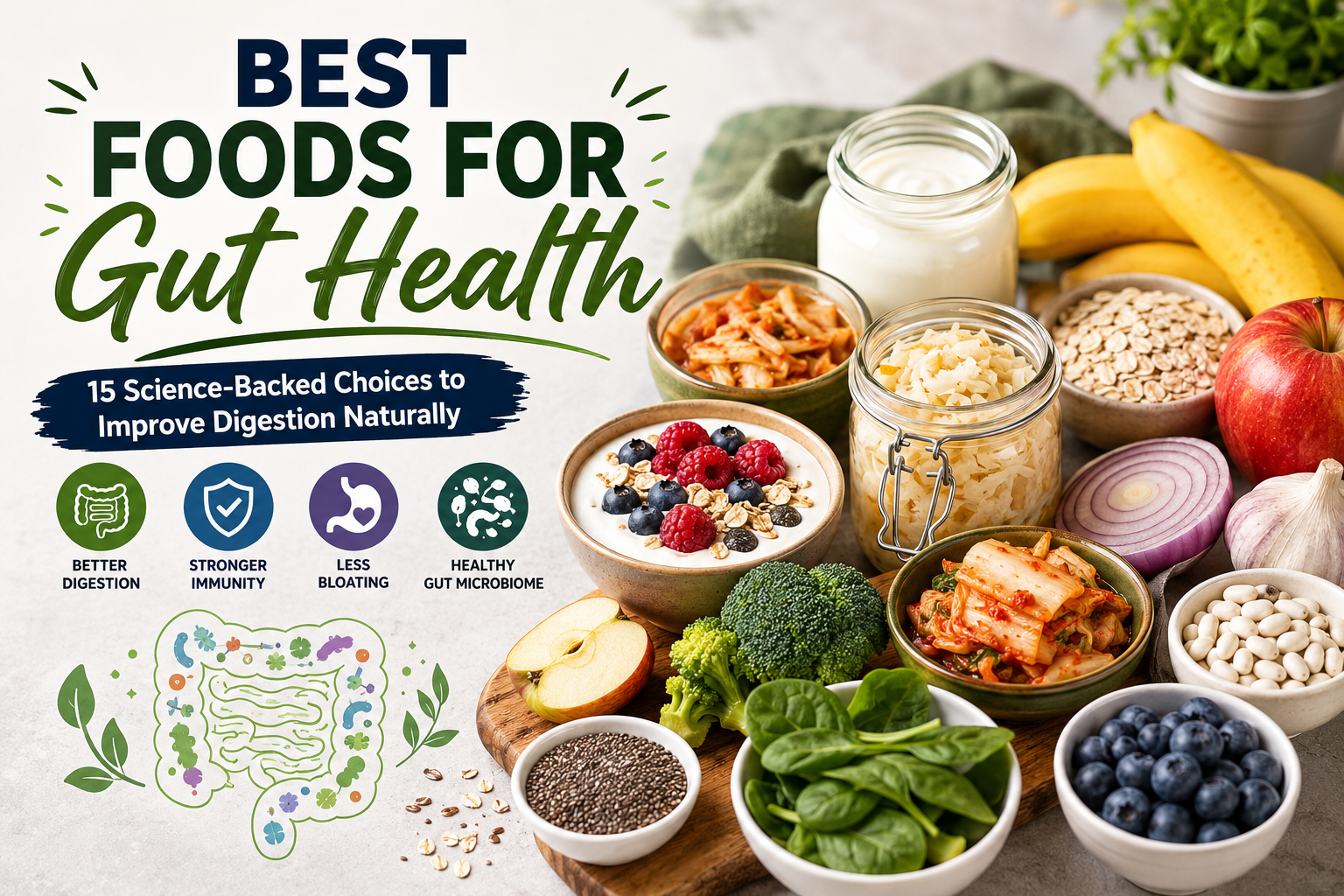

A healthy digestive system is the foundation of overall wellness, and choosing the best foods for gut health is one of the simplest ways to support it. Your gut contains trillions of beneficial bacteria, fungi, and other microorganisms—collectively known as the gut microbiome—that influence digestion, immunity, metabolism, and even mental health.
Research shows that eating a variety of fiber-rich, fermented, and nutrient-dense foods helps maintain a balanced microbiome and supports healthy digestion. Whether you’re dealing with occasional bloating, constipation, or simply want to improve your long-term health, this guide explores 15 evidence-based foods that can naturally nourish your gut.
What Is Gut Health?
Gut health refers to the balance and function of microorganisms living in your digestive tract. A healthy gut efficiently digests food, absorbs nutrients, supports immune defenses, and helps regulate inflammation.
An unhealthy gut microbiome may contribute to digestive discomfort and has been associated with various chronic health conditions.
Why the Gut Microbiome Matters
The gut microbiome helps:
- Digest dietary fiber
- Produce beneficial short-chain fatty acids
- Support immune function
- Synthesize certain vitamins
- Protect against harmful bacteria
- Communicate with the brain through the gut-brain axis
Maintaining microbial diversity is one of the keys to lifelong digestive health.
Benefits of Eating Gut-Healthy Foods
Regularly consuming gut-friendly foods may help:
- Improve digestion
- Reduce bloating
- Prevent constipation
- Support immune health
- Enhance nutrient absorption
- Promote regular bowel movements
- Reduce inflammation
- Improve overall well-being
15 Best Foods for Gut Health
1. Yogurt
Plain yogurt with live active cultures contains beneficial probiotics that help support a balanced gut microbiome.
Best for: Daily breakfast or snacks.
2. Kefir
Kefir is a fermented milk drink that contains a wide variety of probiotic strains and may support digestive health.
3. Sauerkraut
Naturally fermented cabbage provides probiotics, fiber, and vitamin C.
Choose refrigerated, unpasteurized varieties for the greatest probiotic benefits.
4. Kimchi
This traditional Korean fermented vegetable dish contains beneficial bacteria along with vitamins, minerals, and antioxidants.
5. Oats
Oats are rich in beta-glucan, a soluble fiber that nourishes beneficial gut bacteria.
Enjoy them as oatmeal, overnight oats, or homemade granola.
6. Bananas
Bananas contain prebiotic fibers that feed healthy gut bacteria while providing potassium and vitamin B6.
Slightly green bananas contain higher levels of resistant starch.
7. Garlic
Garlic acts as a natural prebiotic, encouraging the growth of beneficial bacteria such as Bifidobacteria.
8. Onions
Onions provide inulin and fructooligosaccharides (FOS), two prebiotic fibers that support microbial diversity.
9. Apples
Apples are rich in pectin, a soluble fiber linked to increased production of beneficial short-chain fatty acids.
Remember to eat the skin for maximum fiber.
10. Legumes
Beans, lentils, and chickpeas provide both protein and fiber, making them excellent foods for digestive health.
11. Chia Seeds
Chia seeds absorb water and form a gel-like consistency that promotes healthy bowel movements.
They’re also rich in omega-3 fatty acids.
12. Flaxseeds
Ground flaxseeds contain soluble and insoluble fiber that supports regular digestion and overall gut health.
13. Berries
Blueberries, raspberries, strawberries, and blackberries provide antioxidants and dietary fiber that help nourish beneficial bacteria.
14. Leafy Greens
Spinach, kale, Swiss chard, and other leafy greens supply fiber, vitamins, and plant compounds that support gut health.
15. Whole Grains
Brown rice, quinoa, barley, and whole wheat provide complex carbohydrates that beneficial gut microbes ferment into compounds that support colon health.
Foods That May Harm Gut Health
To maintain a balanced microbiome, limit:
- Ultra-processed foods
- Excess added sugars
- Sugary beverages
- Highly refined grains
- Excessive alcohol
- Frequent deep-fried foods
- Processed meats
Enjoy these foods occasionally while emphasizing whole, minimally processed choices.
Sample One-Day Gut Health Meal Plan
Breakfast
- Greek yogurt
- Oats
- Blueberries
- Chia seeds
Morning Snack
- Apple with almond butter
Lunch
- Quinoa salad
- Chickpeas
- Spinach
- Olive oil dressing
Afternoon Snack
- Kefir
- Banana
Dinner
- Grilled salmon
- Brown rice
- Steamed broccoli
- Sauerkraut
Evening Snack
- Mixed berries
Lifestyle Habits That Support Gut Health
Healthy eating works best when combined with positive lifestyle habits:
- Drink enough water daily.
- Exercise regularly.
- Sleep 7–9 hours each night.
- Manage stress through relaxation techniques.
- Eat slowly and chew food thoroughly.
- Include a wide variety of plant-based foods each week.
Frequently Asked Questions
1. What are the best foods for gut health?
Some of the best choices include yogurt, kefir, oats, bananas, apples, legumes, fermented vegetables, leafy greens, berries, and whole grains.
2. Are probiotics better than prebiotics?
Both are important. Probiotics provide beneficial bacteria, while prebiotics feed those bacteria and help them thrive.
3. How long does it take to improve gut health?
Some people notice digestive improvements within a few weeks of consistently eating more fiber-rich and fermented foods, though lasting changes depend on overall diet and lifestyle.
4. Can gut health affect immunity?
Yes. A significant portion of the immune system is associated with the digestive tract, and a healthy microbiome plays an important role in immune function.
5. Should everyone eat fermented foods?
Many people can benefit from fermented foods, but those with certain medical conditions or dietary restrictions should consult a healthcare professional.
6. How much fiber should adults eat?
General recommendations are about 25 grams per day for women and 38 grams per day for men, though individual needs vary.
Conclusion
Choosing the best foods for gut health is a powerful step toward better digestion, stronger immunity, and improved overall wellness. A diet rich in fiber, fermented foods, fruits, vegetables, legumes, and whole grains helps nourish the beneficial microbes that keep your digestive system functioning at its best.
Instead of relying on quick fixes, focus on building long-term habits. Eating a diverse range of whole foods, staying hydrated, exercising regularly, and managing stress can all contribute to a healthier gut microbiome. Small, consistent dietary changes often lead to lasting improvements in digestive health and quality of life.
For more evidence-based nutrition information, explore resources from the Harvard T.H. Chan School of Public Health Nutrition Source and the Academy of Nutrition and Dietetics.