
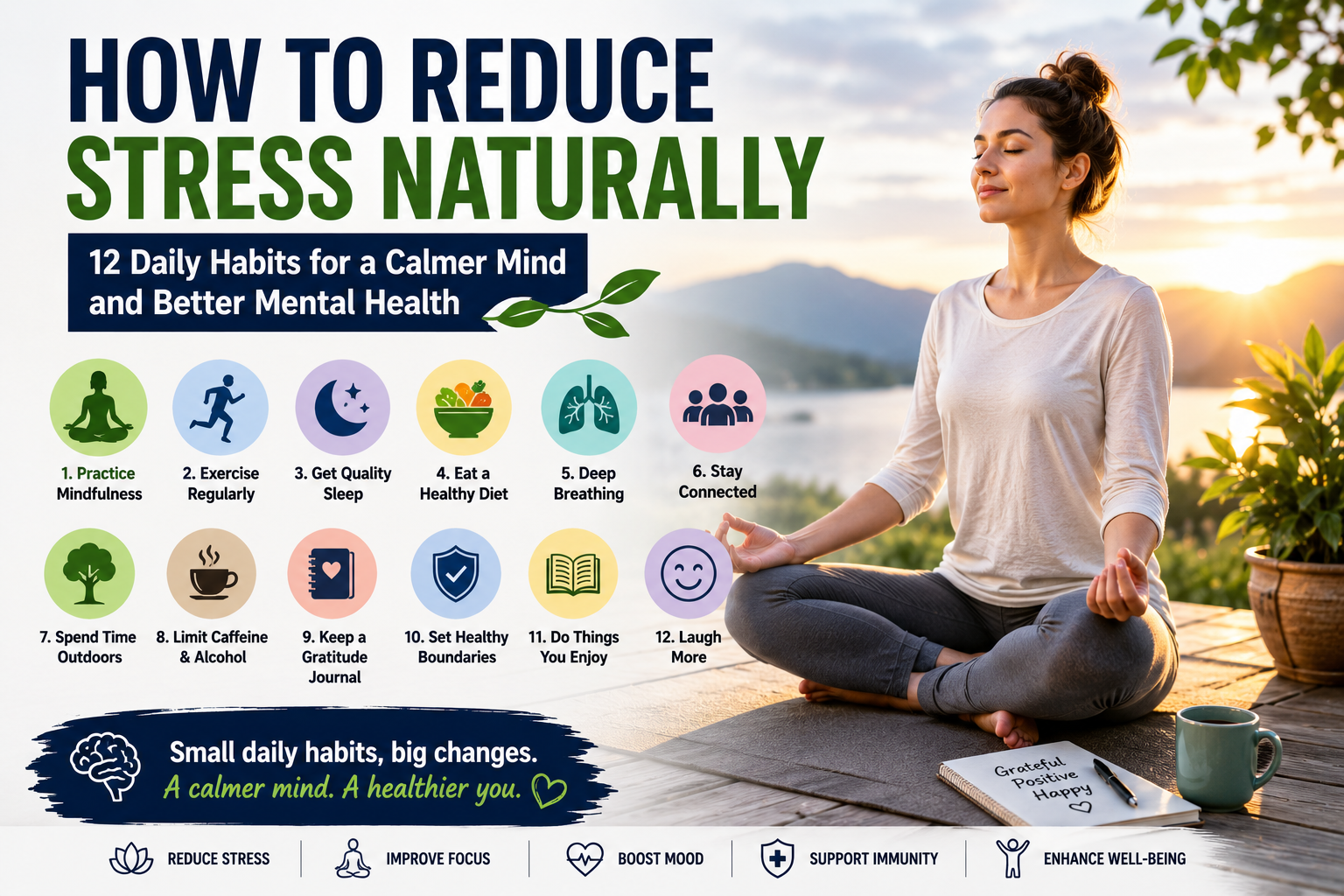

Stress is a normal part of life, but when it becomes chronic, it can affect your physical health, emotional well-being, and overall quality of life. Learning how to reduce stress naturally can help you feel more balanced, improve your mood, and build resilience without relying solely on medication.
Natural stress management focuses on healthy lifestyle habits that calm the mind and support the body. Small, consistent changes—such as regular movement, nutritious meals, quality sleep, and mindfulness—can make a meaningful difference over time.
In this guide, you’ll discover 12 evidence-based daily habits that can help you manage stress naturally and improve your overall wellness.
What Is Stress?
Stress is the body’s natural response to challenges or perceived threats. In short bursts, it can help you stay alert and motivated. However, ongoing stress may contribute to fatigue, poor sleep, anxiety, digestive issues, headaches, and difficulty concentrating.
Recognizing stress early allows you to take positive steps before it begins affecting your daily life.
Common Signs of Chronic Stress
You may experience:
- Difficulty sleeping
- Constant fatigue
- Irritability
- Muscle tension
- Frequent headaches
- Digestive discomfort
- Trouble concentrating
- Feeling overwhelmed
- Changes in appetite
- Low motivation
If these symptoms persist or significantly interfere with daily life, it’s important to speak with a qualified healthcare professional.
Why Natural Stress Management Matters
Healthy habits can help regulate your body’s stress response, improve emotional resilience, and support long-term mental and physical health. While lifestyle changes are valuable, they complement—not replace—professional care when needed.
12 Daily Habits to Reduce Stress Naturally
1. Practice Deep Breathing
Slow, controlled breathing can activate your body’s relaxation response.
Try inhaling through your nose for four seconds, holding briefly, and exhaling slowly through your mouth for six seconds.
Practice for 5–10 minutes daily.
2. Exercise Regularly
Physical activity releases endorphins, improves mood, and helps reduce muscle tension.
Good beginner options include:
- Walking
- Cycling
- Yoga
- Swimming
- Dancing
Aim for at least 150 minutes of moderate activity each week.
3. Prioritize Quality Sleep
Adults generally benefit from 7–9 hours of sleep each night.
Improve sleep by:
- Maintaining a consistent bedtime
- Limiting caffeine late in the day
- Reducing screen time before bed
- Keeping your bedroom cool, dark, and quiet
4. Eat a Balanced Diet
Nutritious foods provide the vitamins and minerals your body needs to respond to stress effectively.
Focus on:
- Fruits
- Vegetables
- Whole grains
- Lean proteins
- Healthy fats
- Plenty of water
5. Practice Mindfulness or Meditation
Mindfulness encourages you to focus on the present moment rather than worrying about the future.
Even 5–10 minutes daily can help improve awareness and emotional balance.
6. Stay Connected
Talking with trusted friends, family members, or support groups can reduce feelings of isolation and provide emotional support.
Healthy relationships are an important part of stress management.
7. Spend Time Outdoors
Nature may help improve mood and reduce mental fatigue.
Take a walk in a park, garden, or other green space whenever possible.
8. Limit Excess Caffeine and Alcohol
Too much caffeine may increase feelings of nervousness, while alcohol can interfere with sleep quality.
Moderation supports better overall well-being.
9. Keep a Gratitude Journal
Writing down three things you’re grateful for each day can help shift your focus toward positive experiences and improve emotional resilience.
10. Set Healthy Boundaries
Learn to say “no” when necessary and prioritize tasks that truly matter.
Managing your time effectively can reduce unnecessary stress.
11. Make Time for Enjoyable Activities
Reading, gardening, painting, cooking, listening to music, or other hobbies can provide relaxation and help you recharge.
12. Laugh More Often
Laughter can reduce muscle tension, improve mood, and help you feel more connected with others.
Watch a funny movie, spend time with loved ones, or enjoy activities that make you smile.
Foods That May Support Stress Management
While no single food eliminates stress, a balanced diet can support overall well-being.
Include foods such as:
- Fatty fish
- Nuts and seeds
- Leafy greens
- Whole grains
- Yogurt
- Berries
- Citrus fruits
- Avocados
- Beans
- Green tea (in moderation)
Additional Lifestyle Tips
To maintain healthy stress levels:
- Stay physically active.
- Drink enough water.
- Take regular breaks from work.
- Reduce unnecessary screen time.
- Practice good time management.
- Seek help when you need it.
Common Mistakes to Avoid
Avoid relying on:
- Skipping meals
- Poor sleep habits
- Excessive caffeine
- Smoking
- Heavy alcohol use
- Ignoring persistent symptoms
- Isolating yourself from supportive relationships
Small, consistent habits often have a greater long-term impact than drastic changes.
Frequently Asked Questions
1. What is the fastest natural way to reduce stress?
Deep breathing, taking a short walk, or practicing a brief mindfulness exercise may help you feel calmer in the moment.
2. Can exercise reduce stress?
Yes. Regular physical activity is associated with improved mood and reduced stress levels.
3. How does sleep affect stress?
Poor sleep can make stress feel more intense, while quality sleep supports emotional regulation and recovery.
4. Are there foods that help with stress?
A balanced diet rich in fruits, vegetables, whole grains, lean proteins, and healthy fats supports overall mental and physical health.
5. How long does it take to notice improvements?
Many people notice small benefits within a few weeks of consistently practicing healthy habits, though results vary.
6. When should I seek professional help?
If stress feels overwhelming, lasts for an extended period, or interferes with work, relationships, or daily activities, consult a qualified healthcare or mental health professional.
Conclusion
Learning how to reduce stress naturally is a lifelong investment in your mental and physical well-being. By incorporating simple daily habits—such as regular exercise, nutritious eating, quality sleep, mindfulness, social connection, and time outdoors—you can build resilience and improve your overall quality of life.
Remember that lasting change comes from consistency, not perfection. Start with one or two habits that fit your lifestyle, then gradually build on your progress. If stress becomes persistent or overwhelming, don’t hesitate to seek support from a healthcare professional. Combining healthy lifestyle practices with appropriate care can help you achieve greater balance, emotional wellness, and long-term health.
For more evidence-based wellness guidance, visit trusted resources such as the World Health Organization (WHO) and the American Psychological Association (APA).