
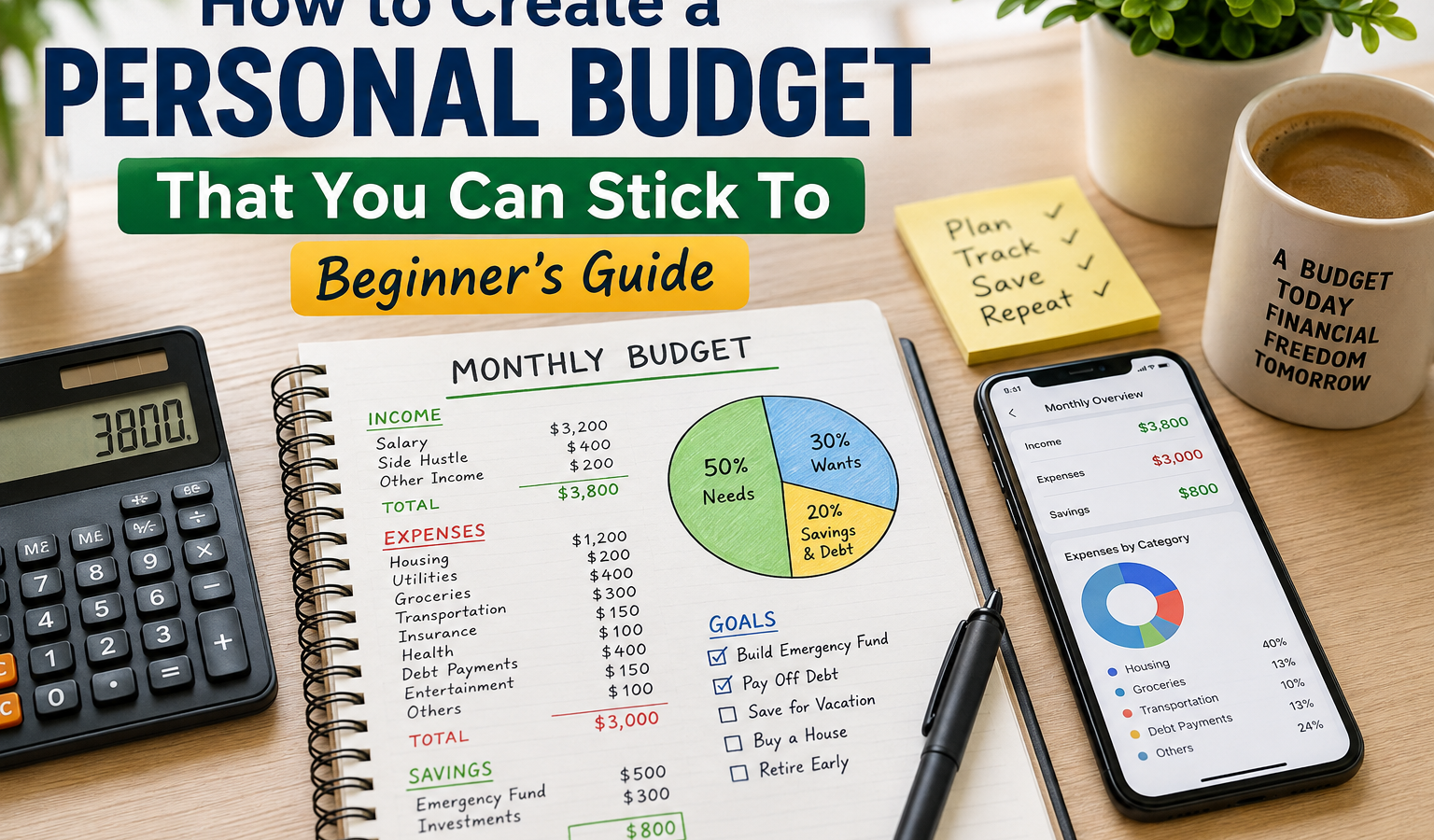

Managing money effectively is one of the most valuable life skills you can develop. Whether you’re earning your first paycheck, supporting a family, or trying to eliminate debt, creating a personal budget is the foundation of financial success.
The challenge isn’t making a budget—it’s sticking to one.
Many people create detailed spreadsheets only to abandon them after a few weeks because the budget feels too restrictive, unrealistic, or difficult to maintain. A successful budget should fit your lifestyle rather than control it.
This beginner’s guide explains how to create a realistic personal budget, avoid common budgeting mistakes, and build financial habits that last. By the end of this guide, you’ll know exactly how to plan your income, manage expenses, save consistently, and stay motivated throughout your financial journey.
Table of Contents
- What Is a Personal Budget?
- Why Budgeting Matters
- Benefits of Creating a Budget
- Step 1: Calculate Your Monthly Income
- Step 2: Track Every Expense
- Step 3: Separate Needs from Wants
- Step 4: Set SMART Financial Goals
- Step 5: Choose the Right Budgeting Method
- Best Budgeting Tools
- Budget Comparison Table
- Expert Budgeting Tips
- Common Budgeting Mistakes
- Frequently Asked Questions
- Conclusion
What Is a Personal Budget?
A personal budget is a financial plan that helps you decide how your money will be earned, spent, and saved over a specific period, usually one month.
Think of your budget as a roadmap for your finances. Instead of wondering where your money went at the end of the month, you’ll know exactly where every dollar is allocated.
A well-designed budget allows you to:
- Control spending
- Build savings
- Reduce financial stress
- Avoid unnecessary debt
- Prepare for emergencies
- Reach long-term financial goals
Budgeting doesn’t mean you can’t enjoy life. Instead, it ensures that your spending aligns with your priorities while protecting your financial future.
Why Budgeting Matters
Many households struggle financially not because they don’t earn enough, but because they don’t have a clear spending plan.
Without a budget, it’s easy to:
- Overspend on non-essential purchases
- Miss bill payments
- Accumulate high-interest debt
- Have little or no emergency savings
- Feel constant financial stress
Budgeting provides clarity. When you know how much money is coming in and going out, you can make informed financial decisions instead of emotional ones.
Research consistently shows that people who regularly monitor their finances are more likely to achieve savings goals and reduce unnecessary spending compared with those who don’t actively manage their budgets.
Benefits of Creating a Personal Budget
Better Financial Control
A budget gives you complete visibility into your finances.
Instead of reacting to expenses, you plan for them ahead of time.
Reduced Financial Stress
Money worries are among the leading causes of stress for many people.
Knowing your bills are covered and your savings are growing provides peace of mind.
Helps Build Savings Faster
Saving becomes much easier when it’s included in your monthly budget.
Rather than saving whatever is left over, you pay yourself first by setting aside a fixed amount before discretionary spending.
Prevents Overspending
Impulse purchases can quietly derail your financial goals.
A budget creates spending limits that help you avoid buying things you don’t truly need.
Makes Debt Repayment Easier
If you have loans or credit card balances, budgeting helps you allocate extra money toward repayments while still covering your essential expenses.
Supports Long-Term Goals
Whether you’re saving for:
- A house
- A car
- Higher education
- Retirement
- Starting a business
- Family vacations
A budget transforms these dreams into achievable financial goals.
Step 1: Calculate Your Monthly Income
Before creating a budget, you need to know exactly how much money you receive each month.
Your income should include every reliable source of earnings.
Examples include:
- Salary
- Wages
- Freelance income
- Business income
- Rental income
- Pension
- Government benefits
- Investment income
- Side hustle earnings
If your income changes each month, calculate your average monthly income using the last six to twelve months.
Example
| Income Source | Monthly Amount |
|---|---|
| Salary | $2,500 |
| Freelancing | $400 |
| Online Business | $300 |
| Investment Income | $100 |
| Total Monthly Income | $3,300 |
Always use your net income (after taxes and deductions) when creating your budget. This gives you a realistic picture of the money available to spend and save.
Step 2: Track Every Expense
The next step is understanding where your money goes.
Many people underestimate their spending because they only remember major bills while forgetting small daily purchases.
Track your spending for at least 30 days.
Include every expense, no matter how small.
Common expense categories include:
Housing
- Rent
- Mortgage
- Property taxes
- Home insurance
Utilities
- Electricity
- Water
- Gas
- Internet
- Mobile phone
Transportation
- Fuel
- Public transport
- Car insurance
- Vehicle maintenance
Food
- Groceries
- Restaurants
- Coffee
- Snacks
Healthcare
- Insurance
- Medication
- Doctor visits
Entertainment
- Movies
- Streaming subscriptions
- Gaming
- Hobbies
Savings
- Emergency fund
- Retirement
- Investments
Debt Payments
- Credit cards
- Student loans
- Personal loans
Expense tracking can be done using:
- Budgeting apps
- Spreadsheet templates
- Bank statements
- A notebook
- Expense tracking software
The more accurate your expense records, the easier it becomes to identify unnecessary spending and make informed budgeting decisions.
Step 3: Separate Needs from Wants
One of the biggest reasons budgets fail is that people treat every expense as equally important. Learning the difference between needs and wants allows you to prioritize your spending without feeling deprived.
What Are Needs?
Needs are essential expenses required to maintain your daily life and financial stability.
Examples include:
- Rent or mortgage
- Utilities
- Groceries
- Transportation to work
- Health insurance
- Prescription medication
- Minimum debt payments
- Childcare
- Basic clothing
Without these, your health, safety, or ability to earn income could be affected.
What Are Wants?
Wants improve your lifestyle but aren’t essential for survival.
Examples include:
- Dining out
- Premium streaming subscriptions
- Designer clothing
- Vacations
- New gadgets
- Luxury vehicles
- Expensive hobbies
- Daily specialty coffee
There’s nothing wrong with spending money on wants—as long as they fit within your budget.
Ask Yourself Before Every Purchase
When considering a purchase, ask:
- Do I truly need this?
- Can I delay buying it?
- Does it align with my financial goals?
- Will I still value this purchase in a month?
- Could I find a less expensive alternative?
Making this a habit can significantly reduce impulse spending.
Step 4: Set SMART Financial Goals
A budget without goals often loses momentum. Clear financial goals provide motivation and help you measure progress.
The SMART framework is an effective way to set goals.
- Specific: Clearly define what you want to achieve.
- Measurable: Track your progress with numbers.
- Achievable: Set realistic targets.
- Relevant: Align goals with your priorities.
- Time-bound: Give yourself a deadline.
Short-Term Goals (Within 12 Months)
Examples:
- Save $1,000 for emergencies.
- Pay off a credit card.
- Build a one-month emergency fund.
- Reduce grocery spending by 15%.
- Save for holiday expenses.
Medium-Term Goals (1–5 Years)
Examples:
- Buy a reliable car.
- Save for a home down payment.
- Start a small business.
- Eliminate personal loans.
- Complete professional training.
Long-Term Goals (More Than 5 Years)
Examples:
- Retirement savings.
- Children’s education.
- Financial independence.
- Purchasing a home.
- Building an investment portfolio.
Write your goals down and review them every month. Seeing your progress reinforces positive financial habits.
Step 5: Choose the Right Budgeting Method
There is no universal budgeting system. The best budget is the one you can consistently follow.
1. The 50/30/20 Budget
This is one of the most beginner-friendly budgeting methods.
Allocate your income as follows:
- 50% for needs
- 30% for wants
- 20% for savings and debt repayment
Example
Monthly income: $3,000
| Category | Percentage | Amount |
|---|---|---|
| Needs | 50% | $1,500 |
| Wants | 30% | $900 |
| Savings & Debt | 20% | $600 |
Best for:
- Beginners
- Salaried employees
- People seeking a simple budgeting system
2. Zero-Based Budgeting
With zero-based budgeting, every dollar has a purpose.
Income minus expenses equals zero—not because you’ve spent everything, but because every dollar has been assigned to spending, saving, investing, or debt repayment.
Example
Income: $4,000
- Housing: $1,200
- Utilities: $250
- Groceries: $450
- Transportation: $300
- Savings: $600
- Investments: $300
- Debt repayment: $400
- Entertainment: $200
- Miscellaneous: $300
Remaining balance: $0
Best for:
- Detail-oriented individuals
- Families
- People focused on eliminating debt
3. Envelope Budgeting
This traditional method involves allocating cash into separate envelopes for different spending categories.
Examples:
- Groceries
- Transportation
- Entertainment
- Dining Out
Once an envelope is empty, spending in that category stops until the next budget cycle.
Many budgeting apps now offer digital envelope systems.
Best for:
- People who overspend
- Cash users
- Beginners learning spending discipline
4. Pay Yourself First
Instead of saving what’s left at the end of the month, you save first.
As soon as you receive your income:
- Transfer money to savings.
- Contribute to investments.
- Build your emergency fund.
- Pay extra toward debt.
Then budget what’s left for living expenses.
This strategy helps make saving a consistent habit.
Best for:
- Long-term savers
- Investors
- Anyone building financial security
Budgeting Methods Comparison
| Method | Best For | Difficulty | Flexibility |
|---|---|---|---|
| 50/30/20 Rule | Beginners | Easy | High |
| Zero-Based Budget | Families, debt payoff | Moderate | Medium |
| Envelope Method | Overspenders | Easy | Medium |
| Pay Yourself First | Savers and investors | Easy | High |
Choose the method that matches your income, lifestyle, and financial goals. Remember, you can switch methods as your circumstances change.
Create Your Monthly Budget
Once you’ve selected a budgeting method, organize your monthly finances into categories.
Sample Monthly Budget
| Category | Budget |
|---|---|
| Housing | $900 |
| Utilities | $180 |
| Internet & Phone | $100 |
| Groceries | $400 |
| Transportation | $250 |
| Insurance | $150 |
| Savings | $400 |
| Investments | $250 |
| Debt Payments | $200 |
| Entertainment | $120 |
| Dining Out | $100 |
| Miscellaneous | $150 |
| Total | $3,200 |
Review your budget before the month begins and adjust it as needed for upcoming expenses.
Monitor Your Spending Weekly
Creating a budget is only the first step. Regularly tracking your spending helps you stay on course.
A weekly review can help you:
- Identify overspending early.
- Adjust categories before the month ends.
- Celebrate savings milestones.
- Avoid missed bill payments.
- Stay motivated toward your financial goals.
Even a 10-minute review each week can make a significant difference.
Prepare for Irregular Expenses
Many budgets fail because they don’t account for occasional costs.
Examples include:
- Car maintenance
- Medical bills
- School fees
- Annual insurance premiums
- Birthdays and holidays
- Home repairs
- Gifts
- Tax payments
Estimate these annual expenses, divide them by 12, and save that amount each month in a dedicated sinking fund.
For example, if you expect to spend $1,200 on car maintenance over the next year, save $100 each month to avoid financial strain when repairs arise.
Best Budgeting Tools for Beginners
Choosing the right tool can make budgeting easier and more consistent.
Spreadsheet Templates
Ideal for people who like full control and customization. Spreadsheet budgets can be tailored to your income, expenses, and financial goals.
Budgeting Apps
Many apps automatically categorize transactions, set spending limits, and provide visual reports. They are especially useful for tracking expenses in real time.
Banking Apps
Some banks include built-in budgeting features that show spending by category, send alerts, and help monitor account balances.
Pen and Paper
A simple notebook remains an effective budgeting method for many beginners. Writing expenses manually can increase awareness and encourage disciplined spending.
Expert Tips for Sticking to Your Budget
- Set realistic spending limits instead of overly restrictive ones.
- Build an emergency fund to avoid relying on debt for unexpected expenses.
- Automate savings and bill payments whenever possible.
- Review your budget at the end of each month and make adjustments.
- Reward yourself for reaching milestones without overspending.
- Involve your partner or family in the budgeting process to stay accountable.
- Compare prices before making major purchases.
- Use cashback offers and discounts wisely—but avoid buying items solely because they’re on sale.
- Increase your savings rate whenever your income grows instead of increasing your lifestyle at the same pace.
Common Budgeting Mistakes to Avoid
Even the best budget can fail if you make avoidable mistakes. Recognizing these pitfalls early can help you stay on track and reach your financial goals faster.
1. Setting Unrealistic Spending Limits
A budget that is too restrictive is difficult to maintain. If you eliminate all entertainment or personal spending, you’re more likely to abandon your budget altogether.
Solution: Create realistic spending limits that leave room for occasional treats while still prioritizing savings.
2. Forgetting Irregular Expenses
Annual insurance premiums, holiday gifts, school fees, and vehicle maintenance often catch people by surprise.
Solution: Create sinking funds by saving a small amount each month for these predictable but infrequent expenses.
3. Not Tracking Daily Spending
Small purchases such as snacks, coffee, or online subscriptions can add up quickly.
Solution: Record every expense using a budgeting app, spreadsheet, or notebook.
4. Ignoring Emergency Savings
Unexpected expenses are inevitable. Without an emergency fund, many people rely on credit cards or loans.
Solution: Aim to build an emergency fund that covers three to six months of essential living expenses.
5. Failing to Review Your Budget
Your financial situation changes over time. A budget should evolve with it.
Solution: Review your budget at least once a month and adjust it for changes in income, expenses, or financial goals.
6. Comparing Yourself to Others
Social media can create pressure to spend beyond your means.
Solution: Focus on your own financial goals and remember that long-term financial stability is more valuable than short-term appearances.
7. Depending Too Much on Credit
Using credit to fund everyday expenses can lead to long-term debt and costly interest charges.
Solution: Spend within your means and use credit responsibly, paying balances in full whenever possible.
8. Giving Up After One Bad Month
Everyone makes financial mistakes. One month of overspending doesn’t mean your budget has failed.
Solution: Learn from setbacks, adjust your plan, and continue building healthy financial habits.
Frequently Asked Questions (FAQs)
1. What is the easiest budgeting method for beginners?
The 50/30/20 rule is one of the easiest methods to start with because it divides your income into three simple categories: needs, wants, and savings or debt repayment.
2. How much of my income should I save each month?
A common recommendation is to save at least 20% of your income. If that’s not possible, start with a smaller percentage and increase it gradually as your financial situation improves.
3. How often should I review my budget?
Review your budget weekly to monitor spending and conduct a more detailed review at the end of each month to make any necessary adjustments.
4. What if my income changes every month?
If your income is irregular, calculate your average monthly income using the last six to twelve months. Base your budget on your lowest expected monthly income and treat any extra earnings as an opportunity to boost savings or pay down debt.
5. Should I use cash or a budgeting app?
Both methods work well. Cash can help control spending in specific categories, while budgeting apps offer convenience, automatic tracking, and detailed reports. Choose the method that best fits your lifestyle.
6. How long does it take to build a budgeting habit?
Most people become comfortable with budgeting after a few months of consistent practice. The key is persistence and making small improvements over time.
7. Can budgeting help me pay off debt faster?
Yes. A well-planned budget helps you identify areas where you can reduce spending and redirect that money toward debt repayment, potentially saving money on interest over time.
8. Is budgeting only for people with low incomes?
No. Budgeting is beneficial for everyone, regardless of income. It helps you manage cash flow, build wealth, prepare for emergencies, and achieve both short-term and long-term financial goals.
Conclusion
Creating a personal budget is one of the most effective ways to take control of your finances. It provides clarity, helps you prioritize spending, reduces financial stress, and keeps you focused on meaningful financial goals.
The best budget isn’t the most complicated one—it’s the one you can consistently follow. By understanding your income, tracking expenses, separating needs from wants, setting SMART goals, choosing a budgeting method that suits your lifestyle, and reviewing your progress regularly, you can build a sustainable financial plan that supports your future.
Remember that budgeting is a continuous process. As your income, expenses, and priorities change, your budget should evolve too. Stay flexible, celebrate your progress, and don’t let occasional setbacks discourage you.
Financial success isn’t about earning the most money—it’s about making the most of the money you have.
Call to Action
Ready to take control of your finances?
Start today by calculating your monthly income, tracking your expenses, and creating your first budget using one of the methods discussed in this guide. Small, consistent actions can lead to significant financial improvements over time.
If you found this guide helpful, share it with friends and family who are beginning their financial journey. Explore our other personal finance articles for practical advice on saving money, paying off debt, investing wisely, and achieving long-term financial freedom.