
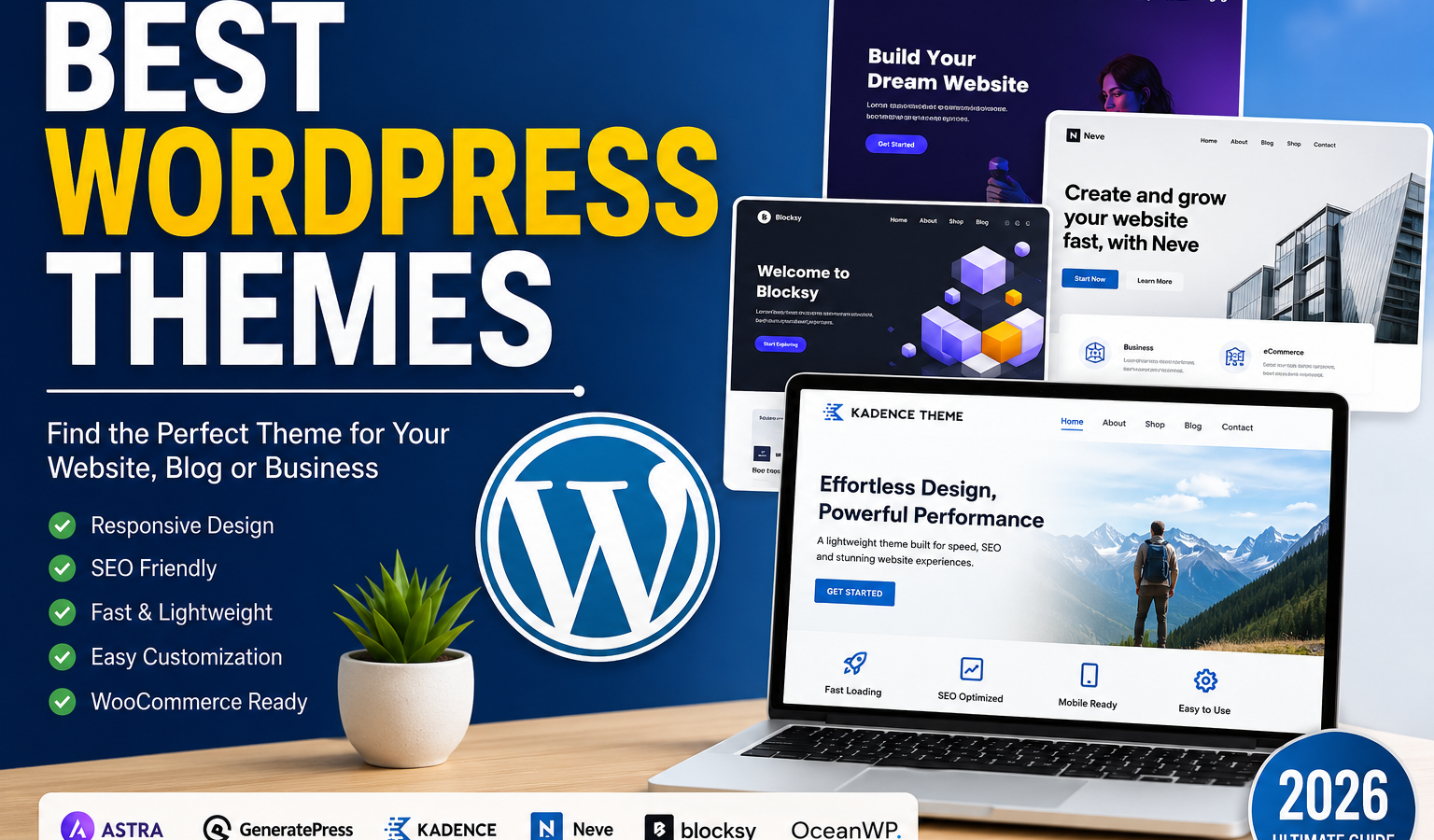

Introduction
WordPress continues to dominate the website-building industry, powering more than 40% of all websites on the internet. Whether you’re building a personal blog, an online magazine, a business website, a portfolio, or an eCommerce store, choosing the right WordPress theme is one of the most important decisions you’ll make.
A WordPress theme determines not only how your website looks but also how it performs, how easy it is to customize, and how well it ranks in search engines. A poorly coded theme can slow down your website, negatively affect user experience, and even hurt your SEO rankings. On the other hand, a high-quality theme provides speed, security, flexibility, and professional design.
This guide explores the best WordPress themes available today, their features, advantages, and how to choose the ideal one for your specific needs.
What Is a WordPress Theme?
A WordPress theme is a collection of templates, stylesheets, scripts, and design elements that control the appearance and layout of your website.
Themes allow you to customize:
- Homepage layout
- Header and footer
- Blog pages
- Single posts
- Navigation menus
- Sidebars
- Typography
- Colors
- Mobile responsiveness
Modern WordPress themes also integrate with page builders like Elementor, Gutenberg, Bricks Builder, and Beaver Builder, making customization easier than ever.
Why Choosing the Right Theme Matters
Selecting the right theme affects nearly every aspect of your website.
Benefits include:
- Faster loading speed
- Better search engine rankings
- Improved user experience
- Higher conversion rates
- Mobile responsiveness
- Better security
- Easier customization
- Long-term scalability
A premium-quality theme can save hundreds of hours of development work.
Features Every Great WordPress Theme Should Have
Before purchasing or downloading any theme, ensure it includes the following features.
1. Responsive Design
Most visitors browse websites using smartphones.
A good theme automatically adjusts to different screen sizes.
Responsive themes improve:
- Mobile usability
- SEO rankings
- User engagement
2. Fast Loading Speed
Website speed directly impacts:
- Google rankings
- Bounce rate
- User satisfaction
Choose lightweight themes with clean code.
3. SEO Optimization
SEO-friendly themes include:
- Schema markup
- Proper heading structure
- Semantic HTML
- Fast performance
- Mobile optimization
These features help search engines understand your content.
4. Customization Options
Modern themes allow users to customize:
- Colors
- Fonts
- Layouts
- Sidebars
- Headers
- Footers
- Widgets
Without touching code.
5. WooCommerce Compatibility
If you plan to sell products, ensure your theme supports WooCommerce.
Features should include:
- Product pages
- Shopping cart
- Checkout pages
- Wishlist support
- Product filters
6. Regular Updates
Themes should receive frequent updates for:
- Security patches
- New features
- Compatibility with WordPress releases
Avoid abandoned themes.
7. Excellent Documentation
Good documentation helps users:
- Install themes
- Import demo content
- Customize layouts
- Troubleshoot issues
Best WordPress Themes
1. Astra
Astra is one of the most popular WordPress themes worldwide.
Key Features
- Extremely lightweight
- Fast loading
- Elementor compatible
- Gutenberg optimized
- WooCommerce ready
- Hundreds of starter templates
Best For
- Blogs
- Agencies
- Businesses
- eCommerce
- Landing pages
Pros:
- Very fast
- Beginner friendly
- Excellent documentation
Cons:
- Some premium features require Pro.
2. GeneratePress
GeneratePress focuses on speed and clean coding.
Features include:
- Lightweight
- Responsive
- SEO optimized
- Accessibility ready
- WooCommerce compatible
Perfect for developers and performance-focused websites.
3. Kadence
Kadence has become one of the fastest-growing themes.
Highlights:
- Drag-and-drop header builder
- Footer builder
- Dynamic layouts
- WooCommerce optimization
- Global typography
Excellent for businesses.
4. Blocksy
Blocksy is built using modern technologies.
It offers:
- Lightning-fast performance
- Dark mode
- Multiple headers
- Sticky navigation
- Live customization
Ideal for modern websites.
5. OceanWP
OceanWP is known for flexibility.
Features:
- Multiple demos
- WooCommerce enhancements
- Mega menus
- Popups
- Portfolio layouts
Suitable for freelancers and agencies.
6. Neve
Neve is lightweight and optimized for speed.
Features include:
- AMP support
- Mobile-first design
- One-click demo import
- Elementor integration
Great for startups.
7. Hello Elementor
Minimalistic and designed specifically for Elementor.
Advantages:
- Ultra-lightweight
- Fast
- No unnecessary styling
- Perfect for custom designs
Ideal for Elementor users.
8. Divi
Divi combines a powerful page builder with a premium theme.
Features:
- Visual editing
- Hundreds of templates
- Marketing modules
- Split testing
- Dynamic content
Suitable for designers.
9. Avada
One of the best-selling WordPress themes ever.
Features include:
- Website builder
- Massive demo library
- WooCommerce integration
- Form builder
- Performance tools
Perfect for multipurpose websites.
10. SignalMedia Premium
SignalMedia Premium is designed for publishers, bloggers, and digital marketers who want a modern magazine-style website with built-in SEO optimization and monetization features.
Key features include:
- Responsive magazine layout
- Homepage drag-and-drop sections
- Ad management support
- Dark mode
- Multiple header styles
- SEO-friendly structure
- Custom widgets
- Social sharing integration
- Performance optimization
- Mobile-first design
Best for:
- News websites
- Online magazines
- Tech blogs
- Affiliate marketing
- Content publishers
Free vs Premium Themes
Free Themes
Advantages:
- No cost
- Easy to install
- Great for beginners
Disadvantages:
- Limited customization
- Basic support
- Fewer updates
Premium Themes
Advantages:
- Better support
- Advanced customization
- More templates
- Regular updates
- Professional features
Disadvantages:
- Initial purchase cost
Premium themes are generally a worthwhile investment for businesses and professional websites.
How to Choose the Best Theme
Ask yourself:
- What type of website are you building?
- Do you need WooCommerce?
- Will you use Elementor?
- Is speed important?
- Do you need multilingual support?
- What is your budget?
Answering these questions helps narrow your options.
Common Mistakes to Avoid
Avoid:
- Choosing based only on appearance
- Ignoring performance
- Using outdated themes
- Installing too many theme plugins
- Ignoring mobile responsiveness
- Buying unsupported themes
Theme Installation Guide
Installing a theme is straightforward:
- Log into WordPress.
- Navigate to Appearance → Themes.
- Click Add New.
- Search for or upload your chosen theme.
- Click Install.
- Activate the theme.
- Import demo content if available.
- Customize via Appearance → Customize or the Site Editor.
Optimizing Your Theme
After installation:
- Enable caching.
- Compress images.
- Use a CDN.
- Minify CSS and JavaScript.
- Remove unused plugins.
- Keep WordPress updated.
- Optimize your database.
These steps improve speed and user experience.
Essential Plugins for Any Theme
Enhance your site with these types of plugins:
- SEO plugin
- Security plugin
- Backup plugin
- Cache plugin
- Image optimization plugin
- Contact form plugin
- Analytics plugin
- Spam protection plugin
Use only plugins you truly need to maintain optimal performance.
Frequently Asked Questions
Which WordPress theme is fastest?
GeneratePress, Astra, Kadence, Blocksy, and Hello Elementor are among the fastest themes available.
Are free WordPress themes safe?
Themes from the official WordPress repository are generally safe and regularly reviewed. Avoid downloading themes from untrusted sources.
Can I change my WordPress theme later?
Yes. However, changing themes may affect layouts, widgets, menus, and some customization settings, so always back up your site first.
Do themes affect SEO?
Absolutely. Clean code, fast loading times, responsive design, and schema markup all contribute to better search engine performance.
Should I use a page builder?
If you want maximum design flexibility without coding, page builders like Elementor or Gutenberg provide an excellent experience.
Final Thoughts
The best WordPress theme depends on your goals, budget, and technical requirements. If speed and simplicity are your priorities, Astra, GeneratePress, Kadence, and Blocksy are excellent choices. For users seeking advanced visual design, Divi and Avada offer comprehensive design tools. Publishers and marketers may find SignalMedia Premium especially suited to content-heavy websites thanks to its magazine layout, SEO-friendly architecture, and monetization features.
Before making your final decision, evaluate factors such as performance, mobile responsiveness, SEO readiness, customization options, ongoing support, and compatibility with essential plugins. Investing in a well-maintained, high-quality theme lays the foundation for a professional, secure, and scalable website that can grow with your business for years to come.