
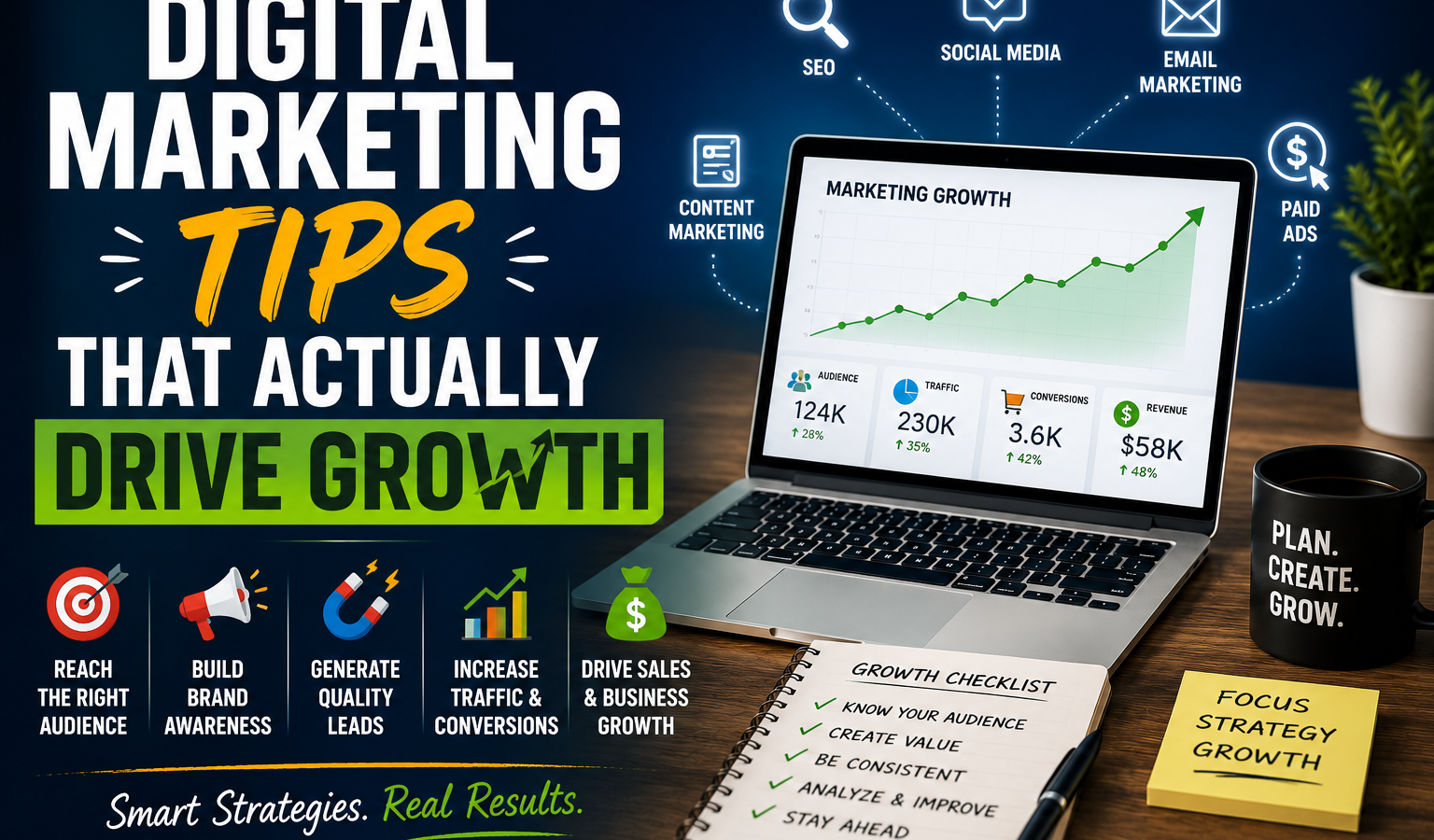

A strong content marketing strategy helps brands attract the right audience, build trust, and generate consistent results without relying only on paid ads. Instead of publishing random posts, a strategy gives your content a purpose. It aligns your topics, format, distribution, and measurement with a clear business goal.
That matters because online competition is intense. Millions of articles, videos, emails, and social posts are published every day. If your content is not planned, it becomes easy to ignore. When your strategy is clear, however, your content can do real work: educate, rank, convert, and retain customers.
Content marketing also continues to be a major priority for businesses. Industry research from leading marketing platforms consistently shows that organizations invest in content because it supports SEO, lead generation, brand authority, and customer education.
Table of Contents
- What content marketing strategy means
- Why it matters
- Core elements of a strategy
- Audience research
- Keyword and topic planning
- Content formats
- Distribution channels
- Measurement and KPIs
- Comparison table
- Expert tips
- Common mistakes
- FAQs
- Conclusion
- Call to action
What a Content Marketing Strategy Means
A content marketing strategy is a planned approach to creating and distributing valuable content that supports a business goal. It defines who you are trying to reach, what topics matter to them, which formats will work best, and how success will be measured.
In simple terms, content marketing strategy is the “why,” “who,” “what,” “where,” and “how” behind your content. Without it, content often becomes inconsistent and forgettable. With it, every article, video, or email has a reason to exist.
The WordPress ecosystem itself shows the power of structured content. WordPress core and the plugin directory exist to help creators publish, extend, and manage content in a scalable way. That same principle applies to content strategy: build a system, not just a single post.
Why Content Marketing Strategy Matters
Content marketing strategy matters because it saves time and improves results. Instead of guessing what to publish, you can focus on topics that support search visibility, lead generation, sales, or brand awareness. That makes your content more efficient and more measurable.
Search engines reward content that is useful, relevant, and trustworthy. Users also reward it with clicks, shares, and repeat visits. A strategy helps you satisfy both sides. It keeps your content aligned with search intent and your business objectives at the same time.
It also helps you avoid waste. Many teams publish content without checking whether it fits the audience, supports conversion, or connects to existing assets. That leads to scattered results. A clear strategy creates focus and compounding growth.
Core Elements of a Content Marketing Strategy
Every strong content marketing strategy should include a few essential pieces. These elements work together and should be revisited regularly as your audience or business changes.
- Business goal: What outcome should content support?
- Audience profile: Who are you trying to reach?
- Topic map: What subjects matter most?
- Content formats: Blogs, videos, emails, case studies, social posts, and more.
- Distribution plan: Where will content be shared?
- SEO plan: Which search terms and topic clusters matter?
- Measurement plan: Which KPIs show success?
When these parts are clear, your content becomes easier to produce and easier to improve. You also reduce the chance of publishing content that looks busy but produces little business value.
Start with Audience Research
Audience research is the foundation of any content marketing strategy. Before you write, you need to know who you are speaking to, what they care about, and what problems they want solved. Content that ignores the audience rarely performs well.
Begin with basic questions. What industry are they in? What keeps them stuck? What objections do they have? What words do they use when searching online? What content format do they prefer? The answers help you write content that feels relevant and useful.
You can gather insights from customer conversations, email replies, analytics, social comments, search queries, support tickets, and competitor reviews. These sources often reveal the real language and pain points your audience uses every day.
Use Search Intent and Topic Research
Search intent explains why someone is searching. They may want information, a comparison, a solution, or a purchase option. A good content marketing strategy matches that intent instead of forcing the wrong format onto the user.
For example, someone searching “content marketing strategy” may want a beginner guide, a template, examples, or step-by-step instructions. A product page would not fit that intent. A detailed article would.
Use keyword research to find relevant questions and related phrases. Build topic clusters around broad themes. Then create supporting content that answers subtopics in a logical order. This structure helps users and search engines understand your expertise.
Choose the Right Content Formats
Different content formats serve different goals. Blog posts are excellent for search traffic and education. Videos can simplify complex ideas. Case studies build trust. Lead magnets can capture emails. Social content expands reach. Email nurtures interest over time.
A balanced content marketing strategy usually includes more than one format. That allows you to reach people at different stages of awareness. Some are just discovering a problem. Others are comparing solutions. Some are ready to buy.
Choose formats based on your resources and audience behavior. A small team should not try to do everything at once. Start with the channels you can execute well, then expand as you learn what works.
Comparison Table: Content Formats and Best Uses
| Content Format | Best For | Strength |
|---|---|---|
| Blog posts | SEO, education, topical authority | Long-term discovery |
| Videos | Explanation, demos, personality | High engagement |
| Case studies | Trust and sales support | Proof and credibility |
| Email newsletters | Nurture and retention | Direct audience access |
| Social posts | Reach and conversation | Fast visibility |
| Lead magnets | Email capture | Conversion support |
Build a Topic Plan
A topic plan prevents random publishing. It gives your team a roadmap and helps you create clusters of related content. These clusters strengthen SEO and make it easier for readers to move through your site.
Start with one core theme. Then break it into related questions, pain points, tools, strategies, and examples. Each piece of content should connect to a larger goal. That is how your library becomes more valuable over time.
- Core theme
- Supporting questions
- How-to articles
- Comparison posts
- Case studies
- FAQs and glossary pages
Topic planning also helps with internal linking. When related posts point to each other, readers stay longer and search engines can better understand the depth of your content coverage.
Set Clear Goals and KPIs
A strategy is not complete unless it includes measurement. You need clear goals and KPIs so you can tell whether your content is working. Otherwise, you may create content that feels productive but does not support growth.
Common content goals include brand awareness, organic traffic, leads, email signups, product sales, and customer retention. The right KPI depends on the goal. For awareness, you might track impressions and reach. For sales, you might track conversions and assisted revenue.
Review data regularly. Monthly reviews are often enough for beginners. Look for patterns in traffic, time on page, click-through rates, bounce behavior, and conversion paths. Then improve the content based on what the data shows.
Focus on SEO and NLP Optimization
SEO and content marketing strategy work best together. Search traffic gives your content a discovery engine. In return, strong content gives your SEO more depth, relevance, and trust. That is why keyword research and topic coverage should be part of your strategy from day one.
NLP keyword optimization means using related terms, entities, and natural language that help search engines understand the topic more fully. It is not about repeating the same phrase too many times. It is about covering the subject in a natural, context-rich way.
For example, a strategy article can naturally include phrases like content planning, audience research, search intent, content calendar, brand authority, lead generation, conversion optimization, editorial workflow, and distribution strategy. These related terms make the article stronger and more useful.
How to Create a Simple Content Marketing Workflow
A workflow turns strategy into action. Without a workflow, even great ideas can stall. A simple process keeps your content moving from planning to publishing to optimization.
- Research the audience and topic.
- Select the content format.
- Outline the piece.
- Write and edit.
- Optimize for SEO.
- Publish and distribute.
- Track results.
- Update the content later.
Even small teams can use this process. The goal is not complexity. The goal is repeatability. A repeatable workflow makes content production faster and more consistent.
Distribution Matters as Much as Creation
Publishing content is only the first step. A content marketing strategy should also explain how the content will be distributed. Good distribution extends the life of every asset and helps it reach more of the right people.
Use your owned channels first. Share content on your website, email list, and social accounts. Then look for earned opportunities such as guest features, communities, partnerships, or mentions. Paid promotion can also help when the content supports a campaign goal.
The point is to avoid one-and-done publishing. Repurpose one article into multiple social snippets, email highlights, short videos, slides, or infographics. That creates more value from the same core idea.
Why Consistency Builds Authority
Consistency is one of the most underrated parts of content marketing. Search engines and users both respond better when a brand publishes regularly and keeps its information fresh. Consistency signals reliability.
That does not mean posting every day. It means choosing a realistic schedule you can sustain. A steady monthly cadence with strong quality is often better than a burst of weak, irregular posts.
Over time, consistency helps you build topical authority. The more useful content you publish around a focused theme, the more likely you are to become a recognized source in that space.
Expert Tips
- Start with one audience and one business goal.
- Build topic clusters instead of isolated posts.
- Use customer language, not just marketing language.
- Repurpose top-performing content into other formats.
- Review analytics monthly and update weak pages.
- Keep your editorial process simple enough to repeat.
- Create content that solves problems before promoting products.
- Use internal links to connect related assets and improve navigation.
Common Mistakes
- Publishing without a clear audience
- Choosing topics only because they are trendy
- Ignoring search intent
- Measuring vanity metrics only
- Not having a distribution plan
- Creating content without internal links
- Failing to update older content
- Expecting instant results from SEO
Another common mistake is treating content as separate from the rest of marketing. In reality, content supports SEO, email, sales, and customer experience. The best strategies connect those parts together instead of managing them in silos.
FAQs
1. What is a content marketing strategy?
A content marketing strategy is a plan for creating and distributing content that supports a specific business goal such as traffic, leads, sales, or brand awareness.
2. Why do I need a content marketing strategy?
You need one to avoid random publishing, save time, improve consistency, and create content that actually supports your business objectives.
3. What should a content strategy include?
It should include audience research, goals, topics, formats, distribution channels, a workflow, and key performance indicators.
4. How often should I publish content?
Publish at a pace you can sustain. Consistency matters more than volume. A realistic schedule is better than a rushed one.
5. Does content marketing help SEO?
Yes. High-quality content helps you target keywords, answer search intent, earn links, and build topical authority.
6. What is the best content format for beginners?
Blog posts are often the best starting point because they support SEO, education, and internal linking. Email and social can follow.
7. How do I know if my strategy is working?
Track traffic, rankings, engagement, leads, conversions, and retention. Compare results against your original goals.
8. Should I update old content?
Yes. Updating old content can improve accuracy, search visibility, and user value. It is one of the most efficient content growth tactics.
Conclusion
A content marketing strategy turns content from a guessing game into a growth system. When you know your audience, choose the right topics, publish in the right formats, and measure what matters, your content can support real business outcomes.
The strongest strategies are simple, focused, and repeatable. They rely on useful content, clear goals, and steady improvement. That is how brands build authority, trust, and long-term visibility.
Call to Action
Review your current content today. Identify one audience, one goal, and one topic cluster. Then build your next piece of content around that focus and start compounding results.