

Table of Contents
- What keyword research tools do
- Why keyword research matters
- Types of keyword research tools
- Best features to look for
- How to use keyword research tools
- Comparison of popular tools
- Expert tips
- Common mistakes
- FAQs
Keyword Research Tools: The Complete SEO Guide
Keyword research tools are the foundation of modern SEO. They help you discover what people search for, how often they search, how competitive a keyword is, and which topics are worth targeting. Without them, content strategy becomes guesswork.
Google still processes billions of searches every day, and that scale makes search intent one of the most valuable signals in digital marketing. The right keyword research workflow helps you align your content with real demand instead of relying on assumptions.
What keyword research tools do
These tools uncover keywords, related queries, SERP patterns, search volume, keyword difficulty, and trend data. Many also show backlink metrics, ranking pages, and content gaps. That gives marketers a clear path from idea to optimized content.
Why keyword research matters
Keyword research improves topical relevance, helps prioritize content that can rank, and supports better internal linking. It also reveals long-tail opportunities, which are often less competitive and more conversion-focused than broad head terms.
Search intent matters as much as search volume. A keyword with lower volume can still drive stronger business results if it matches buyer intent or a high-value informational need.
Types of keyword research tools
Free keyword research tools
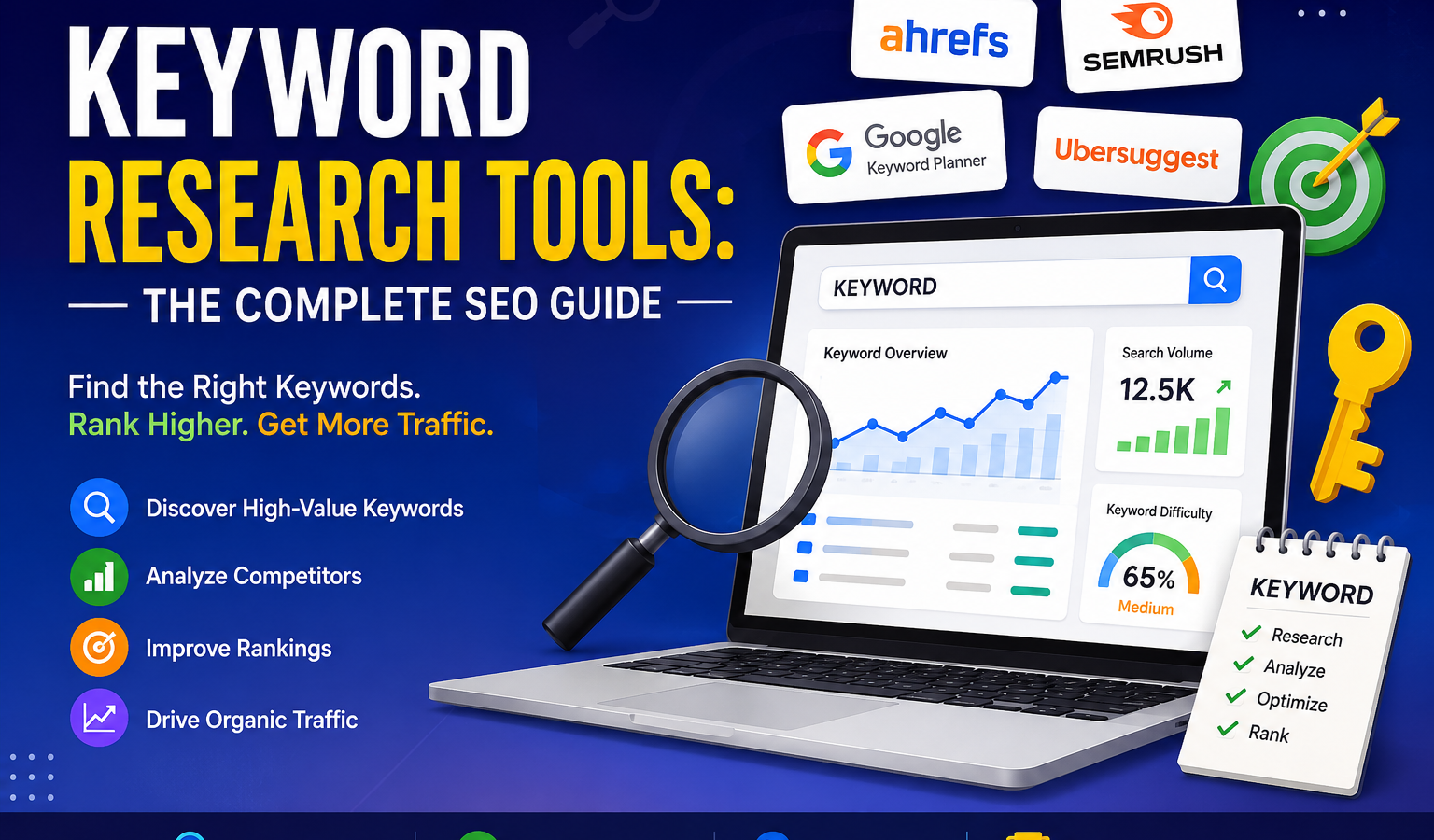
Free tools are useful for beginners and small websites. Examples include Google Keyword Planner, Google Trends, Search Console, and autocomplete-based tools. They are best for discovering ideas, understanding seasonality, and validating search demand.
Paid SEO platforms
Premium platforms such as Semrush, Ahrefs, Moz, and Similarweb provide deeper data, better competitor analysis, and richer reporting. They are ideal for agencies, publishers, and businesses that need a repeatable SEO process.
Content optimization tools
Some tools are designed to help you optimize articles after you choose a keyword. They recommend related terms, questions, and semantic phrases, making it easier to cover a topic comprehensively.
Comparison table
| Tool type | Best for | Strength | Limitation |
|---|---|---|---|
| Google Keyword Planner | Beginners, PPC | Free, reliable demand data | Limited SEO insight |
| Google Trends | Seasonality, topic interest | Shows rising topics | No precise volume |
| Semrush | Agencies, teams | Deep keyword and competitor analysis | Cost |
| Ahrefs | SEO specialists | Strong backlink and keyword data | Cost |
| Moz | Small businesses | Simple keyword difficulty metrics | Smaller database than top rivals |
Best features to look for
- Search volume accuracy
- Keyword difficulty metrics
- Search intent data
- Question and phrase suggestions
- Competitor keyword analysis
- Trend and seasonality insights
- Export and reporting options
- Integration with content workflows
How to use keyword research tools
Start with a seed keyword. Expand it into related topics, questions, and long-tail variations. Then filter by intent, difficulty, and business value. Finally, map the selected keywords into a content plan with one primary keyword and several secondary terms per page.
For best results, compare your chosen keywords with the pages already ranking on page one. This helps you understand whether Google prefers guides, listicles, product pages, or comparison posts for that query.
Expert tips
- Focus on intent before volume.
- Use long-tail keywords for faster wins.
- Build topic clusters, not isolated posts.
- Refresh keyword research every few months.
- Track performance in Search Console after publishing.
Common mistakes
- Choosing keywords only because they have high volume
- Ignoring search intent
- Targeting too many primary keywords on one page
- Copying competitor keywords without differentiation
- Skipping internal links and topical depth
FAQs
What is the best keyword research tool?
The best tool depends on your budget and goals. Google tools are great for free insights, while Semrush and Ahrefs are stronger for advanced SEO analysis.
Are free keyword tools enough?
Yes, for many small websites. Free tools are enough to build a basic content plan, but paid tools save time and provide deeper competitive data.
How often should keyword research be updated?
Review keyword performance regularly and update your research when search demand, competition, or user behavior changes.
Do keyword tools guarantee rankings?
No. They improve strategy, but rankings also depend on content quality, backlinks, technical SEO, and user satisfaction.
What is keyword difficulty?
Keyword difficulty is an estimate of how hard it may be to rank for a term. Different tools calculate it differently, so use it as a comparison guide rather than an absolute rule.
Should I target high-volume keywords only?
No. A balanced keyword strategy should include informational, commercial, and long-tail keywords.
What is a long-tail keyword?
A long-tail keyword is a more specific search phrase, usually with lower volume but clearer intent and often easier ranking potential.
Can keyword research help with internal linking?
Yes. Keyword mapping helps you connect related pages, improve site structure, and strengthen topical authority.
Conclusion
Keyword research tools are essential for smarter SEO, stronger content planning, and better ranking opportunities. The best approach is to combine free data sources, paid research tools, and real performance data from your own website.
When you choose keywords based on intent, difficulty, and business value, your content strategy becomes far more effective and sustainable.
Call to Action
Start your keyword research today, build one focused content cluster, and track the results. Small improvements in keyword targeting can create long-term SEO growth.