
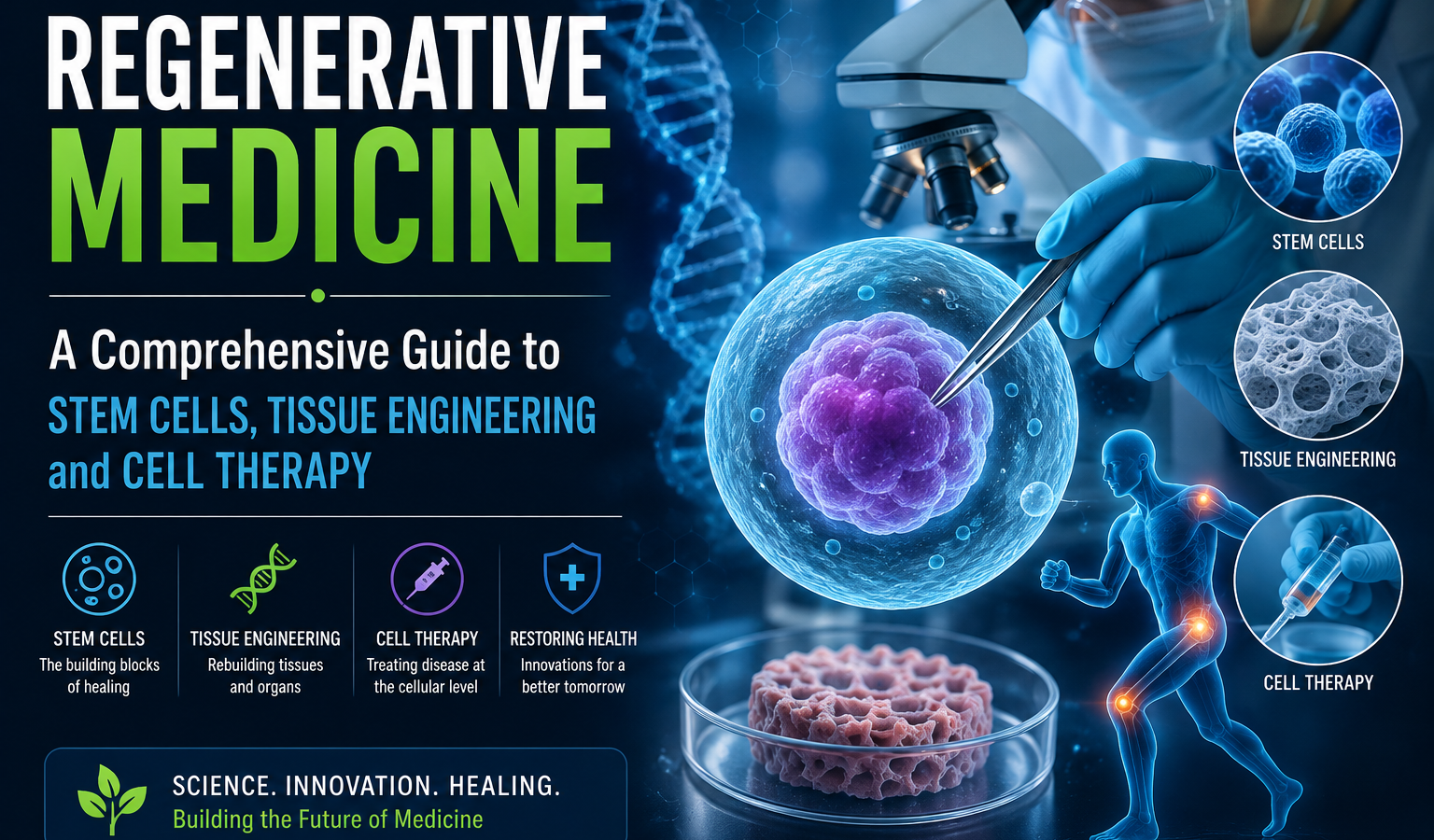

Regenerative medicine is an evolving area of healthcare that aims to repair, replace, or restore damaged cells, tissues, and organs rather than simply managing symptoms. It brings together stem cell biology, cell therapy, tissue engineering, biomaterials, gene therapy, and related technologies to improve how the body heals.
The field has generated legitimate scientific advances, but it is also surrounded by aggressive marketing and claims that can go beyond current evidence. A responsible approach is therefore essential: some regenerative therapies are established medical treatments, many remain experimental, and others are marketed without adequate evidence of safety or effectiveness.
This guide explains what regenerative medicine means, how major approaches work, where the science stands, potential benefits and risks, and what patients should ask before considering a regenerative treatment.
Table of Contents
- What Is Regenerative Medicine?
- How Regenerative Medicine Works
- Major Approaches in Regenerative Medicine
- Stem Cells and Regenerative Medicine
- Potential and Emerging Applications
- Potential Benefits
- Risks and Limitations
- Understanding the Evidence
- Clinical Trials and Regulatory Oversight
- Regenerative Medicine Approaches Compared
- Expert Tips for Evaluating a Treatment
- Common Mistakes to Avoid
- Frequently Asked Questions
- Conclusion
What Is Regenerative Medicine?
Regenerative medicine is a broad field focused on restoring the structure and function of cells, tissues, or organs affected by disease, injury, aging, or congenital conditions. The National Institutes of Health describes the field as including technologies such as stem cells, tissue engineering, gene therapy, engineered biomaterials, and other strategies designed to repair or replace damaged biological structures.
Unlike conventional treatments that may control symptoms or compensate for lost function, regenerative approaches seek to address damaged tissue itself. In practice, however, the degree of regeneration varies considerably between therapies and diseases.
Regenerative medicine is not one treatment. It is an umbrella term covering multiple scientific strategies, ranging from established cell transplantation to experimental tissue-engineering systems and gene-based interventions.
How Regenerative Medicine Works
The underlying concept is to create conditions in which damaged tissue can recover, or to replace tissue that cannot adequately repair itself. Scientists may use cells, biological signals, scaffolds, genes, or combinations of these tools.
Cell-based repair
Cells can sometimes be introduced into damaged tissue with the goal of replacing lost cells or influencing the local healing environment. Stem cells are especially important because some stem-cell populations can self-renew and produce specialized cell types.
Tissue engineering
Tissue engineering combines cells with scaffolds and biologically active molecules to develop functional tissue. Scaffolds can provide physical structure while cells and signaling molecules support tissue formation.
Gene and molecular approaches
Researchers can modify or regulate genes and cellular signaling pathways to encourage repair. Gene therapy may be used to correct a genetic problem, introduce a useful biological function, or influence tissue regeneration.
Biomaterials and engineered environments
Advanced biomaterials can act as temporary structures, delivery systems, or environments that guide cell behavior. Researchers are also investigating 3D bioprinting and organ-on-chip technologies as tools for regenerative research and future therapies.
Major Approaches in Regenerative Medicine
The field includes several overlapping disciplines. Their maturity differs, so a therapy should always be evaluated for the specific disease and product rather than by the general label “regenerative medicine.”
- Stem cell therapy: Uses specific populations of stem or progenitor cells for defined therapeutic purposes.
- Cell therapy: Uses living cells to replace, support, or modify biological function.
- Tissue engineering: Combines cells, scaffolds, and signaling molecules to construct or repair tissue.
- Gene therapy: Alters genetic material or gene expression to treat disease or influence repair.
- Biomaterials: Uses engineered materials to support healing, deliver biological signals, or provide structural support.
- 3D bioprinting: Uses computer-guided fabrication to build complex biological structures for research and potential future clinical use.
Stem Cells and Regenerative Medicine
Stem cells are defined by their ability to self-renew and, depending on the type, differentiate into specialized cell types. Adult stem cells, embryonic stem cells, and induced pluripotent stem cells have different biological properties and potential uses.
Adult stem cells
Adult stem cells exist in several tissues and contribute to normal maintenance and repair. Hematopoietic stem cells, for example, have an established role in transplantation for certain disorders affecting blood formation.
Induced pluripotent stem cells
Induced pluripotent stem cells, or iPSCs, are mature cells that scientists reprogram into a more primitive, pluripotent state. They are valuable for studying disease, testing medicines, and developing future cell-based therapies.
Why “stem cell treatment” is not enough information
A treatment should never be judged solely by the words “stem cell.” The cell source, manufacturing process, dose, delivery route, target condition, clinical evidence, quality controls, and regulatory status all matter.
Potential and Emerging Applications
Researchers are investigating regenerative medicine for many areas of healthcare. The strongest evidence varies by application, and a promising laboratory result does not automatically translate into a proven patient treatment.
Blood and immune disorders
Hematopoietic stem cell transplantation is an established clinical practice for selected blood cancers and other disorders. This is an important example of how a cell-based approach can move from research into routine medicine when supported by substantial clinical evidence.
Musculoskeletal repair
Scientists are studying regenerative strategies for bone, cartilage, tendon, ligament, muscle, and intervertebral-disc injuries. Research includes stem cells, biomaterials, tissue-engineered scaffolds, and methods for controlling inflammation and tissue remodeling.
Neurological disease
Cell replacement and gene-based strategies are being investigated for neurological disorders. The goal may involve replacing lost cell populations, changing harmful biological processes, or delivering therapeutic molecules. Many of these approaches remain investigational.
Heart and vascular disease
Researchers are exploring whether cells, engineered tissues, and molecular therapies can improve cardiac repair after injury or address chronic cardiovascular disease. Results have been mixed across different approaches, which is why rigorous trials remain important.
Eye disease
Regenerative research includes replacement of damaged retinal or ocular cells and development of engineered tissues. Some approaches have reached clinical investigation, but patients should distinguish a controlled clinical trial from an unapproved commercial treatment.
Dental and oral tissue regeneration
Regenerative medicine is also being studied for teeth, bone, cartilage, salivary glands, and other oral and craniofacial tissues. NIH reported that its National Institute of Dental and Craniofacial Research invested more than $73 million in regenerative medicine research during fiscal year 2024, illustrating the scale of ongoing public research in this area.
Potential Benefits of Regenerative Medicine
The potential value of regenerative medicine comes from its focus on restoring biological function. Depending on the therapy and condition, possible goals include:
- Replacing cells lost through disease or injury.
- Repairing damaged tissue.
- Restoring or improving organ function.
- Reducing the need for repeated symptom-focused interventions.
- Creating new options for diseases with limited treatment choices.
- Developing personalized therapies using patient-derived cells or tissues.
- Reducing dependence on donor organs in future applications.
These are potential objectives, not guarantees. The clinical benefit of a regenerative therapy must be demonstrated for the particular disease, product, dose, and treatment protocol.
Risks and Limitations
Regenerative medicine can involve significant biological and clinical complexity. Living cells, engineered tissues, and gene-based products may behave differently from conventional drugs, and manufacturing consistency can be challenging.
Possible medical risks
- Infection or inflammatory reactions.
- Immune reactions or rejection.
- Abnormal tissue growth or tumor formation with some experimental approaches.
- Blood-vessel or clotting complications depending on the product and delivery method.
- Damage caused by the procedure used to administer the treatment.
- Unexpected biological effects that are not apparent in early research.
The U.S. Food and Drug Administration has specifically warned consumers about unapproved regenerative medicine products and reports of serious adverse events associated with some products marketed outside appropriate regulatory pathways. Patients should therefore investigate both the evidence and the regulatory status before paying for treatment.
Scientific limitations
Cells can behave differently depending on their source, preparation, environment, and interaction with the patient’s immune system. Results from laboratory studies or animal models may not predict human outcomes. Small clinical studies may also produce encouraging results that do not hold up in larger randomized trials.
Understanding the Evidence
Evidence should be evaluated on a hierarchy rather than through testimonials or marketing claims. A peer-reviewed publication can be useful, but one study is not necessarily enough to establish effectiveness.
| Evidence level | What it can tell you | What it cannot prove by itself |
|---|---|---|
| Laboratory research | Biological mechanisms and early feasibility | That a treatment works safely in patients |
| Animal studies | Preclinical safety signals and biological effects | Reliable human effectiveness |
| Early clinical trials | Initial safety, dosing and feasibility | Definitive effectiveness |
| Randomized controlled trials | Comparative evidence of benefits and risks | Universal effectiveness for every patient |
| Systematic reviews and guidelines | Assessment of multiple studies and clinical evidence | Proof that an unrelated commercial product is equivalent |
The International Society for Stem Cell Research recommends asking what scientific evidence supports a proposed treatment, whether previous clinical trials have been conducted, how outcomes will be measured, and whether the intervention is routine care or experimental.
Clinical Trials and Regulatory Oversight
Clinical trials are a critical bridge between scientific discovery and patient care. A properly designed trial should define the intervention, eligibility criteria, outcomes, monitoring procedures, and safety requirements before participants receive the experimental treatment.
In the United States, the FDA regulates regenerative medicine products. The agency states that, with limited regulatory exceptions, regenerative medicine products marketed for treating disease require appropriate FDA authorization. FDA also warns that registration in a clinical-trial database does not itself mean a product is approved or legally marketed.
Patients considering an experimental therapy should ask:
- Is this treatment approved for my specific condition and intended use?
- If it is experimental, is it being provided through a properly overseen clinical trial?
- What are the known and unknown risks?
- What alternative treatments are available?
- Who manufactures the cells, tissue, or biological product?
- How will treatment success or failure be measured?
- What happens if I experience a serious complication?
- What will the full treatment and follow-up cost?
Regenerative Medicine Approaches Compared
| Approach | Primary purpose | Typical development stage | Key consideration |
|---|---|---|---|
| Established stem-cell transplantation | Restore blood-forming systems in selected conditions | Established for specific indications | Highly condition-specific |
| Cell therapy | Replace or influence damaged cells | Established in some uses; experimental in others | Cell identity and manufacturing are critical |
| Tissue engineering | Build or repair functional tissue | Mostly developing, with selected products in clinical use | Scaffold, cell integration and durability |
| Gene therapy | Correct or modify biological functions | Established for selected diseases; rapidly expanding | Delivery, durability and safety |
| 3D bioprinting | Construct complex biological structures | Primarily research and development | Vascularization, maturation and long-term function |
Expert Tips for Evaluating a Regenerative Medicine Treatment
- Start with the diagnosis. Confirm the exact condition and whether regenerative treatment has evidence for that indication.
- Ask for published clinical evidence. Look for well-designed human studies rather than testimonials.
- Verify regulatory status. Do not confuse clinical-trial registration, clinic accreditation, or product registration with treatment approval.
- Identify the exact product. Ask where the cells or biological material come from and how they are processed.
- Compare alternatives. A new therapy should be considered alongside established treatments, not in isolation.
- Understand the endpoint. Ask how improvement will be measured and when.
- Get an independent medical opinion. Especially when a clinic makes unusually broad or guaranteed claims.
Common Mistakes to Avoid
- Assuming every stem cell therapy is proven. Different cells and products have very different evidence.
- Trusting testimonials as clinical evidence. Personal stories cannot establish safety or effectiveness.
- Confusing “natural” with “safe.” Biological products can produce serious adverse effects.
- Paying before understanding the evidence. Ask for informed consent and complete pricing before treatment.
- Ignoring alternatives. Experimental treatment may not be the best option when an effective standard treatment exists.
- Believing guaranteed-outcome claims. Legitimate medical research generally involves uncertainty.
- Assuming a clinical trial means proven treatment. Clinical trials are designed to determine whether an intervention is safe and effective.
Frequently Asked Questions
1. What is regenerative medicine?
Regenerative medicine is a broad field that aims to repair, replace, or restore damaged cells, tissues, and organs using approaches such as cell therapy, stem cells, tissue engineering, biomaterials, and gene-based technologies.
2. Is regenerative medicine the same as stem cell therapy?
No. Stem cell therapy is one component of regenerative medicine. The broader field also includes tissue engineering, gene therapy, biomaterials, engineered tissues, and other technologies.
3. Are regenerative medicine treatments proven?
Some regenerative treatments are established for specific medical indications, while many others remain under investigation. Evidence must be evaluated for the exact treatment and condition.
4. Can regenerative medicine cure chronic diseases?
Some therapies are being developed with curative goals, but “cure” should not be assumed. A treatment needs strong clinical evidence demonstrating durable benefit for the specific disease.
5. Are stem cell treatments safe?
Safety depends on the cell type, manufacturing process, dose, delivery route, indication, and clinical oversight. Unapproved products can carry serious risks, so patients should seek qualified medical advice and verify regulatory status.
6. How do I know whether a regenerative treatment is legitimate?
Ask for peer-reviewed clinical evidence, the exact product name and source, regulatory status, clinical-trial information when applicable, known risks, and measurable treatment outcomes. Independent medical advice is also valuable.
7. Is tissue engineering part of regenerative medicine?
Yes. Tissue engineering is an important part of regenerative medicine and generally combines cells, scaffolds, and biological signals to create or repair functional tissue.
8. Should I join a regenerative medicine clinical trial?
Only after discussing the decision with an appropriate healthcare professional and understanding the trial’s purpose, eligibility requirements, risks, alternatives, costs, follow-up, and oversight. Participation should be voluntary and based on informed consent.
Conclusion
Regenerative medicine represents one of the most ambitious areas of modern biomedical research. By combining cell biology, tissue engineering, biomaterials, gene therapy, and related technologies, researchers are working toward ways to restore function rather than simply manage the consequences of tissue damage.
The field has already produced important clinical advances, but many highly publicized applications remain experimental. The safest way to approach regenerative medicine is to focus on evidence for the specific condition, verify regulatory oversight, understand risks and alternatives, and avoid clinics that promise guaranteed results.
As research progresses, regenerative medicine may expand the range of treatments available for injuries and diseases that currently have limited options. Until that evidence matures, informed decision-making remains just as important as scientific innovation.
For more health and wellness reading, explore our guide to healthier, stronger hair.
Sources and Further Reading
- National Institutes of Health: Regenerative Medicine
- NIH/NIBIB: Tissue Engineering and Regenerative Medicine Fact Sheet
- U.S. FDA: Consumer Alert on Regenerative Medicine Products
- International Society for Stem Cell Research: Guide to Stem Cell Treatments
- NIH/NIDCR: Regenerative Medicine Research
Medical disclaimer: This article is for general educational purposes and is not a substitute for diagnosis, treatment, or individualized medical advice from a qualified healthcare professional. Medical evidence and regulatory approvals can change, so verify current information before making healthcare decisions.
Call to Action
Interested in regenerative medicine? Use this guide as a starting point, then discuss your specific condition with a qualified healthcare professional. Before considering any commercial or experimental therapy, request evidence, ask about risks and alternatives, and verify the treatment’s regulatory and clinical status.