
Car insurance premiums have reached historic highs, leaving millions of drivers searching for practical ways to lower their monthly expenses. While traditional policies rely on demographic averages like your age, ZIP code, and credit score to calculate rates, a modern alternative is rapidly gaining traction. Telematics car insurance, also known as usage-based insurance (UBI), shifts the focus from who you are to how you actually drive.
By tracking real-time driving habits, insurance companies can offer highly personalized rates. If you are a safe, low-mileage driver, this technology could unlock some of the deepest discounts available in the insurance market. However, it is not the right fit for everyone. Understanding how these programs work, what data they collect, and the potential drawbacks is essential before making the switch.
What Is Telematics Car Insurance?
Telematics car insurance is a policy type where your premium is directly tied to your driving behavior. Instead of placing you into a broad risk category based solely on your demographics, the insurance company monitors your daily driving habits to assess your individual risk level.
This technology relies on telematics, which combines telecommunications and informatics. To collect this data, insurers use one of three primary methods:
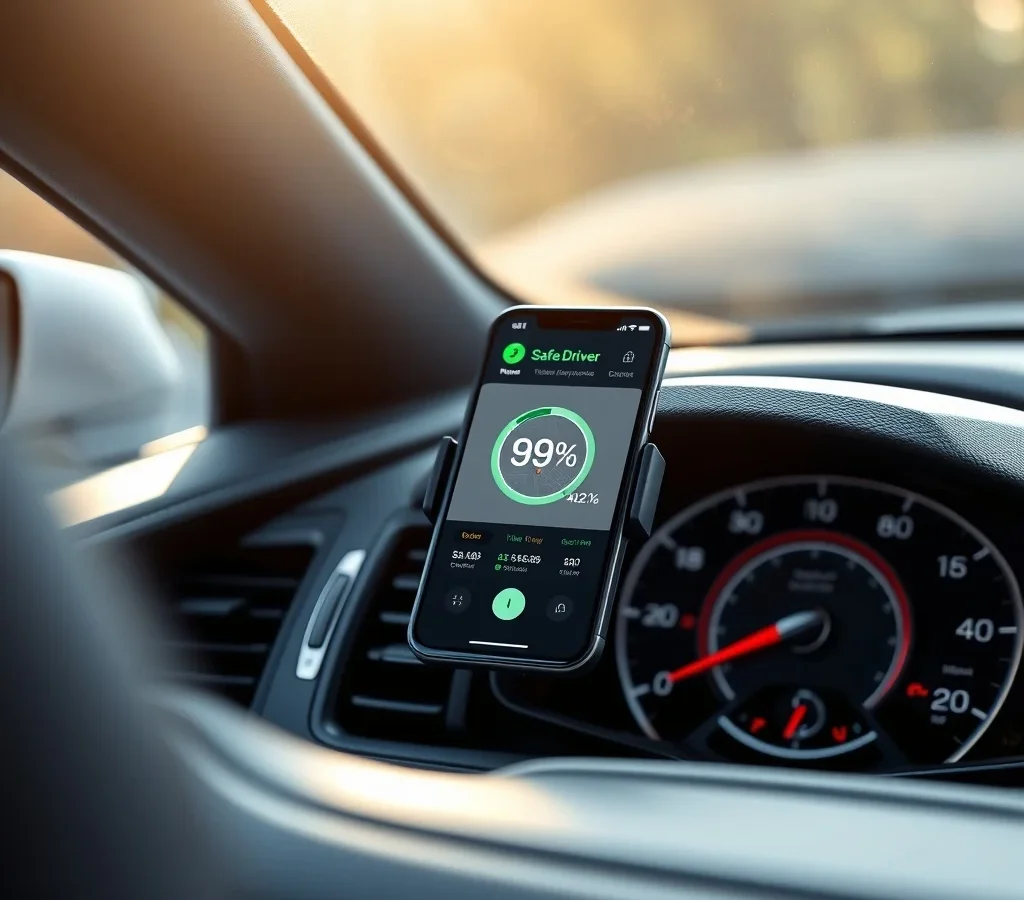
- Mobile Apps: Most modern insurance companies use a dedicated smartphone application that leverages your phone’s GPS, accelerometer, and gyroscope to track your trips.
- Plug-In Devices: Some insurers provide a small device that plugs directly into your vehicle’s OBD-II (On-Board Diagnostics) port, located under the steering column.
- Built-In Systems: Newer vehicles with connected car technology (such as OnStar) can transmit driving data directly to the insurer without requiring external apps or plug-in hardware.
How Telematics Car Insurance Works
Once you enroll in a telematics program, the tracking technology monitors specific driving metrics over a set period—often called the observation period—or continuously throughout the life of the policy. The insurer uses this data to calculate a driving score, which determines your discount.
Most telematics programs monitor the following key behaviors:
- Braking habits: Frequent hard braking is flagged as a high-risk behavior, as it often indicates tailgating or distracted driving.
- Acceleration: Rapid acceleration or aggressive lane merging can lower your driving score.
- Speed: Driving consistently above the speed limit negatively impacts your rating.
- Time of day: Driving during high-risk hours, such as between midnight and 4:00 AM, is associated with a higher likelihood of accidents.
- Mileage: The fewer miles you drive, the lower your exposure to potential accidents, resulting in better rates.
- Phone distraction: Many smartphone-based apps can detect if you are actively using or holding your phone while the vehicle is in motion.
Telematics vs. Traditional Car Insurance
To help you understand how these two models compare, the table below breaks down the fundamental differences in pricing, metrics, and suitability.
| Feature | Traditional Car Insurance | Telematics Car Insurance |
|---|---|---|
| Pricing Basis | Demographic factors (age, ZIP code, credit score, vehicle make) | Real-time driving behavior and mileage combined with demographics |
| Primary Metrics | Historical claims data of similar demographic groups | Braking, acceleration, speed, late-night driving, and phone usage |
| Potential Savings | Standard discounts (multi-policy, good student, paperless) | Significant discounts, often ranging from 10% to 40% off base premiums |
| Rate Increases | Rates generally remain stable unless you file a claim or get a ticket | Some insurers may increase rates if unsafe driving habits are detected |
| Best Suited For | High-mileage drivers, night shift workers, or aggressive drivers | Low-mileage drivers, defensive drivers, and young drivers seeking lower rates |
The Financial Benefits: How Much Can You Save?
The primary appeal of telematics car insurance is the potential for substantial savings. Most insurance companies offer an immediate sign-up discount just for enrolling in the program, typically ranging from 5% to 10%.
Once the tracking period is complete, your actual driving score determines your long-term discount. According to industry data, safe drivers can save anywhere from 15% to 40% on their premiums. For a driver paying an average of $2,000 per year, a 30% telematics discount translates to $600 in annual savings.
Furthermore, telematics programs that operate on a strict pay-per-mile basis can benefit low-mileage drivers immensely. If you work from home or rely on public transportation, paying a low base rate plus a few cents per mile driven can cut your insurance bill in half.
Privacy and Security Concerns
While the financial benefits are clear, telematics car insurance requires a trade-off in privacy. To calculate your risk, insurers must collect vast amounts of personal data, including your precise location, travel times, and driving routes.
Many drivers feel uncomfortable with the idea of their insurance company tracking their every move. Before signing up, it is crucial to read the insurer’s privacy policy. Look for answers to these questions:
- Does the insurer sell or share your driving data with third parties?
- How long is the location data retained on their servers?
- Is the data encrypted to protect against potential cybersecurity breaches?
Most reputable insurance companies state that they do not sell telematics data to third parties, but they may use it to settle claims or investigate potential insurance fraud.
Is Telematics Car Insurance Right for You?
Telematics is not a one-size-fits-all solution. It is highly beneficial for certain types of drivers, but can be counterproductive for others.
Who benefits the most?
- Safe, defensive drivers: If you naturally maintain safe distances, accelerate smoothly, and follow speed limits, your good habits will be rewarded.
- Low-mileage drivers: Those who drive less than 10,000 miles per year stand to save the most, especially with pay-per-mile options.
- Young or inexperienced drivers: Teenagers and college students often face incredibly high premiums due to their demographic risk. A telematics program allows them to prove their individual safety and bypass high standard rates.
Who should avoid telematics?
- Night shift workers: If you frequently commute between midnight and 4:00 AM, the system will flag you as high-risk, regardless of how safely you drive.
- High-mileage commuters: If you have a long daily commute, the sheer volume of miles will limit your potential savings.
- Aggressive or fast drivers: If you tend to accelerate quickly or live in an area with heavy stop-and-go traffic that forces hard braking, your score will suffer.
Common Mistakes to Avoid with Telematics Programs
If you decide to try a telematics program, avoid these common pitfalls to ensure you get the best possible rate:
- Ignoring hard braking events: Many drivers do not realize how hard they brake until an app flags it. Maintain a larger following distance to avoid sudden stops.
- Allowing passengers to use your phone: If you use a mobile-app tracker, holding your phone to change music or hand it to a passenger can register as a phone distraction. Use hands-free mounts and keep the phone stable.
- Failing to classify passenger trips: If you are riding in an Uber, public transit, or a friend’s car, the app may mistake you for the driver. Regularly check the app and mark those trips as “passenger” to protect your score.
- Assuming rates can never go up: While many companies promise they will only use telematics to offer discounts, some states allow insurers to raise rates for drivers with consistently poor driving scores.
Expert Tips for Maximizing Your Telematics Discount
To secure the highest possible discount on your policy, implement these expert strategies during your tracking period:
- Drive defensively: Treat every drive like a driving test. Anticipate traffic flow to minimize the need for sudden stops or rapid acceleration.
- Limit late-night trips: If possible, avoid driving during late-night and early-morning hours when the risk of encountering fatigued or impaired drivers is highest.
- Keep your app updated: Ensure your smartphone’s operating system and the insurance app are up to date to prevent tracking errors or battery drain issues.
- Monitor your score weekly: Check the app regularly to review flagged events. This feedback loop allows you to adjust your driving habits before your final discount is calculated.
Frequently Asked Questions
What is telematics car insurance?
Telematics car insurance is a type of coverage where your premium is calculated based on your real-time driving habits. Using a smartphone app, a plug-in device, or built-in vehicle hardware, insurers track metrics like braking, acceleration, speed, and mileage to offer personalized discounts to safe drivers.
Can telematics raise my car insurance rates?
It depends on the insurance company and your location. While many insurers guarantee that your rates will not go up and only offer discounts, some companies reserve the right to increase premiums for drivers who consistently demonstrate high-risk behaviors like speeding or extreme hard braking.
What driving behaviors does telematics track?
Telematics programs typically track hard braking, rapid acceleration, high speeds, the time of day you drive, total mileage, and smartphone usage while driving. These metrics are combined to create a safety score that determines your final premium discount.
Does telematics track my location at all times?
Yes, most telematics programs use GPS to track your vehicle’s location during trips. This data is used to analyze your routes, speed limits, and overall mileage. If you have strict privacy concerns about location tracking, telematics may not be the right choice for you.
Is telematics car insurance worth it for high-mileage drivers?
Generally, no. High-mileage drivers are exposed to more road hazards, which naturally increases their risk profile. If you drive significantly more than the national average, the mileage tracking component of telematics will likely limit any potential discounts you might receive.
How do phone-based telematics apps affect battery life?
Because telematics apps utilize GPS and motion sensors, they can consume more battery power during trips. Most modern insurance apps are optimized to minimize battery drain, but it is still highly recommended to keep your phone plugged into a car charger while driving.
What happens if someone else drives my car under a telematics policy?
If someone else drives your vehicle and you use a plug-in OBD-II device, their driving habits will be tracked and attributed to your policy. If you use a smartphone app, you can usually go into the app after the trip and classify yourself as a passenger to avoid penalty.
Can I cancel a telematics insurance program if I don’t like it?
Yes, you can opt out of a telematics program at any time. If you decide to cancel, your premium will revert to the standard rate without the telematics discount. Some insurers may charge a nominal fee for unreturned plug-in devices, but opting out is generally straightforward.
Conclusion
Telematics car insurance represents a major shift toward personalized, behavior-based pricing. For safe, low-mileage drivers, it offers an unprecedented opportunity to take control of insurance costs and secure substantial discounts. However, the trade-off involves sharing sensitive location and driving data with your insurer.
If you are comfortable with the privacy aspect and possess safe driving habits, enrolling in a telematics program is one of the most effective ways to lower your premiums. To get started, contact your current insurance provider to see if they offer a telematics program, or compare quotes online to find the best usage-based policy for your lifestyle.