
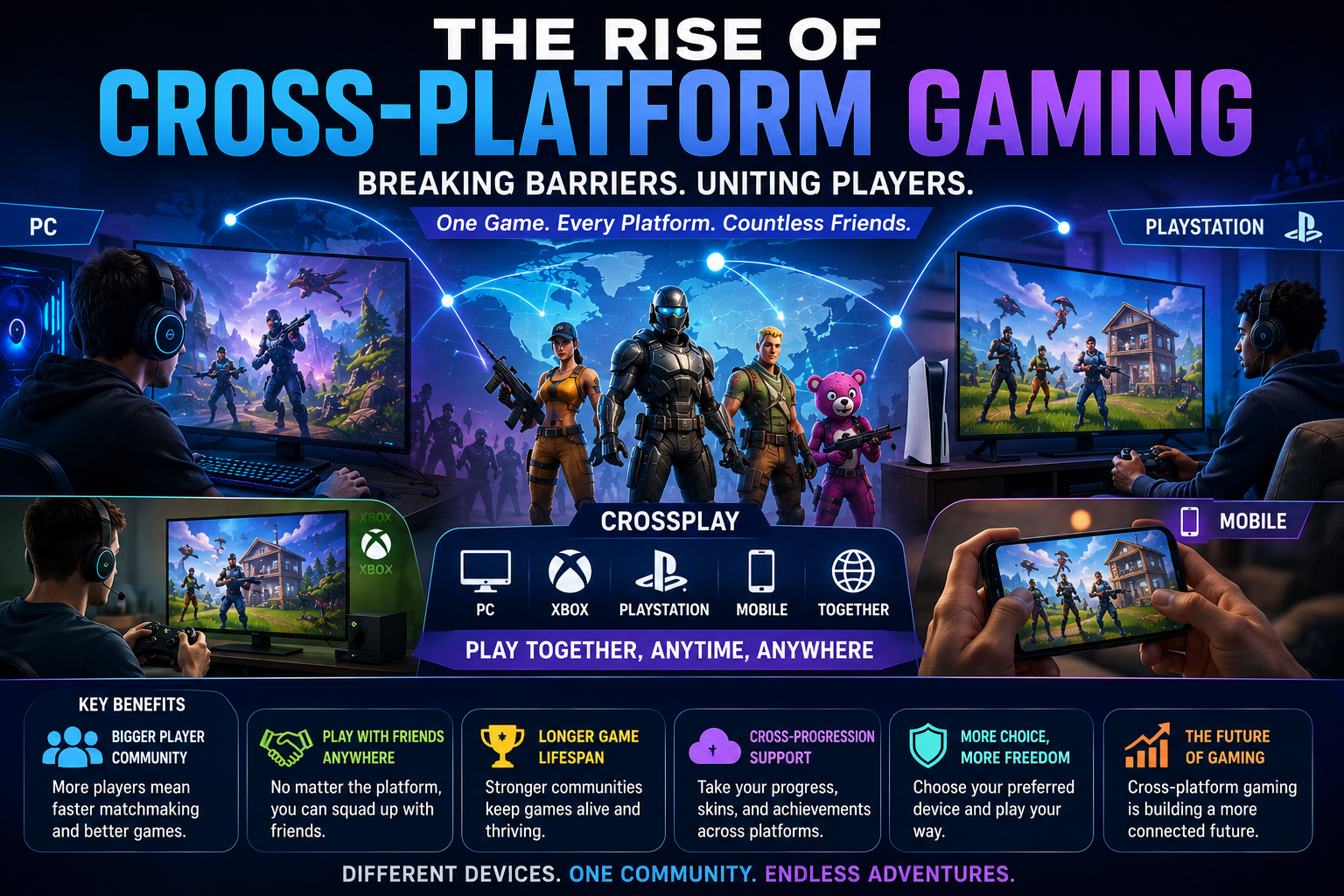

Gaming has changed dramatically over the past decade. Not long ago, choosing a gaming platform meant committing to a single ecosystem. Whether you played on a gaming PC, PlayStation, Xbox, or Nintendo console, your multiplayer experience was largely limited to people using the same platform.
Today, that barrier is disappearing thanks to cross-platform gaming.
Modern multiplayer titles increasingly allow players across different devices to join the same matches, communicate seamlessly, and enjoy shared experiences regardless of the hardware they own. This shift has reshaped the gaming industry, bringing together friends who previously couldn’t play together simply because they owned different systems.
For gamers, cross-platform gaming means greater freedom and larger player communities. For developers, it offers broader audiences, healthier multiplayer ecosystems, and longer game lifespans. While technical and competitive challenges remain, crossplay has become one of the most significant innovations in modern gaming.
In this guide, we’ll explore how cross-platform gaming works, its advantages and limitations, the technology behind it, and what players can expect in the years ahead.
What Is Cross-Platform Gaming?
Cross-platform gaming, often called crossplay, allows players using different hardware platforms to play the same multiplayer game together online.
For example, a gamer on a Windows PC can join a friend playing on an Xbox Series X, while another teammate uses a PlayStation 5. In some cases, mobile players can even participate alongside console and PC users.
Unlike traditional multiplayer systems that separated players by device, cross-platform gaming creates a unified online community where the choice of hardware no longer determines who you can play with.
Cross-Platform Gaming vs. Cross-Progression
Although these terms are often confused, they serve different purposes.
Cross-Platform Gaming (Crossplay)
Allows players on different devices to play together in the same online match.
Cross-Progression
Lets players carry their game progress, unlocked items, achievements, and purchases across multiple platforms using the same account.
Many popular games now support both features, allowing gamers to switch devices without losing progress.
How Cross-Platform Gaming Works
Behind every successful crossplay experience is a complex network of servers, account systems, and synchronization technologies.
Developers typically rely on centralized online services that:
- Authenticate player accounts
- Match players across platforms
- Synchronize game data
- Maintain fair matchmaking
- Deliver updates simultaneously
- Protect against cheating
Cloud infrastructure also plays a major role by ensuring all platforms communicate with the same game servers in real time.
Why Cross-Platform Gaming Has Become So Popular
Several factors have driven the rapid growth of crossplay in recent years.
1. Larger Player Communities
One of the biggest advantages is combining separate player bases into one.
Instead of dividing gamers by hardware, developers can maintain healthier online populations.
Benefits include:
- Faster matchmaking
- More active servers
- Better-ranked matchmaking
- Longer game lifespan
- Reduced waiting times
This is especially valuable for games that rely heavily on online multiplayer.
2. Friends Can Play Together
Perhaps the biggest reason players love cross-platform gaming is simple: friends no longer need identical gaming systems.
Previously, someone owning a PlayStation couldn’t easily join a friend using an Xbox or gaming PC.
Now, many modern multiplayer games remove that restriction entirely.
This flexibility makes gaming more social and inclusive.
3. Longer Game Lifecycles
Crossplay helps games remain active for much longer.
Instead of maintaining separate online communities, developers can support one larger player ecosystem.
This leads to:
- More stable matchmaking
- Continued developer support
- Larger online events
- Longer-lasting esports scenes
- Stronger player engagement
Many multiplayer titles continue thriving years after release thanks to healthy cross-platform populations.
Benefits for Players
Cross-platform gaming offers advantages that extend well beyond simply playing with friends.
Greater Freedom of Choice
Players can choose hardware based on:
- Budget
- Preferred controller
- Graphics performance
- Portability
- Exclusive games
without worrying about losing access to multiplayer communities.
More Competitive Matchmaking
Larger player pools enable matchmaking systems to find opponents with similar skill levels more efficiently.
This often results in:
- Fairer matches
- Reduced queue times
- Better-ranked competition
- Improved overall player satisfaction
Reduced Waiting Times
Games with smaller player populations often struggle to fill matches quickly.
By combining PC, console, and sometimes mobile users into one matchmaking pool, crossplay dramatically reduces waiting times.
This is especially beneficial during off-peak hours or in less populated regions.
Benefits for Developers
Cross-platform gaming also creates significant advantages for studios and publishers.
Broader Audience Reach
Supporting multiple platforms expands a game’s potential audience.
Rather than marketing separate communities, developers build one shared ecosystem.
This often translates into:
- Higher player retention
- Increased sales
- More downloadable content purchases
- Stronger live-service revenue
Simplified Multiplayer Ecosystems
Maintaining separate multiplayer systems for each platform increases development complexity.
Crossplay allows developers to:
- Operate unified servers
- Streamline updates
- Manage one matchmaking system
- Deliver synchronized content releases
This creates a more consistent experience for players.
Stronger Live-Service Games
Many modern games rely on seasonal updates, battle passes, and live events.
A unified community helps ensure these events remain active and engaging.
Examples include:
- Seasonal tournaments
- Community challenges
- Holiday events
- Ranked competitions
- Cooperative missions
A larger player base keeps these features vibrant long after launch.
Popular Genres That Benefit Most from Crossplay
Not every game genre benefits equally from cross-platform support.
The following categories have seen the greatest success.
| Genre | Why Crossplay Works Well |
|---|---|
| Battle Royale | Large player pools improve matchmaking speed. |
| Cooperative Shooters | Friends can play together regardless of platform. |
| Survival Games | Persistent worlds stay active longer. |
| Sports Games | Larger online communities improve competition. |
| Racing Games | Faster matchmaking and broader tournaments. |
| MMORPGs | Unified player populations strengthen social interaction. |
The Technology Behind Cross-Platform Gaming
Delivering seamless crossplay requires sophisticated technology.
Developers must synchronize:
- Player accounts
- Friend lists
- Matchmaking systems
- Voice communication
- Game updates
- Anti-cheat protection
- Cloud saves
In addition, networking infrastructure must compensate for differences in hardware performance, input devices, and operating systems while keeping gameplay fair and responsive.
These technical challenges explain why implementing cross-platform gaming requires significant planning and ongoing support.
Challenges of Cross-Platform Gaming
Despite its many benefits, cross-platform gaming isn’t without drawbacks. Differences in hardware, control schemes, and online infrastructure can create unique obstacles for both players and developers.
Input Devices: Is Cross-Platform Gaming Fair?
One of the biggest debates surrounding cross-platform gaming is whether players using different input devices can truly compete on equal footing.
PC gamers often rely on a keyboard and mouse, while console players typically use controllers. Each setup has strengths and weaknesses that can influence gameplay.
Keyboard and Mouse Advantages
- Faster aiming precision
- Greater control over camera movement
- Highly customizable key bindings
- Quick access to multiple commands
These benefits make keyboard and mouse particularly effective in first-person shooters and strategy games.
Controller Advantages
Modern controllers have evolved significantly and offer features that help balance gameplay, including:
- Comfortable ergonomic design
- Analog movement for smoother control
- Aim assist in many competitive games
- Adaptive triggers and haptic feedback on supported consoles
For racing games, sports titles, and platformers, controllers are often the preferred choice.
How Developers Maintain Balance
To create a fair experience, many games implement:
- Input-based matchmaking
- Optional crossplay settings
- Skill-based matchmaking
- Adjustable aim assist
- Competitive playlists separated by input method
These systems help reduce the competitive gap while allowing players to enjoy cross-platform matches.
Cheating and Security Challenges
Cross-platform gaming introduces new security concerns, particularly in highly competitive online titles.
Common Forms of Cheating
Some of the most common issues include:
- Aimbots
- Wallhacks
- Script automation
- Speed hacks
- Exploits
- Unauthorized third-party software
While cheating can occur on any platform, open PC environments often present additional challenges for developers.
Modern Anti-Cheat Systems
To protect fair play, many developers use advanced anti-cheat solutions capable of:
- Detecting suspicious behavior
- Scanning for unauthorized software
- Monitoring unusual gameplay patterns
- Automatically removing repeat offenders
- Reviewing player reports
Some systems also use artificial intelligence and machine learning to identify cheating methods that traditional detection tools might miss.
As anti-cheat technology continues to improve, maintaining competitive integrity across multiple platforms becomes increasingly achievable.
Technical Challenges for Developers
Creating a successful cross-platform experience involves much more than connecting players across devices.
Developers must overcome several technical hurdles.
Hardware Differences
A gaming PC may feature:
- High-end graphics cards
- Large amounts of RAM
- Ultra-fast SSDs
- High refresh rate monitors
Meanwhile, consoles have fixed hardware configurations designed for optimization rather than customization.
Ensuring consistent gameplay across such different systems requires extensive testing and optimization.
Performance Optimization
Developers need to account for varying levels of performance.
Key considerations include:
- Frame rate consistency
- Texture quality
- Loading times
- Network synchronization
- Memory management
The goal is to ensure gameplay remains fair and enjoyable, regardless of the platform.
Simultaneous Updates
One overlooked challenge is releasing updates across multiple ecosystems.
Each platform has its own certification process and technical requirements. Coordinating patches, seasonal content, and bug fixes so that all players remain on the same version requires careful planning and collaboration.
Cross-Progression: Gaming Without Limits
Many modern multiplayer titles combine cross-platform gaming with cross-progression.
This feature allows players to:
- Continue saved games on another device
- Keep unlocked cosmetics
- Access purchased content
- Retain achievements and progression
- Switch platforms without starting over
For example, a player might begin a game on a console at home and continue on a gaming laptop while traveling, all using the same account.
This flexibility has become an important expectation for many gamers.
The Role of Gaming Ecosystems
Cross-platform gaming has encouraged greater collaboration between major gaming ecosystems.
Rather than isolating players, many publishers now focus on creating connected experiences that span:
- Gaming PCs
- Home consoles
- Handheld devices
- Mobile platforms
- Cloud gaming services
This broader approach benefits players by increasing accessibility and keeping online communities active.
Popular Crossplay Games
Many of today’s most successful multiplayer titles support cross-platform gaming, helping build large, active communities.
Examples include:
- Fortnite
- Rocket League
- Minecraft
- Call of Duty: Warzone
- Apex Legends
- Among Us
- Dead by Daylight
These games demonstrate how crossplay can enhance matchmaking, extend a game’s lifespan, and make it easier for friends to play together regardless of hardware.
How Cross-Platform Gaming Benefits Esports
Competitive gaming has also embraced cross-platform technologies in selected genres.
Benefits include:
- Larger player bases
- More tournament participants
- Better talent discovery
- Faster matchmaking for ranked play
- Increased spectator engagement
While some professional competitions still separate players by platform or input device, crossplay has expanded opportunities for both amateur and competitive gamers.
The Future of Cross-Platform Gaming
Cross-platform gaming is expected to continue evolving alongside advances in cloud computing, artificial intelligence, and networking technologies.
Future developments may include:
Smarter Matchmaking
AI-driven matchmaking systems could consider:
- Skill level
- Input device
- Network quality
- Play style
- Team composition
to create more balanced and enjoyable matches.
Improved Cloud Integration
As cloud infrastructure improves, players may move seamlessly between local hardware and cloud-based gaming without interrupting gameplay.
Expanded Cross-Progression
Cross-progression is likely to become standard in many major releases, allowing players to carry their progress across even more devices.
Unified Gaming Communities
The long-term vision is a gaming landscape where platform choice matters less than the experience itself, enabling broader communities and more inclusive multiplayer ecosystems.
Frequently Asked Questions
What is cross-platform gaming?
Cross-platform gaming allows players using different gaming devices—such as PCs, consoles, and sometimes mobile devices—to play together in the same online multiplayer game.
Is cross-platform gaming the same as cross-progression?
No. Cross-platform gaming enables multiplayer across different devices, while cross-progression lets players keep their progress, purchases, and achievements when switching platforms.
Can PC and console players compete fairly?
Yes. Many developers use input-based matchmaking, aim assist, and skill-based matchmaking to help create balanced competition between keyboard-and-mouse users and controller players.
Does cross-platform gaming increase cheating?
Crossplay can introduce additional security challenges, but modern anti-cheat systems and ongoing monitoring help reduce unfair behavior and protect the player experience.
Why do developers support crossplay?
Cross-platform gaming expands player communities, reduces matchmaking times, improves long-term engagement, and helps multiplayer games remain active for years after release.
Will cross-platform gaming become standard?
Industry trends suggest that cross-platform support will become increasingly common as developers prioritize accessibility, larger communities, and connected gaming experiences.
Conclusion
The rise of cross-platform gaming marks one of the most significant shifts in modern multiplayer entertainment. By allowing players on PCs, consoles, and other supported devices to compete and cooperate together, crossplay has transformed how communities are built and sustained.
Although developers still face challenges related to hardware differences, input balance, security, and platform integration, ongoing technological advancements continue to improve the experience for everyone involved.
For players, the benefits are clear: greater flexibility, faster matchmaking, stronger communities, and the freedom to play with friends regardless of their preferred device. For developers, cross-platform support creates healthier gaming ecosystems and extends the lifespan of multiplayer titles.
As cloud services, artificial intelligence, and networking technologies continue to advance, cross-platform gaming is poised to become an even more integral part of the gaming industry.
For more insights into multiplayer development and implementation, explore the Epic Games Developer Documentation. You may also enjoy our related guide, Best Multiplayer Games to Play Online, featuring top titles that showcase the best of modern crossplay experiences.