

Introduction
An SEO audit is the foundation of every successful search engine optimization strategy. Whether you run a personal blog, business website, eCommerce store, or WordPress site, regularly auditing your website helps identify technical issues, content gaps, and optimization opportunities that can improve search rankings and increase organic traffic.
Search engines like Google continuously update their algorithms. Websites that fail to maintain proper SEO standards often experience ranking drops, decreased visibility, and lower conversions. Performing a comprehensive SEO audit ensures your website remains healthy, competitive, and optimized for both users and search engines.
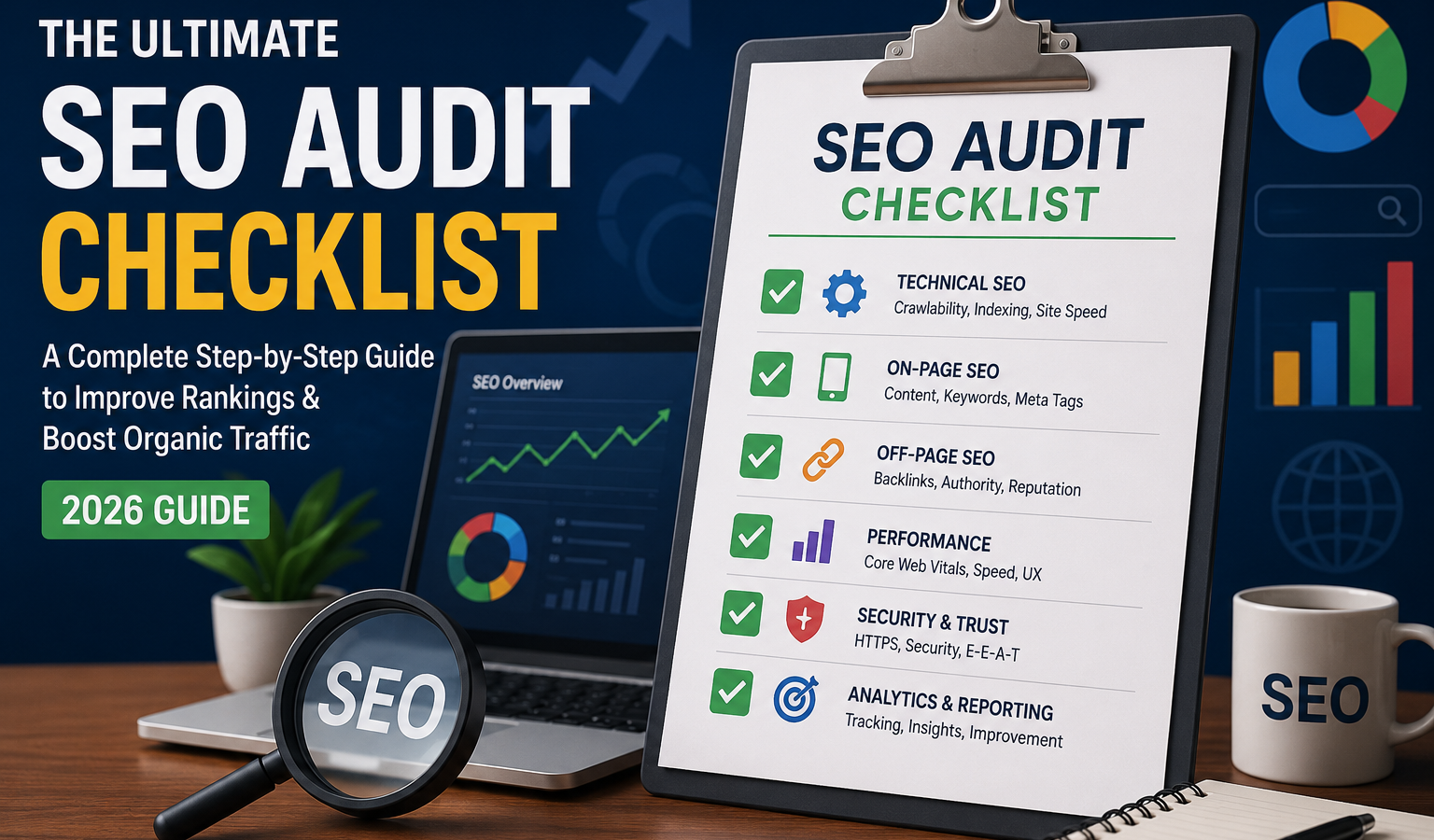
This complete SEO audit checklist covers every essential aspect of modern SEO.
1. Website Crawlability
Search engines must be able to crawl your website efficiently.
Checklist
✅ Verify robots.txt file exists
✅ Ensure important pages are not blocked
✅ Check crawl errors
✅ Fix broken links (404 errors)
✅ Remove redirect chains
✅ Update XML sitemap
✅ Submit sitemap to Google Search Console
2. Indexing Audit
Even perfectly optimized pages cannot rank if they aren’t indexed.
Checklist
- Check Google Search Console Index Coverage
- Review excluded pages
- Remove accidental noindex tags
- Verify canonical tags
- Check duplicate URLs
- Ensure important pages are indexed
- Remove orphan pages
3. Technical SEO Audit
Technical SEO determines how search engines understand your website.
Checklist
HTTPS
- SSL certificate installed
- No mixed content warnings
- HTTPS redirects correctly
URL Structure
- Short URLs
- Keyword-rich URLs
- No unnecessary parameters
- Hyphen-separated words
Example:
Good:
https://example.com/seo-audit-checklist
Bad:
https://example.com/page?id=12345
4. Website Speed Audit
Page speed is a confirmed ranking factor.
Test Using
- Google PageSpeed Insights
- Lighthouse
- GTmetrix
Optimize
- Compress images
- Enable browser caching
- Minify CSS
- Minify JavaScript
- Remove unused CSS
- Lazy-load images
- Enable GZIP compression
- Use a CDN
Aim for:
- Largest Contentful Paint (LCP): under 2.5 seconds
- Interaction to Next Paint (INP): under 200 ms
- Cumulative Layout Shift (CLS): under 0.1
5. Mobile SEO Audit
Google uses mobile-first indexing.
Checklist
- Responsive design
- Readable fonts
- Proper spacing
- Clickable buttons
- No horizontal scrolling
- Fast mobile loading
- Mobile-friendly navigation
6. Core Web Vitals
Google evaluates user experience through Core Web Vitals.
Audit:
- Largest Contentful Paint (LCP)
- Interaction to Next Paint (INP)
- Cumulative Layout Shift (CLS)
Fix slow-loading elements and unstable layouts.
7. On-Page SEO Audit
Review every page individually.
Title Tags
- Unique titles
- Primary keyword included
- Under 60 characters
Meta Descriptions
- Unique
- Under 160 characters
- Encourage clicks
Headings
- One H1
- Logical H2–H6 structure
- Include keywords naturally
8. Keyword Optimization
Review keyword usage.
Questions:
- Does each page target one primary keyword?
- Are secondary keywords included?
- Are keywords naturally placed?
- Is keyword stuffing avoided?
9. Content Quality Audit
Google rewards helpful, original content.
Evaluate:
- Originality
- Accuracy
- Depth
- Readability
- Search intent alignment
- Freshness
- Internal linking
Update outdated content regularly.
10. Image SEO
Images contribute significantly to search visibility.
Checklist
- Descriptive filenames
- Alt text
- Compression
- WebP format where possible
- Responsive sizing
- Lazy loading
11. Internal Linking
Internal links help search engines understand site structure.
Review:
- Broken internal links
- Orphan pages
- Anchor text relevance
- Link depth
- Important pages receiving enough internal links
12. External Links
Audit outbound links.
Ensure:
- High-quality references
- No broken links
- Relevant destinations
- Appropriate use of
nofolloworsponsoredattributes where needed
13. Duplicate Content Audit
Duplicate content can confuse search engines.
Check:
- Duplicate titles
- Duplicate meta descriptions
- Duplicate page content
- Canonical implementation
- Parameter-based duplicates
14. Structured Data Audit
Schema markup enhances search appearance.
Implement where appropriate:
- Article
- BlogPosting
- FAQ
- Organization
- Breadcrumb
- Product
- Review
- Local Business
Validate with Google’s Rich Results Test.
15. XML Sitemap Audit
Your sitemap should:
- Include only indexable pages
- Exclude redirects
- Exclude 404 pages
- Update automatically
- Be submitted to Google Search Console and Bing Webmaster Tools
16. Robots.txt Audit
Ensure robots.txt:
- Doesn’t block critical pages
- References the XML sitemap
- Blocks unnecessary admin areas
- Uses correct syntax
17. Security Audit
Google favors secure websites.
Review:
- SSL certificate
- Malware scans
- Software updates
- Strong passwords
- Firewall protection
- Backup system
18. User Experience (UX) Audit
Good UX supports better SEO performance.
Evaluate:
- Navigation
- Menu structure
- Readability
- Calls-to-action
- Accessibility
- Visual hierarchy
- Engagement metrics
19. Backlink Audit
Backlinks remain one of Google’s strongest ranking signals.
Review:
- Total backlinks
- Referring domains
- Anchor text diversity
- Toxic backlinks
- Lost backlinks
- New backlinks
- Competitor link opportunities
Disavow harmful links only when necessary.
20. Local SEO Audit (If Applicable)
For local businesses:
- Optimize Google Business Profile
- Ensure NAP (Name, Address, Phone) consistency
- Build local citations
- Encourage customer reviews
- Add local business schema
- Target location-based keywords
21. Analytics Audit
Verify data collection is working correctly.
Check:
- Google Analytics 4 installed
- Google Search Console connected
- Event tracking configured
- Conversion goals set
- E-commerce tracking enabled (if applicable)
22. E-E-A-T Audit
Google values Experience, Expertise, Authoritativeness, and Trustworthiness.
Review:
- Author bios
- Contact information
- About page
- Editorial standards
- Citations and references
- Business transparency
- Privacy Policy
- Terms and Conditions
23. Competitor SEO Audit
Compare your website with competitors.
Analyze:
- Top-performing pages
- Keywords
- Backlinks
- Content quality
- Site speed
- Internal linking
- Featured snippets
Identify gaps and opportunities to outperform them.
24. WordPress SEO Audit
If you use WordPress:
- Update WordPress core
- Update themes
- Update plugins
- Remove unused plugins
- Optimize database
- Check SEO plugin settings
- Enable caching
- Optimize images
- Secure login page
25. Final SEO Audit Checklist
Technical
- Crawlability
- Indexability
- HTTPS
- XML Sitemap
- Robots.txt
- Core Web Vitals
Content
- Keyword optimization
- Unique content
- Updated articles
- Internal linking
- Image optimization
Performance
- Fast loading
- Mobile-friendly
- Responsive design
- Clean URLs
Authority
- Backlink quality
- Brand mentions
- E-E-A-T signals
Monitoring
- Google Search Console
- Google Analytics
- Regular monthly SEO audits
Recommended SEO Audit Frequency
- Small websites: Every 3–6 months
- Business websites: Monthly
- eCommerce stores: Monthly
- News and publishing sites: Weekly or after major updates
- Large enterprise websites: Continuous monitoring with quarterly comprehensive audits
Conclusion
An SEO audit is not a one-time task but an ongoing process that keeps your website healthy, discoverable, and competitive. By following this comprehensive checklist, you can uncover technical issues, improve user experience, strengthen your content, and build authority that supports long-term organic growth. Make SEO audits part of your regular website maintenance routine to stay ahead of algorithm updates and maximize your visibility in search results.