
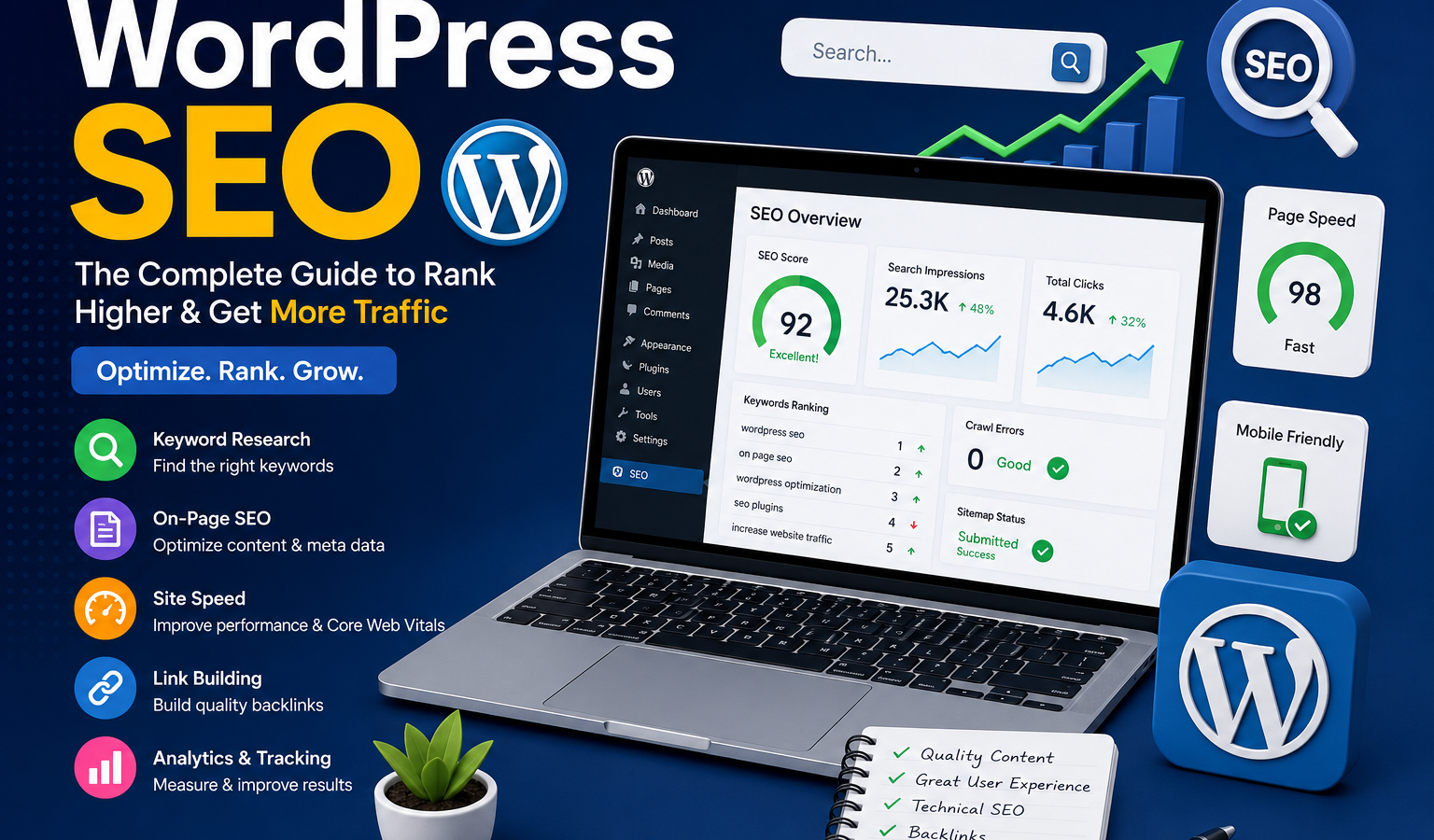

WordPress SEO is the process of optimizing a WordPress website so search engines can crawl it, understand it, and show it to the right people. Done well, it helps your content earn more organic traffic, better clicks, and stronger long-term visibility.
WordPress is a strong foundation for search optimization because it gives publishers flexible content tools, clean taxonomy structure, and a huge ecosystem of SEO plugins. But WordPress alone does not guarantee rankings. Google still looks for high-quality content, crawlable links, strong page titles, structured data, and a site that is easy to understand. Google’s SEO Starter Guide says there are no secrets that automatically rank a site first; the goal is to make it easier for search engines to crawl, index, and understand your content. citeturn488643view0turn488643view1turn488643view2
This guide breaks down WordPress SEO step by step. You will learn how to set up your site correctly, optimize your content, improve technical SEO, and use internal links, schema, and performance signals to strengthen your organic search results. It also includes expert tips, common mistakes, FAQs, and practical checklists you can apply right away.
Table of Contents
- What WordPress SEO really means
- Why SEO matters for WordPress sites
- How to set up WordPress for SEO success
- On-page WordPress SEO
- Technical WordPress SEO
- Content strategy and NLP keyword optimization
- Schema, FAQs, and rich results
- Internal linking and site architecture
- Speed, mobile usability, and Core Web Vitals
- Expert tips and common mistakes
- FAQs
What WordPress SEO Really Means
WordPress SEO is not a single plugin setting. It is the full system of choices that help your site perform in organic search: site structure, content quality, metadata, indexing controls, internal links, schema markup, page speed, image optimization, and user experience.
In practice, WordPress SEO means making every important page easy for search engines and users to discover. Google uses links to find new pages and understand relevance, and it can only reliably crawl standard anchor links with href attributes. That means your navigation, contextual links, category pages, and breadcrumbs matter more than many site owners realize. citeturn488643view1
Why WordPress SEO Matters
Organic search is one of the most durable traffic sources a website can build. Unlike paid traffic, SEO can continue to deliver visits long after publication. For content sites, service businesses, and ecommerce brands, this makes SEO a compounding asset.
WordPress powers a massive share of the web, which is one reason SEO best practices are so widely documented in the WordPress ecosystem. WordPress.org describes the platform as a flexible publishing system with themes, plugins, and block-based customization, while IBM notes that WordPress powers approximately 30% of the web. citeturn264682search2turn264682search18
For your site, the benefit is simple: better WordPress SEO can mean more impressions, more clicks, more leads, and more trust. When your content aligns with search intent, users stay longer, browse deeper, and are more likely to convert.
How to Set Up WordPress for SEO Success
1. Make sure your site can be indexed
Check that search engines are allowed to index your site. In WordPress, this is usually controlled by the “Discourage search engines from indexing this site” option. If you are building a live site, this setting should be off.
Also make sure your robots meta tags do not block important pages. Google recommends using clear crawlable structures and letting pages be discovered through normal links. citeturn488643view0turn488643view1
2. Choose an SEO-friendly permalink structure
Short, descriptive URLs usually work best. A clean slug like /wordpress-seo/ is easier to read and share than a long URL with random numbers or extra words. Use one primary keyword in the slug when it feels natural.
3. Install a trusted SEO plugin
WordPress SEO plugins help you manage titles, meta descriptions, schema, breadcrumbs, canonical URLs, sitemaps, and readability checks. Yoast SEO says it provides real-time SEO feedback, XML sitemaps, schema markup, and FAQ and How-To blocks that automatically add structured data. citeturn497931view0turn497931view1
- Use one primary SEO plugin only
- Set default title and description templates
- Enable XML sitemaps
- Turn on schema features where relevant
- Review plugin output after every major update
On-Page WordPress SEO That Actually Moves Rankings
Write better title tags
Title tags remain one of the strongest on-page signals. Google has said it still uses HTML title tags more than 80% of the time when generating page titles, and it recommends creating great title tags rather than chasing tricks. citeturn488643view3
A strong WordPress SEO title is clear, specific, and appealing to humans. Keep it under 60 characters when possible, place the main keyword near the front, and make the value obvious.
Optimize meta descriptions for clicks
Meta descriptions do not directly rank pages, but they can improve click-through rate. A strong description summarizes the page, includes the keyword naturally, and gives users a reason to click. Keep it roughly 150 to 160 characters.
Use headings with intent
Headings help readers scan your page and help search engines understand the content hierarchy. Use one H1, then organize the article with H2s and H3s that mirror the main questions and subtopics users care about.
Place keywords naturally
For modern SEO, keyword density matters far less than topical coverage. Instead of repeating the exact phrase too often, use related expressions such as:
- WordPress search optimization
- SEO plugin setup
- on-page optimization
- technical SEO for WordPress
- schema markup
- internal linking
- XML sitemap
- page speed optimization
Technical WordPress SEO Checklist
Technical SEO makes your content easier for search engines to crawl, index, and evaluate. This is where many WordPress sites lose rankings because of duplicate pages, broken links, bad canonicals, weak navigation, or slow performance.
Use XML sitemaps correctly
An XML sitemap helps search engines discover important pages faster. Most major SEO plugins generate one automatically. Submit it in Google Search Console and make sure it only includes indexable, valuable URLs.
Set canonical URLs
Canonical URLs tell search engines which version of a page should be treated as the main one. This helps reduce duplicate content issues across categories, tags, archives, and similar product or article pages.
Control archives and thin pages
Tag archives, author archives, date archives, and search result pages can create a lot of low-value URLs if they are not managed well. In many sites, the safest approach is to keep only the archives that add real value and noindex the rest.
Keep your links crawlable
Google says links should be crawlable and should use standard <a> elements with href attributes. That means menus, buttons that act as links, related posts, and in-content anchors should all be built in a way that search engines can follow. citeturn488643view1
Content Strategy for WordPress SEO
Great content is still the core of WordPress SEO. Google’s guidance emphasizes helpful, people-first content that is easy to crawl and understand. AI-generated content is not automatically bad, but Google says the focus should remain on helpful content for people, not on scaling low-value pages. citeturn856653search16turn488643view0
Match search intent first
Every keyword has an intent behind it. For WordPress SEO, users may want a beginner guide, a plugin recommendation, a checklist, a technical fix, or a full tutorial. Study the search results and build content that satisfies that intent better than competing pages.
Use NLP keyword variation
To improve topical relevance, include related terms that naturally appear in strong articles about WordPress SEO. This helps your content cover the subject more completely without sounding forced.
- SEO plugin
- search engine optimization
- meta title
- meta description
- structured data
- breadcrumb navigation
- internal links
- organic traffic
- technical optimization
- site architecture
Write for featured snippets
Featured snippets often reward pages that answer questions directly and clearly. Use concise definitions, numbered steps, tables, and FAQ sections to increase your chances of appearing in special search features.
Schema Markup, FAQs, and Rich Results
Structured data helps search engines understand your content better. Google says structured data adds explicit clues about the meaning of a page and can enable richer search results. Google also notes that rich results can improve engagement, and its documentation includes case studies showing higher CTR and more visits on pages using structured data. citeturn488643view2
For WordPress sites, schema is often handled through SEO plugins. Yoast SEO says it automatically adds schema, including Article, FAQ, breadcrumb, organization, and website markup. citeturn497931view0turn497931view1
Best schema types for WordPress SEO
- Article schema for blog posts
- FAQ schema for question-based content
- BreadCrumb schema for navigation
- Organization schema for brand trust
- WebSite schema for site identity
Use FAQ sections strategically
FAQ sections help users and can support rich result eligibility when implemented correctly. Keep answers short, accurate, and directly related to the article topic.
Internal Linking and Site Architecture
Internal links are one of the easiest ways to improve WordPress SEO. They help distribute authority, guide crawlers, and keep visitors exploring your site longer. Google explicitly says links help it find new pages and understand relevance. citeturn488643view1
Build topic clusters
Organize content into clusters around a core topic. For example, a WordPress SEO pillar page can link to supporting posts about titles, schema, speed, image SEO, redirects, and plugin setup.
Use descriptive anchor text
Anchor text should describe the destination clearly. Instead of “click here,” use phrases like “WordPress SEO checklist,” “schema markup guide,” or “how to improve site speed.”
Comparison Table: What Matters Most in WordPress SEO
| SEO Factor | Why It Matters | Priority |
|---|---|---|
| Content quality | Matches intent and builds trust | Very high |
| Title tags | Influences clicks and relevance | Very high |
| Internal links | Helps discovery and site structure | High |
| Schema markup | Improves understanding and rich results | High |
| Page speed | Improves user experience and usability | High |
| Thin archives | Can create low-value duplicate pages | Medium |
Speed, Mobile Usability, and Core Web Vitals
Fast, mobile-friendly pages give users a better experience and reduce friction. While SEO is broader than speed alone, a slow site can hurt engagement and make content harder to use.
- Compress images before upload
- Use modern image formats where possible
- Limit heavy plugins and scripts
- Use caching and a quality hosting setup
- Test pages on mobile, not just desktop
Google encourages site owners to focus on helpful, accessible pages that are easy to crawl and understand. Fast navigation, clear content, and well-structured pages support that goal. citeturn488643view0turn488643view1
Expert Tips for Better WordPress SEO
- Optimize one post for one primary intent, not ten intents at once.
- Refresh old posts regularly with new examples, stats, and links.
- Use categories as pillars and tags sparingly.
- Add FAQ blocks to pages that answer common search questions.
- Audit indexation monthly in Google Search Console.
- Use schema only when it matches visible page content.
- Write for humans first, then refine for search engines.
Common WordPress SEO Mistakes
- Using the same keyword on every page
- Leaving thin category and tag archives indexed
- Publishing posts without internal links
- Ignoring page titles and meta descriptions
- Uploading oversized images
- Using multiple SEO plugins at once
- Adding schema that does not match the page
- Writing content with no clear search intent
FAQs
1. What is WordPress SEO?
WordPress SEO is the process of optimizing a WordPress website so search engines can crawl, understand, and rank it more effectively.
2. Is WordPress good for SEO?
Yes. WordPress is SEO-friendly because it supports clean content structures, plugins, custom metadata, and flexible site architecture.
3. Which SEO plugin is best for WordPress?
Popular options include Yoast SEO, Rank Math, and SEOPress. The best choice depends on your workflow, features, and site needs.
4. Do WordPress categories help SEO?
Yes, if they are well planned. Categories can support topical structure and internal linking, but they should not be thin or duplicated.
5. Should I use tags on WordPress?
Use tags sparingly. Tags are useful for grouping related posts, but too many can create weak archive pages and indexing clutter.
6. How important is schema for WordPress SEO?
Schema is important because it helps search engines understand your page and can support rich results, but it works best alongside strong content and site structure.
7. How often should I update WordPress SEO?
Review SEO settings whenever you publish major new content, change themes, update plugins, or see indexation changes in Search Console.
8. Can AI content rank in WordPress?
Yes, but only if it is helpful, original, well-edited, and created for users first. Google’s guidance focuses on helpful content, not the tool used to create it. citeturn856653search16
Conclusion
WordPress SEO works best when technical setup, content quality, and user experience all move in the same direction. Start with clean site settings, then build strong titles, useful content, crawlable internal links, schema, and a clear structure. Over time, these improvements compound into better visibility and more organic traffic.
If you treat SEO as a system instead of a checklist, your WordPress site becomes easier to find, easier to trust, and easier to grow.