
Robotic Process Automation (RPA) is a technology that uses software robots to automate repetitive, rule-based tasks that people normally perform through applications and digital interfaces. RPA can interact with websites, desktop software, spreadsheets, databases, email systems, and business applications without requiring every underlying system to be rebuilt.
RPA is particularly useful when a process is repetitive, predictable, high-volume, and governed by clear rules. Typical examples include copying information between systems, processing invoices, generating reports, validating records, updating customer information, and moving files between applications.
This guide explains how RPA works, where organizations use it, how it differs from traditional automation and AI, its benefits and limitations, security considerations, implementation steps, and the future of intelligent automation.
目录
- What Is Robotic Process Automation?
- How RPA Works
- Common RPA Use Cases
- RPA vs AI and Traditional Automation
- Benefits of RPA
- RPA Limitations and Challenges
- RPA Security and Governance
- How to Implement RPA
- The Future of RPA
- 专家建议
- 常见错误
- 常见问题解答
What Is Robotic Process Automation?
Robotic Process Automation is an approach to software automation in which configurable programs, often called bots or software robots, execute tasks according to defined workflows and rules. Unlike physical robots, RPA bots normally operate inside digital environments.
An RPA bot can open an application, sign in, read a value, enter information into another system, download a document, rename a file, send an email, or trigger another workflow. The bot follows instructions much like a human user, although it can operate automatically and at scale.
RPA is most effective when the process has relatively stable inputs, predictable decisions, and repeatable steps. It becomes less suitable when a workflow depends heavily on ambiguous information, frequent interface changes, or complex human judgment.
How RPA Works
1. Process identification
An organization first identifies a process that is suitable for automation. Analysts typically examine task volume, repetition, error rates, processing time, business value, exceptions, and system dependencies.
2. Workflow design
The automation is represented as a sequence of actions and decisions. Depending on the RPA platform, this may be built using visual workflow designers, scripts, reusable components, or a combination of methods.
3. Bot execution
The bot performs the workflow using application interfaces, browser sessions, desktop controls, files, APIs, databases, or other supported mechanisms.
4. Exception handling
Real business processes rarely follow one perfect path. A reliable RPA implementation therefore defines what happens when information is missing, a system is unavailable, a document cannot be interpreted, or a transaction violates a business rule.
5. Monitoring and reporting
Production bots should generate logs and operational information so teams can identify failed jobs, investigate exceptions, measure throughput, and verify that automated actions occurred as expected.
Common RPA Use Cases
Finance and accounting
- Invoice data entry and validation
- Accounts payable and receivable workflows
- Reconciliation support
- Report generation
- Data collection for financial processes
Human resources
RPA can automate repetitive employee-data tasks such as transferring information between HR systems, preparing routine documents, updating records, and supporting onboarding workflows.
Customer service
Bots can retrieve information from multiple systems, update customer records, create tickets, and perform repetitive back-office tasks. This can reduce manual work while allowing human agents to focus on complex customer interactions.
Healthcare administration
Administrative processes such as data entry, scheduling support, document processing, and claims-related workflows can contain repetitive digital steps suitable for automation. Because healthcare data is highly sensitive, security, privacy, access control, and regulatory requirements are especially important.
IT operations
RPA can assist with routine account administration, data collection, report generation, file processing, and repetitive service-desk procedures. It can complement broader automation approaches such as APIs, scripts, workflow engines, and infrastructure automation.
Retail and e-commerce
Common applications include product-data updates, order processing, inventory-related workflows, customer record synchronization, and routine reporting.
RPA vs AI and Traditional Automation
| 方法 | Typical strength | Best suited to | 核心考量 |
|---|---|---|---|
| RPA | Rule-based interaction with digital systems | Repetitive structured workflows | Can be sensitive to process and interface changes |
| Traditional software/API automation | Direct system-to-system integration | Stable systems with accessible interfaces | May require development access and engineering effort |
| 人工智能自动化 | Handling patterns, language, images, or less-structured inputs | Tasks requiring inference or classification | Requires validation, governance, and controls for uncertain outputs |
| Workflow automation | Coordinating predefined business processes | Multi-step processes and approvals | Depends on integration quality and process design |
These approaches are not mutually exclusive. A modern automation architecture may use APIs for reliable system integration, RPA where legacy interfaces cannot easily be integrated, and AI for tasks involving unstructured documents or language.
Benefits of RPA
- Reduced repetitive work: Bots can perform high-volume digital tasks without requiring a person to repeat every step.
- Consistency: A well-designed bot can execute defined rules consistently.
- Faster processing: Automated workflows can operate continuously or according to scheduled jobs.
- 可扩展性: Organizations can deploy additional bot capacity when workloads increase, subject to licensing and infrastructure constraints.
- Auditability: Properly implemented bots can produce execution logs that support monitoring and troubleshooting.
- Legacy-system support: RPA can sometimes automate systems that lack modern APIs, although direct integration should generally be preferred when practical.
RPA Limitations and Challenges
Fragile interfaces
Automations that depend heavily on screen layouts, element names, or desktop controls can fail when an application interface changes. This is one reason API-based integration can be preferable when a stable API exists.
Process instability
If employees regularly change the way a process is performed, an RPA workflow may require frequent maintenance. Automation should therefore begin with a process that is sufficiently standardized.
Exception handling
Automation rates can look impressive in simple demonstrations but decline when real-world exceptions are introduced. Teams should design exception paths before production deployment.
Governance at scale
A small number of bots can be easy to manage. Hundreds of unattended automations introduce additional requirements around ownership, credentials, monitoring, change management, access control, documentation, and incident response.
Technical debt
RPA can become a layer of technical debt if organizations automate poorly designed processes instead of improving them. Automating a broken workflow faster does not necessarily create business value.
RPA Security and Governance
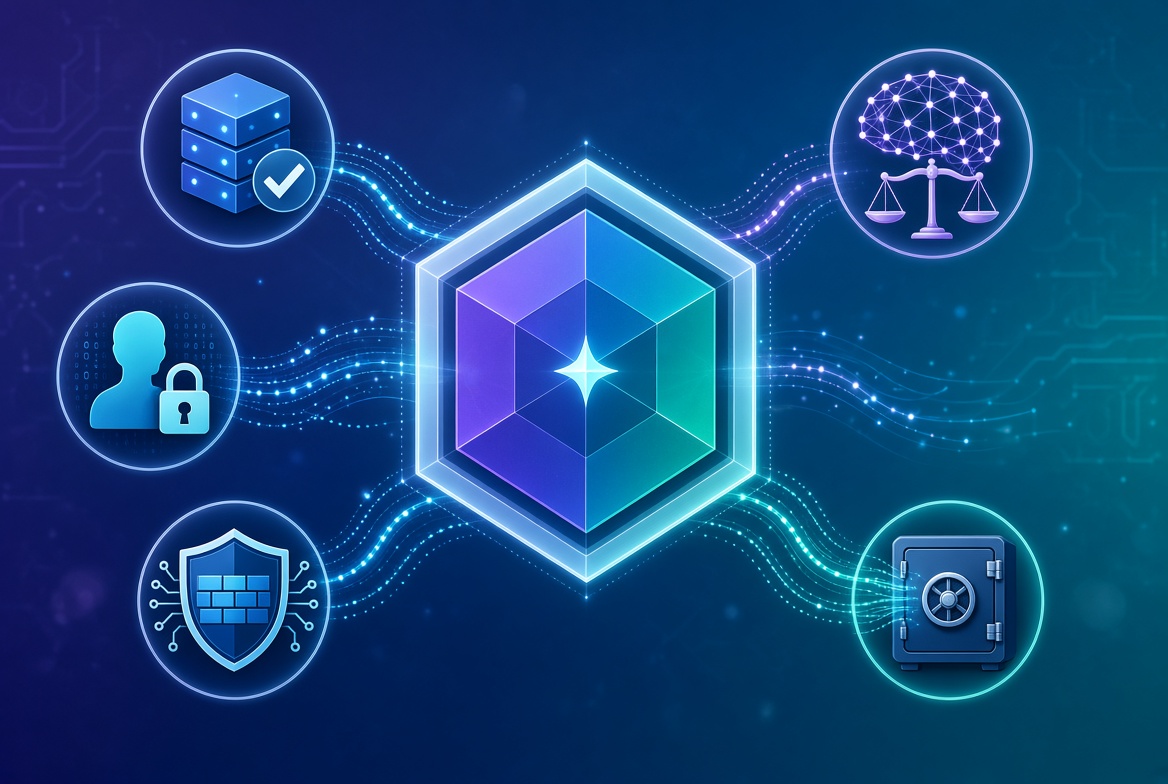
RPA bots often interact with sensitive business systems, which makes identity and access management critical. Each bot should have only the permissions required for its assigned tasks.
Organizations should avoid embedding passwords directly into workflow files. Secrets should be stored in an appropriate credential-management or secrets-management system, with access controlled and audited.
Security teams should also consider bot endpoints, software updates, third-party dependencies, logs, data transfers, and unattended execution. A compromised automation account could potentially perform the same actions available to the bot.
Organizations already using secure software-delivery practices can connect RPA governance with broader security programs. See our DevSecOps guide for more on integrating security throughout software delivery.
How to Implement RPA
Step 1: Map the process
Document every step, decision, input, output, exception, system dependency, and human approval. Do not automate a process that the organization does not understand.
Step 2: Select suitable candidates
Prioritize repetitive, high-volume, rules-based processes with measurable outcomes. Consider transaction volume, time saved, error reduction, implementation complexity, and business risk.
Step 3: Simplify before automating
Remove unnecessary steps and standardize inputs where possible. If an API or direct integration is available and economically sensible, evaluate it before choosing screen-based automation.
Step 4: Build and test
Develop the bot with structured logging and controlled exception handling. Test normal paths, invalid inputs, unavailable systems, duplicate records, permission failures, and unexpected application changes.
Step 5: Deploy with governance
Production bots should have clear owners, documented dependencies, controlled credentials, monitoring, backup procedures, and a defined incident-response process.
第六步:衡量结果
Track processing time, failure rate, exception rate, human intervention, transaction volume, operational cost, and business outcomes. Automation should be judged by value delivered rather than the number of bots deployed.
The Future of RPA
RPA is increasingly converging with AI, intelligent document processing, process mining, workflow orchestration, APIs, and enterprise integration platforms. This shift is sometimes described as intelligent automation or hyperautomation, although those terms can encompass a broader technology stack than RPA alone.
AI can help automation systems handle documents, natural language, classification, and other less-structured inputs. For example, an AI model could extract information from an invoice before an RPA workflow enters validated fields into a legacy accounting application.
However, combining RPA with AI also introduces new risks. AI-generated outputs can be uncertain, so organizations should establish validation rules and human review for high-impact decisions.
The long-term direction is therefore unlikely to be simply “more bots.” Instead, businesses are likely to build coordinated automation systems that combine APIs, workflow engines, RPA, AI, observability, identity controls, and human oversight.
专家建议
- Automate stable processes first: Start where inputs, rules, and outputs are predictable.
- Prefer APIs when practical: Direct integrations are often more resilient than screen-based automation.
- Design exception handling early: Production workflows need clear responses to unexpected conditions.
- Use least privilege: Give every bot only the access required for its tasks.
- Monitor every production bot: Failed automations can silently create operational problems if nobody is watching them.
- Measure business value: Track time, quality, risk, cost, and customer outcomes rather than bot counts alone.
常见错误
- Automating a broken process: Fix unnecessary complexity before encoding it into a bot.
- Ignoring exceptions: Real workflows contain missing data, failed systems, duplicates, and unusual cases.
- Using screen automation when an API exists: A supported integration can often be more maintainable.
- Sharing bot credentials: Bots should have individually governed identities or accounts where appropriate.
- Skipping monitoring: An unattended bot that fails can disrupt downstream operations.
- Assuming RPA equals AI: RPA primarily executes predefined workflows; AI can add inference and handling of less-structured information.
常见问题解答
1. What is Robotic Process Automation?
Robotic Process Automation is software-based automation that uses configurable bots to perform repetitive, rule-based digital tasks across applications and systems.
2. What are examples of RPA?
Examples include invoice processing, data entry, report generation, file handling, record updates, reconciliation support, and repetitive customer-service back-office tasks.
3. Is RPA the same as artificial intelligence?
No. RPA generally follows predefined rules and workflows, while AI systems can perform tasks involving prediction, classification, language, images, or other forms of inference. The two can be combined.
4. What are the main benefits of RPA?
RPA can reduce repetitive manual work, improve consistency, accelerate processing, support scalable operations, and provide useful execution logs when properly implemented.
5. What are the disadvantages of RPA?
RPA can be difficult to maintain when interfaces or processes change. Other challenges include exception handling, governance, security, scalability, and technical debt.
6. Is RPA useful for legacy systems?
Yes. RPA can sometimes automate legacy applications that lack modern APIs. However, direct integration should be considered when a reliable API or other supported interface is available.
7. Can RPA replace employees?
RPA is primarily designed to automate tasks rather than entire jobs. Organizations may use it to reduce repetitive workload while allowing employees to focus on judgment, communication, analysis, and other higher-value activities.
8. What is the future of RPA?
RPA is increasingly being combined with AI, intelligent document processing, process mining, APIs, workflow orchestration, and enterprise integration to create broader intelligent-automation systems.
结论
Robotic Process Automation remains a practical technology for automating repetitive digital work. Its greatest strength is not that it can perform every kind of task, but that it can reliably execute well-defined processes across systems when the workflow is suitable.
The strongest RPA programs begin with process analysis, simplify workflows, use direct integrations where appropriate, build robust exception handling, secure bot identities, and continuously monitor production performance. When combined thoughtfully with AI and modern integration technologies, RPA can become one component of a broader automation strategy.
Follow SignalMediaMKG for more practical guides covering automation, artificial intelligence, software engineering, cybersecurity, and emerging technology.