
Car insurance premiums have reached historic highs, leaving many drivers searching for practical ways to lower their monthly expenses. Traditional insurance models rely heavily on demographic factors such as your age, zip code, marital status, and credit score to determine your risk level. However, a modern alternative is rapidly gaining traction: telematics car insurance.
Also known as usage-based insurance (UBI), telematics shifts the focus from who you are to how you actually drive. By monitoring your real-time driving habits, insurance companies can customize your premiums to match your actual risk profile. For safe, low-mileage drivers, this technology offers a pathway to substantial savings. But is sharing your personal driving data truly worth the discount?
This comprehensive guide breaks down how telematics car insurance works, the specific metrics tracked, the potential savings, and the privacy trade-offs you must consider before signing up.
What Is Telematics Car Insurance?
Telematics car insurance is a policy type that determines your premium based on real-time data collected from your vehicle. Instead of grouping you into a broad demographic category, the insurer evaluates your individual behaviors behind the wheel. If you practice safe driving habits and maintain low mileage, you are rewarded with lower insurance rates.
The technology relies on telecommunication and informatics (hence “tele-matics”) to transmit data directly to your insurance provider. Most major auto insurers now offer some variation of a telematics program, promising discounts of up to 30% or 40% for their safest policyholders.
How Telematics Technology Tracks Your Driving
Insurers use different methods to collect driving data. When you enroll in a usage-based program, your insurer will typically require you to use one of the following tracking methods:
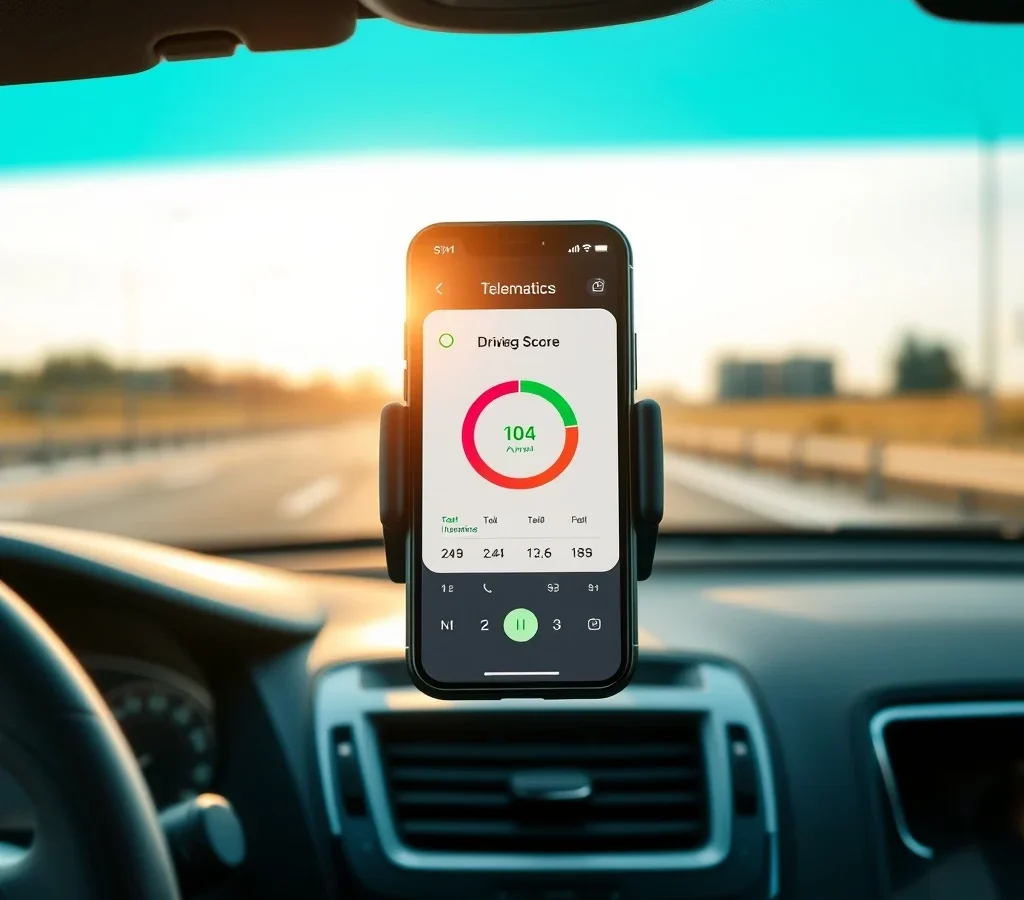
- Mobile Smartphone Apps: The most common method today. You download the insurer’s proprietary app, which runs in the background of your phone. It uses your phone’s GPS, accelerometer, and gyroscope to monitor your trips.
- Plug-In OBD-II Devices: A small device sent by your insurer that you plug directly into your car’s On-Board Diagnostics (OBD-II) port, usually located under the steering column. This device reads data directly from your vehicle’s computer.
- Built-In Manufacturer Systems: Modern “connected cars” often have built-in telematics systems (such as OnStar or brand-specific connected suites). Some insurers can link directly to these pre-installed systems with your permission.
Key Metrics Monitored by Insurers
To calculate your personalized safety score, telematics programs track a specific set of driving behaviors. While every insurance company uses a proprietary algorithm, most focus on the following core metrics:
1. Braking Habits
Hard braking is one of the most heavily weighted factors in telematics algorithms. Frequent, sudden stops suggest tailgating, distracted driving, or a failure to anticipate traffic flow. Insurers look for smooth, gradual deceleration as a key indicator of a safe driver.
2. Acceleration Rates
Rapid, aggressive acceleration is viewed as high-risk behavior. Smooth, consistent acceleration shows that you are driving defensively and keeping a safe distance from other vehicles.
3. Speeding
Consistently driving above the posted speed limit or traveling at excessively high speeds (usually defined as over 80 mph) will quickly lower your telematics score and reduce your potential discount.
4. Time of Day
When you drive is almost as important as how you drive. Statistically, the risk of severe accidents increases dramatically late at night, specifically between midnight and 4:00 AM. Telematics programs often penalize driving during these high-risk hours.
5. Total Mileage
The less time you spend on the road, the lower your chances of getting into an accident. Drivers with short commutes or those who work from home often benefit the most from telematics programs due to their low overall mileage.
6. Phone Distraction
Many smartphone-based telematics apps can detect if you are actively using or holding your phone while the vehicle is in motion. Phone distraction is a major red flag that can severely impact your driving score.
Comparing Auto Insurance Models
To help you understand where telematics fits, here is a comparison of the three primary auto insurance models available today:
| Insurance Model | How Premiums Are Set | Best For | Potential Savings |
|---|---|---|---|
| Traditional Insurance | Demographics, driving record, credit score, ZIP code. | Average drivers who prefer predictable monthly bills. | Standard discounts (bundling, paperless). |
| Telematics (Behavior-Based) | Real-time driving habits, safety scores, and mileage. | Highly cautious drivers, defensive drivers, and daytime commuters. | Up to 10% to 40% off standard rates. |
| Pay-Per-Mile | A low flat monthly base rate plus a fixed rate per mile driven. | Remote workers, retirees, and low-mileage drivers (under 10,000 miles/year). | Significant savings for occasional drivers. |
The Pros and Cons of Telematics Car Insurance
Before committing to a telematics program, it is essential to weigh the advantages against the potential downsides.
The Advantages
- Immediate Savings: Most insurance companies offer an instant introductory discount (usually 5% to 10%) just for signing up and plugging in the device or downloading the app.
- Control Over Your Rates: Safe drivers are no longer forced to subsidize the risky behaviors of others in their demographic group. You have direct influence over your premium costs.
- Encourages Safer Driving: Because the apps provide immediate feedback and weekly scores, many drivers naturally become more mindful of their habits, leading to safer roads for everyone.
- Useful Tools: Many telematics apps include helpful secondary features, such as vehicle location tracking (in case your car is stolen), crash detection, and roadside assistance integration.
The Disadvantages
- Privacy Concerns: You are granting your insurance company constant access to your location, speed, and daily routines. For many, this level of surveillance is a dealbreaker.
- Surcharges and Rate Increases: While some insurers promise they will never raise your rates based on telematics data, others reserve the right to increase your premiums if the data reveals you are an aggressive or high-risk driver.
- Unfair Penalties: Algorithms are not perfect. You might be penalized for a “hard brake” that was actually a defensive maneuver to avoid an erratic driver, or for driving late at night due to a night-shift work schedule.
- Battery and Data Usage: Smartphone-based apps run constantly in the background, which can drain your phone’s battery faster and consume cellular data.
Expert Tips to Maximize Your Telematics Discount
If you decide to try telematics car insurance, these practical strategies can help you secure the highest possible discount:
- Drive Defensively: Maintain a generous following distance behind other vehicles. This gives you plenty of time to slow down gradually, virtually eliminating hard braking events.
- Avoid Late-Night Trips: If possible, limit your driving between midnight and 4:00 AM. If you must travel during these hours, drive with extra caution.
- Limit Phone Interaction: Mount your phone securely on the dashboard before starting your trip. Do not touch, unlock, or interact with your phone while the vehicle is running, even when stopped at a red light.
- Monitor Your App Dashboard: Check your driving scores regularly. Most apps show exactly when and where you received negative marks, allowing you to adjust your habits accordingly.
- Classify Passenger Trips Correctly: If you are a passenger in someone else’s car or riding public transit, make sure to open the app and mark those trips as “Not Driving” so they do not negatively impact your score.
Common Mistakes to Avoid
- Assuming All Programs Are the Same: Read the fine print. Some programs only monitor you for a trial period (typically 90 days) to set your permanent discount, while others track you continuously for the life of the policy.
- Ignoring Rate Increase Clauses: Always ask your agent if the telematics program can actively raise your base premium if you receive a low safety score. If they can, make sure you are confident in your driving habits before enrolling.
- Allowing Risky Drivers to Use Your Vehicle: If you share a car with a family member who has aggressive driving habits, their trips will be logged under your vehicle’s profile (especially with OBD-II devices), which can ruin your hard-earned discount.
Frequently Asked Questions
What is telematics car insurance?
Telematics car insurance is a policy that uses technology to track your actual driving habits—such as braking, speed, and mileage—to calculate personalized insurance premiums. Safer drivers receive lower rates, while riskier drivers may pay more depending on the carrier’s terms.
Can telematics increase my car insurance rates?
It depends on the insurance company. Some insurers guarantee that your rates will never go up based on telematics data, meaning you can only earn a discount. However, other insurers reserve the right to apply a surcharge or increase premiums if the data shows high-risk driving behaviors.
What exactly does a telematics device track?
Most telematics programs track hard braking, rapid acceleration, speeding, the time of day you drive, overall mileage, and active smartphone use while driving. They use GPS and motion sensors to gather this data.
Is my personal data safe with telematics insurance?
Insurance companies are bound by strict privacy policies and generally do not sell your driving data to third parties. However, your data can be subpoenaed in legal proceedings or accident investigations. Always read your insurer’s privacy policy to understand how your data is stored and used.
Does telematics drain my phone battery?
Yes, mobile-app-based telematics programs can increase battery consumption because they constantly use GPS and background processing to detect when you are driving. Keeping a car charger handy during trips can help mitigate this issue.
How much money can I actually save with telematics?
While maximum advertised discounts range from 30% to 40%, the average driver typically saves between 10% and 15%. Your actual savings depend entirely on your driving habits, mileage, and the specific rules of your insurer’s program.
Can I opt out of a telematics program if I don’t like it?
Yes, you can opt out of a telematics program at any time. However, doing so will result in losing any introductory or earned safe-driving discounts, and your premiums will revert to standard traditional rates.
Does telematics track my location at all times?
Yes, most telematics programs utilize GPS tracking to monitor where you drive, the routes you take, and the speed limits of the roads you are on. If constant location tracking makes you uncomfortable, telematics may not be the right choice for you.
Conclusion
Telematics car insurance represents a major shift toward personalized, behavior-based pricing. For low-mileage drivers, daytime commuters, and cautious motorists, usage-based programs offer an excellent opportunity to combat rising insurance costs and take control of their premiums.
However, the financial savings must be balanced against privacy preferences and the willingness to have your driving monitored. If you are ready to try telematics, contact your current insurance provider to see what programs they offer, or compare quotes from multiple carriers to find the best usage-based rates for your driving style.