

Table of Contents
- Introduction
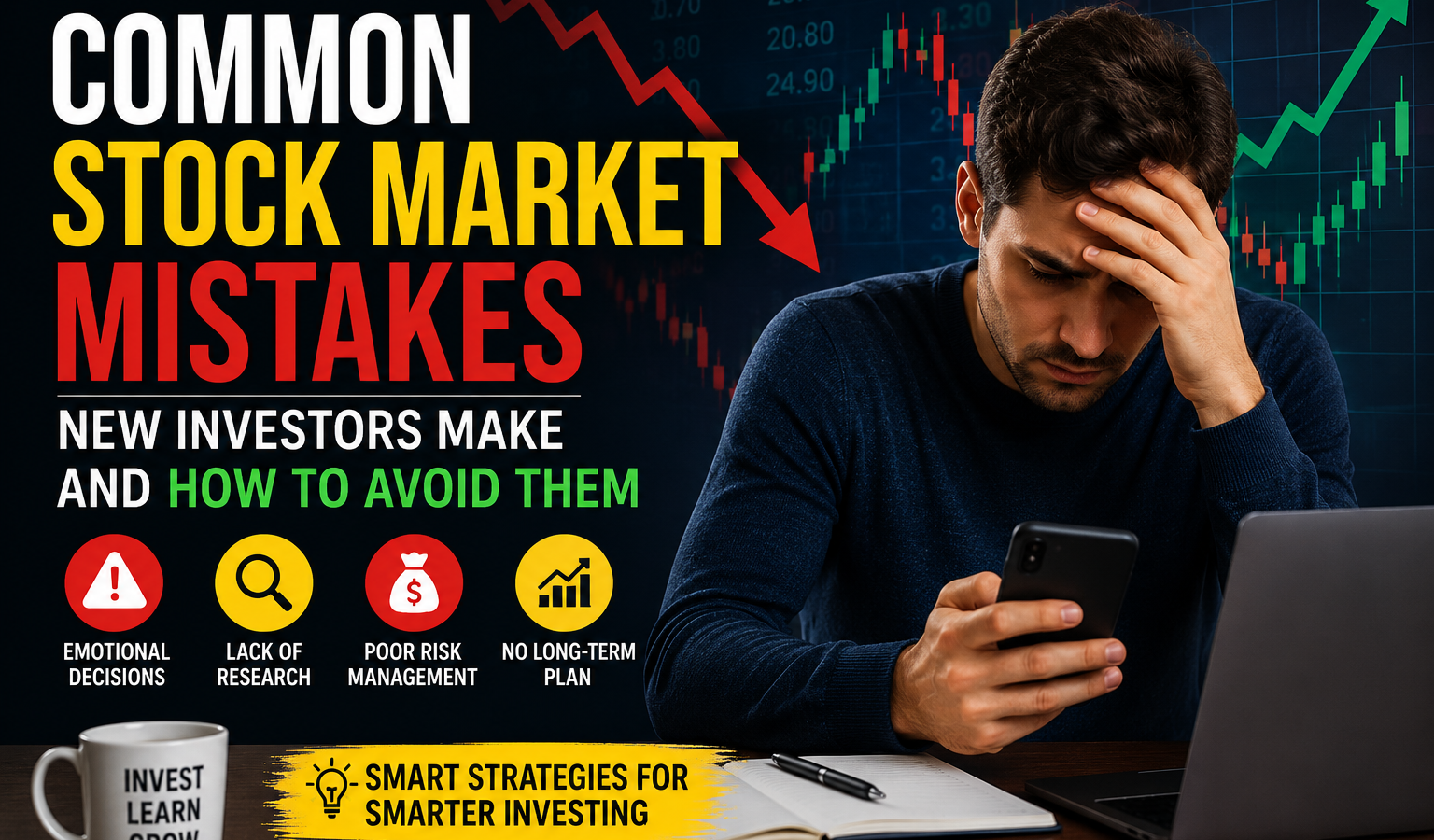
- Common Mistakes New Investors Make
- Mistakes vs Better Habits
- Expert Tips
- FAQs
- Conclusion
Introduction
Many new investors enter the stock market with high hopes and limited preparation. That is normal. The bigger problem is that beginners often repeat the same mistakes: they buy on emotion, chase trends, ignore fees, and sell too soon when prices fall. These habits can damage returns and confidence at the same time.
The good news is that most investing mistakes are avoidable. With a simple plan, patient decision-making, and a few basic rules, new investors can reduce risk and build long-term wealth more effectively. This guide explains the most common stock market mistakes new investors make, why they happen, and how to avoid them using practical, beginner-friendly strategies.
Common Mistakes New Investors Make
1. Investing without a clear goal
One of the biggest mistakes is buying stocks without knowing why you are investing. Some people want retirement growth. Others want a house deposit, passive income, or education funding. If your goal is unclear, your risk level will also be unclear. That usually leads to random decisions and inconsistent results.
How to avoid it: define your goal, time horizon, and risk tolerance before you buy any stock. A long-term goal usually supports a more growth-focused portfolio. A short-term goal usually needs more stability and less market exposure.
2. Trying to get rich quickly
Many beginners want fast wins. They hear stories about one stock that doubled or a trader who made a huge profit in a week. This often creates unrealistic expectations. In reality, the stock market rewards discipline more than speed. Chasing quick gains can push investors into speculative trades, meme stocks, or overleveraged positions that carry far more risk than they understand.
How to avoid it: treat stock investing as a long-term wealth-building tool, not a shortcut. Focus on steady contributions, diversified holdings, and realistic return expectations. Historically, broad equity markets have delivered strong long-term growth, but not in a straight line. Volatility is part of the process, not a sign that something is always wrong.
3. Putting all money into one stock
Putting too much money into one company is a classic beginner mistake. Even strong businesses can face regulation changes, earnings misses, lawsuits, leadership issues, or industry slowdowns. If your portfolio depends on one stock, a single bad event can do serious damage.
How to avoid it: diversify across several companies, sectors, and ideally asset types. For new investors, low-cost index funds or ETFs can be an easier and safer starting point than building a concentrated stock portfolio.
4. Ignoring fees and trading costs
Fees may look small, but they can quietly reduce returns over time. Trading commissions, fund expense ratios, foreign exchange charges, and account costs all matter. Frequent buying and selling can also create hidden costs through poor timing and tax friction. A lower-cost approach often performs better because more of your money stays invested.
How to avoid it: compare broker fees, fund expense ratios, and account charges before you invest. Use a low-turnover strategy whenever possible. For many beginners, a simple buy-and-hold approach is more cost-effective than constant trading.
5. Letting emotions control decisions
Fear and greed are powerful. When prices rise, beginners often feel the urge to buy more because everyone else seems to be making money. When prices fall, the same investors may panic and sell at a loss. Emotional investing usually leads to buying high and selling low, which is the opposite of what works.
How to avoid it: create rules before emotions take over. Decide in advance how much to invest, when to rebalance, and when to hold. A written investment plan can prevent impulsive moves during market swings.
6. Not understanding what they own
Some beginners buy a stock because it is popular or because a social media post said it was a “must-buy.” That is risky. Every investment should have a reason. You should know the business model, revenue drivers, debt levels, competitive position, and main risks. Without that, you may hold a stock you do not truly understand.
How to avoid it: read company reports, earnings summaries, and reliable market analysis before you buy. If a business is too complex, move on. There are many investable companies and funds that are easier to understand.
7. Timing the market instead of staying invested
New investors often wait for the “perfect” time to buy. The problem is that perfect timing is nearly impossible. Miss just a few of the market’s strongest days, and long-term returns can fall sharply. Investors who jump in and out of the market also risk making decisions based on headlines instead of facts.
How to avoid it: use a consistent investing schedule, such as monthly contributions. This approach, often called dollar-cost averaging, helps reduce the pressure of trying to predict every move. It also creates discipline and removes some of the stress from investing.
8. Buying what is trending
Trending stocks can be exciting, but popularity is not the same as quality. Many beginners buy because a stock is being discussed everywhere, not because it fits their goals. That behavior can lead to buying overvalued companies at the worst possible time.
How to avoid it: separate hype from fundamentals. Ask whether the company has strong earnings, a durable business model, and a reasonable valuation. If not, treat the trend as entertainment, not an investment thesis.
9. Selling too early
Some new investors panic when a stock drops a little, even if the business remains strong. Others sell winners too soon because they fear losing gains. Both behaviors can weaken long-term performance. Good investments often need time to compound.
How to avoid it: define your reason for buying each position. If the original thesis is still valid, a short-term price drop may not be a reason to sell. Review the company’s fundamentals rather than reacting to every market move.
10. Not keeping enough cash for emergencies
Investing money you might need soon is dangerous. If an emergency happens and your savings are tied up in stocks, you may be forced to sell at a bad time. That creates unnecessary losses and stress.
How to avoid it: build an emergency fund before you invest heavily. A cash reserve helps you stay invested during market downturns because you are not depending on your portfolio for short-term needs.
Mistakes vs Better Habits
| Common mistake | Better habit |
|---|---|
| Investing without goals | Set a clear time horizon and purpose |
| Chasing quick profits | Focus on long-term compounding |
| Owning one stock only | Diversify across sectors and funds |
| Ignoring fees | Use low-cost brokers and funds |
| Trading emotionally | Follow a written investing plan |
| Buying hype | Study fundamentals and valuation |
| Timing the market | Invest regularly over time |
| Skipping emergency savings | Keep cash for unexpected expenses |
Expert Tips for New Investors
- Start with a simple portfolio instead of trying to beat the market immediately.
- Automate contributions so investing becomes a habit.
- Review your portfolio once a quarter, not every hour.
- Use broad index funds as a core holding if you are unsure how to select stocks.
- Keep learning about valuation, risk, and diversification before adding complexity.
One useful mindset shift is to think like an owner, not a gambler. Owners care about cash flow, growth, and durability. Gamblers care only about price movement. The owner’s mindset usually produces better long-term decisions.
Statistics Every New Investor Should Know
Market history shows why patience matters. The S&P 500 has delivered strong long-term returns over decades, but those returns came with frequent drawdowns along the way. In many calendar years, the index has experienced double-digit intra-year declines even when the year eventually ended positively. That is why staying calm matters so much.
Research on investor behavior has also shown that many individual investors underperform the funds they invest in because they buy and sell at the wrong times. In practice, emotional trading and poor timing can reduce returns more than the market itself. The lesson is simple: process matters.
Common Mistakes New Investors Make: Quick Checklist
- No written investment plan
- Too much concentration in one stock
- Reacting to social media hype
- Ignoring investment fees
- Panic selling during volatility
- Holding assets they do not understand
- Trying to predict short-term market moves
- Investing money needed for emergencies
FAQs
1. What is the biggest mistake new investors make?
The biggest mistake is usually investing without a plan. When goals, time horizon, and risk tolerance are unclear, every decision becomes emotional and inconsistent.
2. Is it better to buy individual stocks or index funds?
For many beginners, index funds are easier because they provide instant diversification and reduce single-stock risk. Individual stocks can work too, but they require more research and discipline.
3. How much money should a beginner invest?
Begin with an amount you can afford to leave untouched for the long term. A good rule is to invest after covering essentials and emergency savings. Start small and stay consistent.
4. Should new investors try to time the market?
No. Timing the market is difficult even for professionals. Regular investing usually works better because it builds discipline and reduces the pressure to guess short-term price moves.
5. Why do beginners lose money in stocks?
Beginners often lose money because they buy in response to emotion, chase trends, overtrade, or fail to diversify. Poor risk management is usually the main problem, not the stock market itself.
6. How can I avoid panic selling?
Write down your investment rules before the market turns volatile. Keep an emergency fund, diversify your holdings, and review the reason you bought each investment before selling.
7. Do fees really matter for small investors?
Yes. Fees may look minor at first, but they reduce the amount of money compounding in your account. Lower fees often mean more of your return stays with you.
8. What is the safest way to start investing?
Start with education, an emergency fund, and a simple diversified portfolio. Many beginners begin with broad index funds, then add individual stocks only after they understand the basics.
Conclusion
New investors do not need to predict the market perfectly to succeed. They need good habits, patience, and a plan they can follow. Most stock market mistakes come from emotion, lack of knowledge, and poor preparation. Once you remove those problems, investing becomes much simpler.
Keep your strategy clear, diversify wisely, control costs, and stay focused on the long term. Small improvements in discipline can make a big difference in your results over time.
Call to Action
Start by reviewing your current investment habits today. Write your goals, check your portfolio for concentration risk, and build a simple plan you can follow consistently. Smart investing begins with avoiding common mistakes.