

Table of Contents
- Introduction
- What Is a Crypto Wallet?
- Hot Wallet vs Cold Wallet: The Core Difference
- Hot Wallets Explained
- Cold Wallets Explained
- Comparison Table
- Which Wallet Is Better for You?
- Security Best Practices
- Expert Tips
- Common Mistakes
- FAQs
- Conclusion
- Call to Action
Crypto wallets are the gateway to owning, sending, receiving, and protecting digital assets. As the crypto market has grown into a multi-trillion-dollar industry, the way you store your coins matters just as much as the coins themselves. A wallet is not just an app or a device. It is your access point to private keys, which control your funds.
The two most common choices are hot wallets and cold wallets. Hot wallets are connected to the internet and are built for speed and convenience. Cold wallets stay offline and are designed for stronger long-term security. Industry guides from Coinbase and Ledger consistently describe hot wallets as internet-connected software wallets and cold wallets as offline storage for private keys.
There is no one-size-fits-all answer. The best wallet depends on how often you trade, how much crypto you hold, and how much risk you can tolerate. In 2025, crypto theft and scams remained a major threat, with Chainalysis reporting billions stolen across the ecosystem, which is one reason wallet choice is such an important security decision.
What Is a Crypto Wallet?
A crypto wallet stores the private keys that prove ownership of your digital assets. It lets you view balances and sign transactions. Your coins are not literally inside the wallet. They remain on the blockchain, while the wallet gives you control over them through cryptographic keys. Coinbase explains that wallets range from simple apps to hardware devices, and the right option depends on your goals and security needs.
In practice, wallet security is about where those private keys live. If the keys are online, the wallet is usually a hot wallet. If the keys stay offline, the wallet is generally a cold wallet. This hot-vs-cold distinction is different from the hardware-vs-software distinction, which Ledger notes are not the same thing.
Hot Wallet vs Cold Wallet: The Core Difference
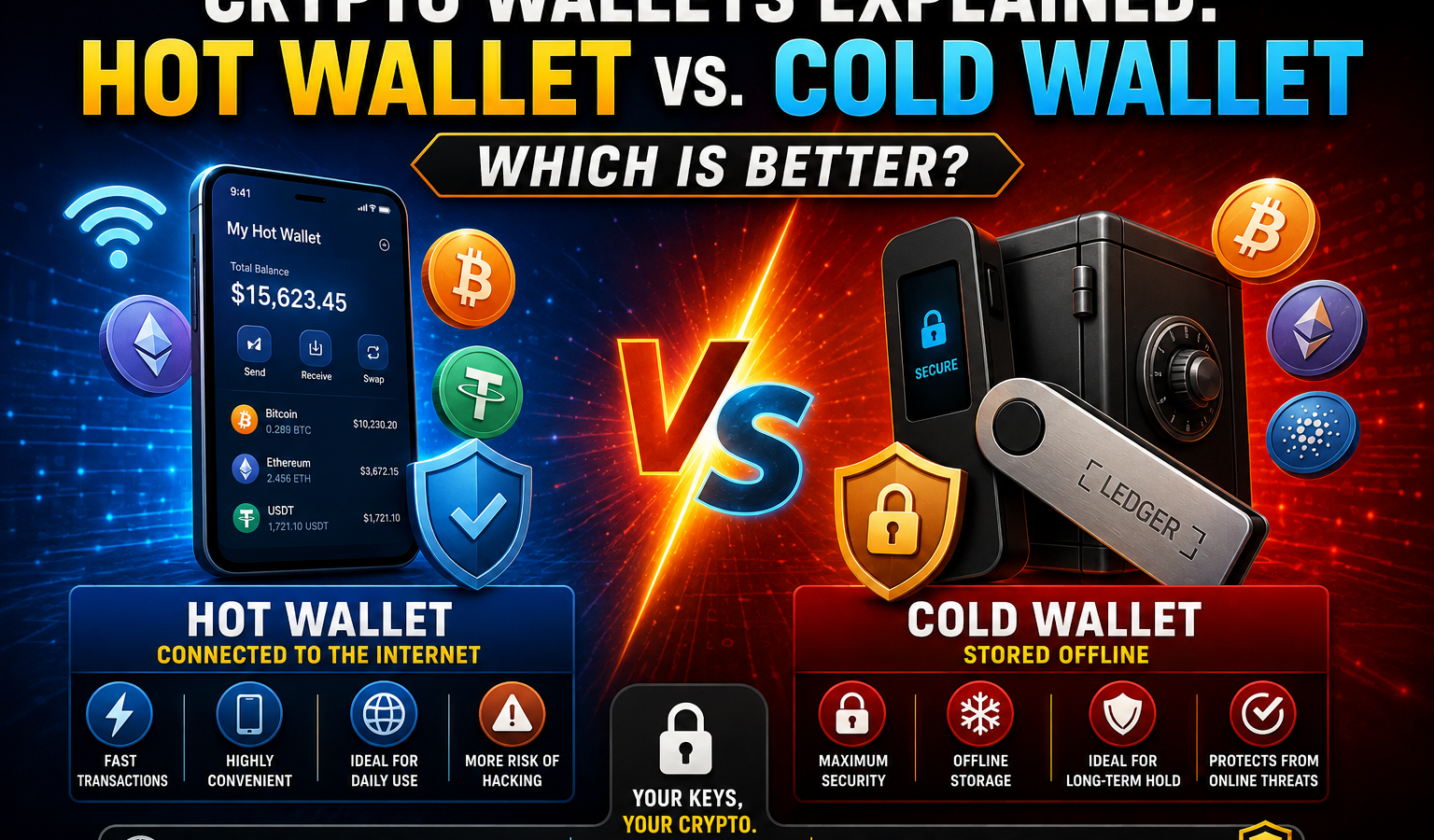
The biggest difference is internet access. Hot wallets stay connected to the web, which makes them quick and easy for active use. Cold wallets stay offline, which lowers the attack surface and reduces exposure to phishing, malware, and remote hacking attempts.
That tradeoff shapes everything else. Hot wallets win on speed, ease of use, and everyday convenience. Cold wallets win on security, especially for larger holdings and long-term storage. Coinbase and Ledger both frame cold storage as the safer option for assets you do not need to move often.
Hot Wallets Explained
Hot wallets are software wallets that run on phones, desktop apps, browser extensions, or exchange platforms. They are ideal for sending funds quickly, using DeFi apps, minting NFTs, or making frequent trades. Their main advantage is convenience. Their main weakness is exposure to online threats.
Examples include mobile wallets and browser wallets such as MetaMask and Phantom, which Ledger lists as common hot-wallet examples. Because they remain connected to the internet, hot wallets are more vulnerable to phishing pages, malicious extensions, device compromise, and social engineering.
- Fast access for trading and spending
- Easy to set up on a phone or browser
- Best for active users and small balances
- More exposed to phishing and malware
Hot wallets are not “bad.” They are simply built for a different job. In the same way you would not keep all your cash in your pocket, you should not keep your entire crypto portfolio in a hot wallet if you do not need immediate access to it. Investopedia and Ledger both recommend limiting the amount stored in hot wallets.
Cold Wallets Explained
Cold wallets keep private keys offline. They often use a hardware device such as a USB-style signer or a specialized device that signs transactions without exposing the keys to the internet. Coinbase describes hardware wallets as offline storage, while Ledger explains that cold wallets sign transactions offline and avoid smart contract interaction.
This offline design makes cold wallets much harder to attack remotely. They are especially useful for long-term holders, large portfolios, and users who want stronger protection from malware, spyware, and malicious approvals.
- Private keys stay offline
- Better for long-term storage
- Strong protection against online attacks
- Less convenient for daily transactions
Cold wallets still require care. They can be lost, damaged, stolen, or misused. And no wallet can protect against a user accidentally approving a bad transaction, exposing a seed phrase, or backing up recovery words insecurely. Coinbase notes that even cold wallets can be compromised if a device is stolen or private keys are exposed.
Comparison Table
| Feature | Hot Wallet | Cold Wallet |
|---|---|---|
| Internet connection | Always online | Offline |
| Convenience | High | Lower |
| Security | Lower | Higher |
| Best use case | Daily use, trading, DeFi | Long-term holding, savings |
| Risk exposure | Phishing, malware, device hacks | Physical loss, damage, mishandling |
| Cost | Often free | Usually requires buying a device |
Which Is Better?
The better wallet depends on your purpose. If you buy, sell, swap, or spend crypto often, a hot wallet is usually the better tool. If you are holding a meaningful amount for months or years, a cold wallet is usually the safer choice. Coinbase and Ledger both position hot wallets as ideal for frequent transactions and cold wallets as better for secure storage.
A practical approach is to use both. Keep a small amount in a hot wallet for daily activity and store the rest in cold storage. This hybrid strategy is common among experienced users because it balances convenience with protection.
When a Hot Wallet Makes Sense
- You trade frequently
- You use DeFi or NFT marketplaces often
- You move small amounts regularly
- You want a simple mobile experience
- You are still learning crypto basics
Hot wallets fit beginners and active users because they make transactions quick and familiar. Coinbase notes that software wallets are often a better fit for less seasoned crypto owners, especially when the user needs fast access and simple controls.
When a Cold Wallet Makes Sense
- You hold crypto for the long term
- You store a large balance
- You want maximum offline protection
- You rarely make on-chain transactions
- You want stronger control over custody
Cold storage is the stronger fit for savings-like behavior. It is especially useful when you do not need constant access to your assets. With crypto crime still a major issue, including billions in stolen funds in 2025 according to Chainalysis, many holders prefer to reduce exposure by moving long-term funds offline.
How Much Money Should Stay in Each Wallet?
A sensible rule is to keep only what you need in a hot wallet and move the rest to cold storage. There is no universal dollar amount, but the principle is simple: keep spending money online and savings money offline. Investopedia recommends limiting hot-wallet balances because of the higher exposure to cyber risks.
For many users, that means a “working balance” in a hot wallet and a much larger reserve in a cold wallet. This reduces damage if one wallet is compromised. It also makes it easier to recover from mistakes without losing your full portfolio.
Security Best Practices
- Use two-factor authentication where available
- Write your recovery phrase offline and store it securely
- Never share private keys or seed phrases
- Download wallets only from official sources
- Check addresses carefully before sending funds
- Keep wallet software updated
- Use a cold wallet for long-term holdings
Security is not just about the wallet type. It is also about your habits. A cold wallet can still fail if your recovery phrase is stolen. A hot wallet can still be reasonably safe if you keep balances low and practice strong hygiene. The most secure setup combines the right wallet with smart behavior.
Expert Tips
- Use a hot wallet for active DeFi and trading only
- Move profits to cold storage regularly
- Test your recovery process before storing large amounts
- Keep separate wallets for spending, trading, and savings
- Choose wallets with a strong security track record
One of the smartest habits is wallet separation. Treat your hot wallet like a checking account and your cold wallet like a savings account. That mental model makes it easier to decide where each asset should live and how much risk each part of your portfolio should carry.
Common Mistakes
- Keeping all funds in one wallet
- Leaving large balances in a hot wallet
- Saving seed phrases in cloud notes or screenshots
- Clicking unknown wallet links or approvals
- Buying a wallet from unofficial sellers
- Ignoring address verification before sending crypto
Many crypto losses happen through human error rather than wallet failure. Scam pages, fake support agents, malicious approvals, and careless key storage remain common threats. That is why wallet education matters as much as wallet choice.
FAQs
1. Is a hot wallet safe?
Yes, for small balances and frequent use. It is less secure than cold storage because it stays online, so keep only what you need in it.
2. Is a cold wallet completely safe?
No wallet is perfect. Cold wallets greatly reduce online risk, but users can still lose funds through theft, loss, bad backups, or exposing recovery phrases.
3. Can I use both hot and cold wallets?
Yes. Many users combine them: hot wallet for daily spending, cold wallet for long-term storage. This is one of the most practical setups.
4. Are hardware wallets always cold wallets?
Usually, but not always. Ledger notes that hardware and cold are related but not identical. The key question is whether the wallet truly keeps keys offline and avoids risky interactions.
5. Which wallet is best for beginners?
Many beginners start with a hot wallet because it is simple and easy to use. As balances grow, moving long-term holdings into cold storage becomes a smarter next step.
6. Can exchanges be used as wallets?
Yes, but that means you rely on the exchange’s custody rather than holding your own keys. Many users prefer self-custody for stronger control.
7. What is the biggest risk with hot wallets?
The biggest risk is exposure to internet-based attacks such as phishing, malware, and device compromise. That is why hot wallets should hold limited funds.
8. What is the biggest risk with cold wallets?
The biggest risks are physical loss, damage, and poor recovery-phrase storage. A cold wallet is only as safe as the way you protect access to it.
Conclusion
Hot wallets and cold wallets solve different problems. Hot wallets are built for convenience. Cold wallets are built for security. If you trade often or use Web3 apps every day, a hot wallet makes life easier. If you hold crypto for the long term, a cold wallet is usually the safer choice. The smartest setup for most users is a combination of both.
As crypto adoption grows, so do scams, theft, and user mistakes. That makes wallet strategy a core part of digital asset ownership. Choose the right wallet for the right job, keep your backups secure, and never store more in a hot wallet than you are willing to risk.
Call to Action
Review your current crypto storage setup today. Move long-term holdings to cold storage, keep only active funds in a hot wallet, and protect every recovery phrase like cash in a vault.