
Rising car insurance premiums have left millions of drivers searching for ways to lower their monthly bills. Traditional auto insurance relies heavily on demographic factors like your age, zip code, credit score, and marital status to determine your risk profile. This model often feels unfair to safe drivers who find themselves grouped into high-risk categories through no fault of their own. Enter telematics car insurance, a modern, technology-driven approach that shifts the control back into your hands.
Telematics car insurance, also known as usage-based insurance (UBI) or pay-how-you-drive programs, evaluates your actual driving habits in real-time. By tracking specific behaviors behind the wheel, insurance companies can offer highly personalized premiums. If you drive safely, drive less, and avoid high-risk hours, you stand to save a significant amount of money. However, many drivers remain skeptical about data privacy, tracking accuracy, and whether these programs genuinely deliver on their promise of affordability.
This comprehensive guide breaks down how telematics technology works, what metrics insurers track, the potential savings you can expect, and how to decide if this modern insurance model is the right choice for your lifestyle and budget.
What Is Telematics Car Insurance?
Telematics is a blend of two fields: telecommunications and informatics. In the context of auto insurance, it refers to the technology used to monitor your vehicle’s operation, location, and driver behavior. Instead of pricing your policy based on generalized statistics, insurers use telematics to price your policy based on your individual real-world performance.
When you enroll in a telematics program, your driving data is collected and sent directly to your insurance company. This data collection typically occurs through one of three primary methods:
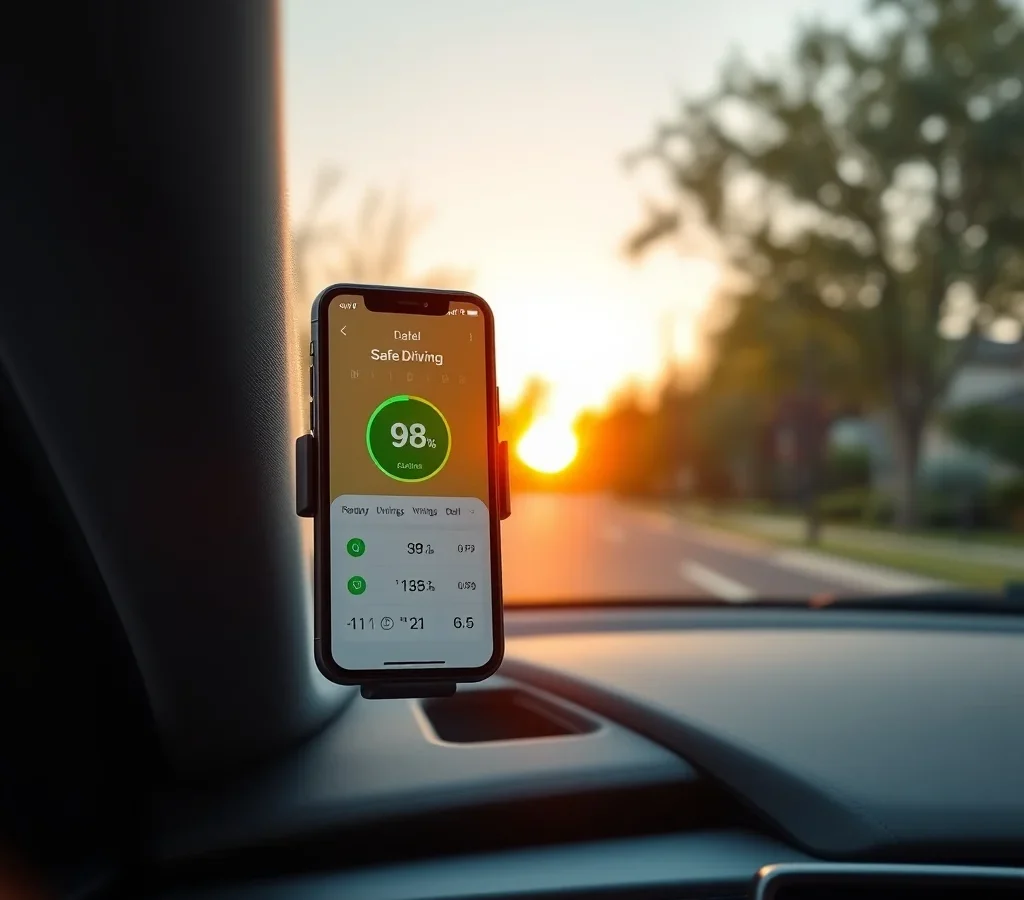
- Mobile Smartphone Applications: The most common method today. You download the insurance company’s dedicated app, which utilizes your phone’s built-in GPS, accelerometer, and gyroscope to track your driving habits automatically.
- Plug-In OBD-II Devices: A small device provided by your insurer that plugs directly into your car’s On-Board Diagnostics (OBD-II) port, usually located under the steering column. This device reads data directly from your vehicle’s computer system.
- Built-In Connected Car Systems: Many newer vehicle models come equipped with factory-installed telematics systems (such as GM’s OnStar or Subaru’s Starlink) that can transmit driving data directly to participating insurers with your consent.
How Insurance Companies Track Your Driving
To calculate your personalized premium or discount, telematics programs analyze several key metrics that correlate with accident risks. Understanding these metrics is essential if you want to maximize your potential savings.
1. Braking Habits
Hard braking is one of the most heavily weighted metrics in telematics algorithms. Insurers view frequent hard braking as a sign of tailgating, distracted driving, or aggressive behavior. A hard braking event is typically defined as a decrease in speed of eight to ten miles per hour within a single second.
2. Acceleration Patterns
Rapid, aggressive acceleration is closely linked to reckless driving and high-speed environments. Smooth, gradual acceleration indicates a calm, defensive driver who is attentive to their surroundings.
3. Time of Day
Statistically, driving late at night—particularly between midnight and 4:00 AM—carries a much higher risk of severe accidents due to fatigue, reduced visibility, and a higher concentration of impaired drivers. Telematics programs often penalize driving during these high-risk hours.
4. Total Mileage
The more time you spend on the road, the higher your statistical probability of getting into an accident. Drivers who commute short distances or work from home often receive substantial discounts simply because their exposure to road hazards is minimal.
5. Phone Distraction
Many modern smartphone-based telematics apps can detect physical phone handling while the vehicle is in motion. Active screen usage, texting, or making handheld calls will quickly lower your overall safety score.
Telematics vs. Traditional Car Insurance
To help you understand how these two models compare, here is a breakdown of the core differences between traditional auto insurance and telematics-based policies:
| Feature | Traditional Car Insurance | Telematics Car Insurance | ||||||||||||
|---|---|---|---|---|---|---|---|---|---|---|---|---|---|---|
| Pricing Basis | Demographics, credit score, driving history, vehicle type. | Real-time driving behavior, mileage, and habits. | Premium Adjustments | Adjusted annually or semi-annually based on claims history. | Adjusted dynamically or at renewal based on recent driving scores. | Data Privacy | High privacy; minimal daily tracking. | Continuous tracking of location, speed, and behavior. | Ideal Driver | Drivers with excellent demographics but occasional aggressive habits. | Low-mileage drivers, defensive drivers, and young drivers building history. | Savings Potential | Limited to standard discounts (multi-car, paperless, etc.). | Up to 30% to 40% off standard rates for excellent drivers. |
The Privacy Debate: Who Has Access to Your Data?
The most common reservation drivers have about telematics car insurance is privacy. Allowing an insurance company to track your exact location, speed, and daily routine can feel invasive. It is crucial to understand what happens to your data before signing up.
Insurance companies are legally bound by privacy policies that dictate how your data is handled. In most jurisdictions, insurers cannot sell your personalized driving data to third-party marketing companies. However, they may share aggregated, anonymous data for research purposes. The primary use of your data is strictly to calculate your risk and determine your premium.
If you are highly protective of your daily location data, look for telematics programs that track behavior without relying heavily on GPS tracking, or opt for programs that only measure mileage rather than exact routes. Always read the terms and conditions of your specific insurer’s program to understand their data-sharing practices.
Expert Tips for Maximizing Your Telematics Discount
If you decide to try a telematics program, you can actively influence your rates by adopting defensive driving habits. Use these expert strategies to secure the highest possible discount:
- Leave Ample Following Distance: Maintaining a three-to-four-second gap between your vehicle and the car in front of you is the easiest way to eliminate sudden, hard braking events.
- Plan Your Commute to Avoid Peak Hours: If your schedule allows, avoid driving during rush hour or late-night windows. Shifting your commute by just 30 minutes can significantly improve your time-of-day score.
- Utilize Hands-Free Systems: If you must use your phone for navigation or music, set it up before putting the car in gear. Use dashboard mounts and hands-free voice commands to prevent the app from registering phone distraction.
- Monitor the App Feedback: Most telematics apps provide immediate feedback after each trip. Review your low-scoring trips to identify exactly where you made mistakes, such as taking a corner too fast or accelerating too quickly.
- Drive Consistently: Consistency is key. A single bad day of driving will not completely ruin your score, but a consistent pattern of smooth, predictable driving over several weeks will maximize your discount.
Common Mistakes to Avoid with Telematics Programs
Many drivers fail to get the discounts they expect because of simple, avoidable mistakes. Be mindful of these common pitfalls:
- Letting Aggressive Drivers Borrow Your Car: The telematics device tracks the vehicle, not the person. If you let a friend with a heavy foot borrow your car, their bad driving habits will directly lower your safety score.
- Ignoring Passenger Status in Apps: Mobile-based apps sometimes mistake you for the driver when you are actually a passenger in someone else’s car or riding public transit. Check the app regularly and mark these trips as “passenger” to protect your score.
- Expecting Instant Discounts: Most programs require an initial monitoring period—typically 30 to 90 days—before applying your actual driving discount to your premium. Patience is required.
- Failing to Keep the App Running: If you turn off your phone’s Bluetooth, location services, or background app refresh, the telematics app cannot log your trips. This can lead to disqualification from the program or loss of your discount.
Frequently Asked Questions
What is telematics car insurance and how does it work?
Telematics car insurance is a policy that uses technology (mobile apps, plug-in devices, or built-in vehicle systems) to track your actual driving habits. It measures behaviors like braking, acceleration, speed, mileage, and time of day to calculate a personalized premium based on how safely you drive.
Can my car insurance rates go up if I have a bad driving week?
In most cases, enrolling in a telematics program will not increase your base rate, even if you have poor driving habits; you simply won’t receive a discount. However, some insurance companies in certain states reserve the right to raise premiums for highly aggressive or high-risk driving behaviors tracked by the system. Always verify your specific policy terms.
What specific driving behaviors does the telematics device track?
Telematics systems primarily track hard braking, rapid acceleration, high-speed driving, total mileage, the time of day you travel, and smartphone distraction (such as active screen usage or handling the phone while driving).
How much money can I realistically save with a telematics program?
Most insurance companies offer an immediate sign-up discount of 5% to 10% just for enrolling. Once the initial monitoring period of 30 to 90 days is complete, safe drivers can earn ongoing discounts ranging from 15% to 40% off their standard premium.
Does telematics insurance track my location at all times?
Yes, most GPS-based telematics programs track your location to determine the routes you take and the times of day you drive. If you prefer not to have your location tracked, look for mileage-only programs or check if your insurer offers a device that measures driving forces without GPS mapping.
Is telematics car insurance a good option for high-risk or young drivers?
Yes, telematics can be incredibly beneficial for young or high-risk drivers. Because these demographics are traditionally charged very high rates based on age or history, demonstrating safe driving habits through telematics is one of the fastest ways to prove they are low-risk and lower their premiums.
Can I opt out of a telematics program if I don’t like it?
Yes, you can opt out of a telematics program at any time. If you decide the tracking is not for you, simply contact your insurer to cancel your enrollment. Keep in mind that you will lose any active telematics discounts, and your premium will revert to standard rates.
How does a telematics mobile app differ from a plug-in OBD-II device?
A mobile app uses your smartphone’s internal sensors and GPS to track your habits, which requires keeping your phone powered and location services active. A plug-in OBD-II device connects directly to your car’s diagnostic port, reading data directly from the vehicle’s computer, making it highly accurate and independent of your phone.
Conclusion
Telematics car insurance represents a major shift toward personalization in the auto insurance industry. By rewarding safe, defensive driving and low-mileage habits, these programs offer a practical way to combat rising premium costs. While privacy concerns are valid, the potential savings make it an attractive option for many. If you are a safe driver who is willing to share your driving data in exchange for lower rates, exploring a telematics program with your current insurer or comparing quotes online is an excellent next step toward reducing your monthly car expenses.