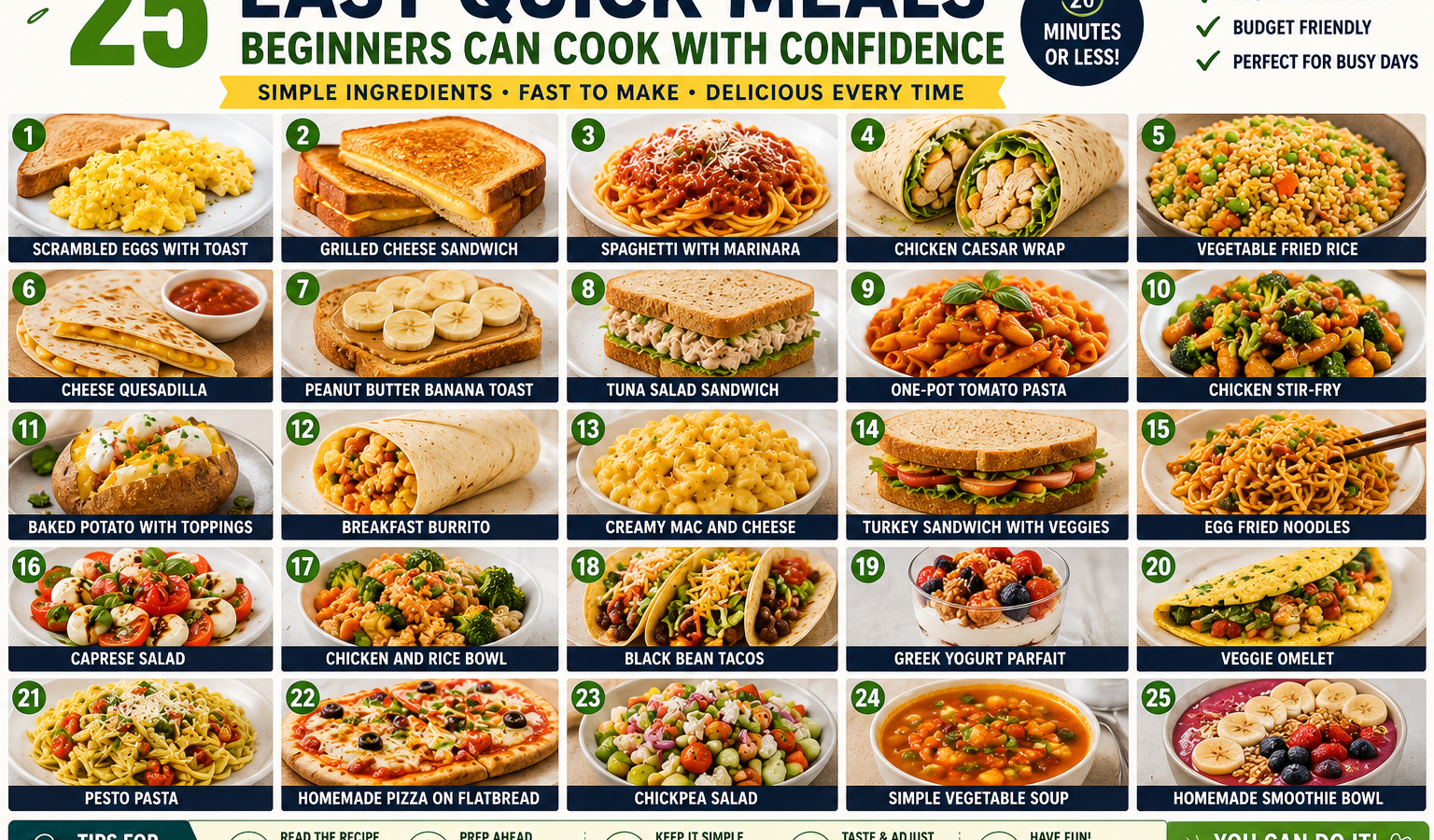

Learning to cook can feel intimidating at first, but it doesn’t have to be. Every experienced home cook started with simple recipes, basic ingredients, and a willingness to learn. The good news is that you don’t need advanced culinary skills or expensive equipment to make delicious meals at home.
This guide features 25 easy quick meals designed specifically for beginners. Each recipe uses simple ingredients, easy-to-follow steps, and basic cooking techniques that build confidence in the kitchen. Most meals can be prepared in 20 minutes or less, making them perfect for busy students, professionals, parents, or anyone cooking for the first time.
By the end of this article, you’ll also discover essential kitchen tools, beginner cooking tips, and meal-planning strategies that make everyday cooking easier and more enjoyable.
Why Beginners Should Start with Easy Quick Meals
Starting with simple recipes helps you learn important cooking skills without feeling overwhelmed. Easy meals often involve fewer ingredients, shorter cooking times, and basic techniques like sautéing, boiling, scrambling, and baking.
Benefits of cooking simple meals include:
- Builds confidence in the kitchen
- Saves money compared to eating out
- Encourages healthier eating habits
- Reduces food waste
- Makes meal planning less stressful
- Improves cooking skills over time
As your confidence grows, you’ll naturally begin experimenting with new ingredients, flavors, and cooking methods.
Essential Kitchen Tools Every Beginner Needs
You don’t need a fully equipped kitchen to cook great meals. These affordable essentials are enough to get started:
- Chef’s knife
- Cutting board
- Large non-stick skillet
- Medium saucepan
- Baking sheet
- Wooden spoon
- Measuring cups and spoons
- Mixing bowls
- Colander
- Food storage containers
Investing in a few quality tools can make cooking faster, safer, and more enjoyable.
Basic Pantry Staples
Keeping your pantry stocked with versatile ingredients makes preparing easy quick meals much simpler.
| Pantry Staple | Why It’s Useful |
|---|---|
| Pasta | Quick and versatile |
| Rice | Great base for many meals |
| Eggs | Affordable protein |
| Canned beans | High in protein and fiber |
| Canned tomatoes | Perfect for sauces and soups |
| Olive oil | Essential for cooking |
| Garlic | Adds flavor instantly |
| Onions | Used in many recipes |
| Salt and pepper | Everyday seasoning |
| Italian seasoning | Great all-purpose spice |
Also keep frozen vegetables, shredded cheese, tortillas, and bread on hand for quick meal options.
Beginner Cooking Tips
Learning a few simple habits can make every recipe easier.
Read the Entire Recipe First
Before you start cooking, read through all the instructions so you know what to expect.
Prepare Ingredients Before Cooking
Chop vegetables, measure spices, and gather ingredients before turning on the stove.
Taste as You Cook
Season gradually and taste your food before serving. Small adjustments can make a big difference.
Don’t Rush
Cooking isn’t a race. Focus on learning each technique rather than trying to work as quickly as possible.
Clean as You Go
Wash utensils and wipe surfaces while food cooks to reduce cleanup later.
25 Easy Quick Meals Beginners Can Cook
1. Scrambled Eggs with Toast
Preparation Time: 10 minutes
One of the simplest meals to master.
Ingredients
- Eggs
- Butter
- Bread
- Salt
- Pepper
Whisk the eggs, cook gently in butter while stirring, and serve with toasted bread.
2. Grilled Cheese Sandwich
Preparation Time: 10 minutes
A classic comfort food that’s nearly impossible to mess up.
Spread butter on bread, add cheese, and cook until both sides are golden brown and crispy.
3. Spaghetti with Marinara Sauce
Preparation Time: 15 minutes
Cook pasta according to the package instructions while warming a jar of marinara sauce. Combine and top with Parmesan cheese.
4. Chicken Caesar Wrap
Fill a tortilla with cooked chicken, lettuce, Caesar dressing, and Parmesan cheese. Roll tightly and enjoy.
5. Vegetable Fried Rice
Use leftover rice, frozen vegetables, eggs, and soy sauce to create a delicious one-pan meal.
6. Cheese Quesadilla
Fill a tortilla with shredded cheese, fold in half, and cook until crispy. Serve with salsa or sour cream.
7. Peanut Butter Banana Toast
Toast bread, spread peanut butter, and top with sliced bananas. Sprinkle with cinnamon for extra flavor.
Perfect for breakfast or a quick snack.
8. Tuna Salad Sandwich
Mix canned tuna with mayonnaise, diced celery, and black pepper. Serve on whole-grain bread with lettuce and tomato.
9. One-Pot Tomato Pasta
Cook pasta in vegetable broth with canned tomatoes, garlic, and Italian seasoning until tender. Finish with Parmesan cheese.
10. Chicken Stir-Fry
Preparation Time: 20 minutes
Stir-frying is one of the easiest cooking techniques for beginners because everything cooks in one pan.
Ingredients
- Chicken breast
- Frozen mixed vegetables
- Soy sauce
- Garlic
- Olive oil
Directions
Heat oil in a skillet, cook diced chicken until browned, then add vegetables and garlic. Stir in soy sauce and cook for another few minutes. Serve over rice or noodles.
Why Beginners Love It
- Minimal cleanup
- Easy to customize
- Ready in under 20 minutes
11. Baked Potato with Toppings
Microwave a potato until tender, then top with shredded cheese, sour cream, chopped green onions, steamed broccoli, or leftover chili.
12. Breakfast Burrito
Scramble eggs and fill a tortilla with eggs, cheese, salsa, and cooked potatoes. Roll tightly and enjoy immediately or freeze for later.
13. Creamy Mac and Cheese
Cook macaroni, then stir it into a simple sauce made with butter, milk, shredded cheddar cheese, salt, and pepper.
14. Turkey Sandwich with Veggies
Layer sliced turkey, lettuce, tomato, cucumber, and cheese between whole-grain bread. Add mustard or mayonnaise to taste.
15. Egg Fried Noodles
Cook noodles, scramble eggs, then combine with soy sauce, garlic, carrots, and green onions for a flavorful one-pan meal.
16. Caprese Salad
Layer sliced tomatoes, fresh mozzarella, and basil leaves. Drizzle with olive oil and balsamic glaze.
This refreshing meal requires no cooking and is ideal for warm days.
17. Chicken and Rice Bowl
Use leftover cooked chicken, instant rice, and steamed vegetables. Season with soy sauce or your favorite dressing for a quick, balanced meal.
18. Black Bean Tacos
Fill taco shells with seasoned black beans, lettuce, tomatoes, shredded cheese, and salsa. They’re affordable, customizable, and beginner-friendly.
19. Greek Yogurt Parfait
Layer Greek yogurt with granola, berries, and a drizzle of honey. This no-cook option is perfect for breakfast or a healthy snack.
20. Veggie Omelet
Beat eggs and pour them into a non-stick skillet. Add chopped spinach, mushrooms, tomatoes, or bell peppers. Fold the omelet once the eggs are set and sprinkle with cheese if desired.
21. Pesto Pasta
Cook your favorite pasta and toss it with basil pesto, cherry tomatoes, and grated Parmesan cheese. Add cooked chicken or chickpeas for extra protein if desired.
22. Homemade Pizza on Flatbread
Use flatbread or naan as a pizza base. Spread tomato sauce, sprinkle with mozzarella, and add toppings like mushrooms, peppers, onions, or pepperoni. Bake until the cheese is melted and bubbly.
23. Chickpea Salad
Combine canned chickpeas, cucumber, tomatoes, red onion, feta cheese, olive oil, lemon juice, and oregano. Toss gently and serve as a light lunch or side dish.
24. Simple Vegetable Soup
Heat vegetable broth with canned tomatoes, frozen mixed vegetables, and canned beans. Simmer for 15–20 minutes and season with herbs and pepper.
25. Homemade Smoothie Bowl
Blend frozen fruit with Greek yogurt and a splash of milk until thick. Top with sliced bananas, berries, granola, chia seeds, or nuts for a colorful, nutritious meal.
Beginner Meal Prep Tips
Meal prep is one of the easiest ways to make cooking less stressful. By preparing ingredients in advance, you’ll spend less time in the kitchen and be less tempted to order takeout after a busy day.
You don’t need to prepare every meal for the week. Even small steps can make a big difference.
1. Cook Grains in Bulk
Prepare a large batch of rice, quinoa, or pasta at the beginning of the week. Store it in airtight containers and use it as the base for different meals.
For example:
- Rice for stir-fries
- Quinoa for salads
- Pasta for quick dinners
2. Wash and Chop Vegetables
Fresh vegetables are easier to use when they’re already cleaned and chopped.
Prepare:
- Bell peppers
- Carrots
- Cucumbers
- Broccoli
- Lettuce
- Onions
Store them in containers so they’re ready whenever you need them.
3. Portion Proteins
Cook chicken breasts, turkey, or hard-boiled eggs ahead of time.
Having cooked protein ready means you can quickly assemble wraps, salads, bowls, or sandwiches.
4. Prepare Healthy Snacks
Keep snacks ready for busy days.
Ideas include:
- Apple slices
- Grapes
- Mixed nuts
- Cheese cubes
- Yogurt
- Hummus with vegetables
5. Freeze Extra Portions
Many beginner-friendly meals freeze well, including:
- Soups
- Chili
- Pasta sauce
- Burritos
- Fried rice
Label containers with the date so you know when they were prepared.
Basic Cooking Techniques Every Beginner Should Learn
Mastering a few simple cooking techniques will make preparing easy quick meals much easier.
Boiling
Boiling is one of the first cooking methods every beginner learns.
Perfect for:
- Pasta
- Rice
- Potatoes
- Eggs
- Vegetables
Always salt your water when cooking pasta to enhance its flavor.
Sautéing
Sautéing means cooking food quickly in a small amount of oil over medium-high heat.
Great for:
- Chicken
- Vegetables
- Garlic
- Shrimp
- Mushrooms
Avoid overcrowding the pan, as this can cause food to steam instead of brown.
Baking
Baking is a hands-off cooking method that’s ideal for beginners.
You can bake:
- Chicken
- Fish
- Potatoes
- Vegetables
- Homemade pizzas
Use a timer to avoid overcooking.
Stir-Frying
Stir-frying is fast, healthy, and perfect for busy weeknights.
The key is to:
- Cut ingredients into similar sizes.
- Cook protein first.
- Add vegetables next.
- Finish with sauce.
Everything cooks in one pan, making cleanup easier.
Scrambling Eggs
Learning to cook eggs well builds confidence because eggs appear in countless recipes.
Cook them over medium-low heat and stir gently for soft, fluffy eggs.
How to Build a Balanced Plate
A healthy meal doesn’t need to be complicated. Use this simple formula:
| Food Group | Examples |
|---|---|
| Protein | Chicken, eggs, beans, fish, tofu |
| Whole Grains | Brown rice, quinoa, whole-wheat pasta |
| Vegetables | Broccoli, carrots, spinach, peppers |
| Healthy Fats | Avocado, olive oil, nuts, seeds |
This approach helps create satisfying meals that provide a balance of nutrients.
Simple Flavor Boosters for Beginners
You don’t need complicated sauces to make food taste great. Keep these ingredients on hand to add flavor with minimal effort:
- Garlic
- Onion
- Lemon juice
- Black pepper
- Italian seasoning
- Paprika
- Soy sauce
- Dijon mustard
- Parmesan cheese
- Fresh herbs such as parsley or basil
Experiment with different combinations to discover your favorite flavors.
Common Beginner Cooking Mistakes
Everyone makes mistakes while learning to cook. Recognizing them early will help you improve faster.
Not Reading the Recipe First
Always read the entire recipe before you begin. This helps you understand the steps and gather all the ingredients.
Cooking at the Wrong Temperature
High heat isn’t always better. Medium or medium-low heat often gives you more control and helps prevent burning.
Skipping Seasoning
Salt and pepper make a big difference. Taste your food before serving and adjust the seasoning if needed.
Overcrowding the Pan
Adding too much food to a pan at once lowers the temperature and causes food to steam instead of brown. Cook in batches if necessary.
Using a Dull Knife
A sharp knife is actually safer because it requires less force and gives you more control while cutting.
Ignoring Food Safety
Wash your hands before cooking, keep raw meat separate from ready-to-eat foods, and cook proteins to safe internal temperatures.
Being Afraid to Experiment
Once you’re comfortable with a recipe, try swapping vegetables, herbs, or proteins. Small changes help you build confidence and discover new favorites.
Frequently Asked Questions
1. What is the easiest meal for someone who has never cooked before?
Scrambled eggs with toast, grilled cheese sandwiches, pasta with marinara sauce, and cheese quesadillas are excellent starting points because they require only a few ingredients and simple techniques.
2. How can beginners cook faster?
Prepare ingredients before you start, keep your workspace organized, use simple recipes, and choose one-pan meals whenever possible. With practice, your speed will naturally improve.
3. What ingredients should every beginner keep at home?
Stock basics like pasta, rice, eggs, canned beans, canned tomatoes, olive oil, onions, garlic, bread, frozen vegetables, shredded cheese, and common seasonings. These staples make it easy to prepare a variety of meals.
4. Are easy quick meals healthy?
Yes. When you include lean proteins, vegetables, whole grains, and healthy fats, easy quick meals can be both nutritious and satisfying. Home cooking also lets you control ingredients and portion sizes.
5. Can I meal prep as a beginner?
Absolutely. Start small by cooking extra rice, chopping vegetables, or preparing protein in advance. Even a little preparation can save time during busy weekdays.
6. How can I avoid wasting food?
Plan your meals before shopping, buy only what you need, store leftovers properly, freeze extra portions, and use ingredients in multiple recipes throughout the week.
7. What are the best meals for busy students or professionals?
Chicken stir-fry, vegetable fried rice, pasta with pesto, breakfast burritos, tuna sandwiches, wraps, and homemade soups are quick, affordable, and easy to prepare after a long day.
8. How long does it take to become confident in the kitchen?
Confidence comes with practice. Cooking one or two simple meals each week helps you build skills over time. As you become familiar with basic techniques, preparing new recipes will feel much easier.
Conclusion
Learning to cook doesn’t require professional training or expensive equipment. By starting with easy quick meals, you’ll develop practical skills, gain confidence, and enjoy the satisfaction of preparing your own food.
The 25 beginner-friendly recipes in this guide are designed to make cooking approachable, affordable, and enjoyable. From comforting pasta dishes and flavorful stir-fries to fresh salads, wraps, and hearty breakfast options, there’s something for every taste and schedule.
Remember that every great cook started as a beginner. Focus on mastering one recipe at a time, keep a well-stocked pantry, and don’t be afraid to experiment with flavors as your confidence grows. Mistakes are part of the learning process, and each meal you prepare is an opportunity to improve.
With consistent practice and a few simple habits like meal planning, prepping ingredients ahead of time, and using versatile pantry staples, you’ll soon be creating delicious homemade meals with ease. Before long, these easy quick meals will become part of your regular routine, helping you save time, eat healthier, and enjoy cooking with confidence every day.