
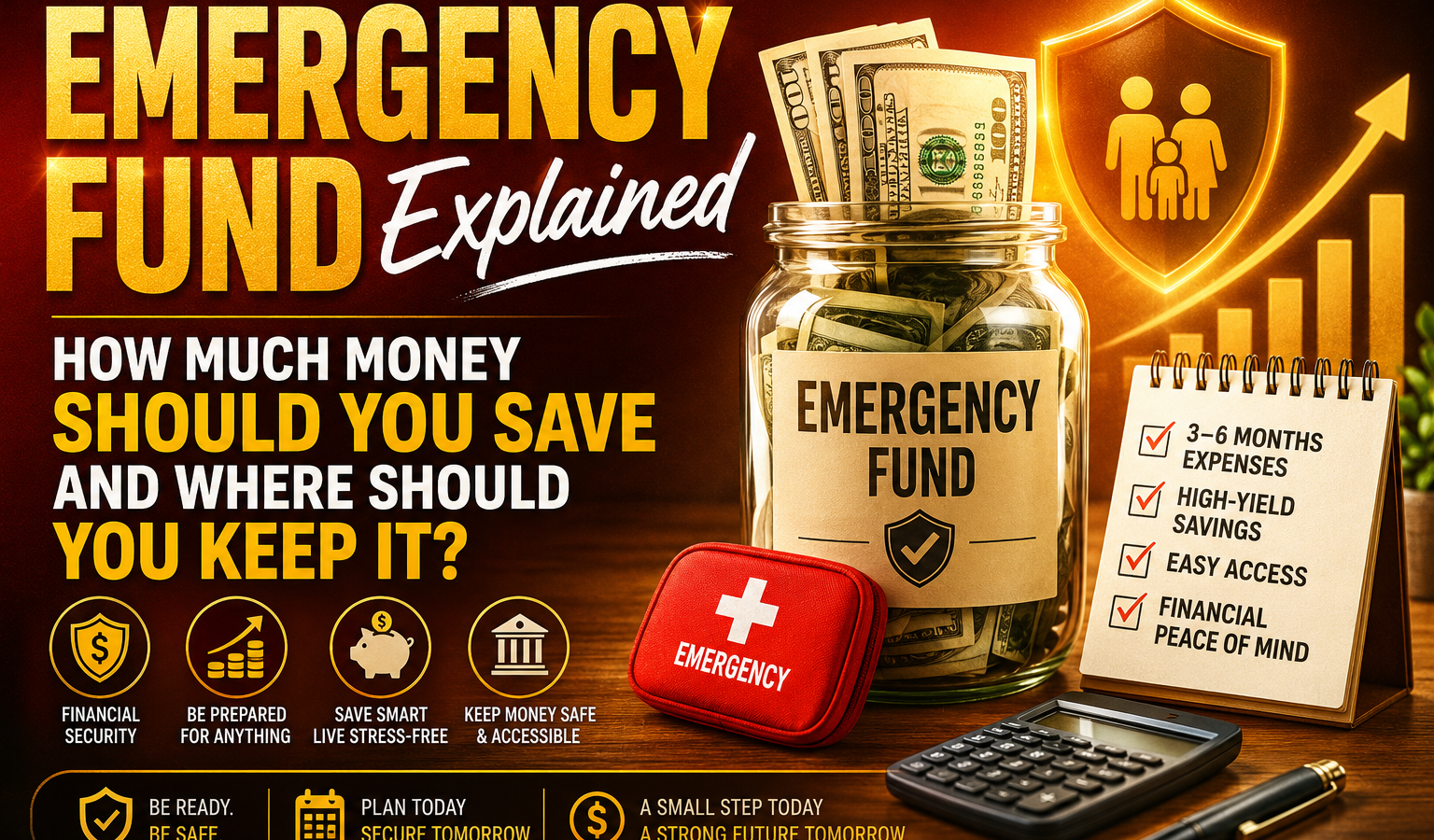

Life is unpredictable. A sudden job loss, unexpected medical bill, urgent car repair, or major home expense can happen when you least expect it. Without financial preparation, these emergencies often force people to rely on credit cards, personal loans, or borrowing from family and friends.
That’s where an emergency fund becomes one of the most important tools in personal finance.
An emergency fund acts as your financial safety net, helping you cover unexpected expenses without going into debt or disrupting your long-term financial goals. Whether you’re just starting your financial journey or already have investments, building an emergency fund should be a top priority.
This comprehensive guide explains exactly what an emergency fund is, how much you should save, where you should keep your money, common mistakes to avoid, and practical strategies to build your fund faster.
What Is an Emergency Fund?
An emergency fund is money set aside specifically for unexpected financial emergencies.
Unlike savings for vacations, gadgets, or holidays, this money should only be used when facing genuine financial hardship.
Examples include:
- Medical emergencies
- Emergency home repairs
- Major vehicle repairs
- Job loss
- Sudden reduction in income
- Family emergencies
- Urgent travel for emergencies
- Essential appliance replacement
An emergency fund provides financial stability during difficult times without forcing you to borrow money.
Why Everyone Needs an Emergency Fund
Many people underestimate how quickly unexpected expenses can appear.
Without emergency savings, even a relatively small financial shock can become a major crisis.
Benefits include:
Reduces Financial Stress
Knowing you have money available for emergencies creates peace of mind.
Prevents Debt
Instead of using expensive credit cards or payday loans, you can pay cash for unexpected expenses.
Protects Your Investments
You won’t need to sell investments during market downturns just to cover emergency costs.
Helps You Stay on Budget
Emergency expenses won’t completely destroy your monthly budget.
Provides Career Flexibility
If you lose your job, an emergency fund gives you time to find the right opportunity instead of accepting the first available position.
How Much Money Should You Save?
There is no universal number that works for everyone.
The ideal emergency fund depends on your lifestyle, income stability, family size, and monthly expenses.
Here are common recommendations.
Beginner Emergency Fund
If you’re starting from zero, aim for:
$500–$1,000
This covers many common emergencies including:
- Minor medical bills
- Car repairs
- Appliance replacement
- Emergency travel
Reaching this first milestone should be your initial goal.
Standard Emergency Fund
Financial experts often recommend saving:
Three to six months of essential living expenses.
This includes:
- Rent or mortgage
- Utilities
- Food
- Transportation
- Insurance
- Minimum debt payments
- Childcare
- Basic necessities
For example:
Monthly expenses:
- Housing: $1,200
- Food: $500
- Utilities: $300
- Transportation: $250
- Insurance: $250
- Other essentials: $500
Total monthly expenses:
$3,000
Recommended emergency fund:
- 3 months = $9,000
- 6 months = $18,000
Who Should Save More?
Some people should aim for larger emergency funds.
Consider saving 6–12 months of expenses if you are:
- Self-employed
- A freelancer
- Commission-based employee
- Seasonal worker
- Single-income household
- Supporting multiple dependents
- Working in an unstable industry
The more unpredictable your income, the larger your safety net should be.
Factors That Affect Your Emergency Fund Size
Several personal factors determine how much you need.
Income Stability
Stable employment may require a smaller emergency fund.
Irregular income usually requires larger savings.
Family Size
Larger families generally face higher emergency expenses.
Health
Those with ongoing medical concerns may need additional savings.
Job Market
If finding new employment would likely take several months, consider increasing your emergency fund.
Insurance Coverage
Good insurance reduces some financial risks but doesn’t eliminate the need for emergency savings.
Where Should You Keep Your Emergency Fund?
The ideal place combines:
- Safety
- Easy access
- Low risk
- Some interest earnings
Here are the best options.
1. High-Yield Savings Account
This is often the best choice.
Advantages:
- Easy access
- FDIC or equivalent deposit protection (where applicable)
- Higher interest than regular savings accounts
- Low risk
- No stock market volatility
Perfect for most people.
2. Money Market Account
Money market accounts typically offer:
- Competitive interest
- Limited check-writing
- High liquidity
- Strong security
They are another excellent emergency fund option.
3. Cash Management Account
Many financial institutions now offer cash management accounts with:
- High interest
- Debit card access
- Online transfers
- Strong security
These can work well for emergency savings.
4. Traditional Savings Account
Although interest rates may be lower, traditional savings accounts still offer:
- Safety
- Immediate access
- Simplicity
Better to earn a little interest than keep large amounts of cash at home.
Where You Should NOT Keep Your Emergency Fund
Some locations are too risky for emergency savings.
Avoid keeping emergency money in:
Stocks
Stock prices fluctuate significantly.
You may need money during a market crash.
Cryptocurrency
Crypto markets are highly volatile.
Emergency savings should never depend on market timing.
Long-Term Investments
Retirement accounts often have withdrawal penalties and tax consequences.
Real Estate
Property isn’t liquid enough for emergencies.
Selling can take weeks or months.
Physical Cash at Home
Keeping excessive cash at home exposes you to:
- Theft
- Fire
- Loss
- No interest earnings
A small amount for immediate emergencies is reasonable, but not your full emergency fund.
How to Build an Emergency Fund Faster
Building savings doesn’t happen overnight.
Use these practical strategies.
Set a Monthly Goal
Treat emergency savings like a monthly bill.
Automate contributions whenever possible.
Save Windfalls
Deposit:
- Tax refunds
- Bonuses
- Cash gifts
- Side hustle income
Instead of spending unexpected money.
Reduce Unnecessary Spending
Review monthly subscriptions.
Cancel services you rarely use.
Redirect those savings into your emergency fund.
Increase Your Income
Consider:
- Freelancing
- Part-time work
- Selling unused items
- Online services
- Weekend gigs
Extra income accelerates savings.
Automate Your Savings
Automatic transfers reduce the temptation to spend.
Even small weekly deposits build momentum over time.
When Should You Use Your Emergency Fund?
Use it only for genuine emergencies.
Appropriate examples include:
- Medical emergencies
- Essential home repairs
- Unexpected unemployment
- Emergency travel
- Major vehicle repairs
Do not use it for:
- Holidays
- Shopping
- Entertainment
- Luxury purchases
- Planned expenses
If you spend part of your emergency fund, prioritize rebuilding it as soon as your finances allow.
Common Emergency Fund Mistakes
Avoid these common errors.
Waiting Until You Earn More
Start with whatever amount you can afford today.
Consistency matters more than size.
Investing Emergency Savings
Emergency funds should prioritize stability over high returns.
Mixing Emergency Savings With Spending Money
Keep emergency savings in a separate account to reduce temptation.
Ignoring Inflation
Review your emergency fund annually.
As living expenses increase, your savings target should also grow.
Never Updating Your Goal
Major life changes such as marriage, children, or a new home may require a larger emergency fund.
Frequently Asked Questions
Is $1,000 Enough?
It’s an excellent starting point but usually isn’t enough for long-term financial security. Aim to gradually build toward several months of essential expenses.
Should I Pay Off Debt or Build an Emergency Fund First?
Many people benefit from first saving a modest emergency fund (such as $500–$1,000) before focusing aggressively on high-interest debt. This helps reduce the need to borrow again when unexpected expenses arise.
Can I Invest My Emergency Fund?
Emergency savings should generally remain in low-risk, easily accessible accounts rather than investments that can fluctuate in value.
How Long Does It Take to Build an Emergency Fund?
The timeline depends on your income, expenses, and savings rate. With consistent contributions, many people reach their initial goal within several months and continue building from there.
Final Thoughts
An emergency fund is one of the most powerful foundations of financial security. It protects you from unexpected expenses, reduces reliance on debt, and gives you greater confidence during life’s uncertainties.
You don’t need to save thousands of dollars overnight. Start with a realistic goal, automate regular contributions, and increase your savings as your financial situation improves. Over time, your emergency fund can become a reliable cushion that helps you weather financial setbacks while staying focused on your long-term goals.