
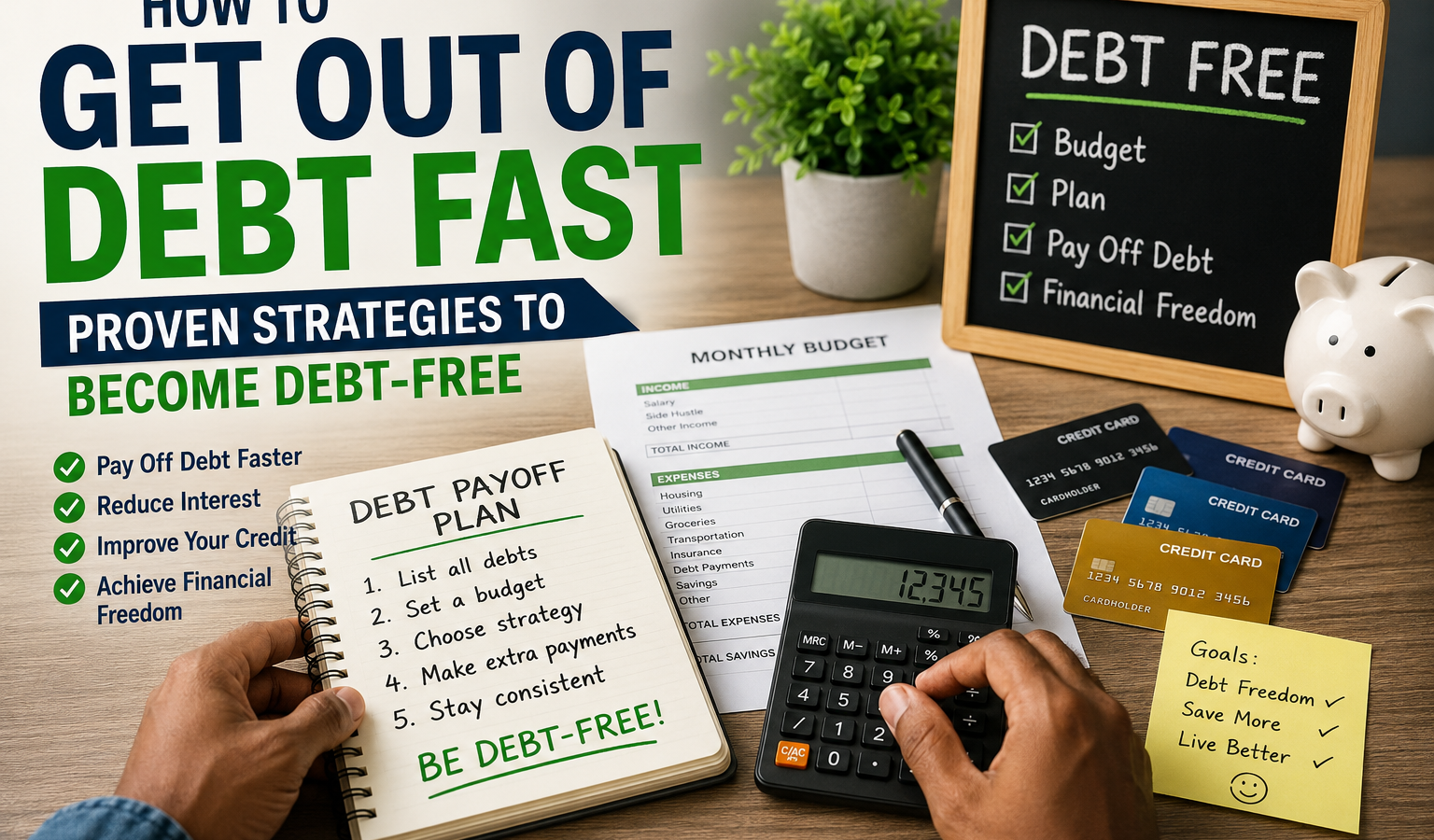

Debt can feel overwhelming, affecting every aspect of your financial life—from your monthly budget to your long-term goals. Whether you’re dealing with credit card balances, personal loans, student loans, or medical bills, becoming debt-free is possible with the right strategy and consistent effort.
The good news is that thousands of people successfully eliminate debt every year without winning the lottery or receiving a huge inheritance. They simply follow proven methods that reduce interest costs, improve cash flow, and accelerate repayment.
In this comprehensive guide, you’ll learn practical, proven strategies to get out of debt faster and build a healthier financial future.
Why Paying Off Debt Quickly Matters
Eliminating debt offers benefits beyond simply owing less money.
These include:
- Saving thousands in interest payments
- Reducing financial stress
- Improving your credit score
- Increasing monthly cash flow
- Building financial security
- Qualifying for better loan rates
- Growing your savings faster
- Achieving financial independence
The sooner you eliminate high-interest debt, the sooner your income starts working for you instead of your lenders.
Step 1: Know Exactly What You Owe
Before creating a repayment strategy, understand your complete financial picture.
Create a debt inventory including:
- Creditor name
- Total balance
- Interest rate
- Minimum payment
- Payment due date
- Remaining loan term
Many people underestimate their total debt until they write everything down.
A complete overview helps prioritize which debts should be paid first.
Step 2: Create a Realistic Budget
Your budget determines how much money can go toward debt repayment every month.
List your:
Income
- Salary
- Freelance work
- Business income
- Side hustle earnings
- Passive income
Essential Expenses
- Rent or mortgage
- Utilities
- Food
- Transportation
- Insurance
- Healthcare
Non-Essential Spending
- Streaming services
- Dining out
- Shopping
- Entertainment
- Subscriptions
Every dollar you save can accelerate your debt payoff timeline.
Step 3: Stop Creating New Debt
One of the biggest mistakes people make is paying off old debt while continuing to accumulate new balances.
Avoid:
- Unnecessary credit card purchases
- Buy Now, Pay Later services
- Impulse shopping
- Payday loans
Consider using cash or a debit card until your debt is under control.
Step 4: Choose the Best Debt Repayment Strategy
There are two popular methods.
The Debt Snowball Method
Pay minimums on all debts except the smallest.
Put every extra dollar toward the smallest balance.
Once it’s paid, move to the next.
Benefits:
- Quick psychological wins
- Increased motivation
- Easier to stay consistent
The Debt Avalanche Method
Focus on the debt with the highest interest rate first.
Benefits:
- Saves the most money
- Pays off debt faster mathematically
- Reduces total interest costs
If motivation is your challenge, choose the Snowball Method.
If saving money is your priority, use the Avalanche Method.
Step 5: Increase Your Monthly Payments
Even an extra $50–$200 monthly can dramatically shorten repayment time.
Ideas include:
- Weekly instead of monthly payments
- Biweekly payments
- Paying immediately after payday
- Applying bonuses to debt
- Using tax refunds wisely
Small increases produce significant long-term savings.
Step 6: Cut Unnecessary Expenses
Review your spending honestly.
Consider reducing:
- Premium subscriptions
- Gym memberships you don’t use
- Frequent takeout
- Daily coffee purchases
- Luxury shopping
- Expensive phone plans
Redirect every saved dollar toward debt.
Step 7: Increase Your Income
Cutting expenses has limits.
Increasing income often has unlimited potential.
Consider:
- Freelancing
- Online tutoring
- Selling digital products
- Blogging
- Affiliate marketing
- Delivery driving
- Weekend jobs
- Virtual assistance
- Selling unused items
Even an additional $300–$500 monthly can significantly speed up repayment.
Step 8: Negotiate Lower Interest Rates
Many lenders are willing to work with responsible borrowers.
Ask about:
- Lower APR
- Hardship programs
- Reduced monthly payments
- Temporary interest reductions
- Modified repayment plans
A simple phone call could save hundreds or even thousands.
Step 9: Consider Debt Consolidation
Debt consolidation combines multiple debts into one payment.
Advantages include:
- Lower interest rate
- Easier budgeting
- One monthly payment
- Faster payoff potential
However, consolidation only works if you avoid accumulating new debt afterward.
Step 10: Use Windfalls Wisely
Unexpected money can dramatically reduce debt.
Examples include:
- Tax refunds
- Work bonuses
- Cash gifts
- Inheritance
- Profit from selling valuables
Instead of spending these funds, use them to reduce your highest-interest debt.
Step 11: Build a Small Emergency Fund
Many people fall back into debt because they have no emergency savings.
Aim for:
- $500 initially
- Then one month of expenses
- Eventually three to six months
Even a modest emergency fund prevents relying on credit cards for unexpected expenses.
Step 12: Automate Your Payments
Automatic payments help:
- Avoid late fees
- Protect your credit score
- Stay consistent
- Reduce stress
Automation removes the temptation to skip payments.
Step 13: Track Your Progress
Celebrate every milestone.
Examples:
- First $1,000 paid off
- First credit card eliminated
- 25% debt reduction
- Halfway point
- Final payment
Tracking progress increases motivation and accountability.
Step 14: Avoid Common Debt Payoff Mistakes
Many people unknowingly slow their progress.
Avoid these mistakes:
- Paying only minimum balances
- Ignoring high-interest debt
- Closing old credit cards immediately
- Missing payment deadlines
- Borrowing to repay other debt
- Not having an emergency fund
- Lifestyle inflation after raises
Discipline is often more important than income.
Step 15: Stay Debt-Free After Paying Everything Off
Becoming debt-free is only half the journey.
Stay debt-free by:
- Living below your means
- Saving before spending
- Following a monthly budget
- Investing regularly
- Avoiding unnecessary loans
- Using credit responsibly
- Building multiple income streams
Financial freedom comes from consistent habits.
Sample Debt Payoff Plan
Suppose you owe:
- Credit Card A: $2,000 (24%)
- Credit Card B: $4,500 (18%)
- Personal Loan: $8,000 (10%)
Using the Avalanche Method:
- Pay minimums on all debts.
- Put every extra dollar toward Credit Card A.
- Once cleared, attack Credit Card B.
- Finally, pay off the personal loan.
This approach minimizes interest and accelerates repayment.
Frequently Asked Questions
How long does it take to become debt-free?
It depends on your debt amount, interest rates, income, and repayment strategy. Many people can eliminate consumer debt within one to five years with consistent extra payments.
Should I save money or pay off debt first?
A balanced approach works best. Build a small emergency fund, then focus aggressively on high-interest debt while continuing to save modestly.
Which debt should I pay first?
High-interest debt, especially credit cards, should generally be your top priority because it costs the most over time.
Can debt consolidation help?
Yes, if it reduces your interest rate or simplifies repayment. However, it is only effective if you avoid taking on new debt.
Will paying off debt improve my credit score?
In many cases, yes. Lower credit utilization, on-time payments, and reduced balances can positively impact your credit profile over time.
Final Thoughts
Getting out of debt fast isn’t about finding a secret trick—it’s about combining smart strategies with consistent action. Start by understanding your finances, choosing a repayment method that fits your personality, cutting unnecessary expenses, increasing your income, and staying committed to your plan.
Every payment brings you closer to financial freedom. By staying disciplined and avoiding new debt, you can reduce financial stress, build lasting wealth, and enjoy the peace of mind that comes with being completely debt-free.