
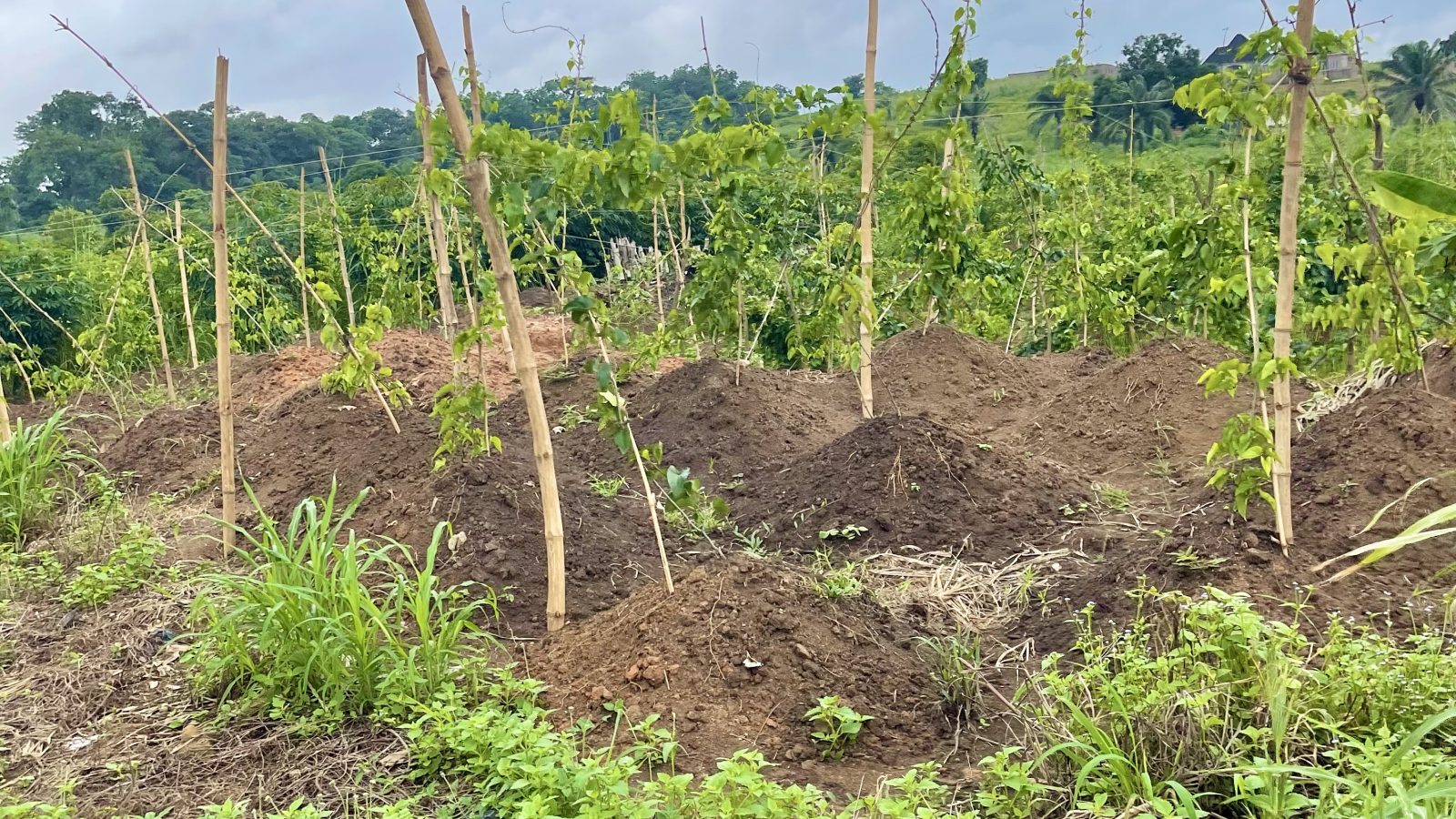

Nigeria offers investors two asset classes with unusually strong links to everyday demand: agriculture and real estate. Food must be produced, processed and distributed, while homes, rental units, warehouses, offices and other properties are needed as cities expand. That does not make either sector risk-free, but it does make both worth serious consideration for investors who understand the underlying economics.
Recent data show why agriculture remains strategically important. The National Bureau of Statistics (NBS) reported that Nigeria’s real GDP grew by 3.89% year-on-year in Q1 2026, while agriculture grew by 3.15%, a sharp improvement from just 0.07% in Q1 2025. Agriculture contributed 23.16% of real GDP during the quarter. The African Development Bank also estimates that agriculture employs 38% of Nigeria’s working population and generates 25.2% of GDP. In February 2026, the Bank approved a $200 million facility for the second phase of the Federal Government’s National Agricultural Growth Scheme – Agro-Pocket, focused on productivity, value chains, improved inputs, digital tools, climate-smart farming and agricultural data.
Real estate has a similarly powerful demand story. The Federal Ministry of Housing and Urban Development reported in December 2025 that the National Housing Data Technical Committee put Nigeria’s housing deficit at 15.2 million units. The NBS says construction contributed 4.85% of Nigeria’s real GDP in Q1 2026, up from 4.74% a year earlier. citeturn2search0 In June 2026, the Federal Government said its Lagos Renewed Hope City project in Ibeju-Lekki comprised 2,084 housing units, including 1,500 units supported by Federal Mortgage Bank of Nigeria financing. Nigeria’s housing shortage remains substantial, although figures vary depending on methodology. The Federal Ministry of Housing and Urban Development reported in December 2025 that the National Housing Data Technical Committee put the national housing deficit at 15.2 million units. The investment case is also visible in current construction activity: the NBS says construction contributed 4.85% of Nigeria’s real GDP in Q1 2026, up from 4.74% a year earlier. citeturn2search0 In June 2026, the Federal Government said its Lagos Renewed Hope City project in Ibeju-Lekki comprised 2,084 housing units, including 1,500 units supported by Federal Mortgage Bank of Nigeria financing.
Table of Contents
- Why Agriculture and Real Estate Attract Investors
- Agriculture Investment Opportunities in Nigeria
- Real Estate Investment Opportunities in Nigeria
- Agriculture vs Real Estate: Which Is Better?
- Capital, Cash Flow and Investment Horizon
- Due Diligence Before Investing
- Expert Tips
- Common Mistakes to Avoid
- Frequently Asked Questions
Why Agriculture and Real Estate Attract Investors in Nigeria
The strongest investment thesis in both sectors is not simply that prices may rise. It is that each sector sits close to persistent economic needs.
- Agriculture: food demand, processing, logistics, storage and export markets create multiple ways to invest.
- Real estate: population growth, urbanisation, housing shortages and business activity support demand for usable space.
- Inflation resilience: productive assets can sometimes reprice as costs and revenues change, although this is never guaranteed.
- Multiple income models: investors can seek operating income, rent, capital appreciation, or a combination.
At the same time, both sectors can be illiquid. A farm enterprise may suffer from weather, pests, input costs or weak market access. A property may remain vacant, face legal problems or take months to sell. The right question is therefore not “Which sector is guaranteed to make money?” but “Which investment structure fits my capital, skills, time horizon and risk tolerance?”
Agriculture Investment Opportunities in Nigeria
Agriculture is broader than owning a farm. Investors can participate directly in production or target the infrastructure and services that allow the value chain to work.
1. Crop Production
Commercial crops such as rice, maize, cassava, soybeans, tomatoes, ginger and cocoa can offer opportunities where investors have access to productive land, reliable inputs, competent farm management and a clear route to market. The economics depend on yield, selling price, costs and losses, so a farm should be evaluated like a business rather than treated as passive land ownership.
2. Livestock and Poultry
Poultry, eggs, aquaculture, cattle, goats and other livestock businesses can generate recurring sales. However, feed costs, disease control, biosecurity, mortality rates and market prices can materially affect margins.
3. Agro-Processing
Processing can capture more value than selling raw commodities. Examples include cassava flour and starch, packaged rice, tomato products, animal feed, vegetable oils and processed cocoa. Nigeria’s Special Agro-Industrial Processing Zones (SAPZ) programme is designed to strengthen this part of the value chain. In December 2025, the African Development Bank approved $200 million for the first tranche of Phase II, targeting 10 states and 10 agro-industrial hubs. The Bank says the wider programme is expected to mobilise about $1.5 billion in new private-sector investment and create an estimated 1.1 million jobs across the targeted states. In December 2025, the African Development Bank approved $200 million for Phase II of the SAPZ programme, with the initiative intended to mobilise private investment alongside public infrastructure.
4. Storage, Warehousing and Cold Chain
Post-harvest losses create room for investment in aggregation centres, warehouses, cold storage and transport. These businesses can earn revenue without requiring the investor to grow crops personally.
5. Agricultural Inputs and Services
Seed distribution, fertiliser supply, irrigation equipment, mechanisation, farm management, crop advisory services and agricultural technology can serve farmers across multiple production cycles. AfDB’s 2026 Agro-Pocket financing specifically highlights access to high-quality inputs, value chains, extension services, digital tools and climate-smart agriculture.
6. Farmland Investment
Some investors buy or lease agricultural land and either operate it themselves or appoint farm managers. The opportunity depends heavily on location, soil quality, water availability, accessibility, land documentation and the viability of the intended crop or livestock system.
Real Estate Investment Opportunities in Nigeria
Real estate investment opportunities in Nigeria span several strategies, and the best option depends on the investor’s budget, market knowledge and local demand.
For a broader guide to evaluating property deals, see our step-by-step guide to analyzing a real estate investment opportunity.
1. Residential Rental Property
Rental housing can provide recurring income and potential capital appreciation. Demand tends to be strongest where employment, schools, transport and services support household formation. Investors should model vacancy, maintenance, service charges, taxes, insurance and management costs rather than focusing only on gross rent.
2. Development and Property Renovation
Buying land or an underperforming property, improving it and selling or renting it can create value. The main risks are construction cost inflation, permitting delays, contractor performance and weak exit demand.
3. Commercial Property
Retail spaces, offices, neighbourhood centres, medical facilities and other commercial assets can generate higher rents in the right locations. They also carry tenant-concentration and vacancy risks, so location and tenant quality matter greatly.
4. Warehouses and Logistics Property
As e-commerce, manufacturing, food distribution and modern retail expand, well-located storage and logistics facilities can become valuable. NBS reported that construction grew by 6.38% in real terms in Q1 2026 and accounted for 4.85% of real GDP. Real estate activities were also among the sectors supporting overall GDP growth during the quarter. In this strategy, road access, power, security and proximity to major consumption centres can be more important than prestige addresses. In this strategy, road access, power, security and proximity to major consumption centres can be more important than prestige addresses.
5. Student and Short-Term Accommodation
Purpose-built student accommodation and short-term rentals can work in markets with sustained demand from universities, business travellers or tourism. These models require closer management and should be assessed with realistic occupancy assumptions.
6. Land Banking
Land banking involves purchasing land with the expectation that surrounding infrastructure and economic activity will increase its value. It can work over long periods, but the investment may generate no cash flow while carrying holding, documentation and security costs.
Agriculture vs Real Estate: Which Is Better?
| Factor | Agriculture | Real Estate |
|---|---|---|
| Typical cash-flow source | Crop/livestock sales, processing, services | Rent, leases, operating income |
| Key growth driver | Food demand, productivity, value addition | Urbanisation, housing and business demand |
| Major risks | Climate, disease, input costs, prices, logistics | Title, vacancy, construction costs, financing, liquidity |
| Management intensity | Often high | Low to high, depending on strategy |
| Liquidity | Varies; operating assets can be difficult to exit | Usually low; sales can take time |
| Skill requirement | Farm/sector knowledge is valuable | Market, legal and property-management knowledge is valuable |
| Best suited for | Investors comfortable with operating risk | Investors seeking property exposure and potentially rental income |
Neither sector is automatically superior. Current data reinforce the distinction: agriculture grew 3.15% in real terms in Q1 2026, while construction contributed 4.85% of real GDP. These figures describe sector activity, not investment returns, so investors should not interpret GDP growth as a guaranteed return on an individual farm or property. A diversified investor may also combine them rather than choosing only one. Agriculture can offer business growth through productivity and value addition, while real estate can offer rental income and long-term asset appreciation. A diversified investor may also combine them rather than choosing only one.
Capital, Cash Flow and Investment Horizon
Investment size should come after strategy. A practical approach is to define the amount of capital that can be committed without jeopardising emergency savings or essential business needs.
For smaller investors
Consider professionally managed pooled structures, listed property securities where available, agricultural businesses with transparent governance, or smaller-scale operating opportunities rather than stretching to buy an entire property or farm.
For medium-sized investors
Explore rental units, small-scale development, farmland with a professional operator, processing businesses, warehouses or partnerships with established agribusinesses.
For larger investors
Institutional-style strategies can include residential developments, logistics parks, agro-processing facilities, storage infrastructure and diversified portfolios across multiple states or value chains.
Due Diligence Before Investing
Due diligence is where many attractive-looking investments become unattractive. Treat every proposal as unverified until documents, numbers and counterparties have been checked.
For agriculture
- Inspect the land and confirm access, boundaries and water availability.
- Verify title, tenure and permitted use.
- Review soil, climate, irrigation and historical yield data.
- Confirm input suppliers, off-takers and transportation costs.
- Check who will manage the farm and how performance will be measured.
- Stress-test the business for lower yields and weaker selling prices.
For real estate
- Verify ownership and conduct title searches through the relevant land authority.
- Check for encumbrances, disputes, planning restrictions and competing claims.
- Review survey plans, approvals and development permits where applicable.
- Model total acquisition cost, rent, vacancy, maintenance and financing expenses.
- Inspect construction quality and infrastructure before committing.
- Use independent legal and technical professionals for significant transactions.
Government sources illustrate why documentation matters. Lagos planning requirements can include proof of ownership such as a Certificate of Occupancy, Governor’s Consent or other recognised title documents, while the Federal Capital Territory also specifies documentary requirements for Rights of Occupancy and Certificates of Occupancy. citeturn980474search3turn980474search8
Expert Tips for Investing in Agriculture and Real Estate in Nigeria
- Invest where demand is visible: look for established buyers, tenants, transport links and economic activity rather than relying on speculative stories.
- Buy the operator, not just the asset: strong management can make a major difference in both farming and property development.
- Stress-test every projection: use conservative assumptions for yield, rent, occupancy, costs and selling price.
- Prioritise documentation: a cheap asset with weak title can be much more expensive than a properly documented asset bought at a fair price.
- Do not overconcentrate: consider spreading capital across assets, locations and income sources where appropriate.
- Keep liquidity reserves: agriculture may need seasonal working capital, while property can require unexpected repairs or prolonged vacancy.
Common Mistakes to Avoid
- Buying farmland solely because the price per hectare looks cheap.
- Buying property based only on promised future infrastructure.
- Ignoring land title and assuming an agent’s documents are enough.
- Using projected rental yields without accounting for vacancies and operating costs.
- Trusting farm-profit projections without reviewing actual production records.
- Putting all available capital into one large, illiquid asset.
- Using expensive short-term debt to finance a long-term investment.
- Assuming past price appreciation will automatically continue.
Frequently Asked Questions
1. Is agriculture a good investment in Nigeria?
It can be, particularly where there is strong market demand, competent management, productive assets and controlled operating costs. Agriculture is a business and carries material climate, market and execution risks.
2. Is real estate a good investment in Nigeria?
Real estate can be attractive for investors who understand local demand and complete rigorous legal and financial due diligence. Rental income and capital appreciation are possible, but neither is guaranteed.
3. Which is better, agriculture or real estate?
It depends on your goals. Agriculture may suit investors comfortable with active operating risk, while real estate may suit investors seeking property exposure and rental income. A combination can also improve diversification.
4. How much money do I need to start investing?
There is no single minimum that fits every strategy. The required capital depends on whether you are buying land, developing property, funding a farm business, investing in processing, or using a pooled structure.
5. What are the biggest agriculture investment risks?
Key risks include weather and climate events, pests and disease, input prices, inadequate storage, logistics constraints, weak market access and commodity-price volatility.
6. What are the biggest real estate investment risks?
Major risks include defective title, disputes, planning restrictions, construction overruns, vacancy, weak tenants, financing costs, poor infrastructure and slow resale.
7. How do I verify land before buying in Nigeria?
Use the relevant state or federal land authority to verify title and ownership records, then obtain independent legal advice and survey evidence. Requirements differ by jurisdiction.
8. Should beginners invest directly in farmland or property?
Beginners should start with a strategy they can understand and monitor. Direct ownership can require substantial capital and expertise, so professionally managed or smaller-scale options may be more appropriate in some cases.
Sources and Data Notes
The statistics in this article were updated in September 2026 using recent Nigerian and development-institution sources. Key references include the National Bureau of Statistics (NBS) Q1 2026 GDP data, the African Development Bank’s February 2026 agriculture financing update, the Federal Ministry of Housing and Urban Development’s December 2025 housing-deficit update, and the Federal Government’s June 2026 update on the Lagos Renewed Hope City project.
Because housing-deficit figures vary by definition and methodology, this article uses the Federal Ministry’s 15.2 million-unit 2025 figure rather than mixing it with older or differently defined estimates. GDP figures describe economic activity and should not be interpreted as guaranteed investment returns.
Conclusion
Exploring agriculture and real estate as investment opportunities in Nigeria reveals two sectors with durable economic demand but very different risk profiles. Agriculture offers opportunities across production, processing, logistics, inputs and technology. Real estate offers rental housing, development, commercial property, warehousing and land-based strategies.
The strongest approach is disciplined rather than speculative: understand the market, verify the asset, model the cash flow, protect against downside risks and use professional advisers where the transaction justifies the cost. Nigeria’s recent agriculture rebound, continued agro-industrial investment and persistent housing shortage all point to substantial market needs. However, sector growth and housing demand do not guarantee returns on an individual investment; investors still need to select the right project at the right price and verify the underlying numbers. , but investors still need to select the right project at the right price.
Call to Action
Before committing capital, compare at least three opportunities, calculate your expected cash flow under conservative assumptions, verify all ownership and operating documents, and decide how much risk and management responsibility you are genuinely prepared to take. A sound investment is not simply an asset that looks promising—it is an asset you can verify, finance, manage and exit responsibly.
Disclaimer: This article is for educational purposes and is not personalised financial, investment, tax or legal advice. Property and agricultural investments can lose money. Obtain independent professional advice and verify current rules, prices and documents before investing.