
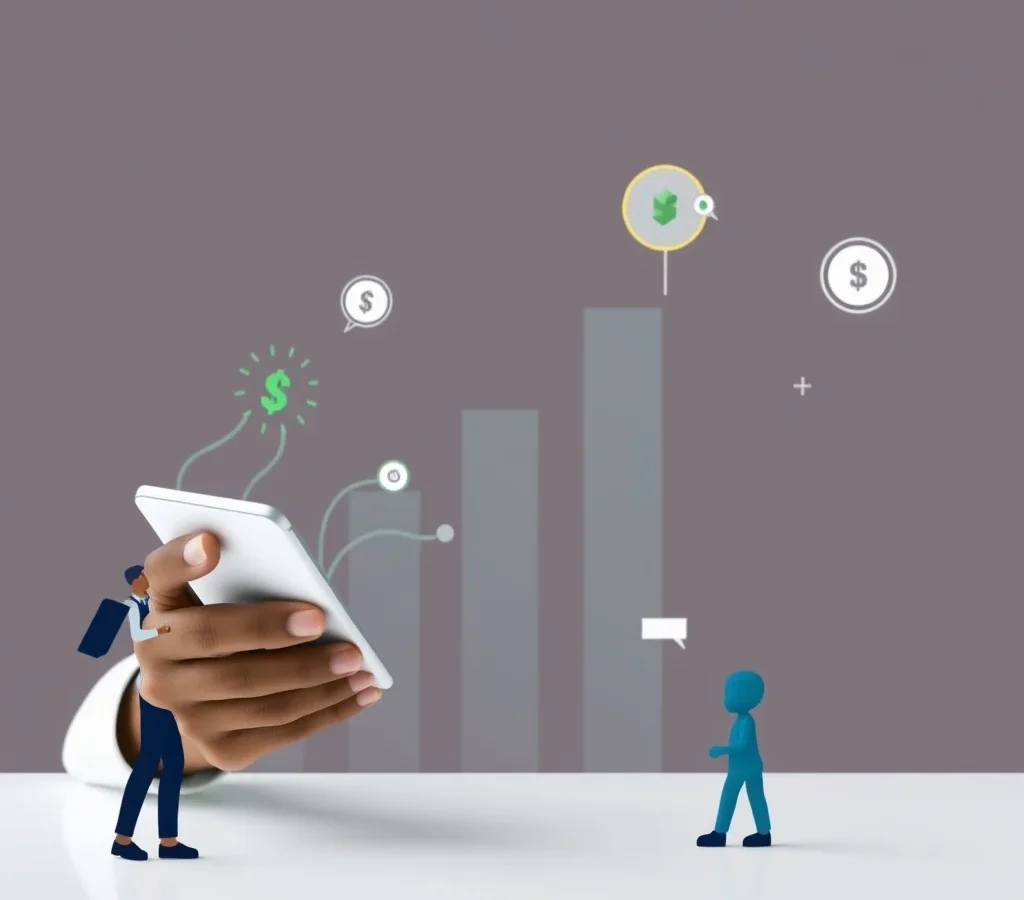

Fintech in Nigeria has become one of the most important forces shaping Africa’s digital economy. What began with electronic payments and card processing has expanded into digital banking, merchant services, mobile money, lending, remittances, wealth technology, embedded finance, artificial intelligence and blockchain-enabled infrastructure.
Moreover, the shift is not happening only inside banks. Fintech companies now provide payment rails, business accounts, checkout tools, agent services, cross-border transfers and other financial products used by consumers, merchants and businesses every day.
Recent data illustrates the scale. The Central Bank of Nigeria (CBN) says close to 11 billion transactions were processed through Nigeria’s real-time payment infrastructure in 2024, compared with about 5 billion in 2022. More than 25% of electronic transactions are processed through real-time payment channels and the NIBSS Instant Payment platform. [1]
As a result, fintech is now one of the defining forces in Nigeria’s digital economy. This guide examines the latest innovations, the trends shaping the sector, the opportunities ahead and the risks consumers and businesses should understand.
Table of Contents
- What Is Fintech and Why Does It Matter in Nigeria?
- How Fintech Has Grown in Nigeria
- Latest Fintech Innovations in Nigeria
- Key Fintech Trends to Watch
- Traditional Banking vs Fintech Services
- Fintech and Financial Inclusion
- Regulation, Security and Consumer Protection
- Major Challenges Facing Nigerian Fintech
- Expert Tips for Using Fintech Services
- Common Mistakes to Avoid
- Frequently Asked Questions
- Conclusion
What Is Fintech and Why Does It Matter in Nigeria?
Financial technology, or fintech, refers to the use of technology to deliver, improve or automate financial services. It includes everything from payment applications and digital wallets to automated compliance, online lending, investment platforms and financial APIs.
Nigeria’s tech startup ecosystem is particularly suited to fintech innovation because the country combines a large consumer market, widespread mobile-phone usage, strong entrepreneurial activity and a financial system that has invested heavily in electronic payment infrastructure.
Why Nigerian consumers are adopting fintech
- Fast account opening and digital onboarding.
- Instant bank transfers and merchant payments.
- Convenient access through smartphones, USSD and agents.
- Digital tools for small businesses and informal merchants.
- Cross-border payment and remittance options.
- Personal finance, savings and investment products delivered through apps.
Fintech therefore competes with traditional financial institutions in some areas while also providing infrastructure that banks, merchants and other financial companies can use.
How Fintech Has Grown in Nigeria
Nigeria’s fintech story did not start with today’s popular financial apps. Earlier developments in electronic payments, switching infrastructure and mobile financial services created the foundation for today’s ecosystem.
The CBN’s recent fintech report describes Nigeria as one of Africa’s leading fintech ecosystems and highlights the maturity of its real-time payment infrastructure. The country introduced nationwide real-time interoperable payments in 2011, giving it a long operating history with instant digital transfers. [1]
The payments market has continued to expand. TechCabal Insights reported that Nigeria processed ₦1.56 quadrillion in e-payment transactions during the first half of 2024, equivalent to 70% of the total volume recorded during 2023. Its 2025 payments report also identified more than 200 fintech startups operating in the country. [2]
Funding has become more selective, but investor interest has not disappeared. TechCabal Insights reported that fintech attracted $1.37 billion, or 40% of African startup funding, in 2025, making it the continent’s largest-funded startup sector that year. [3]
Latest Fintech Innovations in Nigeria
1. Instant digital payments
Instant payments are now central to everyday commerce. Consumers can move money between accounts within seconds, while merchants can accept digital payments without relying exclusively on cash.
The next stage is less about simply making transfers possible and more about making them reliable, secure, interoperable and easy to reconcile for businesses.
2. Digital banking and app-based financial services
Digital-first financial providers have changed expectations around banking. Customers increasingly expect remote onboarding, app-based account management, transaction notifications, virtual cards and automated support.
Traditional banks are responding by improving their own digital channels and partnering with fintech companies rather than treating fintech as a completely separate market.
3. Payment infrastructure for businesses
Fintech innovation increasingly happens behind the scenes. Payment APIs, gateways, switching services and merchant platforms allow online stores, applications and businesses to embed payments into their products.
This infrastructure reduces the technical burden for companies that want to accept cards, account transfers and other payment methods.
4. Open banking
Open banking can allow customers, with appropriate consent, to share financial data or enable regulated third parties to access financial services through standardised interfaces.
Nigeria’s open-banking framework is creating opportunities for new products in personal finance, lending, payments and business financial management. The long-term value will depend on strong consent mechanisms, data security and interoperability.
5. Artificial intelligence and machine learning
AI is becoming increasingly important across fintech. Financial institutions can use machine-learning systems to identify unusual transaction patterns, improve customer support, automate document processing and strengthen risk assessment.
AI can improve efficiency, but it should not become an excuse for weak governance. Financial decisions that materially affect customers require explainability, data quality, privacy controls and human oversight.
6. Digital lending and alternative credit assessment
Technology has made it possible for lenders to assess applications using more digital information than traditional branch-based processes. This can increase access to credit, especially for customers and small businesses with limited conventional credit histories.
However, responsible lending remains essential. Transparent pricing, affordability checks, fair collection practices and clear dispute channels matter as much as speed.
7. Cross-border payments and remittances
Cross-border fintech is another major growth area. Nigerian consumers and businesses need faster and more transparent ways to receive money, pay international suppliers and manage foreign-currency transactions.
Fintech companies are increasingly building products around remittances, international transfers and multi-currency financial services. Regulation and foreign-exchange rules remain critical considerations.
8. Stablecoins and blockchain-enabled finance
Blockchain technology is being explored for payments, settlement, tokenisation and cross-border financial services. Nigeria’s crypto and Web3 ecosystem has also attracted renewed investment.
TechCabal reported that Nigerian Web3 startups raised $43 million in 2025, with 89% of that funding going to products connected to stablecoin use cases such as payments and fiat-crypto exchanges. [4]
This area carries higher regulatory, market and consumer-protection risks than ordinary payment products, so users should distinguish regulated financial services from speculative crypto activity.
Key Fintech Trends to Watch
Embedded finance
Financial services are moving into non-financial products. A retailer, marketplace, logistics company or software platform can integrate payments, accounts, credit or insurance into its customer journey.
Fintech and bank partnerships
The market is increasingly moving from a simple “banks versus fintechs” narrative toward partnerships. Banks bring licences, deposits, established infrastructure and risk-management capabilities, while fintechs often bring product speed, specialised technology and user-focused design.
RegTech and automated compliance
As transaction volumes grow, compliance cannot depend entirely on manual reviews. Automated identity verification, transaction monitoring, fraud detection and anti-money-laundering tools are becoming increasingly important.
The CBN has introduced baseline standards for automated AML, CFT and CPF solutions, signalling that technology-enabled compliance is becoming an important part of financial-sector infrastructure. [5]
Biometrics and stronger identity verification
Identity is becoming central to digital finance. Better verification can reduce account takeover, impersonation and synthetic identity risks while supporting smoother onboarding.
Agent banking and last-mile finance
Digital finance does not eliminate the need for physical access. Agents remain important for customers who need cash services or live outside major banking centres.
The next phase will focus on making agent networks safer, better connected and more efficient while reducing fraud and service downtime.
Contactless payments
Contactless cards and other tap-to-pay technologies are expanding payment choices. In late 2025, the CBN reported that more than 12 million contactless payment cards were in circulation. [6]
Real-time fraud detection
As payments become instant, fraud controls must also operate in real time. This is pushing fintech companies and banks toward behavioural analytics, device intelligence, transaction monitoring and multi-factor authentication.
Traditional Banking vs Fintech Services
| Feature | Traditional Banking | Fintech Services |
|---|---|---|
| Onboarding | Often branch-assisted, although digital options are growing | Usually designed for digital onboarding |
| Payments | Broad account and card infrastructure | Fast, specialised and API-driven payment products |
| Product development | Often governed by larger legacy systems | Typically faster and more specialised |
| Physical access | Branches and ATMs | Apps, agents and digital channels |
| Innovation | Increasing through internal development and partnerships | Core part of many business models |
| Regulation | Established regulatory obligations | Depends on licence, service and operating model |
The distinction is becoming less rigid. Banks increasingly operate like technology companies in some areas, while fintech companies must build bank-grade controls as they scale.
Fintech and Financial Inclusion
One of fintech’s strongest promises is the ability to reduce the cost and distance involved in accessing financial services.
Digital wallets, agent networks, USSD services and low-cost payment accounts can reach customers who may not regularly visit a bank branch. Fintech can also help small merchants accept electronic payments and create transaction records that support business growth.
Yet access is not automatically inclusion. TechCabal Insights, citing the CBN’s fintech report, noted that 26% of Nigerian adults remain financially excluded, with exclusion higher in rural areas and in northern Nigeria. [7]
The lesson is important: Nigeria has built impressive digital payment infrastructure, but the next challenge is making digital finance affordable, reliable and useful for people who remain underserved.
Regulation, Security and Consumer Protection
Rapid innovation requires strong regulation. The CBN has continued updating rules around payments, instant transfers, agent banking, automated AML controls, ATM operations and payment-terminal oversight.
In 2026, the CBN introduced new instant-payment guidance that includes stronger fraud monitoring and identity-verification requirements, as well as customer controls around instant transfers. The measures took effect from July 1, 2026. [8]
The regulatory direction is clear: innovation must be matched by resilience, cybersecurity, consumer protection and effective compliance.
What fintech users should check
- Whether the provider is properly licensed for the service it offers.
- How the company protects personal and financial data.
- Whether two-factor or multi-factor authentication is available.
- What fees, limits and exchange rates apply.
- How disputes, failed transactions and refunds are handled.
- Whether the service clearly explains its terms and privacy practices.
Major Challenges Facing Nigerian Fintech
Cybersecurity and fraud
More digital transactions create more opportunities for fraudsters. Account takeover, social engineering, SIM-related attacks, phishing and payment fraud remain serious risks.
Infrastructure reliability
Fintech depends on telecommunications, electricity, payment switches, data centres and banking infrastructure. Outages can quickly affect merchants and consumers.
Regulatory complexity
Fintech businesses may interact with several regulatory regimes depending on their products. Keeping licences, reporting, consumer-protection processes and compliance systems current requires substantial investment.
Funding pressure
The era of growth at any cost has given way to greater emphasis on sustainable economics. Investors increasingly look for strong unit economics, regulatory discipline, customer retention and a credible path to profitability.
Digital exclusion
Smartphones, data costs, digital literacy and connectivity remain barriers for some consumers. A fintech product that works only for sophisticated smartphone users cannot solve every financial-access problem.
Expert Tips for Using Fintech Services Safely
- Verify the provider: Confirm the company and the relevant licence before depositing significant funds.
- Protect your credentials: Never share OTPs, PINs, passwords or authentication codes.
- Enable strong security: Use multi-factor authentication and device locks where available.
- Review transaction alerts: Report unfamiliar transactions immediately.
- Understand fees: Check transfer charges, withdrawal fees, subscription costs and FX spreads.
- Separate business and personal finances: Dedicated business accounts make reconciliation and financial reporting easier.
- Keep evidence: Save receipts, transaction references and customer-support correspondence for important transactions.
Common Mistakes to Avoid
- Choosing a fintech provider based only on social-media popularity.
- Ignoring transaction fees because the app appears convenient.
- Sharing login details or one-time authentication codes.
- Keeping all funds with one provider without considering operational risk.
- Assuming every fintech product is a bank deposit or has the same protections as a bank account.
- Using unregulated investment or crypto products without understanding the risks.
- Failing to update devices, apps and security credentials.
Frequently Asked Questions
1. What is fintech in Nigeria?
Fintech in Nigeria refers to technology-driven financial services such as digital payments, online banking, lending, remittances, merchant services, investment technology, insurance technology and financial infrastructure.
2. Why is fintech growing so quickly in Nigeria?
Growth is supported by strong demand for convenient payments, a large mobile-connected population, real-time payment infrastructure, entrepreneurial innovation and increasing digital adoption by consumers and businesses.
3. What are the major fintech trends in Nigeria?
Key trends include instant payments, digital banking, open banking, embedded finance, AI-powered fraud detection, automated compliance, cross-border payments, agent banking, contactless payments and blockchain-enabled financial services.
4. Is fintech regulated in Nigeria?
Yes. Different fintech activities are subject to different regulatory requirements and licences. The CBN and other relevant authorities oversee financial services according to the nature of the activity.
5. How does fintech support financial inclusion?
Fintech can reduce the cost of delivering financial services through mobile apps, USSD, agents and digital payment infrastructure. It can reach customers who have limited access to traditional branches.
6. What are the risks of using fintech apps?
Risks include fraud, phishing, account takeover, data breaches, service outages, hidden fees, poor dispute resolution and losses from unsuitable or unregulated financial products.
7. Will AI change fintech in Nigeria?
Yes. AI can improve fraud detection, customer support, compliance, risk assessment and operational efficiency. Its use will need strong data governance, security and human oversight.
8. What is the future of fintech in Nigeria?
The sector is likely to become more integrated with banks, commerce and business software. Growth will increasingly depend on reliable infrastructure, responsible regulation, cybersecurity, profitable business models and products that reach underserved customers.
Conclusion
The rise of fintech in Nigeria is no longer a short-term technology trend. It is changing how consumers pay, how merchants operate and how financial institutions deliver services.
Nigeria already has a powerful foundation: mature real-time payments, a large fintech ecosystem, strong entrepreneurial talent and a regulatory system that is evolving alongside innovation.
The next chapter will be defined by quality rather than hype. Companies that combine useful products with security, regulatory compliance, reliable infrastructure and sustainable economics will be best positioned to shape the future.
For consumers and businesses, the opportunity is equally significant. Digital finance can make payments faster, expand access and create new financial products—but informed usage and strong security practices remain essential.
Call to Action
Want to keep up with Nigeria’s fast-changing technology and digital economy? Follow Signal Media MKG for practical guides, technology trends, business insights and updates on the innovations shaping Nigeria and Africa.
Sources:
- Central Bank of Nigeria, Shaping the Future of Fintech in Nigeria: Innovation, Inclusion and Integrity.
- TechCabal Insights, Nigeria Payments Report 2025.
- TechCabal Insights, SOTIA Year in Review 2025.
- TechCabal, Nigerian Web3 startups raised $43 million in 2025.
- Central Bank of Nigeria, CBN Baseline Standards for Automated AML/CFT/CPF Solutions.
- Central Bank of Nigeria, Payment-System Modernisation & Digital Finance.
- TechCabal Insights, analysis of Nigeria’s fintech infrastructure and financial inclusion.
- Central Bank of Nigeria, Guidance Note on the Operations of Instant Payment.





Watching the local matches has never been this exciting since I started placing my picks here. The odds are super fair and I love that the live streaming works perfectly on my phone. Every weekend feels like a game day now bet365ecuador
dr88club keeps me coming back because the game variety is huge and everything runs smoothly on mobile. I tested the new crash games last night and the odds felt completely transparent. Great platform for both casual spins and serious sessions. dr88club
Finally found a platform where the login process is actually seamless. No more endless loading screens. Highly recommend cardtimecasinologin for anyone tired of glitchy sites.