
Car insurance premiums have been steadily climbing, leaving many drivers searching for practical ways to lower their monthly bills. Standard insurance policies rely on broad demographic data like your age, zip code, credit score, and marital status to determine your risk. However, this traditional model often penalizes safe drivers who happen to fall into higher-risk categories. Enter usage-based car insurance (UBI), a modern alternative designed to price coverage based on how you actually behave behind the wheel.
By leveraging smart technology, usage-based car insurance offers a personalized approach to auto coverage. Instead of paying a flat premium based on group statistics, your rate is directly tied to your individual driving patterns. If you practice safe habits, drive fewer miles, and avoid high-risk driving times, you could see substantial savings on your policy. But is this high-tech option right for every driver?
This comprehensive guide explores the mechanics of usage-based car insurance, compares the top programs on the market, analyzes the pros and cons, and helps you decide if making the switch is worth it for your wallet.
What Is Usage-Based Car Insurance?
Usage-based car insurance is a type of auto insurance policy that calculates your premiums based on real-time data collected from your vehicle. This system is powered by telematics, which is the integration of telecommunications and informatics. Instead of estimating how safely or how often you drive, your insurance company uses actual driving data to assess your risk level.
When you enroll in a UBI program, you agree to let your insurer monitor your driving habits for a specific period—or indefinitely. The insurer then uses this data to apply discounts to your premium. Most programs offer an immediate participation discount just for signing up, followed by a personalized discount when your policy renews, depending on your performance score.
Telematics programs typically collect data through one of three primary methods:
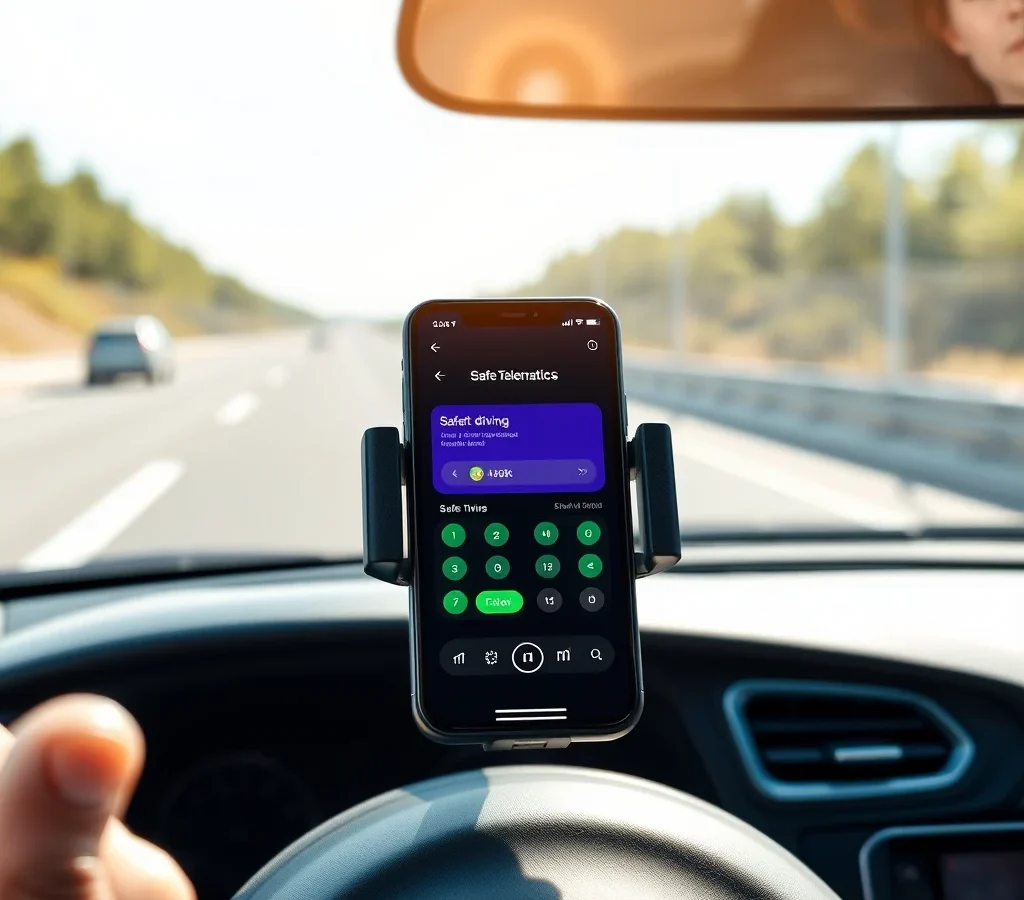
- Mobile Apps: The most common method. You download the insurer’s proprietary app on your smartphone, which uses your phone’s built-in GPS, accelerometer, and gyroscope to track your driving.
- Plug-In OBD-II Devices: A small device provided by the insurer that plugs directly into your car’s On-Board Diagnostics port (usually located under the steering wheel). This device tracks vehicle data directly from your car’s computer.
- Built-In Connected Car Systems: Many modern vehicles come equipped with built-in telematics systems like OnStar, which can transmit driving data directly to the insurance company with your permission.
How Usage-Based Car Insurance Tracks Your Habits
To determine your risk profile, telematics systems monitor specific driving behaviors that are statistically linked to accidents. While each insurance company uses its own proprietary algorithm, most programs focus on a core set of metrics.
Understanding what these systems track can help you adjust your habits to maximize your potential discount:
- Braking and Acceleration: Hard braking and rapid acceleration are major indicators of aggressive driving. Telematics devices detect sudden changes in speed, which often suggest tailgating or distracted driving.
- Speeding: Consistently driving above the speed limit or driving at excessively high speeds will negatively impact your safety score.
- Time of Day: Statistically, more accidents occur late at night and during early morning hours (typically between 11:00 PM and 4:00 AM). Driving during these high-risk hours can lower your score, even if you drive safely.
- Mileage: The less time you spend on the road, the lower your chances of getting into an accident. Some UBI programs focus heavily on total miles driven.
- Phone Distraction: Mobile-app-based programs can often detect if you are actively using your phone (handheld calling, texting, or unlocking the screen) while the vehicle is in motion.
The Two Main Types of Telematics Insurance
It is important to distinguish between the two primary formats of usage-based car insurance, as they cater to different types of drivers and lifestyle patterns.
1. Behavior-Based Insurance (Pay-How-You-Drive)
This is the most common form of UBI. Programs like Progressive Snapshot or State Farm Drive Safe & Save fall into this category. Your premium is determined by how safely you drive. The system monitors your driving behaviors (braking, speeding, cornering) and awards discounts based on your overall safety score. Mileage may play a minor role, but driving behavior is the primary metric.
2. Mileage-Based Insurance (Pay-Per-Mile)
This format is designed specifically for low-mileage drivers. Programs like Metromile (now part of Lemonade) or Nationwide SmartMiles charge a flat monthly base rate plus a few cents for every mile you drive. Your driving behavior is usually not monitored for safety; instead, your premium scales directly with your odometer. This is ideal for remote workers, retirees, or city dwellers who rarely use their vehicles.
Comparing Major Usage-Based Insurance Programs
Almost every major auto insurance carrier now offers some form of telematics program. To help you navigate your options, here is a comparison of the industry’s leading usage-based car insurance programs:
| Program Name | Insurance Carrier | Primary Metrics Tracked | Maximum Potential Discount |
|---|---|---|---|
| Snapshot | Progressive | Hard braking, rapid acceleration, late-night driving, phone usage | Up to 30% (Surcharges possible for risky drivers) |
| Drive Safe & Save | State Farm | Acceleration, braking, cornering, speed, phone use, mileage | Up to 30% (No risk of rate increases in most states) |
| Drivewise | Allstate | Speed (over 80 mph), extreme braking, late-night driving | Up to 40% (Cash back or policy discounts) |
| SmartRide | Nationwide | Hard braking, fast acceleration, idle time, nighttime driving | Up to 40% (Discount is locked in after evaluation period) |
| SmartMiles | Nationwide | Total miles driven (pay-per-mile structure) | Variable (Based entirely on mileage) |
The Pros and Cons of Usage-Based Car Insurance
While the prospect of lowering your premium is highly appealing, usage-based car insurance is not a one-size-fits-all solution. Weighing the advantages and disadvantages can help you make an informed choice.
The Advantages (Pros)
- Significant Financial Savings: Safe drivers can easily save 10% to 40% off their standard premiums, which can add up to hundreds of dollars annually.
- Encourages Safer Driving Habits: Knowing that you are being monitored naturally encourages drivers to slow down, leave more space between vehicles, and avoid distracted driving. Many apps provide real-time coaching and driving tips.
- Fairer Pricing for Low-Risk Drivers: If you are a young driver or live in an expensive zip code, UBI allows you to prove your individual safety rather than being judged solely by demographic risk pools.
- Theft Tracking: If your program uses a physical OBD-II device or connected car system, it can often act as a GPS tracker to help locate your vehicle if it is stolen.
The Disadvantages (Cons)
- Privacy Concerns: Many drivers are uncomfortable with sharing continuous, real-time location and driving data with a large corporation.
- Potential Rate Increases: While some companies promise your rates won’t go up if you perform poorly, others (like Progressive Snapshot) reserve the right to increase your premiums if they detect high-risk driving habits.
- Unfair Penalties for Necessary Actions: If a child runs into the street and you slam on your brakes to avoid them, the telematics system registers a