
The cost of auto insurance has climbed dramatically over the last few years, leaving many drivers searching for ways to lower their premiums. Traditional car insurance pricing relies on demographic generalizations, such as your age, ZIP code, credit score, and marital status. While these factors help insurers estimate risk, they do not reflect how safely you actually drive on a daily basis.
Enter usage-based car insurance (UBI). Often referred to as telematics, this technology-driven alternative promises to price your policy based on your actual driving habits rather than generalized statistics. If you are a safe driver or someone who does not drive very often, UBI could offer substantial savings. However, trading your personal driving data for a discount comes with unique trade-offs. This guide explores how usage-based programs work, their pros and cons, and how to determine if tracking your driving is truly worth it.
What Is Usage-Based Car Insurance?
Usage-based car insurance is a type of auto insurance policy that calculates your premium based on real-time data collected from your vehicle. Instead of relying solely on historical risk profiles, insurers analyze your daily driving behavior to determine how likely you are to get into an accident.
This technology shifts the insurance paradigm from demographic-based pricing to behavior-based pricing. If you consistently practice safe habits, your insurer rewards you with lower rates. Conversely, if the data shows high-risk behaviors, you may not qualify for a discount, and in some cases, your rates could even go up.
How Telematics Technology Works
To track your driving, insurance companies utilize telematics technology. There are two primary methods used to collect this data:
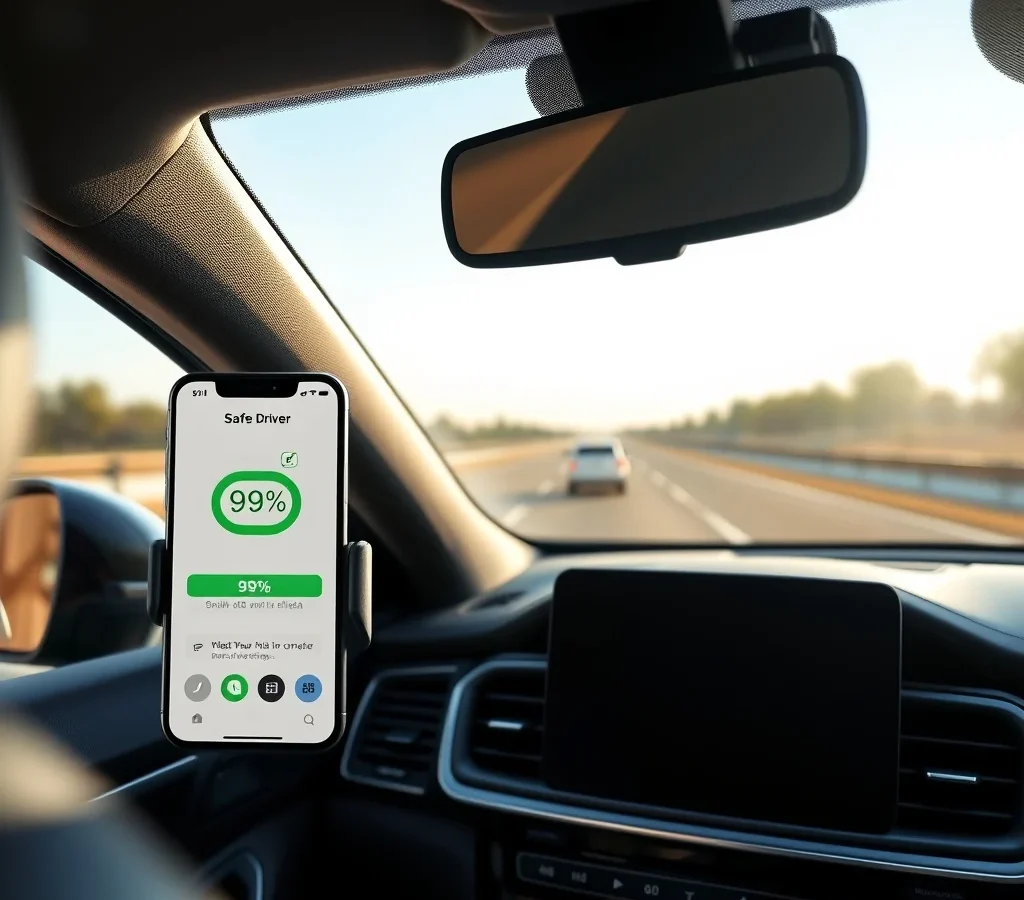
- Mobile Apps: Most modern insurance companies require you to install a dedicated app on your smartphone. The app runs in the background and uses your phone’s GPS, accelerometer, and gyroscope to monitor your trips automatically.
- Plug-In Devices: Some insurers provide a small telematics device that plugs directly into your vehicle’s OBD-II (On-Board Diagnostics) port, which is typically located under the dashboard. This device records vehicle data directly from your car’s computer system.
The Data Insurers Collect
While the exact metrics vary by insurance provider, most usage-based programs track a standard set of driving behaviors, including:
- Braking Habits: Frequent hard braking is one of the most heavily weighted metrics, as it often indicates tailgating or distracted driving.
- Acceleration Rates: Rapid, aggressive acceleration is flagged as risky behavior.
- Time of Day: Driving during late-night hours (typically between midnight and 4:00 AM) is statistically associated with a higher risk of severe accidents.
- Speeding: Consistently exceeding speed limits or driving at excessively high speeds will negatively impact your score.
- Phone Distraction: Mobile apps can detect if you physically handle or unlock your phone while the vehicle is in motion.
- Total Mileage: The fewer miles you drive, the lower your exposure to potential accidents.
Types of Usage-Based Insurance Programs
Usage-based insurance is generally divided into two main categories, each catering to different types of drivers.
Pay-How-You-Drive (PHYD)
These programs focus primarily on your driving behavior. You receive an initial discount just for signing up (usually between 5% and 10%). Over a monitoring period of several months, the insurer tracks your driving habits. At renewal, your final discount is calculated based on your safety score. Popular examples include Progressive Snapshot, Allstate Drivewise, and State Farm Drive Safe & Save.
Pay-As-You-Drive (PAYD) / Pay-Per-Mile
If you primarily want to save money because you rarely drive, pay-per-mile insurance may be a better fit. With this model, your premium consists of a flat monthly base rate plus a variable per-mile fee (usually a few cents per mile). Your driving behavior is less critical than the sheer volume of miles you cover. This is ideal for remote workers, retirees, or city dwellers who rely on public transit.
Comparing Traditional vs. Usage-Based Car Insurance
To help you understand the core differences between these two models, here is a direct comparison of traditional and usage-based auto insurance:
| Feature | Traditional Auto Insurance | Usage-Based Insurance (UBI) |
|---|---|---|
| Pricing Basis | Demographics, ZIP code, credit score, driving record | Real-time driving behavior, mileage, and demographics |
| Data Tracking | None required | Continuous tracking via smartphone app or OBD-II device |
| Potential Savings | Standard discounts (multi-policy, good student, paperless) | Up to 30% to 40% for highly safe, low-mileage drivers |
| Risk of Rate Increases | Rates only increase after claims, violations, or market shifts | Some insurers may raise rates if risky driving is detected |
| Best For | Commuters with long, predictable routes or those seeking privacy | Low-mileage drivers, cautious drivers, and young drivers |
The Real Benefits of Switching to Telematics
For the right driver, usage-based car insurance offers several compelling advantages that extend beyond simple premium discounts.
- Significant Financial Savings: Cautious drivers who avoid hard braking and late-night driving can save hundreds of dollars annually. Safe driving discounts often range from 10% to 40% off standard premiums.
- Encourages Safer Driving Habits: Many telematics apps provide immediate, gamified feedback on your driving. Knowing you are being monitored naturally encourages smoother braking, gentler acceleration, and less phone use.
- Fairer Pricing for Young Drivers: Teens and young adults face exceptionally high insurance rates due to their demographic group’s overall risk profile. UBI allows a responsible young driver to prove their individual safety and secure lower rates faster.
- Added Safety Features: Many telematics apps include crash detection services that automatically alert emergency responders if a severe impact is detected. Some plug-in devices also offer vehicle location tracking, which is invaluable if your car is stolen.
The Drawbacks and Privacy Concerns
Despite the potential savings, usage-based car insurance is not a perfect fit for everyone. There are several distinct drawbacks to consider before signing up.
The Privacy Trade-Off
Participating in a telematics program means consenting to constant location and behavioral tracking. While insurance companies state they do not sell this data to third-party marketers, some drivers find the continuous monitoring of their location and habits intrusive. Additionally, this data could potentially be subpoenaed in legal proceedings following an accident.
The Risk of Surcharges and Rate Hikes
Historically, UBI programs only offered discounts, meaning the worst-case scenario was saving 0%. Today, however, several major insurers reserve the right to increase your premiums if the telematics data shows you are an aggressive or high-risk driver. Frequent hard braking or late-night driving could result in your rates going up at renewal.
System Inaccuracies and False Positives
Telematics apps are not infallible. A mobile app may mistake a sudden stop caused by a reckless driver cutting you off as your own poor driving. Similarly, if you are a passenger in a friend’s car or riding public transit, the app might mistakenly record the trip as you driving unless you manually log in and correct it.
Is Usage-Based Car Insurance Right for You?
To determine if UBI is worth it, evaluate your daily driving patterns. You are an ideal candidate for usage-based car insurance if:
- You drive fewer than 10,000 miles per year.
- You rarely drive between midnight and 4:00 AM.
- You maintain a safe following distance, minimizing the need for hard braking.
- You keep your phone securely mounted and do not use it while driving.
Conversely, you should probably stick to traditional insurance if you have a long daily commute in heavy, stop-and-go traffic (which leads to frequent hard braking), if you work late-night shifts, or if you prefer absolute privacy regarding your location and daily habits.
Expert Tips for Maximizing Your Telematics Discount
If you decide to try a usage-based insurance program, use these expert strategies to secure the highest possible discount:
- Increase Your Following Distance: The number one reason drivers miss out on UBI discounts is hard braking. Keep a three-to-four-second gap between your car and the vehicle ahead to allow for gradual, smooth stops.
- Avoid Late-Night Trips: If possible, limit your driving during the high-risk window of midnight to 4:00 AM. If you must travel during these hours, drive with extra caution to offset the time-of-day penalty.
- Mount Your Phone Securely: Phone movement can trigger