
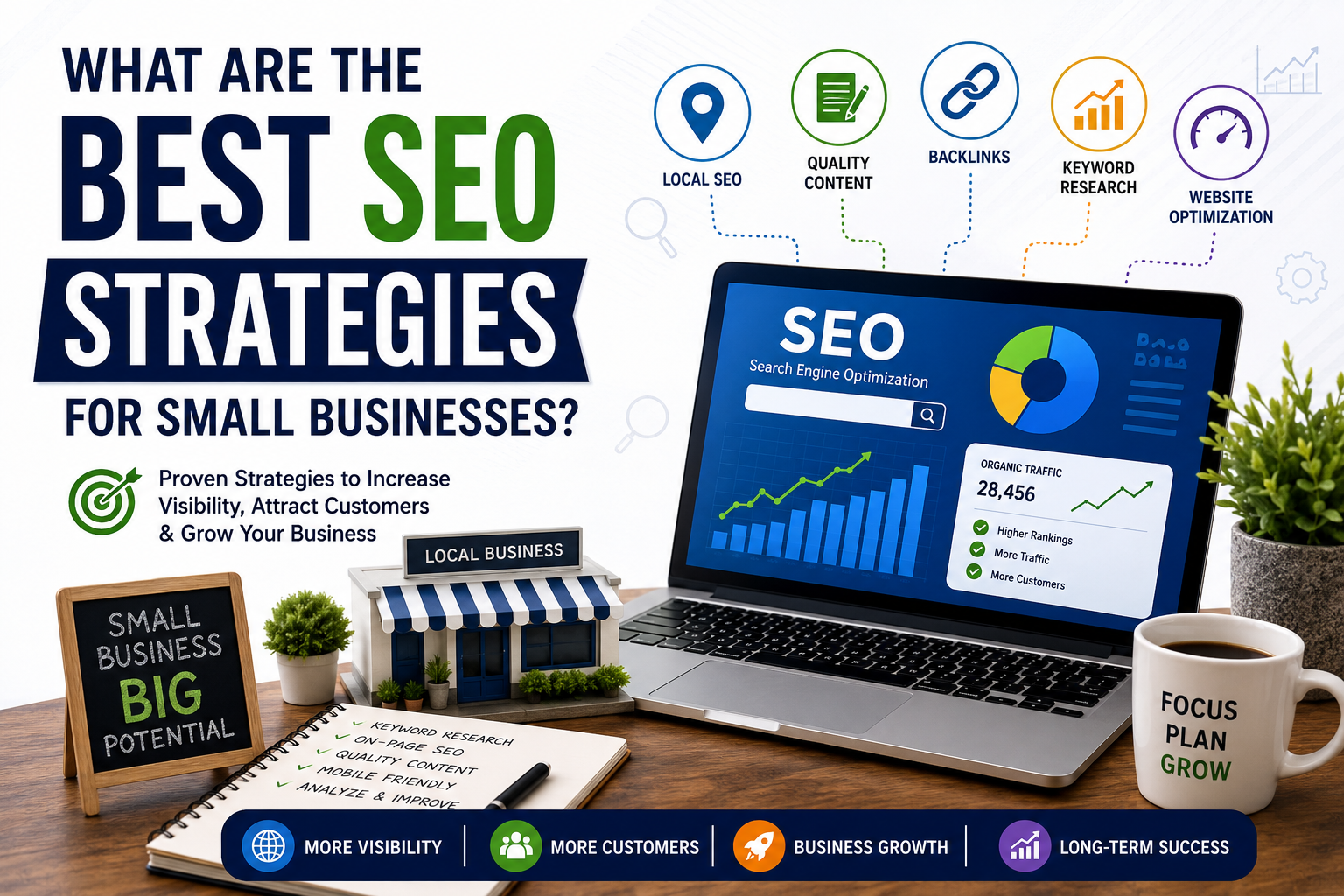

In today’s digital world, having a website is no longer enough. Small businesses need a strong online presence to attract customers, compete with larger companies, and grow their revenue. This is where Search Engine Optimization (SEO) comes in. SEO helps businesses improve their visibility on search engines like Google, making it easier for potential customers to find them.
But with so many SEO tactics available, many small business owners wonder: What are the best SEO strategies for small businesses? The answer lies in focusing on practical, cost-effective methods that deliver long-term results. Let’s explore the most effective SEO strategies that can help small businesses succeed online.
1. Focus on Local SEO
For most small businesses, local customers are the primary target audience. Local SEO helps your business appear in searches related to your geographic area.
Start by claiming and optimizing your Google Business Profile. Ensure that your business name, address, phone number, website, and operating hours are accurate. Encourage satisfied customers to leave reviews, as positive ratings can improve both visibility and credibility.
Using location-based keywords such as “plumber in Chicago” or “bakery in Austin” can also help your business rank higher in local search results.
2. Conduct Keyword Research
Keyword research is the foundation of every successful SEO strategy. It helps you understand what your customers are searching for online.
Instead of targeting highly competitive keywords, focus on long-tail keywords that are more specific and easier to rank for. For example, rather than targeting “SEO services,” a small agency might target “affordable SEO services for small businesses.”
Tools like Google Keyword Planner, Ahrefs, and Semrush can help identify valuable keyword opportunities.
3. Create High-Quality Content
Content remains one of the strongest ranking factors in SEO. Search engines favor websites that provide useful, relevant, and informative content.
Small businesses can benefit from creating:
- Blog posts
- How-to guides
- FAQs
- Case studies
- Product tutorials
- Industry insights
When your content answers customer questions and solves problems, it has a better chance of ranking well and attracting organic traffic.
4. Optimize On-Page SEO Elements
Every page on your website should be optimized for search engines and users.
Important on-page SEO elements include:
- Title tags
- Meta descriptions
- Header tags (H1, H2, H3)
- Image alt text
- Internal links
- Keyword placement
A well-optimized page helps search engines understand your content while improving user experience.
5. Improve Website Speed
Website speed is crucial for both SEO and user satisfaction. Visitors are likely to leave if a website takes too long to load.
To improve speed:
- Compress images
- Enable browser caching
- Minimize unnecessary code
- Use a reliable hosting provider
- Implement a content delivery network (CDN)
Faster websites often experience better rankings and higher conversion rates.
6. Ensure Mobile Friendliness
With most online searches now occurring on mobile devices, having a mobile-friendly website is essential.
Responsive design ensures your site adapts to different screen sizes and provides a seamless experience across smartphones, tablets, and desktops. Google also uses mobile-first indexing, meaning it primarily evaluates the mobile version of your site when determining rankings.
7. Build High-Quality Backlinks
Backlinks are links from other websites pointing to your site. They act as votes of confidence and signal authority to search engines.
Small businesses can earn quality backlinks through:
- Guest blogging
- Local partnerships
- Business directories
- Community sponsorships
- Industry associations
- Publishing valuable content
Focus on quality over quantity. A few authoritative backlinks can be more beneficial than hundreds of low-quality links.
8. Optimize for User Experience
SEO is no longer just about keywords. Search engines increasingly prioritize websites that provide excellent user experiences.
Improve usability by:
- Creating clear navigation
- Using readable fonts
- Reducing pop-ups
- Organizing content logically
- Making contact information easy to find
A positive user experience often leads to lower bounce rates and higher engagement.
9. Leverage Customer Reviews
Online reviews play a significant role in local SEO and consumer trust.
Encourage happy customers to leave reviews on platforms such as Google, Yelp, and industry-specific directories. Responding professionally to both positive and negative reviews demonstrates credibility and customer care.
Reviews can also improve local search rankings and increase click-through rates.
10. Monitor and Analyze Performance
SEO is an ongoing process, not a one-time task. Regularly tracking performance helps identify what is working and where improvements are needed.
Useful metrics to monitor include:
- Organic traffic
- Keyword rankings
- Click-through rates
- Bounce rates
- Conversion rates
- Backlink growth
Tools like Google Analytics and Google Search Console provide valuable insights for making data-driven decisions.
11. Use Internal Linking Strategically
Internal links connect pages within your website and help search engines understand your site’s structure.
Benefits include:
- Improved navigation
- Better page authority distribution
- Increased time on site
- Enhanced crawlability
Link relevant blog posts, service pages, and product pages together to strengthen your overall SEO strategy.
12. Keep Content Updated
Search engines prefer fresh and accurate information. Regularly updating existing content can improve rankings and maintain relevance.
Review older articles and update:
- Statistics
- Examples
- Product information
- Industry trends
- Internal links
Refreshing content often requires less effort than creating entirely new pages while still delivering SEO benefits.
Frequently Asked Questions
How long does SEO take to work for a small business?
SEO typically takes three to six months before noticeable improvements appear. Highly competitive industries may require more time.
Is SEO better than paid advertising?
SEO provides long-term organic traffic, while paid advertising delivers immediate visibility. Many successful businesses use both strategies together.
Can small businesses compete with large companies in SEO?
Yes. By targeting local and niche keywords, small businesses can often outperform larger competitors in specific markets.
How much should a small business spend on SEO?
The budget varies based on goals, competition, and industry. Many small businesses start with a modest investment and scale as results improve.
Do social media signals affect SEO?
While social media is not a direct ranking factor, it can increase content visibility, drive traffic, and support overall marketing efforts.
Conclusion
The best SEO strategies for small businesses focus on delivering value to both users and search engines. By investing in local SEO, keyword research, high-quality content, website optimization, backlink building, and user experience, small businesses can steadily improve their online visibility and attract more customers.
SEO is not about quick wins or shortcuts. It is a long-term investment that rewards consistency, quality, and patience. Businesses that commit to a sustainable SEO strategy often enjoy increased traffic, stronger brand recognition, and higher revenue over time.