
Car insurance premiums have reached historic highs, leaving many drivers searching for practical ways to lower their monthly expenses. Among the various strategies available, usage-based car insurance has emerged as one of the most popular and technologically advanced methods to secure a discount. By allowing your insurance company to monitor your driving habits, you can potentially unlock substantial savings that traditional policy structures simply cannot offer.
Traditional car insurance relies heavily on demographic factors. Actuaries determine your rates based on your age, gender, zip code, credit score, and driving history. While these metrics help insurers estimate risk across large populations, they do not account for how safely you actually drive on a daily basis. Usage-based car insurance changes this dynamic by shifting the focus from who you are to how you drive.
Before signing up for a telematics program, it is essential to understand how these systems work, what data they collect, and whether the potential savings outweigh the privacy trade-offs. This comprehensive guide details everything you need to know to decide if usage-based car insurance is the right choice for your lifestyle and budget.
What Is Usage-Based Car Insurance?
Usage-based car insurance (UBI), also known as telematics car insurance, is a type of auto policy where your premium is directly tied to your real-time driving behavior and mileage. Instead of grouping you into a broad risk category based solely on demographics, the insurance company uses technology to evaluate your individual risk profile behind the wheel.
The concept relies on telematics, a technology that combines telecommunications and informatics to transmit data over long distances. In the context of auto insurance, telematics technology records specific driving events and habits, sending this data back to the insurer’s servers. The insurer then uses proprietary algorithms to calculate a safety score, which determines your discount or premium adjustment.
Most major insurance companies now offer some form of UBI. These programs are typically marketed with promises of savings ranging from 10% to over 40%. However, the actual discount you receive depends heavily on your driving patterns and the specific parameters of the program you choose.
How Telematics Technology Tracks Your Driving
To participate in a usage-based car insurance program, you must allow your insurer to collect data while you drive. Insurance companies collect this information using one of three primary methods:
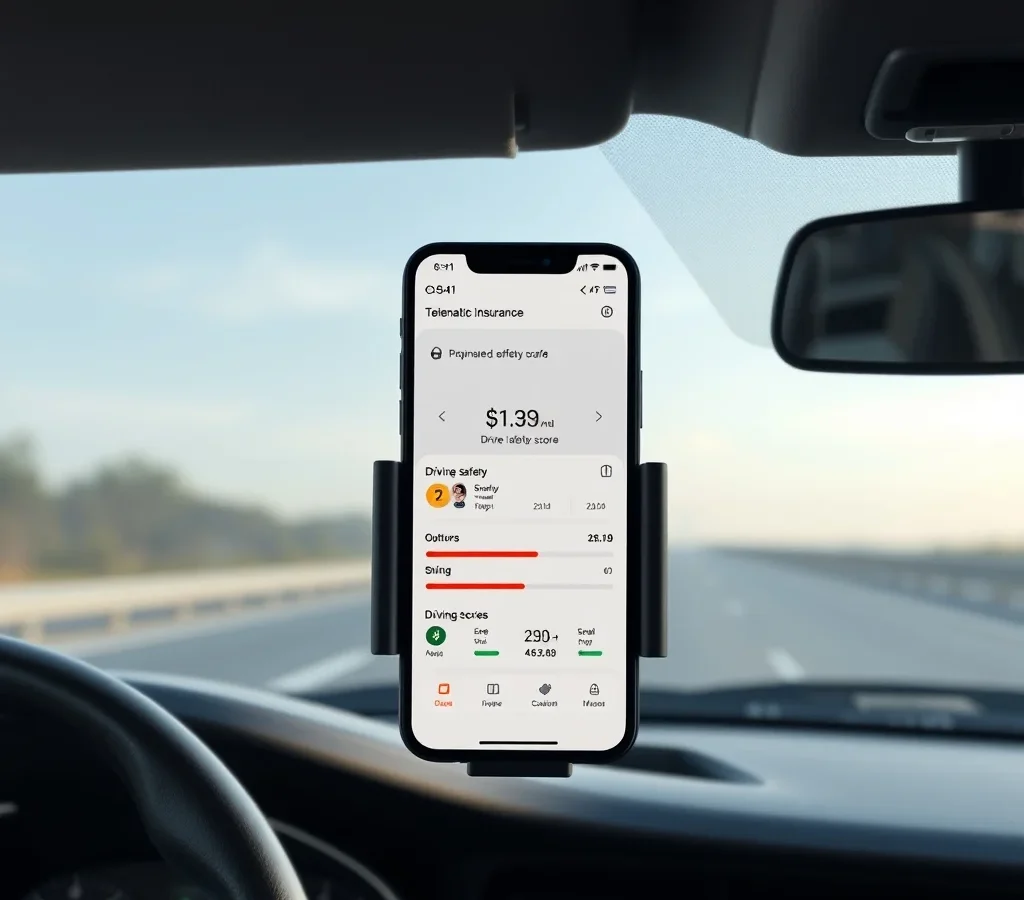
- Mobile Smartphone Apps: The most common method today. You download the insurer’s app, enable location and motion-tracking permissions, and keep your phone with you while driving. The app automatically detects when a trip begins and ends using your phone’s internal sensors.
- Plug-In OBD-II Devices: Some insurers provide a small device that plugs directly into your vehicle’s On-Board Diagnostics (OBD-II) port, usually located under the dashboard. This device reads data directly from your car’s computer system and transmits it cellularly.
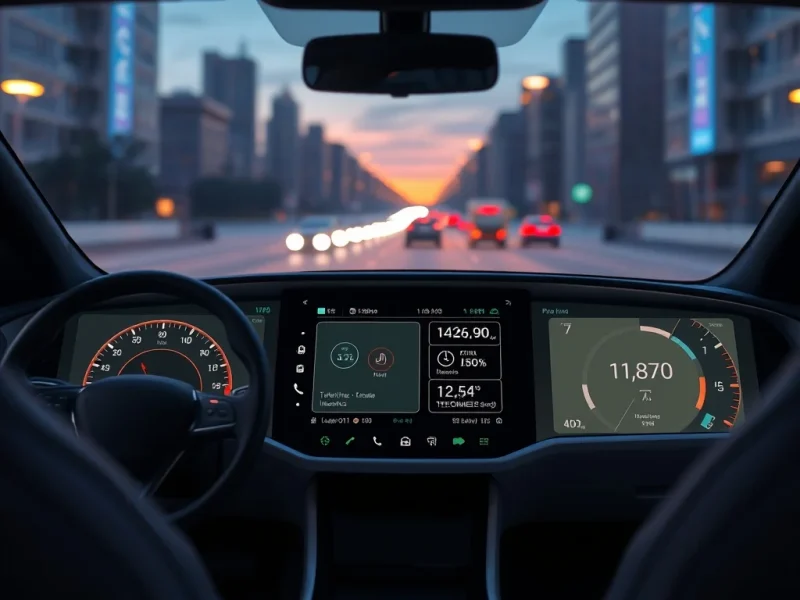
- Built-In Connected Car Systems: Newer vehicles equipped with built-in connectivity suites (such as OnStar or Subaru Starlink) can share driving data directly with insurance companies if you opt-in to the integration.
Key Metrics Tracked by Insurers
Regardless of the hardware or software used, telematics systems generally focus on a specific set of driving behaviors to assess your risk profile:
- Braking Habits: Frequent, sudden hard braking is one of the strongest indicators of high-risk driving, often suggesting that a driver is tailgating or distracted.
- Acceleration Patterns: Rapid, aggressive acceleration is tracked and flagged as a high-risk behavior.
- Speeding: Consistently driving above the speed limit or traveling at high speeds relative to traffic flow will negatively impact your safety score.
- Time of Day: Statistically, driving late at night (typically between 11 PM and 4 AM) is much more dangerous due to fatigue, reduced visibility, and a higher prevalence of impaired drivers. Driving during these hours often lowers your score.
- Phone Distraction: Smartphone apps can detect if you pick up, unlock, or use your phone while the vehicle is in motion, which heavily penalizes your rating.
- Total Mileage: The more miles you drive, the higher your statistical probability of being involved in an accident.
Pay-Per-Mile vs. Behavior-Based Insurance
Usage-based car insurance generally falls into two distinct categories: pay-how-you-drive (behavior-based) and pay-per-mile (mileage-based). Understanding the difference is crucial for selecting the right policy type.
| Feature | Behavior-Based (Pay-How-You-Drive) | Pay-Per-Mile (Mileage-Based) |
|---|---|---|
| Primary Rating Factor | How safely you drive (braking, speed, focus) | How many miles you drive |
| Pricing Structure | Standard premium minus a safety discount | Low base rate + a flat per-mile rate |
| Best Suited For | Safe drivers with standard or long commutes | Low-mileage drivers, remote workers, retirees |
| Tracking Method | Continuous behavior monitoring via app or device | GPS or odometer readings via app or OBD-II |
| Potential Savings | Up to 10% to 40% off standard premiums | Up to 50% or more for very low-mileage drivers |
If you have a daily commute but practice highly cautious driving habits, a behavior-based program is likely your best option. Conversely, if your car sits in the garage most of the week because you work from home or use public transit, a pay-per-mile policy will almost certainly yield greater savings, regardless of how aggressively you drive on the rare occasions you take the car out.
Pros and Cons of Usage-Based Car Insurance
While UBI offers an innovative path to affordable car insurance, it is not a perfect solution for everyone. Carefully weigh the benefits against the drawbacks before enrolling.
The Advantages
- Significant Financial Rewards: Safe, low-mileage drivers can save hundreds of dollars per year compared to traditional policies.
- Encourages Safer Driving Habits: Knowing you are being monitored creates a gamified feedback loop that naturally encourages smoother braking, slower speeds, and less phone usage.
- Fairer Pricing: You are judged on your actual performance rather than being penalized for demographic factors beyond your control, such as your age or zip code.
- Accident Reconstruction and Theft Tracking: Some OBD-II devices and apps can pinpoint your location in the event of an accident or vehicle theft, speeding up emergency response and claims processing.
The Disadvantages
- Privacy Concerns: Many drivers are uncomfortable sharing constant GPS location, speed, and driving schedule data with a major corporation.
- Potential for Rate Increases: While some companies promise your rates will never go up based on telematics data, others reserve the right to increase your premiums if they detect aggressive driving habits or high speeds.
- Inaccuracies in Data Collection: Smartphone apps cannot always tell if you are the driver or a passenger in another vehicle, requiring you to manually correct trips inside the app. Additionally, sudden stops to avoid a collision caused by another driver can be unfairly logged as hard braking.
- Unfavorable Terms for Night Workers: If your job requires you to commute during late-night hours, your safety score will likely suffer through no fault of your actual driving skill.
Is Usage-Based Insurance Right for You?
To determine if usage-based car insurance is worth the transition, analyze your daily routine and driving temperament. You are an ideal candidate for a telematics program if you:
- Drive fewer than 10,000 miles per year.
- Rarely drive between the hours of 11 PM and 4 AM.
- Maintain a safe following distance and avoid sudden stops.
- Are comfortable sharing your driving data and location with your insurer.
- Do not use your smartphone while operating your vehicle.
On the other hand, you should probably avoid usage-based programs if you have a long, stressful daily commute in heavy stop-and-go traffic, frequently drive late at night, or have a habit of driving over the speed limit. In these scenarios, the system may flag you as a high-risk driver, resulting in little to no discount, or even a rate hike depending on your state and insurer.
Expert Tips to Maximize Your Telematics Discount
If you decide to enroll in a usage-based car insurance program, use these professional strategies to secure the highest possible discount:
- Keep a Safe Following Distance: The number one reason drivers lose their UBI discount is hard braking. By leaving three to four seconds of space between you and the car ahead, you give yourself ample time to slow down smoothly.
- Correct Incorrect Passenger Trips: Check your telematics app regularly. If you were a passenger in a friend’s car, an Uber, or on public transit when a bad driving event was logged, manually classify yourself as a passenger to remove those trips from your score.
- Minimize Late-Night Driving: Plan your social calendar or errands to avoid driving past 11 PM whenever possible during your monitoring period.
- Secure Your Phone: Use a dashboard mount. Picking up your phone to change a song or check directions while moving can be registered as a phone distraction event, severely damaging your score.
Common Mistakes to Avoid
- Assuming all programs are risk-free: Always read the fine print. Make sure you know whether your specific insurer can raise your baseline rates if your driving score is poor.
- Forgetting to enable app permissions: If your phone’s GPS, motion tracking, or background app refresh is disabled, the app may fail to record trips, which can lead to disqualification from the discount program.
- Allowing aggressive drivers to borrow your vehicle: If someone else drives your car with an OBD-II device plugged in, their bad driving habits will directly impact your premium.
- Failing to shop around: Do not assume your current insurer’s telematics program offers the best rate. Compare quotes from multiple companies to see who offers the best combination of base rates and potential telematics discounts.
Frequently Asked Questions
Does usage-based car insurance track your location?
Yes, most usage-based car insurance programs track your location using GPS via a smartphone app or an OBD-II device. This data is used to verify speed limits, determine the safety of the routes you take, and evaluate the times of day you drive. Some states have regulations that limit how this location data can be used, so check your policy details.
Can my rates go up if I have bad driving habits?
It depends on your insurance company and the state you live in. Some insurers guarantee that your rates will never increase based on telematics data, meaning you only stand to gain a discount. However, other companies explicitly state that drivers with high-risk behaviors, such as excessive speeding or frequent hard braking, may see their premiums rise.
How much money can I actually save with telematics?
While many insurance companies advertise maximum potential savings of up to 30% to 40%, the average driver typically saves between 10% and 15%. To achieve the maximum discount, you must demonstrate near-perfect driving behaviors, drive low annual mileage, and avoid driving during high-risk late-night hours.
What is the difference between pay-per-mile and pay-how-you-drive?
Pay-per-mile insurance charges you a flat daily or monthly base rate plus a set fee for every mile you drive, making it ideal for low-mileage drivers regardless of driving style. Pay-how-you-drive (behavior-based) insurance monitors your actual driving habits—such as braking, speed, and phone usage—to determine a discount on a standard auto policy.
Does usage-based insurance drain your phone battery?
Because telematics apps utilize your phone’s GPS, accelerometer, and gyroscope sensors in the background, they do consume more battery power during trips than standard apps. However, most modern insurance apps are highly optimized to minimize battery drain, and keeping your phone plugged into a car charger during your commute easily mitigates this issue.
How long do insurance companies track your driving?
Tracking periods vary by insurer. Some companies require continuous tracking for as long as you hold the policy to maintain your discount. Others use an introductory monitoring period—typically 30 to 90 days—to establish your driving score, after which the tracking device can be returned or the app tracking features can be disabled while you keep the discount.
Is usage-based car insurance good for young drivers?
Yes, usage-based insurance can be highly beneficial for young drivers. Because teen and young adult drivers face exceptionally high traditional insurance rates due to demographic risk pools, demonstrating safe driving habits through a telematics program is one of the fastest and most effective ways to lower their premiums.
What happens if someone else drives my car?
If you use an OBD-II plug-in device, any driving behavior exhibited by another driver in your vehicle will be logged and attributed to your account. If you use a mobile app, you can usually open the app after the trip and mark that you were a passenger or that someone else was driving to prevent their habits from impacting your score.
Conclusion
Usage-based car insurance represents a major shift in how auto insurance premiums are calculated, offering a highly personalized path to savings. For cautious, low-mileage drivers who do not mind sharing their data, telematics programs provide an excellent opportunity to bypass generic demographic pricing and secure much lower rates.
To get started, contact your current insurance provider to ask about their specific telematics program, or compare quotes online from multiple insurers to see who offers the most competitive rates and flexible tracking options for your unique driving profile.