
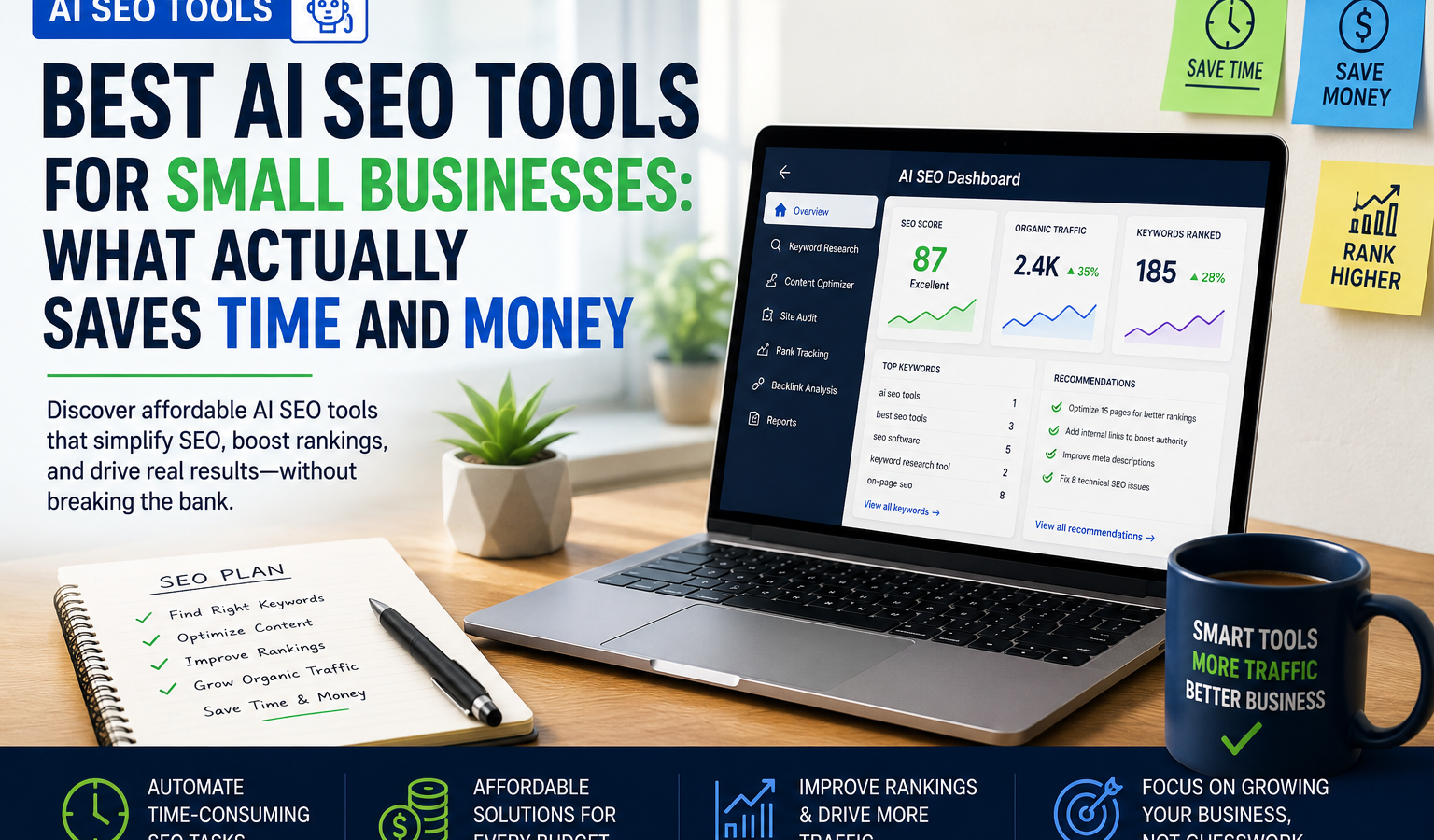

Best AI SEO Tools for Small Businesses: What Actually Saves Time and Money
Small businesses do not need the most expensive SEO software on the market. They need tools that help them work faster, waste less time, and make better marketing decisions without creating unnecessary complexity. That is where AI SEO tools have become especially valuable. They can help small teams handle keyword discovery, content optimization, competitor analysis, and internal linking with far less manual effort than before.
For a small business owner, every hour matters. There is usually no large content team, no dedicated analyst, and no budget for endless subscriptions. A good AI SEO tool should reduce friction, not add it. It should help answer practical questions like: Which pages need improvement? Which keywords are worth targeting? Which articles should be updated first? Which topics can bring the fastest returns?
What small businesses should look for
The most useful AI SEO platforms usually combine a few core functions. Look for keyword clustering, content scoring, on-page optimization suggestions, SERP analysis, and a clear workflow for creating briefs or content outlines. If a tool also tracks internal links and detects technical issues, that is even better. The point is to get actionable guidance rather than data overload.
Many small businesses also benefit from tools that offer templates or guided workflows. Instead of forcing the user to interpret a dashboard full of metrics, the software should suggest next steps. That may mean improving title tags, refreshing old content, adding related questions, or reworking the page structure to match user intent more closely.
Why affordability is only part of the story
A cheap SEO tool is not automatically a smart buy. If it saves money but produces vague recommendations, the real cost may be wasted time and missed ranking opportunities. For that reason, small businesses should think in terms of return on effort, not just monthly price. A tool that helps publish two better posts a month may be worth far more than a lower-cost option that barely changes the workflow.
The right AI SEO tool should help a business improve the content it already has. That often means upgrading service pages, local landing pages, blog posts, and FAQ sections. These updates can produce meaningful gains without needing a full-scale content operation.
How to get the most from AI SEO tools
Start with pages that already show some promise. A page ranking on page two may need only a few improvements to move higher. AI can help identify missing subtopics, weak headings, or keyword gaps. It can also suggest questions to answer and opportunities to add internal links. That kind of focused optimization is often more effective than chasing brand-new topics every week.
Small businesses should also use AI to maintain consistency. Publish in a repeatable style, keep tone aligned with the brand, and update older pages regularly. AI can help flag which pages need a refresh and which topics are already covered well. That keeps the site organized and prevents content from drifting in too many directions.
Best use cases for busy owners
- Improving service pages that need stronger on-page SEO
- Finding long-tail keywords with clear buying intent
- Updating old blog posts to match current search behavior
- Building quick content briefs for writers or freelancers
- Identifying internal links that strengthen topical relevance
Recommended internal links
- Can I Get Effective Monthly SEO Services for a Small Business Budget?
- What Are the Best SEO Strategies for Small Businesses?
- Technical SEO Audit Checklist for Faster Rankings and Better UX
FAQ
Are AI SEO tools worth it for small businesses?
Yes, especially when the tool helps save time and improves the quality of content decisions. The best tools can pay for themselves through better rankings and faster workflows.
Do small businesses need advanced SEO software?
Not always. Many businesses do better with simple tools that focus on the basics: keywords, content optimization, and internal linking.
Should AI write the whole article?
AI can help draft content, but human review is still important for accuracy, brand voice, and originality.
AI SEO Tools for Content Updates: How to Refresh Old Posts and Win Rankings
Publishing new articles is important, but refreshing older content is often where the fastest SEO wins appear. Many websites already have posts that rank on page two, attract a few impressions, or contain useful information that has simply gone stale. AI SEO tools can make it much easier to identify these opportunities and turn old content into a stronger asset.
Instead of guessing which posts deserve attention, AI tools can scan performance data and suggest pages that are close to breaking through. They can also highlight missing sections, weak search intent alignment, outdated examples, and opportunities for new internal links. This is especially useful for sites with a large archive of blog content.
Why content refreshes matter
Search behavior changes over time. A page that performed well last year may lose traffic because competitors improved their content, user questions evolved, or the topic developed new subthemes. Updating the article can restore visibility and improve engagement without starting from scratch.
Content refreshes also help build authority. When your site consistently updates posts with better examples, clearer structure, and more relevant information, it signals that the site is active and maintained. That can improve trust with both readers and search engines.
How AI helps detect update opportunities
AI SEO platforms can review rankings, search impressions, and page structure to identify weak spots. They may suggest adding new FAQs, improving title tags, increasing topical depth, or reorganizing headings to better match user intent. In some cases, the best improvement is not more content but better content arrangement.
For example, a long article may have useful information buried too deep in the page. AI can help flag sections that should be moved higher, split into clearer subheadings, or expanded with more direct answers. These changes can improve readability and increase the chance that the page satisfies the searcher faster.
A practical refresh workflow
- Find pages with declining traffic or strong impressions but weak clicks
- Check whether the search intent has changed
- Use AI to suggest new headings, questions, and related terms
- Add updated examples, current references, and internal links
- Rewrite the introduction and conclusion to better match today’s searcher
This workflow keeps older content competitive. It also reduces the pressure to constantly publish brand-new posts when your existing library may already contain hidden opportunities.
How to avoid shallow updates
Some content refreshes fail because they only change a few words and a date. That is not enough. A real update should improve the substance of the article. AI can speed up the process, but the final version still needs useful additions, stronger examples, and a better structure. The article should feel newly valuable, not lightly edited.
The best refresh strategy is to improve meaning, not just metadata. Update the body, add related subtopics, and strengthen the page’s answer to the search intent. That is where the ranking gains usually come from.
Recommended internal links
- WordPress SEO: The Complete 2026 Guide
- SEO Mistakes That Are Hurting Your Rankings and Traffic
- Meta Tags SEO Guide: Boost Rankings and Click-Through Rates
FAQ
Should I update old content or publish new content?
Both matter, but updating older content can be one of the fastest ways to regain traffic and improve SEO performance.
Can AI tools tell me which posts to update?
Yes. Many tools can highlight pages with declining performance, weak optimization, or missed keyword opportunities.
How often should content be refreshed?
That depends on the topic and competition, but many pages benefit from a review every few months or whenever the topic changes significantly.